Why Open Source Is the Future of Hybrid Cloud
November 21, 2025
Why Businesses Are Moving to Cloud-Native Apps
December 7, 2025

Introduction – Why Modern Businesses Need Scalable Cloud Tech
Businesses today are constantly evolving, and their technology needs to keep up. Traditional IT systems often struggle with growing workloads, which is why more companies are turning to scalable cloud services. These modern solutions allow businesses to adjust resources instantly, making it easier to stay flexible, maintain speed, and manage costs effectively.
Scalable cloud architecture also provides the stability needed for long-term growth. Whether a company is adding new users, launching new products, or handling larger volumes of data, a scalable system ensures smooth performance at every stage. By supporting expansion without downtime or heavy investment, scalable cloud tech has become essential for any business aiming to stay competitive in the digital era.
Understanding Scalable Cloud Services
Scalable cloud services give businesses the ability to expand or reduce their resources whenever needed. Instead of relying on fixed, limited systems, companies can adjust computing power, storage, and other resources in real time. This flexibility makes it easy to manage sudden spikes in traffic, whether it’s during promotions, seasonal demand, or unexpected growth. When activity slows down, the system scales back, helping businesses save money by only paying for what they truly use.
Where MarQi Cloud Comes In:
MarQi Cloud delivers these scalable cloud services through its independent data center, advanced storage clusters, and redundant network fabric. This setup ensures smooth scaling, reliable performance, and zero interruptions, giving businesses the stability and freedom they need to grow confidently.
What Makes Cloud Systems “Scalable”?
- Ability to adjust compute, storage, and network resources instantly
- On-demand expansion to handle peak loads and heavy traffic
- Performance optimization without causing downtime
- Backed by MarQi Cloud’s strong infrastructure for fast and reliable scaling
Vertical vs. Horizontal Scaling
- Vertical Scaling (Scale Up):
- Adds more CPU, memory, or power to an existing server
- Best for applications needing more performance from a single machine
- Horizontal Scaling (Scale Out):
- Adds multiple servers to share the workload
- Ideal for distributed systems, apps with large user bases, and rapid growth
- Benefits for Businesses:
- Smooth handling of fluctuating workloads
- Improved stability and consistent performance
- MarQi Cloud supports both approaches, giving businesses flexible options to grow at their own pace
Enterprise-Grade Cloud Infrastructure for High-Growth Companies
Enterprise-grade cloud infrastructure provides businesses with a strong, secure, and reliable foundation to manage critical applications and large workloads. Unlike standard cloud services, it is designed to handle high volumes of data, complex operations, and strict industry regulations. It can be deployed in hybrid or multi-cloud environments, allowing organizations to combine public, private, and on-premise resources for maximum flexibility and efficiency.
Key Features
- Scalability and Performance: Quickly adjusts resources to handle growing users, traffic spikes, and large datasets without affecting performance
- Security and Compliance: Robust protections including end-to-end encryption, strict access controls, and adherence to standards like GDPR, HIPAA, and SOC 2
- Integration Capabilities: Seamlessly connects with existing systems, applications, and enterprise workflows
- Reliability: High availability, guaranteed uptime, and safeguards such as DDoS protection
- Flexibility: Supports diverse workloads with different storage and performance tiers, from high-speed SSDs to archival solutions
Why Infrastructure Quality Matters – MarQi Cloud
- Redundant systems and resilient design at MarQi Cloud minimize downtime, ensuring your business stays operational
- MarQi Cloud’s enterprise-grade cloud infrastructure keeps mission-critical applications running smoothly, even during heavy workloads
- Strong security measures, regulatory compliance, and SLA-backed performance provide businesses with peace of mind and reliable operations
How Modern Infrastructure Enhances Productivity – MarQi Cloud
- MarQi Cloud accelerates the deployment of applications and updates, helping teams move faster
- Seamless integration with DevOps pipelines and workflow automation ensures smoother operations
- Supports microservices, containers, and distributed systems, enabling businesses to innovate quickly and scale efficiently
Choosing an Open Source Hybrid Cloud Provider
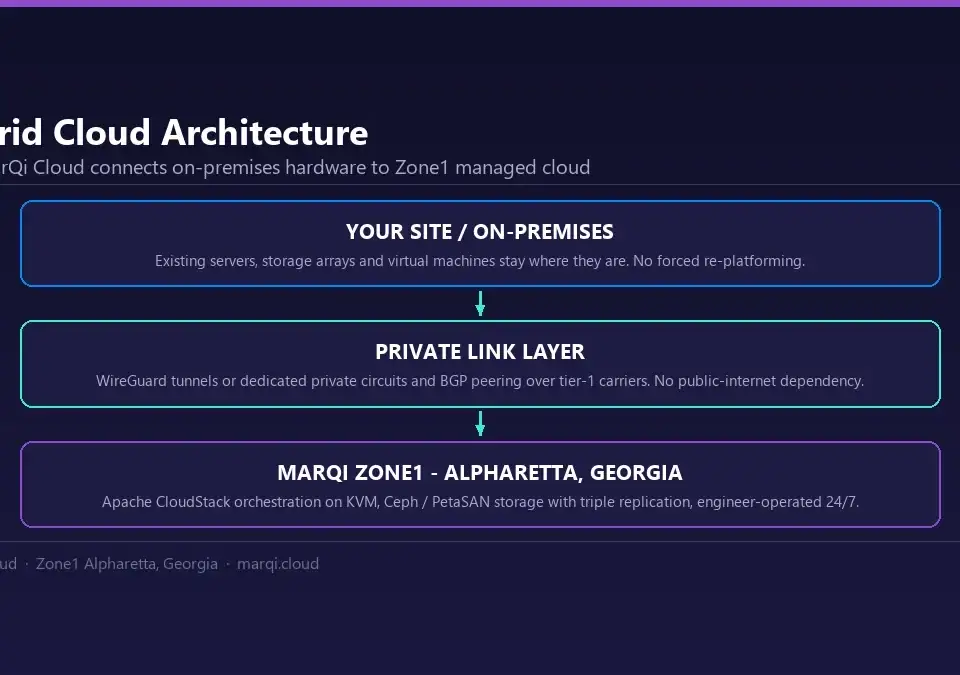
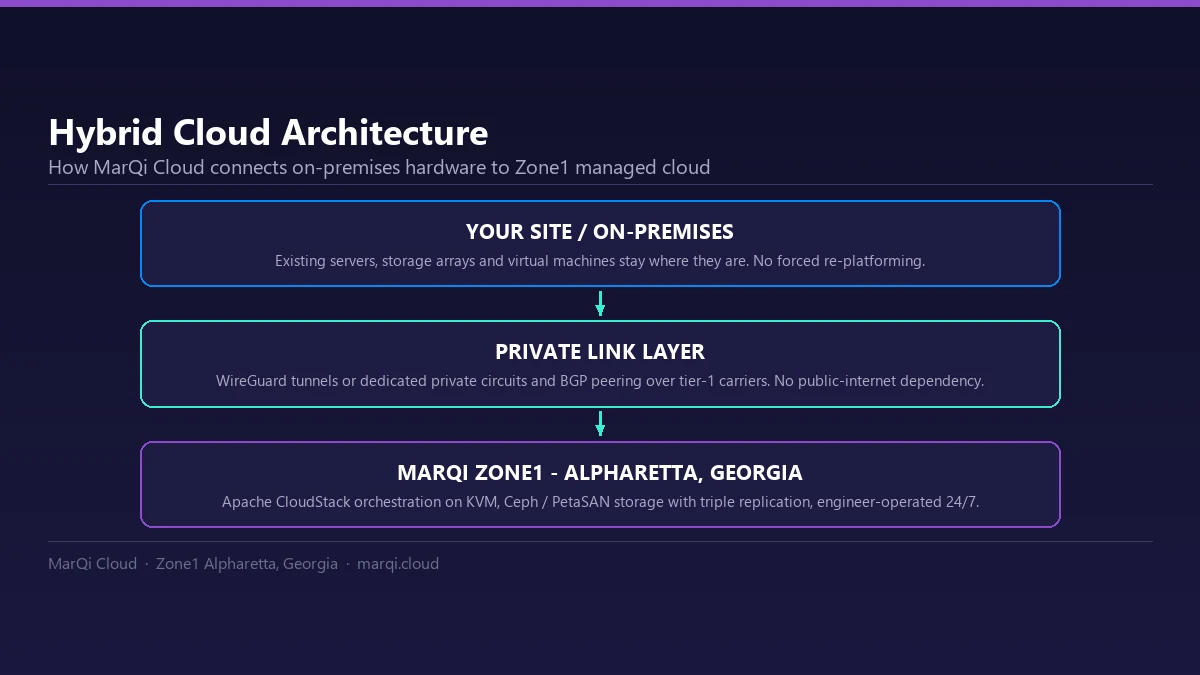
An open source hybrid cloud provider gives businesses the tools to build and manage hybrid cloud environments using open-source technologies. This allows organizations to combine private on-premises infrastructure with public cloud resources, moving workloads to the environment that best suits their needs. The result is increased flexibility, cost efficiency, and complete control over applications and data.
MarQi Cloud as an Open Source Cloud Provider:
MarQi Cloud provides a reliable open source hybrid cloud solution, helping businesses seamlessly run workloads across private and public environments. With MarQi Cloud, organizations benefit from transparency, the ability to customize systems, and optimized costs, all while maintaining high performance and strong security.
Why Open Source Matters in Cloud Computing
- Encourages transparency, collaboration, and community-driven innovation
- Allows businesses to customize infrastructure to fit their needs
- Reduces operational costs and offers greater flexibility than proprietary systems
Benefits of a Hybrid Cloud Environment
- Efficiently balances private and public cloud resources
- Keeps sensitive data on-premises while using public cloud for less critical workloads
- Provides scalability without vendor lock-in, supporting business growth
- Ideal for companies needing agility, flexibility, and modern cloud capabilities
Cloud Without Vendor Lock-In
A cloud without vendor lock-in allows businesses to use multiple cloud providers freely, avoiding dependency on a single vendor. This approach gives organizations full control over their data and workloads, while enabling them to move applications between environments as needed. By leveraging open-source technologies, open standards, and multi-cloud strategies, companies gain flexibility, cost efficiency, and improved performance.
MarQi Cloud and Cloud without Vendor Lock-In
- Provides an open hybrid infrastructure that supports private, public, and hybrid cloud environments
- Enables businesses to scale workloads efficiently without being tied to a single provider
- Helps companies maintain control over their systems, optimize costs, and ensure business continuity
Challenges with Proprietary Cloud Ecosystems
- Long-term costs increase when relying on a single vendor
- Migration and scaling face technical limitations
- Risk of losing control over critical data and workloads
How to Achieve True Independence
- Use open-source tools and platforms for flexibility
- Deploy workloads across multiple cloud environments
- Choose providers based on open standards to avoid proprietary constraints
- Reduce vendor dependency to ensure long-term business freedom
Key Benefits of a Cloud without Vendor Lock-In
- Flexibility: Move workloads or switch providers as business needs change
- Cost Savings: Choose the most cost-effective provider for each task
- Performance: Run applications in the environment best suited for them
- Resilience: Spread workloads across multiple clouds to minimize the risk of downtime
How Independent Data centers like MarQi Cloud Support Scalable Growth
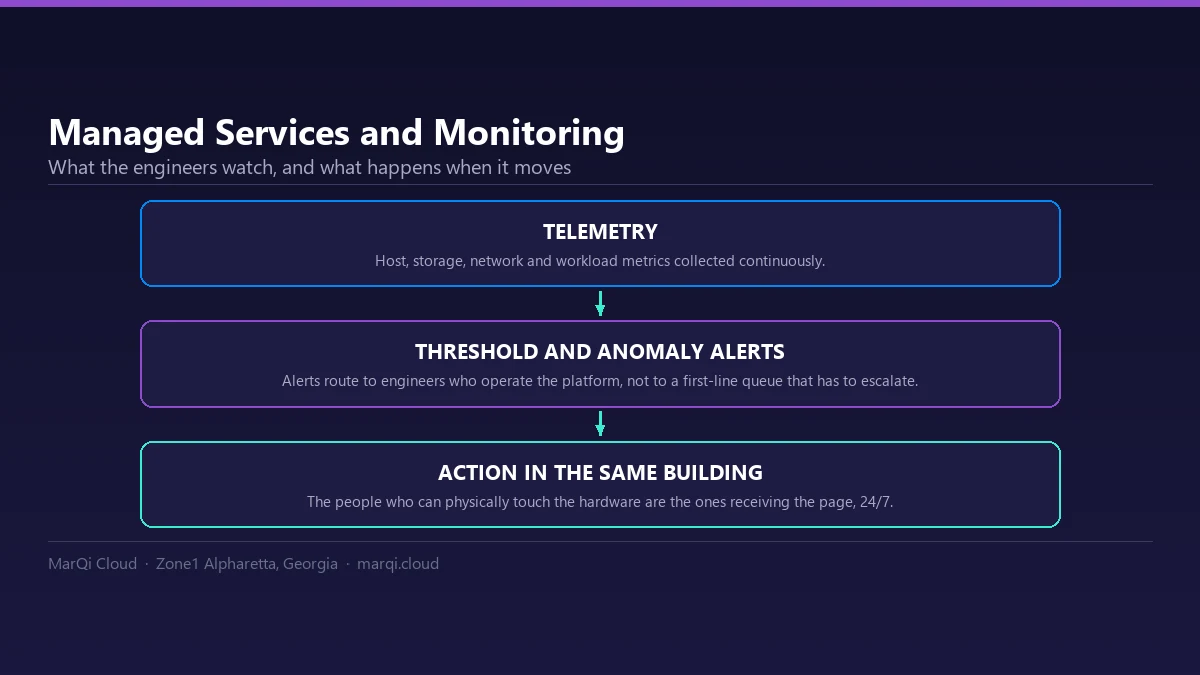
Independent data centers are crucial for businesses seeking to grow efficiently while maintaining high performance, security, and reliability. By owning and managing their infrastructure, these centers allow companies to scale smoothly without downtime or slowdowns.
The Role of Independent Infrastructure
- Full Ownership: Complete control over hardware, networks, and storage ensures consistent and reliable performance
- Better Performance: Localized resources reduce latency and improve speed for critical workloads
- Enhanced Security & Fast Response: On-site management allows quick issue resolution and strong data protection
Importance of Redundant Network Fabric & Storage Clusters
- Eliminates Single Points of Failure: Redundant systems keep operations running even if one component fails
- Reliable Data Replication: Copies of data across storage clusters ensure maximum reliability and prevent data loss
- Consistent Performance at Scale: Handles traffic spikes and high workloads smoothly without affecting user experience
MarQi Cloud leverages independent infrastructure, redundant network fabrics, and storage clusters to provide businesses with scalable, secure, and reliable cloud solutions, making growth seamless and worry-free.
What Makes MarQi Cloud Stand Out
- Independent Data Center: Owns and manages its storage clusters for full control
- Redundant Network Fabric: Ensures reliable systems and maximum uptime
- Open-Source Hybrid Cloud: Combines private and public clouds using open-source technology
- Cloud Without Vendor Lock-In: Lets businesses move workloads freely without being tied to one provider
- Enterprise-Grade Infrastructure: Scalable, secure, and built to meet modern business needs
Conclusion
Scalable cloud services are essential for businesses looking to grow efficiently while maintaining high performance and reliability. Platforms that are open-source, hybrid, and free from vendor lock-in provide flexibility, control, and cost optimization, allowing companies to adapt quickly to changing demands. By choosing the right cloud strategy, such as MarQi Cloud, businesses can ensure long-term growth, secure operations, and the ability to scale seamlessly as their needs evolve.