Why Daily Monitoring of Cloud Spending Prevents Cost Anomalies
August 7, 2026
How to Implement a Zero-Trust Security Architecture on Cloud Infrastructure
August 8, 2026
The Complete Guide to Cloud Cost Allocation Tags for Multi-Department Environments
In today’s rapidly evolving cloud landscape, understanding cloud cost allocation tags is crucial for organizations operating within multi-department environments. As an enterprise cloud provider, MarQi Cloud recognizes the importance of effective cloud cost management. This comprehensive guide will explore what cloud cost allocation tags are, how they function, and the best practices for implementing them in your organization. By the end, you will have a solid grasp of how to optimize your cloud spending, ensuring that each department is accountable and efficient in utilizing cloud resources.
What Are Cloud Cost Allocation Tags?
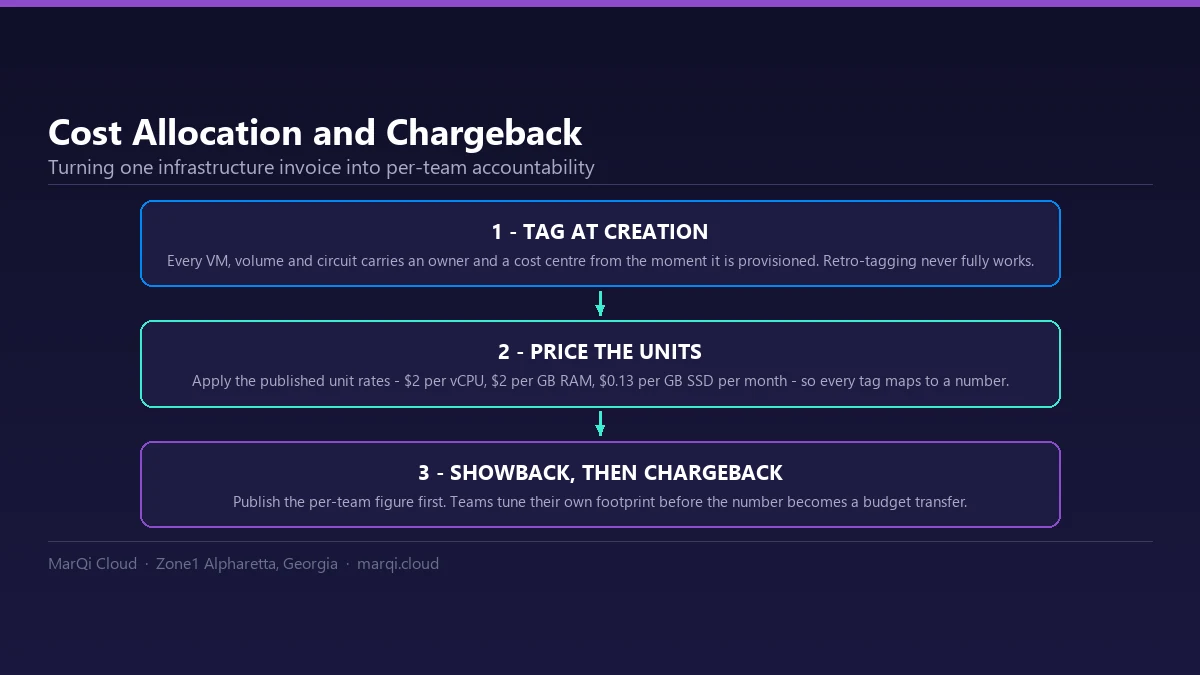
Cloud cost allocation tags are metadata that you apply to your cloud resources to categorize and track spending. These tags can include various attributes such as department, project, or environment (e.g., development, testing, production). By leveraging these tags, organizations can gain a granular view of their cloud expenditures, enabling them to analyze costs associated with specific departments or projects.
For instance, if your marketing department runs a campaign on cloud infrastructure, tagging the resources used allows for precise tracking of expenses related to that campaign. This practice not only facilitates accountability but also aids in budget forecasting and resource allocation.
The Importance of Cost Allocation Tags
Implementing cost allocation tags is vital for several reasons:
- Enhanced Visibility: Tags provide a clear view of spending across various departments, enabling finance teams to identify areas where costs can be optimized.
- Accountability: By tagging resources, each department becomes responsible for its cloud spending, fostering a culture of accountability and financial discipline.
- Budget Management: Tags can help in creating accurate budgets based on historical spending patterns, allowing departments to plan for future expenditures effectively.
- Optimized Resource Utilization: Understanding which resources are underutilized or overutilized helps organizations make informed decisions about resource scaling and management.
How to Implement Cost Allocation Tags
Implementing cloud cost allocation tags requires careful planning and execution. Here are the steps you can follow:
- Define Tagging Strategy: Start by defining a clear tagging strategy tailored to your organization’s needs. Determine the key attributes that will be useful for tracking costs, such as department names, project codes, or environment types.
- Establish Tagging Policies: Create policies that dictate how and when tags should be applied. Ensure that all departments are aware of these policies and their importance.
- Utilize Automation Tools: Leverage automation tools to enforce tagging policies. Many cloud providers, including MarQi Cloud, offer built-in functionalities to automate tagging processes.
- Monitor and Audit Tags: Regularly monitor and audit your tags to ensure compliance with your established policies. Consider using cloud management platforms that can help you visualize and analyze tagging data.
- Train Employees: Conduct training sessions for all relevant employees to ensure they understand the tagging strategy and its significance. This will foster a culture of accountability and encourage adherence to the tagging policies.
Best Practices for Cost Allocation Tags
To maximize the effectiveness of your cost allocation tags, consider the following best practices:
- Keep It Simple: Avoid overly complex tagging structures. Use simple and descriptive tags that are easy for all employees to understand.
- Standardize Tags: Create a standardized list of tags across the organization. This consistency will facilitate easier reporting and analysis.
- Regularly Review Tags: Periodically review your tagging policies and practices to ensure they remain relevant and effective. Adjust them as necessary to accommodate changes in the organization.
- Involve Stakeholders: Engage with stakeholders from various departments when developing your tagging strategy. Their insights can help create a more effective and comprehensive approach.
- Utilize Reporting Tools: Use reporting tools that can integrate with your cloud infrastructure to visualize spending patterns based on tags. This will provide valuable insights into resource utilization and cost management.
Common Challenges and Solutions
While implementing cloud cost allocation tags can significantly enhance financial management, organizations may face several challenges:
Challenge 1: Inconsistent Tagging
Inconsistent tagging can lead to inaccurate cost reporting. To combat this, enforce strict tagging policies and use automated tools to ensure compliance.
Challenge 2: Lack of Employee Awareness
If employees are unaware of the tagging policies, they may neglect to apply them. Regular training and communication about the importance of tagging can help mitigate this issue.
Challenge 3: Complexity of Tagging Structure
A complex tagging structure can confuse users. Aim for simplicity and standardization in your tagging strategy to enhance usability.
Case Study: Successful Implementation
To illustrate the benefits of effective cloud cost allocation tags, let’s consider a hypothetical case study of a mid-sized enterprise, XYZ Corp.
XYZ Corp operates in the healthcare sector and has multiple departments, including marketing, IT, and operations. Initially, the organization struggled with cloud cost visibility, leading to overspending and budget overruns. After implementing a tagging strategy, XYZ Corp was able to:
- Enhance Visibility: By tagging resources according to department and project, they achieved a 40% improvement in cost visibility.
- Increase Accountability: Each department took ownership of its cloud spending, resulting in a 30% reduction in unnecessary expenditures.
- Optimize Resource Utilization: They identified underutilized resources and reallocated them, improving overall operational efficiency.
Frequently Asked Questions
What are the benefits of using cloud cost allocation tags?
Cloud cost allocation tags enhance visibility, accountability, and budget management while optimizing resource utilization.
How do I create a tagging strategy?
Define key attributes for tagging, establish policies, utilize automation tools, and train employees on the importance of tagging.
What challenges might I face with tagging?
Common challenges include inconsistent tagging, lack of employee awareness, and complexity of tagging structure.
Can I automate the tagging process?
Yes, many cloud providers offer automation tools to enforce tagging policies and streamline the tagging process.
How often should I review my tagging policies?
Regularly review your tagging policies to ensure they remain relevant and effective. Consider doing this quarterly or bi-annually.
What should I do if my employees are not following tagging policies?
Conduct training sessions to raise awareness about the importance of tagging and enforce policies to ensure compliance.
Are there any tools to help visualize tagging data?
Yes, many cloud management platforms offer reporting tools that help visualize spending patterns based on tags.
How can I ensure standardization in my tagging?
Create a standardized list of tags and engage stakeholders from different departments to ensure consistency.
Understanding and implementing cloud cost allocation tags is essential for organizations operating in multi-department environments. By following the practices outlined in this guide, you can optimize your cloud spending, enhance accountability, and foster a culture of financial discipline across your organization. For more information on cloud cost management and best practices, reach out to MarQi Cloud.