How CDN Edge Caching Reduces Origin Server Load on Cloud Infrastructure
August 20, 2026
The Complete Guide to Cloud Infrastructure Performance SLAs
August 21, 2026
Why Cloud Performance Monitoring Must Include Application-Level Metrics
Cloud application performance monitoring measures how an application behaves from the user’s side (response time, error rate and throughput) and links those numbers to the infrastructure metrics underneath. Monitoring cloud performance has evolved beyond simply tracking infrastructure metrics. To truly optimize performance and ensure seamless user experiences, organizations must integrate application-level metrics into their monitoring strategies. This article explores why cloud performance monitoring must include application-level metrics, the benefits of doing so, and how to implement effective monitoring strategies.
Understanding Cloud Performance Monitoring
Cloud performance monitoring refers to the systematic process of tracking and analyzing the performance of cloud-based applications and services. It encompasses various metrics that provide insights into how well cloud resources are functioning. Traditionally, monitoring efforts focused on infrastructure metrics such as CPU usage, memory consumption, and network latency. While these metrics are essential for understanding the overall health of cloud infrastructure, they do not provide a complete picture of application performance.
Organizations that invest in cloud performance monitoring commonly report improvements in their operational efficiency. This statistic underscores the growing recognition of the need for comprehensive monitoring strategies that extend beyond infrastructure.
The Importance of Application-Level Metrics
Application-level metrics play a crucial role in understanding how users interact with applications and how these applications perform under various conditions. Here are several reasons why integrating application-level metrics into cloud performance monitoring is essential:
- Enhanced User Experience: Monitoring application-level metrics, such as response times and error rates, allows organizations to identify performance bottlenecks that directly impact user experience. A study published by the Nielsen Norman Group states that users expect web applications to respond within two seconds. Delays beyond this threshold can lead to increased bounce rates and decreased user satisfaction.
- Proactive Issue Resolution: By monitoring application-level metrics, organizations can detect anomalies and performance issues before they escalate into critical failures. This proactive approach enables IT teams to address issues in real-time, minimizing downtime and maintaining service quality.
- Informed Decision-Making: Application-level metrics provide valuable insights into user behavior and application performance. By analyzing these metrics, organizations can make data-driven decisions regarding application enhancements, resource allocation, and scaling strategies.
- Alignment with Business Goals: Integrating application-level metrics into cloud performance monitoring aligns IT operations with business objectives. By understanding how applications impact business outcomes, organizations can prioritize improvements that drive revenue and enhance customer satisfaction.
Key Application-Level Metrics to Monitor
To effectively monitor application performance, organizations should focus on several key application-level metrics:
1. Response Time
Response time measures how long it takes for a user request to be processed and a response to be returned. This metric is critical for assessing user experience. Tools like Google PageSpeed Insights can help organizations analyze response times and optimize their applications accordingly.
2. Error Rates
Error rates track the frequency of errors encountered by users while interacting with an application. High error rates can indicate underlying issues that need to be addressed. Monitoring tools such as Sentry can provide insights into error occurrences and their potential causes.
3. Throughput
Throughput measures the number of transactions or requests processed by an application within a specific timeframe. This metric helps organizations understand the capacity and efficiency of their applications. By analyzing throughput data, businesses can identify trends and adjust resources as needed.
4. Apdex Score
The Apdex (Application Performance Index) score is a standardized metric that evaluates user satisfaction with application performance. It ranges from 0 to 1, with higher scores indicating better user satisfaction. Organizations can use tools like Apdex to measure and improve their application performance.
5. User Satisfaction
Tracking user satisfaction metrics involves gathering feedback from users through surveys and monitoring social media sentiment. This qualitative data complements quantitative metrics and provides a holistic view of application performance.
| Metric | Description | Importance |
|---|---|---|
| Response Time | Time taken to process user requests | Directly impacts user experience |
| Error Rates | Frequency of errors encountered | Indicates application stability |
| Throughput | Number of transactions processed | Reflects application efficiency |
| Apdex Score | User satisfaction index | Measures overall user experience |
| User Satisfaction | Feedback from users | Provides qualitative insights |
Challenges in Monitoring Application-Level Metrics
While integrating application-level metrics into cloud performance monitoring is essential, organizations face several challenges:
- Data Overload: With numerous metrics to track, organizations may struggle to filter out noise and focus on what truly matters. This can lead to analysis paralysis and ineffective decision-making.
- Integration Complexity: Integrating application-level metrics across various platforms and tools can be complex and resource-intensive. Organizations must ensure that their monitoring solutions can cohesively collect and analyze data from different sources.
- Performance Impact: Monitoring tools can introduce additional latency to applications, potentially affecting user experience. Organizations must balance monitoring needs with application performance.
- Skill Gaps: Effective monitoring requires skilled personnel who can interpret data and make informed decisions. Organizations may need to invest in training or hire specialized talent to manage their monitoring efforts.
Implementing a Successful Monitoring Strategy
To implement a successful cloud performance monitoring strategy that includes application-level metrics, organizations should follow these steps:
1. Define Clear Objectives
Establish clear objectives for monitoring efforts, including specific metrics to track and desired outcomes. This will help align monitoring strategies with business goals.
2. Choose the Right Tools
Select monitoring tools that provide comprehensive coverage of both infrastructure and application-level metrics. Solutions like Datadog and New Relic offer robust capabilities for monitoring cloud performance.
3. Establish Baselines
Establish performance baselines for key metrics to understand normal application behavior. This will help identify anomalies and performance issues more effectively.
4. Implement Automated Alerts
Set up automated alerts for critical metrics to ensure timely responses to performance issues. This proactive approach minimizes downtime and enhances user experience.
5. Regularly Review and Adjust
Continuously review monitoring data and adjust strategies as needed. Regular assessments ensure that monitoring efforts remain effective and aligned with changing business needs.
Best Practices for Cloud Performance Monitoring
To maximize the effectiveness of cloud performance monitoring, consider the following best practices:
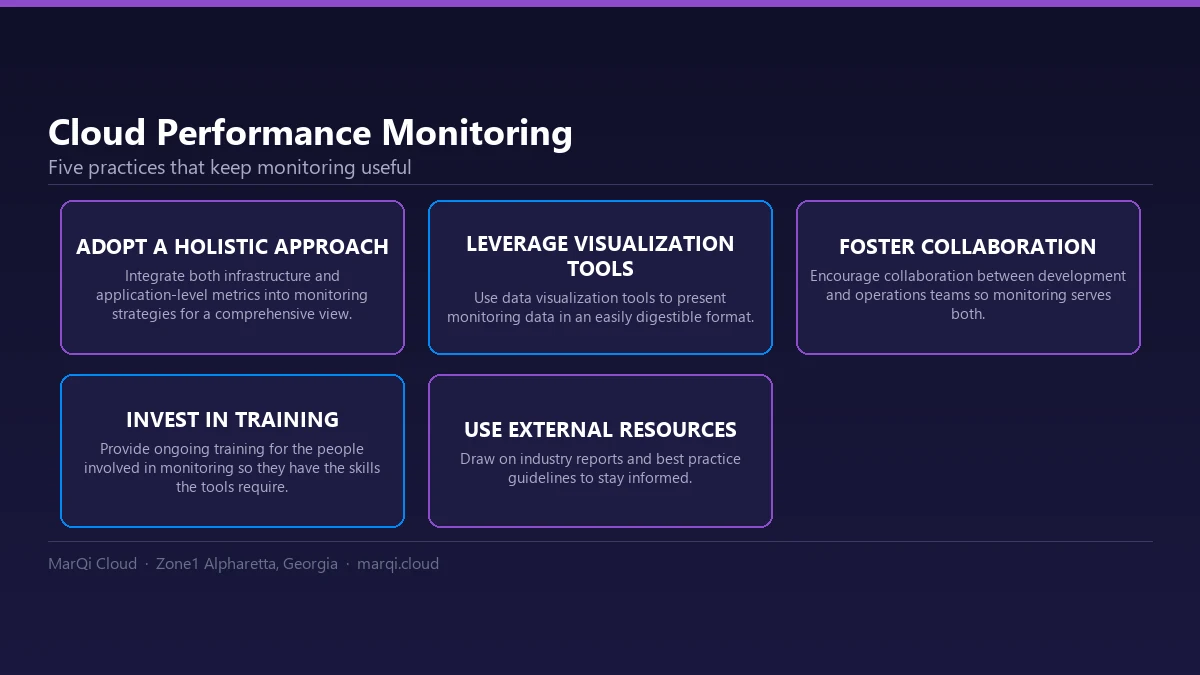
- Adopt a Holistic Approach: Integrate both infrastructure and application-level metrics into monitoring strategies for a comprehensive view of performance.
- Leverage Visualization Tools: Use data visualization tools to present monitoring data in an easily digestible format. This enhances insights and facilitates quicker decision-making.
- Foster Collaboration: Encourage collaboration between development and operations teams (DevOps) to ensure that monitoring efforts align with application development and deployment processes.
- Invest in Training: Provide ongoing training for personnel involved in monitoring efforts to ensure they have the skills needed to interpret data and make informed decisions.
- Utilize External Resources: Leverage external resources, such as industry reports and best practice guidelines, to stay informed about the latest trends and advancements in cloud performance monitoring.
Conclusion
In conclusion, cloud performance monitoring must extend beyond traditional infrastructure metrics to include application-level metrics. By doing so, organizations can enhance user experience, proactively resolve issues, and align IT operations with business goals. Implementing a comprehensive monitoring strategy that incorporates both types of metrics is essential for optimizing cloud performance and ensuring the success of cloud-based applications.
FAQ
1. What are cloud performance metrics?
Cloud performance metrics are quantitative measures used to assess the performance of cloud-based applications and infrastructure. They include both infrastructure metrics (e.g., CPU usage) and application-level metrics (e.g., response times, error rates).
2. Why are application-level metrics important?
Application-level metrics are crucial because they provide insights into user experience and application performance. They help organizations identify bottlenecks, optimize performance, and enhance user satisfaction.
3. How can I monitor application performance?
You can monitor application performance by using specialized monitoring tools that track key metrics such as response time, error rates, and throughput. Tools like Datadog and New Relic are popular choices.
4. What challenges do organizations face in monitoring application metrics?
Organizations may face challenges such as data overload, integration complexity, performance impact, and skill gaps when monitoring application metrics.
5. What is the Apdex score?
The Apdex score is a standardized metric that measures user satisfaction with application performance. It ranges from 0 to 1, with higher scores indicating better user satisfaction.
6. How can I improve application performance monitoring?
To improve application performance monitoring, define clear objectives, choose the right tools, establish performance baselines, implement automated alerts, and regularly review and adjust strategies.
7. What are some best practices for cloud performance monitoring?
Best practices include adopting a holistic approach, leveraging visualization tools, fostering collaboration between teams, investing in training, and utilizing external resources for insights.
8. How does cloud performance monitoring impact user experience?
Effective cloud performance monitoring helps organizations identify and resolve performance issues quickly, leading to improved user experience and increased customer satisfaction.