Building a Zero-Trust Hybrid Cloud: Practical Controls That Work
February 22, 2026
How to Properly Size Your VM: Understanding vCPU, RAM, and SSD for Real Workloads
February 22, 2026
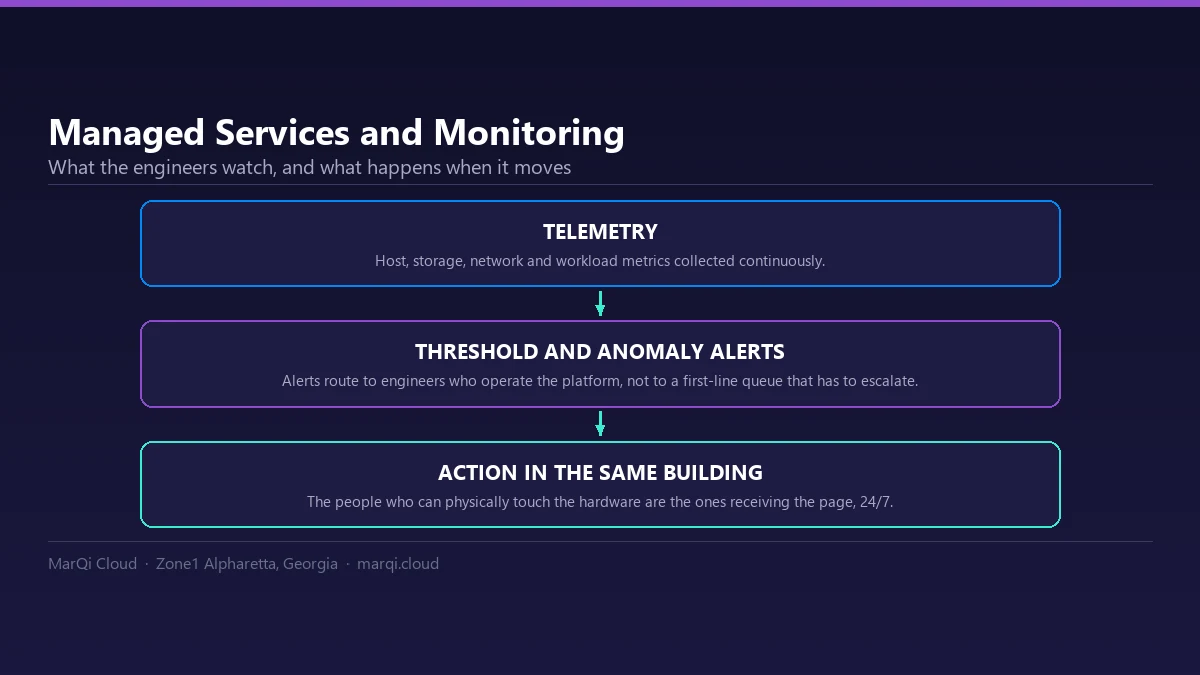
What should enterprise cloud monitoring include?
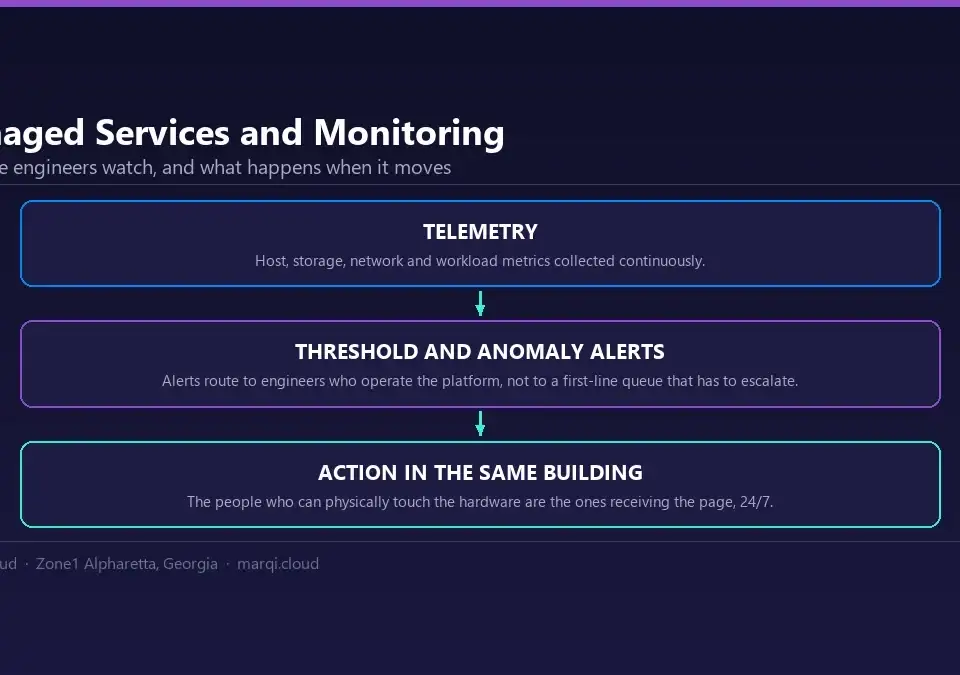
Four layers, watched continuously rather than sampled: infrastructure health, application behaviour, network path, and the external check that proves the service answers from outside your own network. Coverage matters less than escalation - a monitor nobody is paged for is a dashboard, not monitoring.
Comprehensive Guide to Enterprise Monitoring in the Cloud: What 24/7 Monitoring Should Include
Introduction to Enterprise Monitoring in the Cloud
In today’s fast-paced digital landscape, businesses increasingly depend on cloud infrastructure to host their applications and store data. As enterprises migrate to the cloud, the need for robust monitoring solutions has never been more critical. Effective enterprise monitoring in the cloud ensures that systems remain operational, performance is optimized, and any potential issues are swiftly addressed. This article delves into what constitutes true 24/7 monitoring and how organizations can leverage cloud monitoring solutions to enhance their infrastructure.
What does cloud monitoring actually watch?
What is Cloud Monitoring?
Cloud monitoring refers to the process of overseeing cloud-based resources and applications, ensuring they operate smoothly and efficiently. It involves tracking performance metrics, resource utilization, and uptime, while also identifying any anomalies or failures. For enterprises, having a robust monitoring strategy is essential to maintain operational continuity and ensure optimal service delivery.
Importance of 24/7 Monitoring
24/7 monitoring means that organizations continuously observe their cloud environments, without any downtime. This level of vigilance is crucial for several reasons:
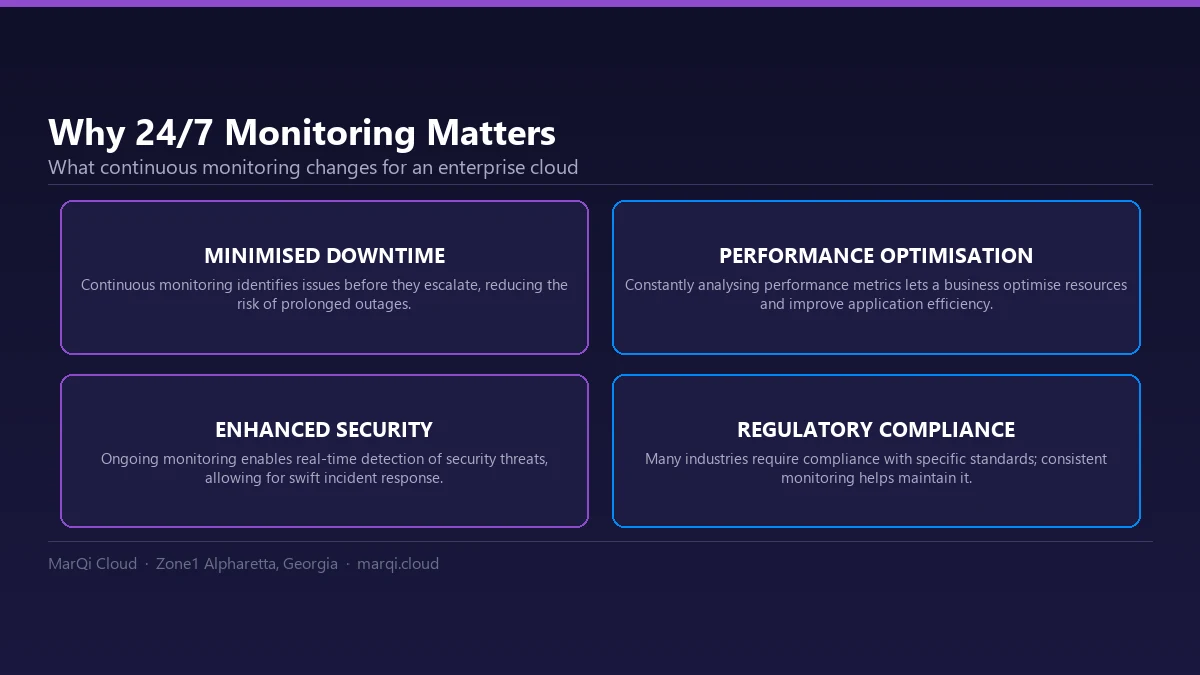
- Minimized Downtime: Continuous monitoring helps identify issues before they escalate, reducing the risk of prolonged outages.
- Performance Optimization: By constantly analyzing performance metrics, businesses can optimize resources and improve application efficiency.
- Enhanced Security: Ongoing monitoring enables real-time detection of security threats, allowing for swift incident response.
- Regulatory Compliance: Many industries require compliance with specific standards; consistent monitoring helps maintain adherence.
Key Components of 24/7 Monitoring
1. Infrastructure Monitoring
Infrastructure monitoring encompasses the review of all components of the cloud environment, including servers, networks, and storage systems. Key aspects include:
- Server Health: Monitoring CPU usage, memory consumption, disk I/O, and network traffic to ensure optimal server performance.
- Network Performance: Tracking latency, packet loss, and bandwidth usage to guarantee seamless connectivity.
- Storage Management: Keeping tabs on storage utilization and performance to prevent bottlenecks.
2. Application Performance Monitoring (APM)
APM focuses on the performance of applications hosted in the cloud. This includes:
- Response Time: Assessing how quickly applications respond to user requests.
- Error Rates: Monitoring the frequency of errors that can affect user experience.
- User Satisfaction: Keeping track of user interaction metrics to gauge overall satisfaction.
3. Security Monitoring
Security is a top concern for cloud-based enterprises. Effective security monitoring includes:
- Intrusion Detection: Identifying unauthorized access attempts or suspicious activities.
- Vulnerability Scanning: Regularly scanning for security flaws in the infrastructure and applications.
- Compliance Audits: Ensuring that security practices align with industry regulations.
4. Log Management
Logs are invaluable for troubleshooting and analyzing system performance. Effective log management involves:
- Data Collection: Gathering logs from various sources like servers, applications, and security devices.
- Log Analysis: Using analytical tools to extract insights from log data.
- Retention Policies: Implementing policies for log retention to meet compliance requirements.
5. Alerts and Notifications
Setting up alerts is critical for 24/7 monitoring. Key considerations include:
- Thresholds: Defining performance thresholds that trigger alerts when exceeded.
- Alert Channels: Utilizing multiple channels (email, SMS, dashboards) to ensure timely notifications.
- Escalation Procedures: Establishing clear protocols for escalating issues based on severity.
6. Reporting and Analytics
Regular reporting and analytics are essential for continuous improvement. This includes:
- Performance Reports: Generating reports to review performance metrics over defined periods.
- Incident Reports: Documenting incidents to identify trends and prevent future occurrences.
- Capacity Planning: Using data analytics to forecast future resource needs.
Choosing the Right Monitoring Solution
Factors to Consider
When selecting a monitoring solution, enterprises should consider several factors:
- Integration: Ensure that the monitoring tool integrates seamlessly with existing cloud infrastructure.
- Scalability: Choose a solution that can grow with your business.
- User-Friendly Interface: A straightforward interface can enhance usability and productivity.
- Support and Training: Look for vendors that provide robust support and training resources.
Popular Monitoring Tools
Some of the leading monitoring tools in the market include:
- Datadog: Provides comprehensive monitoring for cloud applications and infrastructure.
- New Relic: Focuses on application performance monitoring to optimize user experiences.
- Splunk: Offers powerful log management and analytics capabilities.
Best Practices for Effective Cloud Monitoring
1. Define Clear Objectives
Establish clear monitoring objectives that align with business goals to ensure tracking relevant metrics.
2. Regularly Review and Adjust
Continuously evaluate monitoring processes and adjust strategies as necessary to adapt to changing business needs.
3. Foster a Monitoring Culture
Encourage a culture of monitoring within the organization, where teams understand the importance of data-driven decisions.
Conclusion
In an era where cloud infrastructure is pivotal to business success, enterprise monitoring must be a top priority. Effective 24/7 monitoring encompasses various components, from infrastructure health to application performance and security. By investing in comprehensive monitoring solutions, organizations can ensure their cloud environments remain reliable, efficient, and secure, ultimately driving business success.
FAQ
1. What is enterprise monitoring in the cloud?
Enterprise monitoring in the cloud involves overseeing cloud-based resources and applications to ensure optimal performance and availability.
2. Why is 24/7 monitoring important?
24/7 monitoring minimizes downtime, optimizes performance, enhances security, and helps maintain regulatory compliance. On MarQi Cloud that watch is operated for you — see how round-the-clock monitoring and the NOC work.
3. What are the key components of 24/7 monitoring?
The key components include infrastructure monitoring, application performance monitoring, security monitoring, log management, alerts and notifications, and reporting and analytics.
4. How can I choose the right monitoring solution?
Consider factors such as integration, scalability, user-friendliness, and support when selecting a monitoring solution.
5. What are some popular cloud monitoring tools?
Popular tools include Datadog, New Relic, and Splunk.
6. How often should I review my monitoring strategy?
Regularly review and adjust your monitoring strategy to adapt to business needs and changes in the cloud environment.
7. Can cloud monitoring help with compliance?
Yes, effective cloud monitoring can help organizations maintain compliance with industry regulations through consistent monitoring and reporting.
8. What should I do if I receive an alert?
Follow your established escalation procedures to address alerts promptly, ensuring that issues are resolved to minimize impact.
9. How can I optimize application performance through monitoring?
Monitor response times and error rates to identify performance bottlenecks and optimize resources for better application efficiency.
10. What role does log management play in monitoring?
Log management helps in troubleshooting, performance analysis, and maintaining compliance by collecting and analyzing log data from various sources.