The Complete Guide to Cloud Key Management and Cryptographic Best Practices
August 11, 2026
Why Cloud Security Posture Management Validates Your Configuration Continuously
August 11, 2026
How DDoS Protection Keeps Enterprise Cloud Services Available Under Attack
In today’s hyper-connected world, the availability of enterprise cloud services is critical for business continuity. Distributed Denial of Service (DDoS) attacks pose a significant threat, targeting the infrastructure of organizations and leading to service outages, data breaches, and financial losses. Understanding how DDoS protection mechanisms work is essential for any enterprise looking to maintain service availability during an attack. In this article, we will explore the importance of DDoS protection, the strategies employed to mitigate these attacks, and how MarQi Cloud’s robust cloud infrastructure can keep your business running smoothly, even under attack.
Understanding DDoS Attacks
DDoS attacks occur when multiple systems target a single system, overwhelming it with traffic and causing it to become unresponsive. These attacks can take various forms, including:
- Volume-based attacks: These aim to saturate the bandwidth of the target site, often measured in bits per second (bps).
- Protocol attacks: These focus on exploiting weaknesses in layer 3 and layer 4 protocols, consuming server resources and network equipment.
- Application layer attacks: These target specific applications, often designed to crash the web server, and are measured in requests per second (rps).
DDoS attacks continue to grow in frequency and sophistication, making it crucial for enterprises to implement effective protection measures.
Impact of DDoS Attacks on Enterprises
The impact of a DDoS attack can be catastrophic for enterprises. Here are some key statistics highlighting the potential repercussions:
- ITIC’s 2024 Hourly Cost of Downtime survey found that a single hour of downtime now costs over $300,000 for more than 90% of mid-size and large enterprises.
- Additionally, the reputational damage incurred from a service outage can lead to long-term loss of customers.
Understanding these impacts emphasizes the need for a robust DDoS protection strategy to safeguard enterprise cloud services.
How DDoS Protection Works
DDoS protection mechanisms are designed to identify and mitigate attacks before they impact service availability. These mechanisms typically involve:
Traffic Analysis
Advanced DDoS protection systems continuously monitor incoming traffic patterns. By analyzing traffic in real-time, they can identify anomalies indicative of a DDoS attack.
Rate Limiting
Rate limiting restricts the number of requests a user can make to a server in a given timeframe. This helps prevent overwhelming the server with excessive requests.
Traffic Redirection
During an attack, traffic can be redirected to cleaning centers where malicious requests are filtered out, allowing legitimate traffic to reach the server.
IP Blacklisting
Identifying and blocking IP addresses associated with malicious activity is another effective strategy. This can significantly reduce the volume of attack traffic.
Strategies for DDoS Mitigation
To effectively mitigate DDoS attacks, enterprises should consider the following strategies:
1. Employ a DDoS Protection Service
Utilizing a dedicated DDoS protection service can provide enhanced security and expertise. Services like those offered by MarQi Cloud can help ensure your infrastructure remains resilient under attack.
2. Implement Redundancy and Failover Systems
Creating redundancy in your infrastructure can help maintain service availability. This includes having backup servers and failover systems in place to handle increased traffic loads.
3. Regular Security Audits
Conducting regular security audits helps identify vulnerabilities in your infrastructure. This proactive approach can help mitigate the risk of potential DDoS attacks.
4. Employee Training
Training employees on recognizing potential DDoS attacks and implementing best practices can help create a security-first culture within the organization.
DDoS Resilience on MarQi Cloud
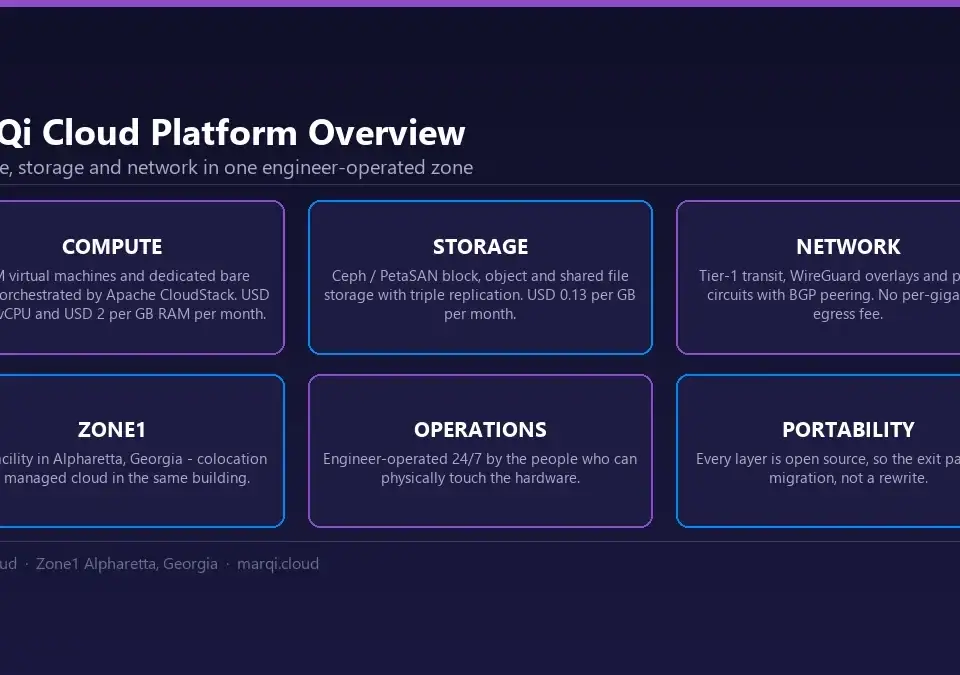
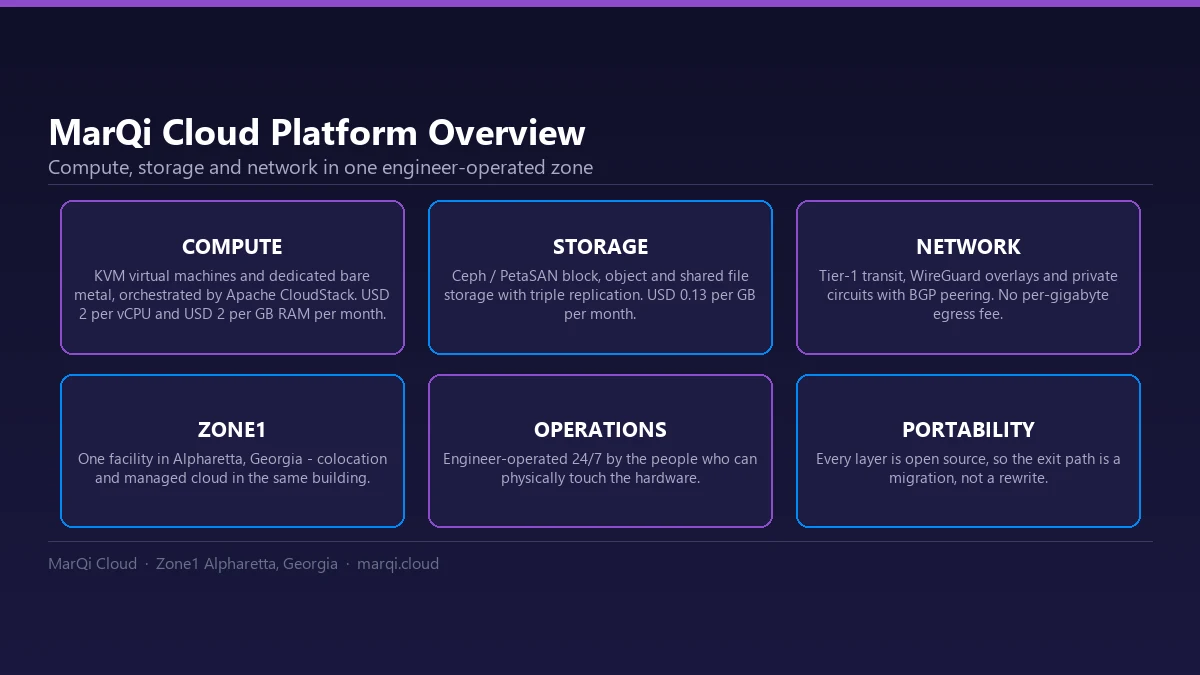
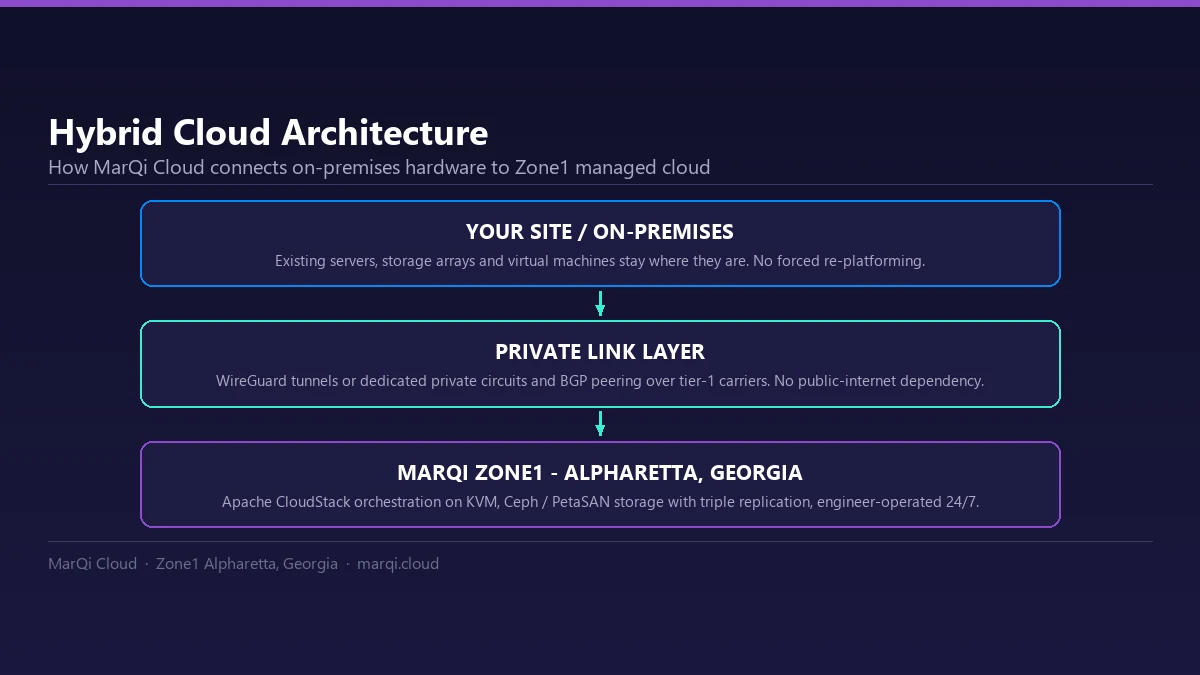
The MarQi Cloud platform provides the infrastructure layer for DDoS resilience: upstream capacity from multiple tier-1 providers, isolated private networks for your backends, a load balancer included with every plan and continuous platform monitoring by our NOC. For large volumetric attacks, add a dedicated DDoS mitigation or scrubbing service in front of your public endpoints.
A practical layered setup looks like this:
- A DDoS mitigation or CDN service in front of public endpoints
- Load balancers spreading traffic across several instances
- Backends on isolated private networks, reachable only through the load balancer or VPN
- Rate limits and alerting on your own services
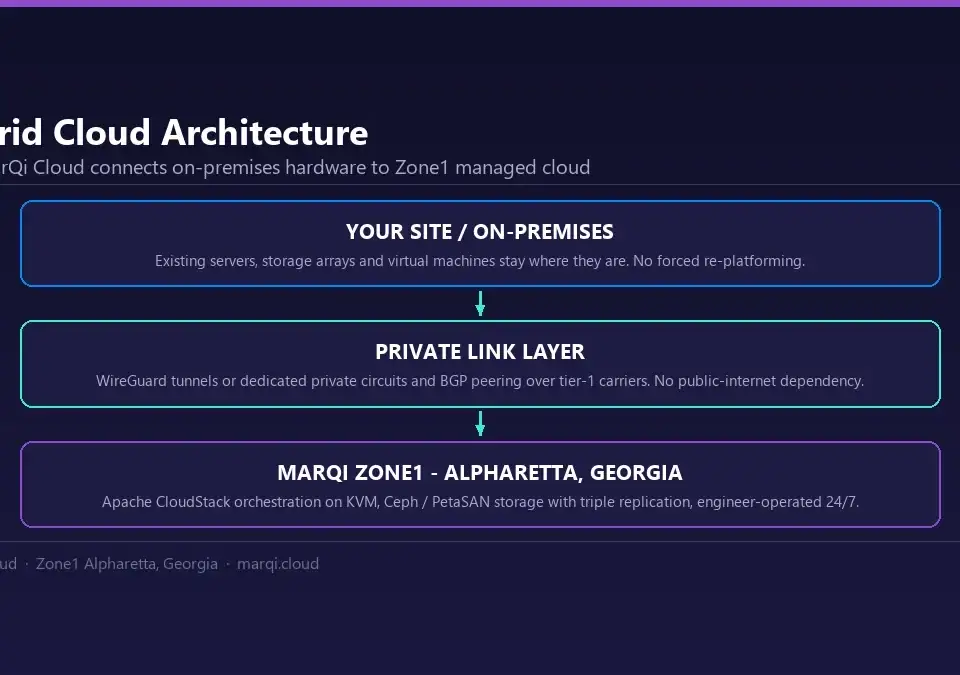
Our hybrid cloud solutions page shows how these pieces fit together.
Best Practices for Enterprise Security
To bolster your DDoS protection efforts, consider implementing these best practices:
1. Develop an Incident Response Plan
Having an incident response plan in place ensures your team is prepared to respond effectively during a DDoS attack. This should include communication protocols and designated roles for team members.
2. Use a Content Delivery Network (CDN)
A CDN can distribute traffic across multiple servers, reducing the load on any single server and enhancing your overall resilience against DDoS attacks.
3. Employ Load Balancing
Load balancing helps evenly distribute incoming traffic across multiple servers, preventing any single server from becoming overwhelmed.
4. Keep Software Updated
Regularly updating your software and security protocols can help protect against vulnerabilities that attackers may exploit.
The Future of DDoS Protection
The landscape of DDoS attacks is continually evolving, making it essential for enterprises to stay ahead of emerging threats. Future trends in DDoS protection may include:
- Increased use of artificial intelligence (AI) for threat detection and response
- Greater collaboration between organizations to share threat intelligence
- Enhanced focus on application-layer protections
As the threat landscape continues to evolve, investing in advanced DDoS protection measures will be critical for maintaining the availability and integrity of enterprise cloud services.
FAQ
What is a DDoS attack?
A DDoS attack is a malicious attempt to disrupt the normal functioning of a targeted server, service, or network by overwhelming it with a flood of traffic.
How can DDoS attacks affect my business?
DDoS attacks can lead to service outages, financial losses, reputational damage, and loss of customer trust.
What are some common types of DDoS attacks?
The most common types of DDoS attacks include volume-based, protocol, and application layer attacks.
How does DDoS protection work?
DDoS protection works by monitoring incoming traffic, identifying anomalies, and implementing mitigation strategies to filter out malicious traffic.
Why is DDoS protection essential for enterprises?
DDoS protection is essential for enterprises to maintain service availability, protect their reputation, and avoid financial losses associated with downtime.
What are the best practices for DDoS mitigation?
Best practices for DDoS mitigation include employing a dedicated DDoS protection service, implementing redundancy, conducting security audits, and training employees.
How can MarQi Cloud help with DDoS protection?
MarQi Cloud provides the infrastructure layer for DDoS resilience: multiple tier-1 upstream providers, isolated private networks, a load balancer included with every plan and continuous platform monitoring by its NOC. For large volumetric attacks, add a dedicated DDoS mitigation service in front of your public endpoints.
What should I include in my incident response plan?
Your incident response plan should include communication protocols, designated team roles, and a clear strategy for responding to a DDoS attack.