Why Application-Aware Backup Is Superior to Volume-Level Backup for Disaster Recovery
July 21, 2026
How to Calculate the Business Impact of Downtime to Justify DR Investment
July 22, 2026
The Complete Guide to Disaster Recovery Compliance Requirements for Regulated Industries
In today’s digital landscape, the importance of disaster recovery compliance cannot be overstated, especially for regulated industries such as healthcare, finance, and government. Organizations operating in these sectors must ensure their disaster recovery (DR) plans meet specific compliance requirements to safeguard sensitive data and maintain business continuity. This comprehensive guide explores the intricacies of disaster recovery compliance requirements, providing insights, strategies, and actionable tips to help your organization navigate this critical aspect of risk management.
Understanding Disaster Recovery Compliance
Disaster recovery compliance refers to the adherence to specific laws, regulations, and industry standards that dictate how organizations must prepare for, respond to, and recover from disruptive events. These events can range from natural disasters to cyberattacks, and the implications of non-compliance can be severe, including legal penalties, financial losses, and reputational damage.
Regulated industries face stricter compliance requirements due to the sensitive nature of the data they handle. For instance, healthcare organizations must comply with the Health Insurance Portability and Accountability Act (HIPAA), while financial institutions must adhere to regulations set forth by the Gramm-Leach-Bliley Act (GLBA) and the Payment Card Industry Data Security Standard (PCI DSS).
Key Regulations and Standards
To effectively manage disaster recovery compliance, organizations must familiarize themselves with the key regulations and standards applicable to their industry. Below is an overview of some of the most critical regulations:
- Health Insurance Portability and Accountability Act (HIPAA): HIPAA mandates that healthcare organizations implement appropriate administrative, physical, and technical safeguards to protect patient data. This includes having a documented disaster recovery plan that ensures the availability and integrity of electronic health information.
- Gramm-Leach-Bliley Act (GLBA): Financial institutions must establish safeguards to protect customer information. Disaster recovery plans must ensure that data is recoverable and accessible following a disaster, adhering to the financial industry’s stringent compliance standards.
- Payment Card Industry Data Security Standard (PCI DSS): Organizations that handle credit card transactions must comply with PCI DSS, which outlines specific requirements for maintaining a secure environment. This includes having a disaster recovery plan to ensure the protection of cardholder data.
- Federal Information Security Management Act (FISMA): FISMA requires federal agencies and their contractors to secure information systems. Disaster recovery plans must be part of broader information security programs, ensuring compliance with federal standards.
- ISO 22301: This international standard outlines the requirements for a business continuity management system (BCMS). Organizations can leverage ISO 22301 to enhance their disaster recovery compliance efforts.
Developing a Compliance-Focused Disaster Recovery Plan
Creating a disaster recovery plan that aligns with compliance requirements involves several critical steps:
- Risk Assessment: Conduct a thorough risk assessment to identify potential threats and vulnerabilities that could impact your organization. This assessment should consider both natural and man-made disasters.
- Business Impact Analysis (BIA): Perform a BIA to determine the potential impact of various disasters on your operations. This analysis helps prioritize recovery efforts based on the criticality of different systems and data.
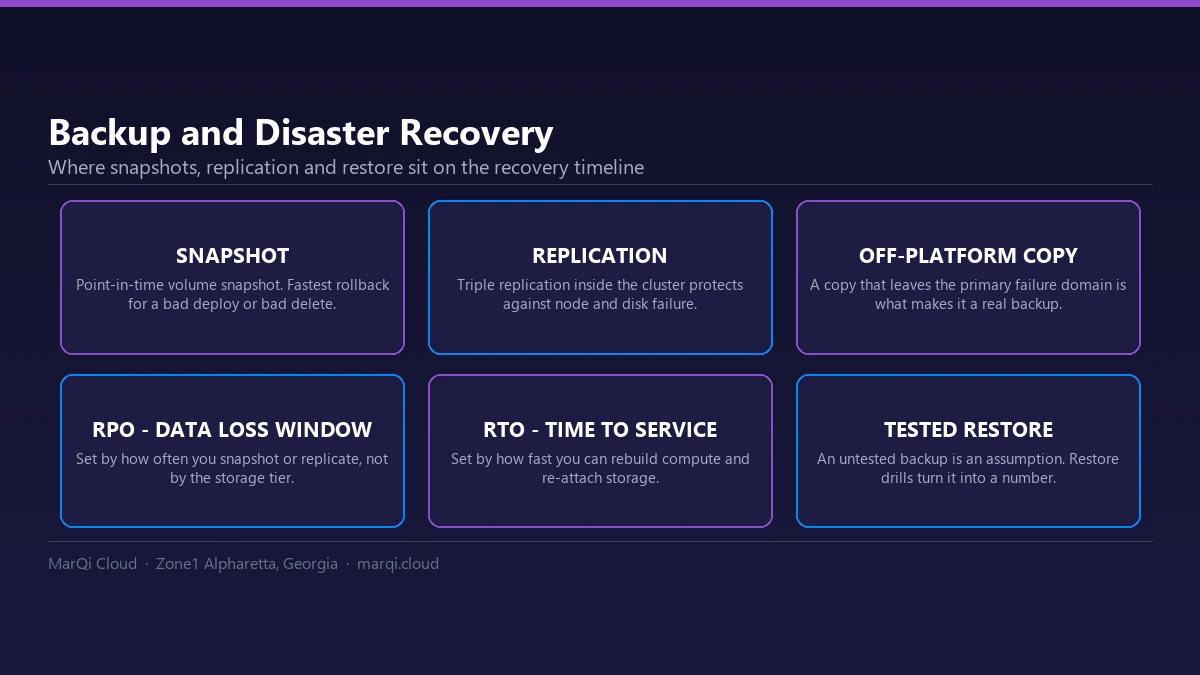
- Define Recovery Objectives: Establish clear recovery time objectives (RTO) and recovery point objectives (RPO) for each critical system. RTO defines the maximum acceptable downtime, while RPO outlines the maximum acceptable data loss.
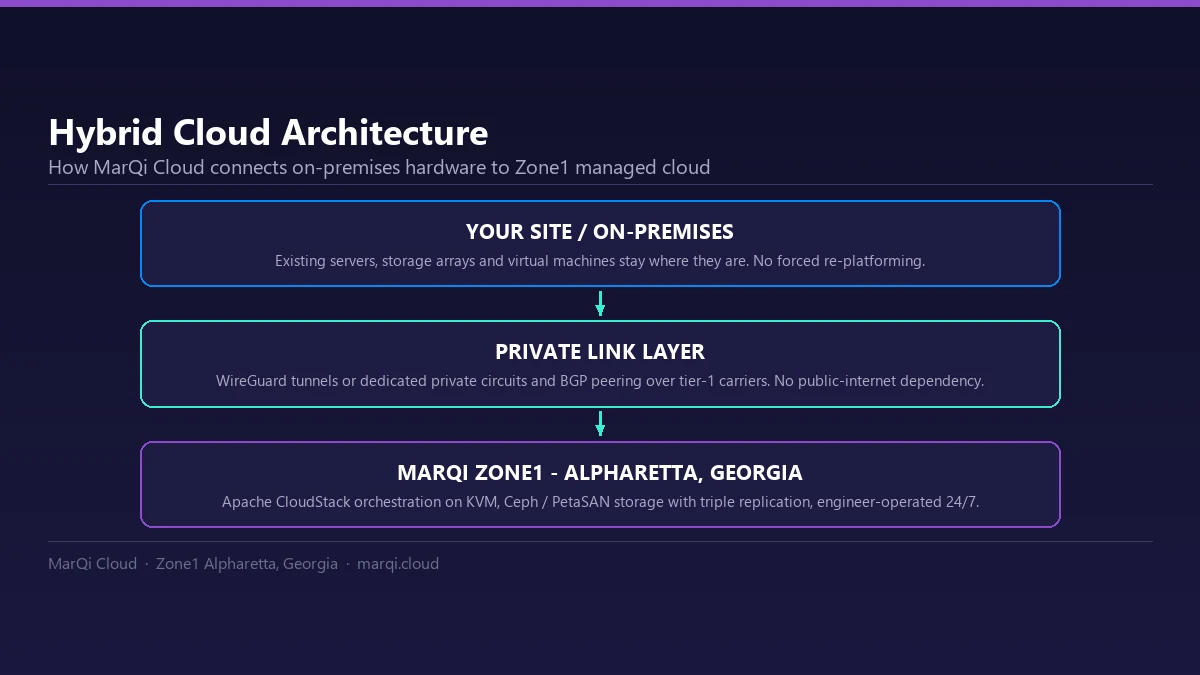
- Develop Recovery Strategies: Outline specific recovery strategies for each critical system, including data backup solutions, alternate processing sites, and communication plans. Consider leveraging MarQi Cloud’s hybrid cloud infrastructure for scalable and secure disaster recovery solutions.
- Documentation: Document all aspects of the disaster recovery plan, including roles and responsibilities, procedures, and contact information for key personnel.
- Testing and Training: Regularly test the disaster recovery plan to ensure its effectiveness. Conduct training sessions for employees to familiarize them with their roles during a disaster.
Best Practices for Disaster Recovery Compliance
Implementing best practices can enhance your organization’s disaster recovery compliance efforts:
- Engage Stakeholders: Involve key stakeholders from various departments, including IT, legal, and compliance, in the disaster recovery planning process to ensure comprehensive coverage.
- Leverage Technology: Utilize advanced technologies such as cloud computing and automation to streamline disaster recovery processes and enhance compliance.
- Regular Audits: Conduct regular audits of your disaster recovery plan to identify gaps and areas for improvement. This proactive approach helps maintain compliance and strengthens your overall risk management strategy.
- Documentation and Reporting: Maintain thorough documentation of your disaster recovery plan and any testing or training activities. This documentation serves as evidence of compliance during regulatory audits.
- Continuous Improvement: Adopt a culture of continuous improvement by regularly reviewing and updating your disaster recovery plan based on lessons learned from drills, incidents, and changes in regulations.
Common Challenges and Solutions
Organizations often face challenges when it comes to disaster recovery compliance. Below are some common challenges along with potential solutions:
| Challenge | Solution |
|---|---|
| Complex Regulatory Landscape | Stay informed about relevant regulations and seek guidance from legal and compliance experts to ensure adherence. |
| Resource Constraints | Leverage managed services like MarQi Cloud’s white-glove managed services to reduce the burden on internal resources while ensuring compliance. |
| Lack of Employee Awareness | Implement regular training and awareness programs to educate employees on their roles in disaster recovery and compliance. |
| Inadequate Testing | Schedule regular testing of the disaster recovery plan and incorporate lessons learned into future updates. |
Conclusion
Disaster recovery compliance is a critical component for organizations operating in regulated industries. By understanding the key regulations, developing a compliance-focused disaster recovery plan, and implementing best practices, organizations can effectively manage risks and ensure business continuity. As a leading provider of enterprise cloud solutions, MarQi Cloud is dedicated to helping organizations navigate the complexities of disaster recovery compliance. Contact us today to learn how our hybrid cloud solutions can support your compliance efforts.
FAQ
1. What is disaster recovery compliance?
Disaster recovery compliance refers to the adherence to specific laws, regulations, and standards that organizations must follow to ensure their disaster recovery plans are effective and protect sensitive data.
2. Why is disaster recovery compliance important?
Disaster recovery compliance is essential for safeguarding sensitive data, maintaining business continuity, and avoiding legal penalties and reputational damage.
3. What are the key regulations for disaster recovery compliance?
Key regulations include HIPAA, GLBA, PCI DSS, FISMA, and ISO 22301, which set specific requirements for disaster recovery planning and data protection.
4. How often should disaster recovery plans be tested?
Disaster recovery plans should be tested regularly, at least annually, to ensure their effectiveness and to incorporate lessons learned from drills and incidents.
5. What are RTO and RPO?
Recovery Time Objective (RTO) is the maximum acceptable downtime for a system, while Recovery Point Objective (RPO) is the maximum acceptable data loss.
6. How can technology enhance disaster recovery compliance?
Technology, such as cloud computing and automation, can streamline disaster recovery processes, improve data protection, and enhance compliance with regulatory requirements.
7. What is a Business Impact Analysis (BIA)?
A Business Impact Analysis (BIA) assesses the potential impact of disasters on operations, helping organizations prioritize recovery efforts based on critical systems and data.
8. How can organizations stay informed about regulatory changes?
Organizations can stay informed about regulatory changes by engaging legal and compliance experts, attending industry events, and subscribing to relevant publications.