
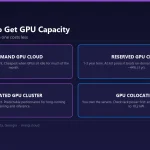
GPU Cloud, Dedicated GPU Cluster or GPU Colocation? A Cost and Fit Guide
October 2, 2026
The Complete Guide to Cloud Infrastructure Requirements for Large Language Model Workloads
October 2, 2026

Why Edge AI Inference with Cloud Training Creates Optimal ML Architecture
In the rapidly evolving landscape of artificial intelligence (AI) and machine learning (ML), organizations are constantly seeking innovative solutions to improve efficiency, reduce latency, and enhance performance. The integration of Edge AI inference with cloud training has emerged as a powerful architectural approach that not only addresses these challenges but also unlocks new potentials for businesses. This article will delve into the reasons why this combination creates an optimal ML architecture, providing insights backed by data, expert opinions, and real-world applications.
Understanding Edge AI Inference
Edge AI refers to the deployment of artificial intelligence algorithms on local devices, enabling real-time data processing and decision-making without the need to rely on centralized cloud resources. This architecture is particularly valuable in scenarios where low latency is critical, such as autonomous vehicles, smart cities, and industrial automation.
By performing inference at the edge, organizations can minimize the delay associated with sending data back and forth to the cloud, thereby enhancing user experience and operational efficiency.
The Role of Cloud Training
While Edge AI focuses on real-time inference, cloud training plays a crucial role in developing and refining ML models. Cloud environments provide the scalability and computational power necessary for training complex AI models on large datasets. Utilizing cloud infrastructure allows organizations to harness powerful GPUs and TPUs, significantly speeding up the training process.
Moreover, cloud platforms can easily accommodate the vast amounts of data generated by edge devices, enabling continuous model improvement through retraining. This synergy between edge inference and cloud training is essential for maintaining the accuracy and relevance of AI applications.
Benefits of Combining Edge AI and Cloud Training
The integration of Edge AI inference and cloud training offers several advantages:
- Reduced Latency: By processing data at the edge, organizations can achieve real-time responses, which is vital for applications like autonomous driving and real-time fraud detection.
- Scalability: Cloud training allows for the rapid scaling of resources to accommodate varying workloads, ensuring that model training can keep pace with the evolving demands of edge devices.
- Enhanced Security: With sensitive data processed locally, organizations can reduce the risk of data breaches associated with transmitting information to the cloud.
- Cost Efficiency: By optimizing data transfer and processing, businesses can reduce cloud storage and bandwidth costs.
- Continuous Learning: The cloud can facilitate ongoing model training using data collected from edge devices, leading to improved performance over time.
Comparison of Edge AI and Cloud Training
| Feature | Edge AI Inference | Cloud Training |
|---|---|---|
| Latency | Low latency; immediate processing | Higher latency; dependent on network speed |
| Data Processing | Local processing; reduced data transmission | Centralized processing; requires data transfer |
| Scalability | Limited by device capabilities | Highly scalable with cloud resources |
| Security | Enhanced local security | Risk of data exposure during transfer |
| Cost | Lower operational costs due to reduced data transfer | Higher costs for extensive data storage and transfer |
Real-World Applications of Edge AI and Cloud Integration
Numerous industries are already leveraging the combination of Edge AI inference and cloud training:
1. Healthcare
In healthcare, AI-powered devices can monitor patient vitals in real time, sending critical alerts to medical staff while ensuring that sensitive data remains secure. The cloud can be used to train models on historical patient data to enhance diagnostic accuracy.
2. Retail
Retailers utilize Edge AI for inventory management and customer experience personalization. By analyzing customer behavior at the edge, they can make instantaneous adjustments, while cloud training continuously improves recommendation algorithms.
3. Manufacturing
In manufacturing, AI-driven machines can analyze production lines on-site, enabling immediate adjustments to optimize efficiency. Cloud training can analyze vast historical data to refine predictive maintenance models, reducing downtime.
Key Considerations for Implementation
While the benefits of combining Edge AI and cloud training are significant, organizations must consider several factors for successful implementation:
- Infrastructure Requirements: Evaluate existing infrastructure capabilities to support edge devices and cloud services.
- Data Privacy: Ensure compliance with regulations governing data protection, particularly in industries like healthcare and finance.
- Integration Challenges: Address potential integration issues between edge devices and cloud services, focusing on seamless data flow and model updates.
- Cost Management: Analyze the cost implications of deploying edge devices versus cloud resources to ensure a balanced approach.
Future Trends in Edge AI and Cloud
The future of Edge AI and cloud integration is promising, with several trends shaping its evolution:
- 5G Connectivity: The rollout of 5G networks will enhance the capabilities of Edge AI by providing faster data transfer rates and lower latency, making real-time applications even more viable.
- Increased Automation: As AI technologies advance, the automation of processes at the edge will become more common, leading to more efficient operations.
- Interoperability: Future solutions will focus on creating seamless interoperability between edge and cloud environments, enhancing data sharing and model updates.
FAQ
1. What is Edge AI inference?
Edge AI inference involves running AI algorithms on local devices to process data in real-time, reducing latency and enhancing performance.
2. How does cloud training differ from edge inference?
Cloud training focuses on developing and refining AI models using large datasets in a centralized environment, while edge inference executes these models on local devices.
3. What are the benefits of combining Edge AI and cloud training?
This combination offers reduced latency, enhanced security, cost efficiency, and continuous learning capabilities.
4. What industries benefit from Edge AI and cloud integration?
Healthcare, retail, and manufacturing are among the industries leveraging this integration for improved efficiency and performance.
5. How can organizations ensure data privacy in Edge AI applications?
Organizations must comply with relevant data protection regulations and implement robust security measures to safeguard sensitive information.
6. What role does 5G play in Edge AI?
5G provides faster data transfer rates and lower latency, enhancing the capabilities of Edge AI applications.
7. What are the key considerations for implementing Edge AI and cloud training?
Key considerations include infrastructure requirements, data privacy, integration challenges, and cost management.
8. How does continuous learning work in this architecture?
Continuous learning involves updating AI models using data collected from edge devices, which can improve performance over time.
Conclusion
The integration of Edge AI inference with cloud training creates an optimal ML architecture that enhances operational efficiency, reduces latency, and improves security. As organizations continue to embrace this innovative approach, they will unlock new opportunities for growth and transformation. To explore how MarQi Cloud can assist your organization in harnessing the power of Edge AI and cloud training, contact us today.



