Why MarQi Cloud’s Engineering Team Prioritizes Customer Outcomes
October 16, 2026
How MarQi Cloud’s Transparent Pricing and Zero Egress Fees Simplify Cloud Budgeting Forever
October 16, 2026
The Complete Guide to Getting Started with MarQi Cloud for Your First Enterprise Workload
As businesses increasingly migrate their operations to the cloud, choosing the right cloud provider is critical for the success of your enterprise workload. MarQi Cloud offers robust, secure, and scalable solutions tailored for enterprise clients, making it the ideal choice for organizations venturing into the cloud for the first time. In this comprehensive guide, we will explore how to effectively start using MarQi Cloud for your first enterprise workload, ensuring you leverage its full potential for performance, security, and compliance.
Understanding MarQi Cloud
MarQi Cloud is an enterprise cloud provider specializing in hybrid infrastructure and secure hosting solutions. With a focus on performance-driven design, MarQi Cloud offers a private cloud environment ensuring your data remains secure while providing scalable compute and storage resources. The company’s unique value propositions include:
- Enterprise-grade cloud infrastructure
- Flexible pricing models with no lock-in or egress fees
- White-glove managed services for personalized support
- Robust disaster recovery solutions
As you prepare to migrate your enterprise workload, understanding these features will help you make informed decisions about how to utilize MarQi Cloud effectively.
Setting Up Your MarQi Cloud Account
The first step in getting started with MarQi Cloud is creating your account. Here’s a step-by-step guide to ensure a smooth setup:
- Visit the MarQi Cloud website: Go to MarQi Cloud and click on the ‘Get Started’ button.
- Choose Your Plan: Evaluate the available plans based on your enterprise needs. MarQi Cloud offers flexible pricing models that cater to various workloads.
- Fill Out the Registration Form: Provide necessary details such as your company name, contact information, and billing information.
- Verify Your Email: After submitting the registration, check your email for a verification link to confirm your account.
- Log In to Your Dashboard: Once verified, log in to your MarQi Cloud dashboard to start configuring your environment.
By following these steps, you will have set up your MarQi Cloud account, ready to deploy your first enterprise workload.
Choosing the Right Infrastructure
Choosing the appropriate infrastructure for your enterprise workload is crucial for performance and scalability. MarQi Cloud offers various options, including:
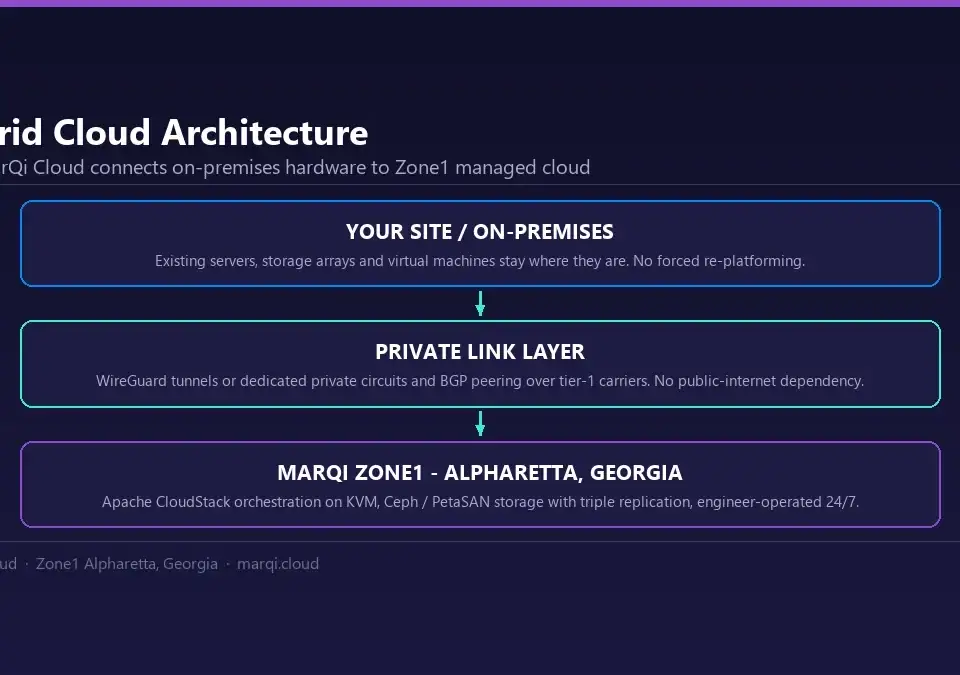
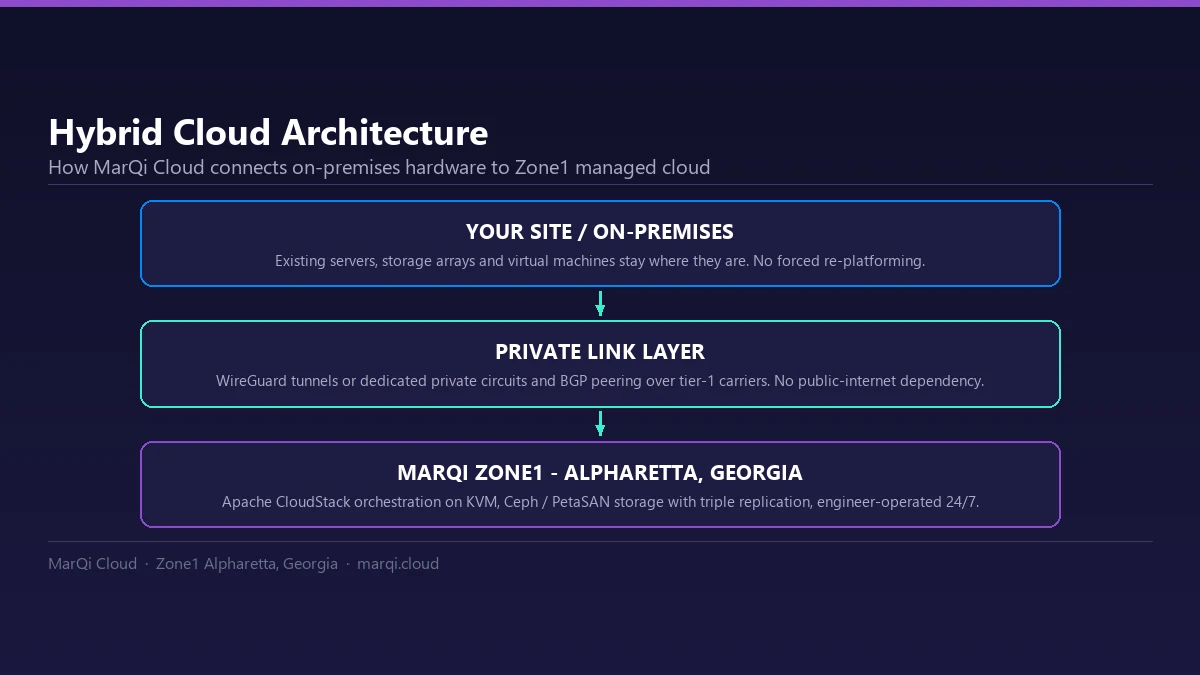
1. Hybrid Cloud Infrastructure
Utilizing a hybrid cloud model allows you to maintain a mix of on-premises and cloud resources, which can be beneficial for sensitive workloads that require compliance and security. This model also facilitates greater flexibility in resource allocation.
2. Private Cloud Solutions
For organizations that prioritize data security, MarQi Cloud’s private cloud solutions offer dedicated resources, ensuring that your data is isolated from other users. This is particularly important for industries such as healthcare and finance, where compliance with regulations like HIPAA or PCI-DSS is mandatory.
3. Virtualization Services
MarQi Cloud’s virtualization services allow you to create virtual machines tailored to your workload requirements. This flexibility enables efficient resource management and cost savings.
| Infrastructure Type | Benefits | Best Suited For |
|---|---|---|
| Hybrid Cloud | Flexibility, scalability, cost-effective | Organizations with varying workloads |
| Private Cloud | Enhanced security, compliance | Healthcare, finance, regulated industries |
| Virtualization | Resource efficiency, cost savings | Startups, SMBs, and enterprises |
By assessing these options, you can determine the best infrastructure for your specific enterprise workload needs.
Migrating Your Workload to MarQi Cloud
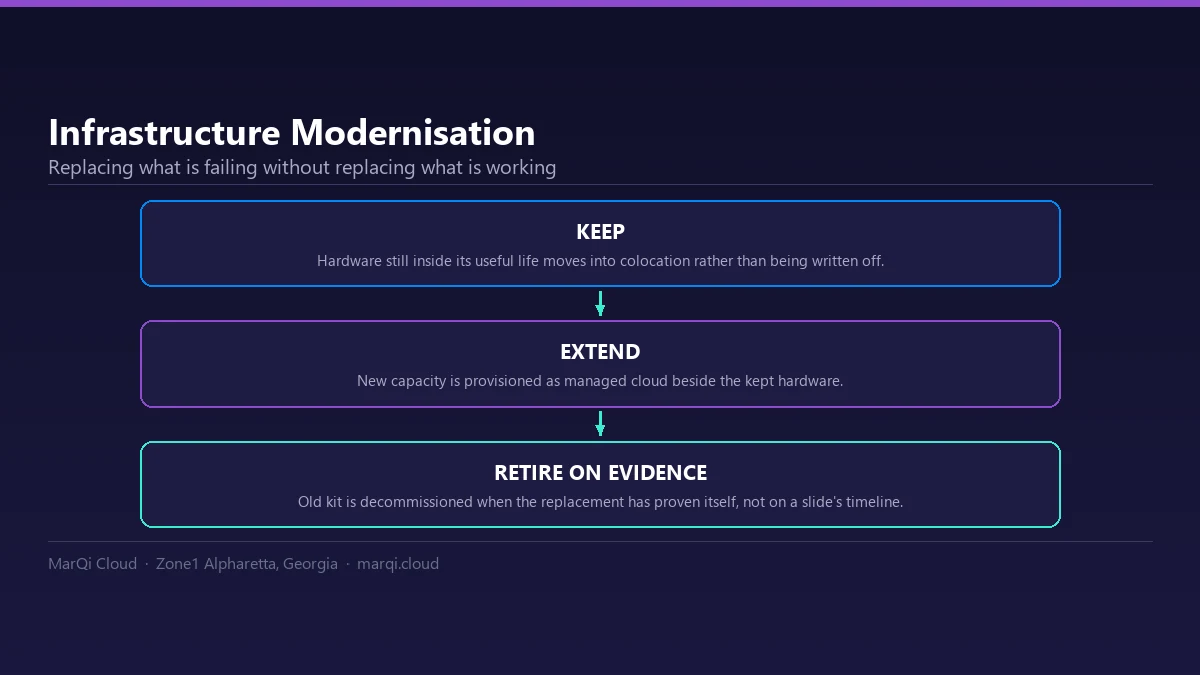
Once you have selected your infrastructure, the next step is migrating your existing workloads to MarQi Cloud. This process can be daunting, but with careful planning and execution, it can be seamless. Here’s a straightforward migration strategy:
1. Assessment
Begin by conducting an assessment of your current infrastructure. Identify which applications and data need to be migrated, and evaluate their dependencies. This will help you create a comprehensive migration plan.
2. Choose a Migration Strategy
There are several migration strategies you can consider:
- Lift and Shift: Move applications as-is to the cloud, which is the quickest approach.
- Refactor: Modify applications to better utilize cloud capabilities.
- Rebuild: Redesign applications to be cloud-native, which may take more time but can yield long-term benefits.
3. Execute the Migration
Follow these steps for a successful migration:
- Use MarQi Cloud’s migration tools to facilitate the transfer of data and applications.
- Monitor the migration process closely to address any issues that arise.
- Validate the integrity of the migrated data and applications to ensure everything functions as expected.
4. Testing
After migration, conduct comprehensive testing to ensure that your applications perform optimally in the new environment. This includes functional testing, performance testing, and security testing.
Best Practices for Managing Your Enterprise Workload
Once your workload is successfully migrated, managing it efficiently is key to maximizing your investment in MarQi Cloud. Here are some best practices:
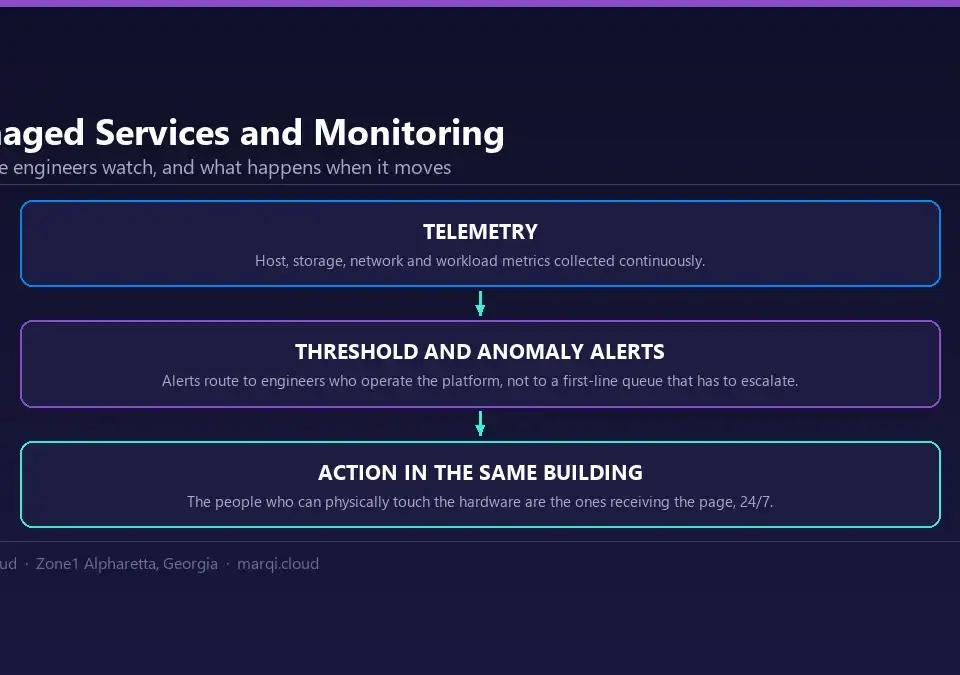
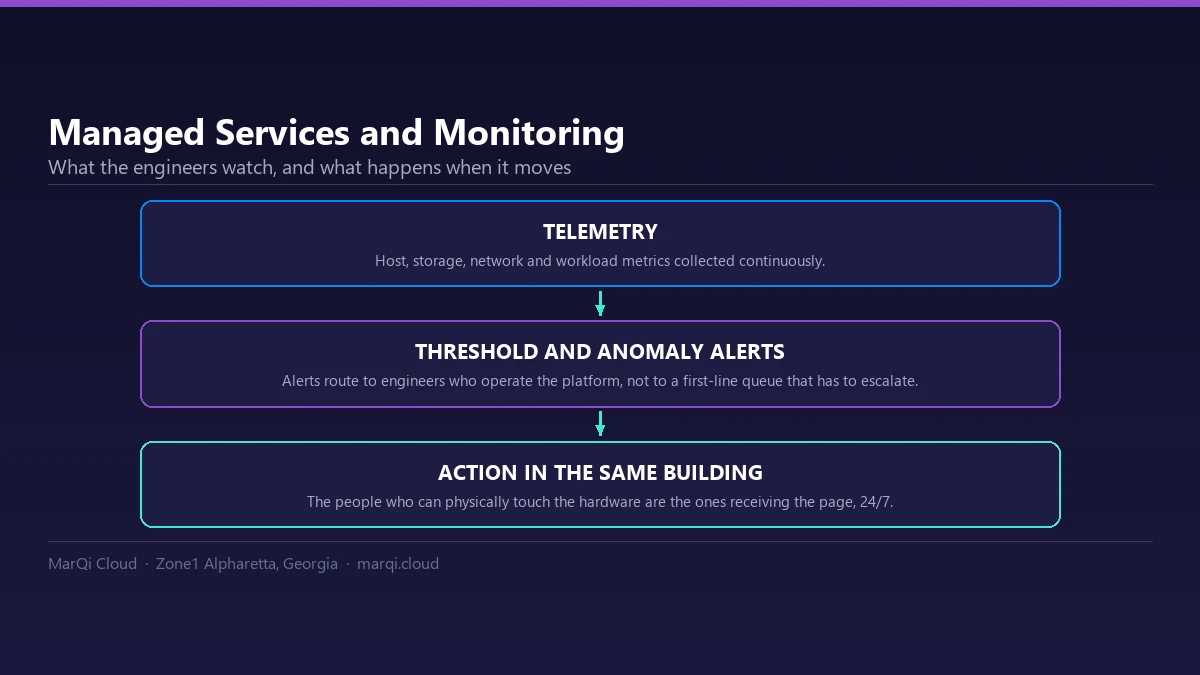
- Monitor Performance: Regularly monitor your cloud environment using MarQi Cloud’s monitoring tools to identify performance bottlenecks.
- Implement Automation: Use automation tools to streamline repetitive tasks, such as scaling resources based on demand.
- Maintain Security: Regularly update your security protocols and ensure compliance with industry standards.
Disaster Recovery and Business Continuity
Implementing a robust disaster recovery strategy is essential for protecting your enterprise workload. MarQi Cloud offers comprehensive disaster recovery solutions that ensure business continuity in the event of an outage or data loss.
1. Understanding RTO and RPO
Recovery Time Objective (RTO) and Recovery Point Objective (RPO) are critical metrics in disaster recovery planning:
- RTO: The maximum acceptable length of time your application can be offline after a disaster.
- RPO: The maximum acceptable amount of data loss measured in time.
2. Implementing a Disaster Recovery Plan
To create an effective disaster recovery plan, consider the following steps:
- Identify critical applications and data that require protection.
- Choose a disaster recovery solution from MarQi Cloud that aligns with your RTO and RPO requirements.
- Regularly test your disaster recovery plan to ensure its effectiveness.
Expert Tips for Optimizing Performance
To ensure your enterprise workload runs efficiently on MarQi Cloud, consider the following optimization tips:
- Utilize Load Balancers: Distribute traffic across multiple servers to enhance performance and reliability.
- Optimize Storage: Choose the right storage solution based on your workload requirements, whether it’s object storage, block storage, or file storage. For a detailed comparison, refer to our article on storage types.
- Regularly Update Software: Keep your applications and operating systems up to date to benefit from the latest features and security patches.
Conclusion
Getting started with MarQi Cloud for your first enterprise workload is a strategic move that can yield significant benefits in terms of performance, security, and scalability. By following the guidelines outlined in this comprehensive guide, you can ensure a smooth transition to the cloud while optimizing your infrastructure for the future.
For personalized assistance, don’t hesitate to reach out to MarQi Cloud’s expert team at info@marqi.cloud or call us at +1 770-369-9321.
FAQs
1. What is MarQi Cloud?
MarQi Cloud is an enterprise cloud provider offering hybrid infrastructure and secure hosting solutions tailored for organizations.
2. How do I migrate my workload to MarQi Cloud?
Start by assessing your current infrastructure, choose a migration strategy, and execute the migration using MarQi Cloud’s tools.
3. What are RTO and RPO in disaster recovery?
RTO is the maximum acceptable downtime, while RPO is the maximum acceptable data loss measured in time.
4. How can I optimize my workload performance on MarQi Cloud?
Utilize load balancers, optimize storage solutions, and keep your software updated to enhance performance.
5. Are there flexible pricing models available?
Yes, MarQi Cloud offers flexible pricing with no lock-in or egress fees, tailored to your enterprise needs.
6. What support does MarQi Cloud provide?
MarQi Cloud offers white-glove managed services and dedicated support to assist you in managing your cloud environment.
7. Can I use MarQi Cloud for compliance-sensitive applications?
Absolutely, MarQi Cloud’s private cloud solutions are designed to meet compliance requirements for industries such as healthcare and finance.
8. How do I contact MarQi Cloud for support?
You can reach out to MarQi Cloud’s support team via email at info@marqi.cloud or by calling +1 770-369-9321.