Setting Up Redis on MarQi Cloud: The Performance Caching Guide
May 20, 2026
Why MarQi Cloud Is the Best Infrastructure Choice for Headless CMS Platforms
May 21, 2026
How MarQi Cloud’s Network Redundancy Keeps Your App Online During Failures
In today’s fast-paced digital landscape, ensuring that your applications remain online and accessible is paramount. Downtime can lead to significant financial losses, damage to your brand reputation, and a diminished user experience. This is where MarQi Cloud’s network redundancy plays a crucial role. In this article, we will explore how MarQi Cloud’s enterprise-grade infrastructure, combined with advanced redundancy measures, keeps your applications running smoothly even in the face of unexpected failures.
Understanding Network Redundancy
Network redundancy refers to the inclusion of extra components in a network to provide backup in case of a failure. This can include additional hardware, pathways, or connections that ensure a continuous flow of data. The main goal of network redundancy is to prevent single points of failure that could disrupt service availability.
The Importance of Network Redundancy
Redundancy is critical for businesses that rely on application uptime. For instance, e-commerce platforms, banking systems, and critical communication tools require constant availability. Network redundancy helps in:
- Minimizing Downtime: Redundant systems automatically take over when primary systems fail, ensuring minimal disruption.
- Enhancing Performance: Redundant paths can balance traffic loads, improving application performance and response times.
- Boosting Reliability: A redundant network design increases the overall reliability of your infrastructure.
MarQi Cloud’s Approach to Network Redundancy
MarQi Cloud takes network redundancy seriously, offering a robust infrastructure that ensures your applications remain online during failures. Here are the key components of our network redundancy strategy:
1. Multi-Path Connectivity
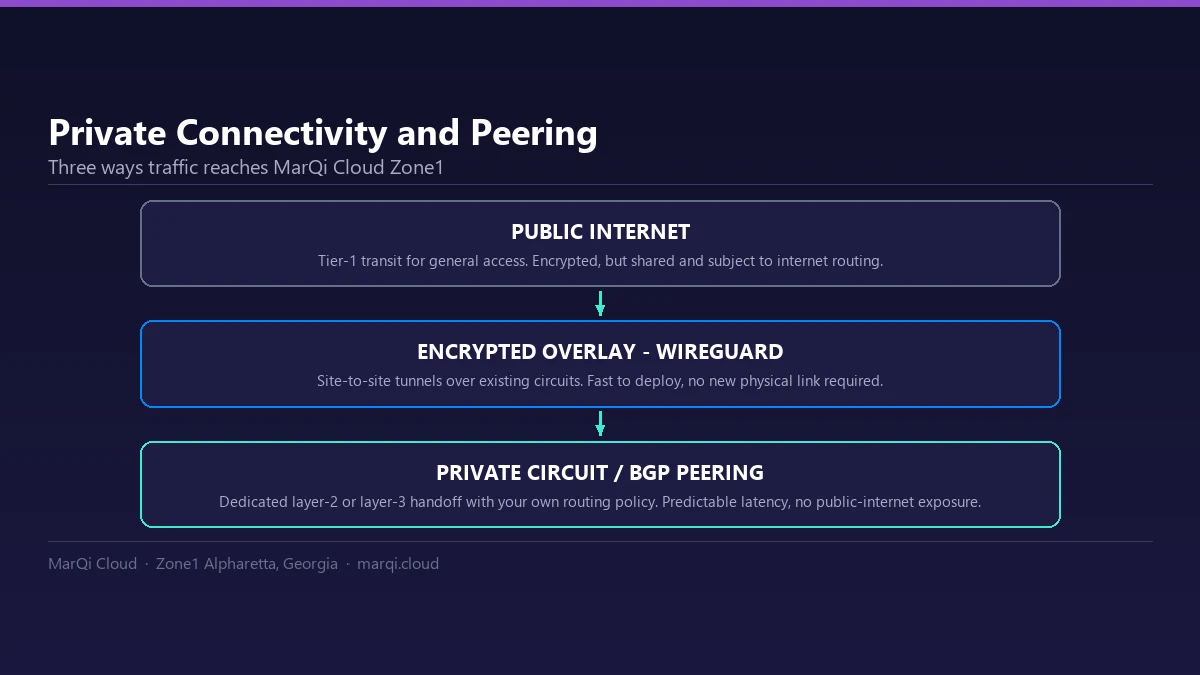
MarQi Cloud employs multi-path connectivity, which involves creating multiple pathways for data transmission. This ensures that if one path fails, traffic can be rerouted through another, maintaining a seamless user experience.
2. Geographic Redundancy
Our cloud infrastructure spans multiple geographic locations. By distributing resources across different data centers, MarQi Cloud provides resilience against regional outages or disasters. If one data center experiences an issue, applications can automatically switch to another center, ensuring continuous availability.
3. Load Balancing
Load balancing is an integral part of our redundancy strategy. By distributing incoming traffic across multiple servers, we prevent any single server from becoming a bottleneck. This not only enhances performance but also adds another layer of redundancy. If one server goes down, others can handle the traffic without any noticeable impact on the end-user.
4. Automatic Failover Systems
MarQi Cloud implements automatic failover systems that detect outages or performance degradation in real time. Our infrastructure is designed to switch to backup systems without any manual intervention, ensuring that your applications remain online even during unexpected failures.
Benefits of MarQi Cloud’s Network Redundancy
Choosing MarQi Cloud for your cloud infrastructure means you benefit from advanced network redundancy strategies. Here are some of the key advantages:
Enhanced Uptime
With our multi-layered redundancy approach, MarQi Cloud guarantees exceptional uptime. Our clients can focus on their core business activities, knowing that their applications are supported by a resilient network.
Improved Performance
Network redundancy not only helps in maintaining uptime but also improves the overall performance of applications. By balancing loads and utilizing multiple pathways, we ensure fast and reliable access to resources.
Cost Efficiency
Investing in a robust cloud infrastructure with redundancy can lead to significant cost savings. Businesses can avoid the costs associated with downtime, such as lost sales and customer dissatisfaction.
Peace of Mind
With MarQi Cloud’s network redundancy, businesses can operate with confidence, knowing that their applications will remain online, secure, and performant.
Real-World Applications of Network Redundancy
To better understand the value of network redundancy, let’s take a look at some real-world applications:
1. E-Commerce Platforms
For e-commerce businesses, even a few minutes of downtime can lead to lost sales. By leveraging MarQi Cloud’s network redundancy, these platforms can ensure that their websites remain accessible during high-traffic events, such as Black Friday sales.
2. Financial Services
In the financial sector, reliability is crucial. Any downtime can impact transactions and lead to significant financial losses. MarQi Cloud’s redundancy measures help financial institutions maintain continuous service, safeguarding transactions and customer trust.
3. Healthcare Applications
Healthcare applications that store sensitive patient data must remain available at all times. MarQi Cloud ensures that these applications are protected against outages, enabling healthcare providers to deliver uninterrupted care.
Implementing Network Redundancy with MarQi Cloud
Implementing network redundancy with MarQi Cloud is a straightforward process. Our team of experts will work with you to assess your specific needs and design a tailored solution that ensures maximum uptime and performance for your applications.
Step 1: Needs Assessment
We begin by understanding your business requirements, including the critical applications you need to keep online and the expected traffic loads.
Step 2: Design and Deployment
Based on the assessment, we design a network redundancy solution that meets your needs. Our team will then deploy the necessary infrastructure, including multi-path connections and automatic failover systems.
Step 3: Ongoing Support and Monitoring
Once your redundant network is in place, MarQi Cloud provides ongoing support and monitoring. Our US-based team ensures any issues are promptly addressed, maintaining the integrity of your applications.
Conclusion
In an era where digital presence is paramount, ensuring your applications remain online during failures is critical. MarQi Cloud’s network redundancy solutions provide the enterprise-grade infrastructure that businesses need to thrive. With multi-path connectivity, geographic redundancy, and automatic failover systems, we keep your applications running smoothly, allowing you to focus on what matters most—growing your business.
FAQ
1. What is network redundancy?
Network redundancy is the inclusion of extra components in a network to provide backup in case of a failure.
2. Why is network redundancy important?
It minimizes downtime, enhances performance, and boosts reliability.
3. How does MarQi Cloud implement network redundancy?
We use multi-path connectivity, geographic redundancy, load balancing, and automatic failover systems.
4. What are the benefits of using MarQi Cloud’s network redundancy?
Enhanced uptime, improved performance, cost efficiency, and peace of mind.
5. Which industries can benefit from network redundancy?
E-commerce, financial services, and healthcare applications are just a few examples.
6. How can I implement network redundancy with MarQi Cloud?
We assess your needs, design a solution, and provide ongoing support and monitoring.
7. What happens if a primary server fails?
Our automatic failover systems ensure that traffic is rerouted to backup servers without any manual intervention.
8. Can network redundancy improve application performance?
Yes, by balancing loads and using multiple pathways, network redundancy can enhance overall application performance.
9. Is MarQi Cloud’s infrastructure based in the US?
Yes, MarQi Cloud offers US-based infrastructure and support for our clients.
10. What pricing models does MarQi Cloud offer?
We provide flexible pricing models to accommodate different business needs and budgets.