Backup Strategy for US Businesses: Implementing the 3-2-1 Rule with Immutable Backups
March 5, 2026
Load Balancing 101: Understanding Layer 4 vs Layer 7 for Production Systems
March 6, 2026
How to Build a High-Availability Stack for US Web Apps
In today’s digital landscape, ensuring that web applications remain accessible, responsive, and functional is critical for businesses. High availability (HA) is a design approach that enables systems to operate continuously without failure for a long period of time. In this article, we will delve into the components and strategies involved in creating a high-availability stack for web applications, particularly for businesses operating in the United States.
Understanding High Availability
High availability refers to systems designed to operate continuously without failure, minimizing downtime. It is crucial for web applications, especially those that support business-critical functions. A high-availability system is characterized by redundancy, failover mechanisms, and continuous monitoring. The goal is to ensure that applications can withstand hardware failures, network issues, or unexpected spikes in traffic.
Key Components of a High-Availability Stack
1. Redundant Infrastructure
One of the foundations of a high-availability stack is redundancy. This involves having multiple instances of critical components, such as servers, databases, and network resources. In the event of a failure, traffic can be rerouted to operational resources without affecting the user experience.
2. Load Balancers
Load balancers distribute incoming traffic across multiple servers, ensuring that no single server bears too much load. This not only improves performance but also adds a layer of redundancy. If one server goes down, the load balancer can redirect traffic to remaining operational servers.
3. Database Replication
Databases are often the backbone of web applications. Implementing database replication ensures that data is copied across multiple database servers. This means that even if one database server fails, the application can continue to function with minimal disruption.
4. Application Clustering
Application clustering involves grouping multiple instances of an application so that they can work together to provide high availability. If one instance fails, other instances in the cluster can take over without impacting service.
5. Backup and Disaster Recovery Solutions
No high-availability stack is complete without a robust backup and disaster recovery strategy. This includes regular backups of data and configurations, as well as a clear plan for restoring services in the event of a major failure.
Steps to Build a High-Availability Stack
Step 1: Assess Your Current Infrastructure
Before building a high-availability stack, it’s essential to assess your existing infrastructure. Identify single points of failure and areas that require redundancy. This assessment will guide your design and implementation strategy.
Step 2: Choose the Right Cloud Provider
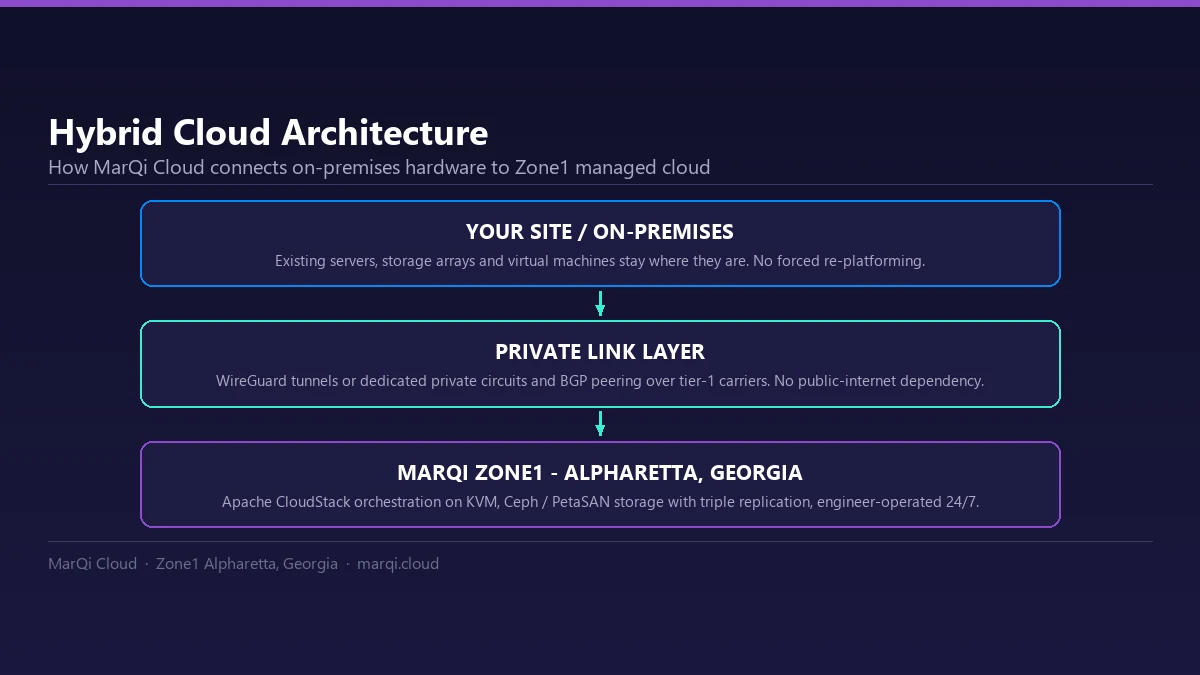
When building a high-availability stack, selecting the right cloud provider is crucial. Look for providers that offer enterprise-grade cloud infrastructure with options for hybrid cloud deployment models. MarQi Cloud, for example, provides private and secure hosting environments with scalable compute and storage resources.
Step 3: Implement Load Balancing
Once your infrastructure is in place, implement load balancing. This can be done using software-based solutions or hardware load balancers, depending on your needs. Ensure that your load balancer is configured to monitor the health of your servers and reroute traffic as necessary.
Step 4: Set Up Redundant Databases
Implement database replication to ensure that your data is available even in the event of a database server failure. Use technologies like master-slave replication or clustering to achieve this goal. Regularly test your failover mechanisms to ensure they function as expected.
Step 5: Create an Application Cluster
Set up application clustering to allow multiple instances of your application to run simultaneously. This can be achieved through containerization or virtual machine technologies. Ensure that your application can share sessions and state information between instances.
Step 6: Develop a Disaster Recovery Plan
Your disaster recovery plan should outline how to restore services in the event of a major failure. This includes data backups, recovery procedures, and communication plans. Regularly test your disaster recovery plan to identify any potential weaknesses.
Best Practices for High Availability
1. Monitor Performance
Implement monitoring solutions to track the performance and health of your high-availability stack. This includes monitoring server loads, database performance, and application response times. Use this data to make informed decisions about scaling and optimizing your infrastructure.
2. Regularly Update and Patch
Keeping your systems updated is vital for maintaining high availability. Regularly apply patches and updates to your servers, applications, and databases to protect against vulnerabilities. Schedule these updates during low-traffic periods to minimize impact.
3. Test Your Failover Mechanisms
Regularly test your failover mechanisms to ensure they work as intended. Simulate failures and monitor how your high-availability stack responds. This will help identify any weaknesses and ensure that your systems can handle unexpected issues.
4. Document Everything
Maintain documentation of your high-availability architecture, including diagrams, configurations, and procedures. This will be invaluable for troubleshooting and onboarding new team members.
Conclusion
Building a high-availability stack for web applications is a complex but essential task for businesses in the digital age. By implementing redundancy, load balancing, and robust disaster recovery plans, companies can ensure their applications remain available and responsive. As you embark on this journey, consider partnering with a reliable provider like MarQi Cloud, which offers enterprise-grade solutions tailored to your needs.
Frequently Asked Questions (FAQ)
1. What is high availability in web applications?
High availability refers to systems that are designed to operate continuously without failure, minimizing downtime and ensuring that web applications remain accessible.
2. Why is redundancy important?
Redundancy is important because it provides backups for critical components, ensuring that if one fails, others can take over, maintaining service continuity.
3. How do load balancers work?
Load balancers distribute incoming traffic across multiple servers to optimize resource use and prevent overload on any single server.
4. What is database replication?
Database replication is the process of copying data from one database server to others, ensuring that data remains available even if one server fails.
5. How can I ensure my application is highly available?
To ensure high availability, implement redundancy, load balancing, and regular monitoring while developing a robust disaster recovery plan.
6. What should my disaster recovery plan include?
Your disaster recovery plan should outline backup procedures, recovery steps, and communication strategies in the event of a failure.
7. How often should I test my high-availability systems?
Regular testing is essential; it is recommended to test failover mechanisms at least quarterly or after significant changes to your infrastructure.
8. Can high availability be achieved in a cloud environment?
Yes, cloud providers often offer solutions that facilitate high availability through redundancy, load balancing, and scalable resources.
9. What challenges may arise when implementing high availability?
Challenges may include increased complexity, higher costs, and the need for ongoing monitoring and maintenance.
10. How can MarQi Cloud assist with high-availability implementations?
MarQi Cloud offers enterprise-grade cloud infrastructure and support, which can be tailored to meet your high-availability needs, including hybrid deployment models and scalable resources.