Liquid Cooling vs Air Cooling in GPU Data Centers: Which is Best for Your Infrastructure?
March 17, 2026
Secure Hybrid Cloud Architecture in Georgia: Unlocking Business Potential with MarQi Cloud
March 18, 2026
Low Latency Hosting for AI APIs in Atlanta: Optimizing Performance for Next-Gen Applications
In today’s fast-paced digital landscape, businesses are increasingly relying on artificial intelligence (AI) to enhance their operations, improve customer experiences, and gain competitive advantages. As AI applications become more sophisticated, the need for low latency hosting solutions has emerged as a crucial factor in their success. This article will explore the significance of low latency hosting for AI APIs in Atlanta, examining its benefits, challenges, and the best practices for implementation.
Understanding Low Latency Hosting
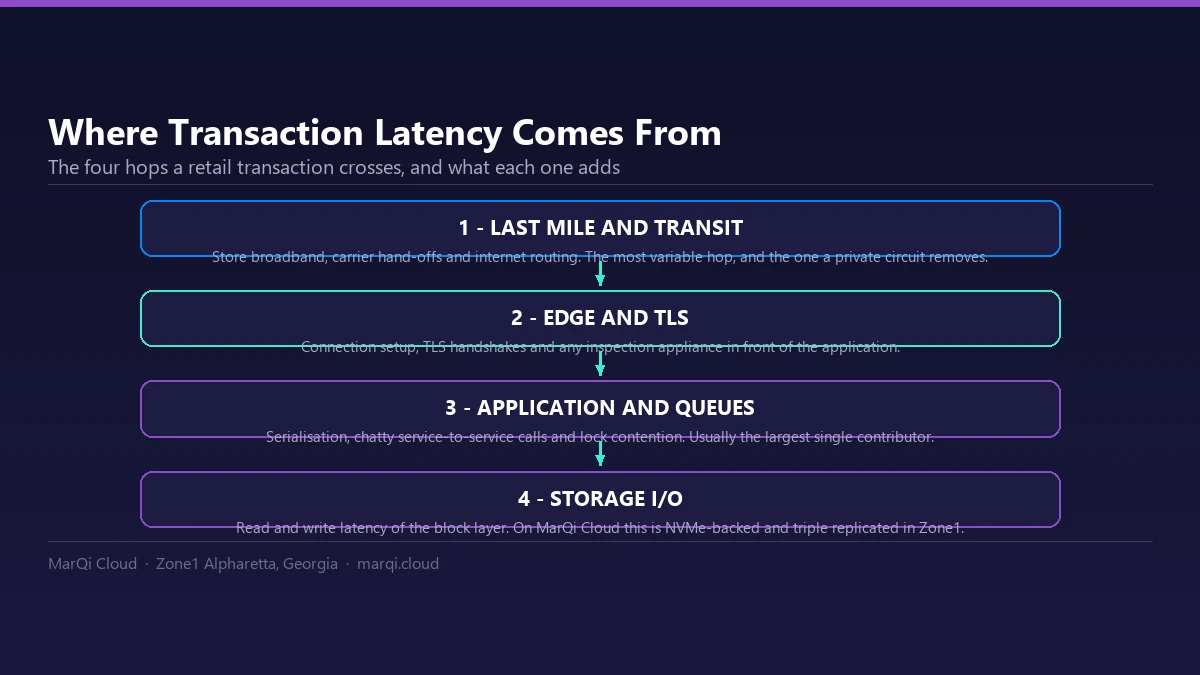
Low latency hosting refers to server environments that provide minimal delay in data transmission between the server and end-users. This is particularly important for AI applications that require real-time data processing and analysis. Low latency is essential for AI APIs, as it directly impacts response times, user experience, and overall performance. Where the path itself is the variable rather than the code, private networking and VPN is the layer that decides it.
The Importance of Low Latency in AI Applications
AI applications, such as chatbots, recommendation systems, and predictive analytics, depend on swift data processing to deliver accurate and timely results. Low latency hosting ensures that these applications can quickly access and process data, resulting in seamless user experiences.
Key Benefits of Low Latency Hosting for AI APIs
- Enhanced User Experience: Low latency hosting reduces the delay between user requests and system responses, leading to faster interactions and improved satisfaction.
- Real-Time Data Processing: AI applications often require real-time data analysis to make informed decisions. Low latency ensures that data is processed promptly, facilitating quick insights.
- Increased Efficiency: By minimizing delays, businesses can optimize their operations, allowing AI algorithms to function at peak efficiency.
- Scalability: Low latency hosting solutions can accommodate growing demands as AI applications scale, ensuring consistent performance even under high traffic.
Why Atlanta is Ideal for Low Latency Hosting
Atlanta has emerged as a significant hub for technology and innovation, making it an attractive location for low latency hosting solutions. Several factors contribute to this trend.
Robust Infrastructure
Atlanta boasts a robust and growing tech infrastructure, including multiple data centers equipped with the latest hardware and technology. This infrastructure supports low latency connectivity and high-speed internet access, making it ideal for hosting AI APIs.
Strategic Location
Located in the southeastern United States, Atlanta offers a strategic location for businesses targeting both domestic and international markets. Its geographical position allows for optimal routing of data, reducing latency when accessing AI APIs from various locations.
Access to Talent
Atlanta is home to a thriving tech community, with numerous universities and educational institutions producing a skilled workforce. This talent pool is essential for developing and maintaining advanced AI technologies, further enhancing the region’s appeal for low latency hosting.
Challenges of Low Latency Hosting
While low latency hosting offers numerous advantages, it also comes with its challenges.
Network Congestion
Network congestion can lead to increased latency, negatively impacting AI API performance. To mitigate this, businesses must monitor and manage their network traffic effectively.
Infrastructure Costs
Investing in enterprise-grade infrastructure can be costly. However, the benefits of low latency hosting often outweigh the initial expenses, particularly for businesses that rely heavily on AI technologies.
Best Practices for Low Latency Hosting in Atlanta
To maximize the benefits of low latency hosting for AI APIs, businesses should consider the following best practices:
1. Choose the Right Hosting Provider
Select a provider that specializes in low latency solutions, such as MarQi Cloud. Look for features like US-based infrastructure, flexible pricing models, and scalable resources.
2. Optimize Network Configuration
Optimize your network configuration by reducing the number of hops between servers and end-users. Use content delivery networks (CDNs) to cache data closer to users and minimize latency.
3. Monitor Performance
Regularly monitor the performance of your AI APIs to identify latency issues. Utilize monitoring tools to track response times and make necessary adjustments to maintain optimal performance.
4. Implement Caching Strategies
Caching frequently accessed data can significantly reduce latency. By storing data closer to the end-user, businesses can minimize the time it takes to retrieve information.
5. Leverage Edge Computing
Edge computing allows data processing to occur closer to the source of data generation, reducing latency. By implementing edge computing solutions, businesses can enhance the performance of their AI applications.
Conclusion
Low latency hosting is a critical component for the success of AI APIs in Atlanta. With its robust infrastructure, strategic location, and access to top talent, Atlanta is well-positioned to support businesses looking to leverage AI technologies. By adopting best practices for low latency hosting, companies can enhance their AI applications’ performance, deliver exceptional user experiences, and ultimately gain a competitive edge in the marketplace.
FAQs
1. What is low latency hosting?
Low latency hosting refers to server environments that provide minimal delay in data transmission, which is crucial for applications requiring real-time data processing.
2. Why is low latency important for AI APIs?
Low latency is essential for AI APIs as it directly impacts response times, user experience, and the overall performance of AI applications.
3. What are the benefits of low latency hosting?
The benefits include enhanced user experience, real-time data processing, increased efficiency, and scalability.
4. Why is Atlanta a good location for low latency hosting?
Atlanta offers robust infrastructure, a strategic location, and access to a skilled workforce, making it ideal for low latency hosting solutions.
5. What challenges are associated with low latency hosting?
Challenges include network congestion, infrastructure costs, and the need for effective monitoring and management.
6. How can businesses optimize their network configuration for low latency?
Businesses can reduce the number of hops between servers and users, use CDNs, and implement caching strategies to optimize network configuration.
7. What is edge computing?
Edge computing refers to processing data closer to its source to reduce latency and enhance application performance.
8. How can MarQi Cloud assist with low latency hosting?
MarQi Cloud provides enterprise-grade cloud infrastructure, hybrid deployment models, and scalable resources designed to meet the needs of businesses requiring low latency hosting.
9. Can low latency hosting improve AI application performance?
Yes, low latency hosting can significantly enhance the performance of AI applications by reducing response times and facilitating quick data access.
10. What should businesses look for in a low latency hosting provider?
Businesses should seek providers with US-based infrastructure, flexible pricing models, and a focus on performance-driven design to ensure optimal low latency hosting solutions.