How to Choose the Right Cloud-Native App Development Partner
December 11, 2025
Open Source Cloud Computing for Strong Enterprise Infrastructure
December 18, 2025

Private Cloud Connectivity Solutions & Cloud Network Optimization
Introduction
Reliable and secure cloud connectivity is important for businesses that rely on digital systems every day. As data needs grow, more companies are choosing private cloud connectivity solutions to gain better control, security, and performance. With proper cloud network optimization, businesses can enjoy faster access, improved protection, and scalable cloud networks that support long-term growth.
Understanding Private Cloud Connectivity Solutions
Private cloud connectivity solutions are built to provide businesses with a secure and dedicated cloud network that is not shared with other users. These solutions allow organizations to maintain full control over their data, systems, and performance. By using private connections such as leased lines, MPLS, or Virtual Private Clouds (VPCs), companies can create isolated environments that support sensitive workloads and strict compliance needs.
Unlike public cloud networks that rely on shared infrastructure, private cloud connectivity solutions offer exclusive access to resources. This approach helps businesses avoid performance fluctuations and security risks. For industries like healthcare, finance, and government, private cloud connectivity solutions make it easier to protect data, meet regulatory standards, and maintain reliable operations. With optimized network design, private cloud connectivity solutions also ensure fast data transfer and low latency for high-demand applications.
Key Benefits of Private Cloud Connectivity
- Exclusive Infrastructure: Dedicated servers, storage, and networking for consistent performance
- Improved Security: Greater control over data access, encryption, and compliance requirements
- Custom Setup: Ability to tailor hardware, software, and network configurations
- High Performance: Stable bandwidth and low latency for AI, analytics, and mission-critical systems
Importance of Cloud Network Optimization
Cloud network optimization enables businesses to achieve optimal performance from their cloud systems by utilizing resources more efficiently. It focuses on improving the collaboration between bandwidth, servers, and storage, enabling applications to run faster, stay secure, and remain reliable. By adjusting resources based on real-time needs, cloud network optimization reduces waste and keeps costs under control.
A well-optimized cloud network means faster data transfer, fewer interruptions, and a better overall user experience. Technologies like load balancing, content delivery networks (CDNs), automatic scaling, and ongoing monitoring help prevent slowdowns and downtime. Cloud network optimization ensures systems stay responsive, even during high traffic or peak usage times.
How Optimization Improves Cloud Performance
- Better Application Speed: Faster response times and smoother performance
- Reduced Latency: Data moves efficiently with minimal delays
- Smart Resource Usage: Avoids over-provisioning and unnecessary costs
- Easy Scalability: Automatically adjusts resources during traffic spikes
- Improved Security: Continuous monitoring and controlled access
- Reliable Operations: Consistent performance for critical business systems
Role of Direct Peering Services in Private Cloud Connectivity
Private cloud connectivity provides organizations with secure, dedicated network links to access their exclusive cloud resources. Unlike public cloud access, it ensures high control, strong security, and reliable performance. These connections often link on-premise systems with private cloud environments, making them ideal for sensitive workloads in industries like finance, healthcare, and government.
Direct peering services enhance private cloud connectivity by allowing direct connections to cloud providers or other networks. This bypasses the public internet, improving speed, stability, and security for critical applications.
Key Features of Private Cloud Connectivity
- Dedicated Access: Infrastructure such as servers, storage, and network is reserved for one organization only
- Enhanced Security: Uses VPNs, private fiber lines, and firewalls to protect sensitive data
- Onsite & Remote Access: Lets users connect safely from the office or from secure remote locations.
- Flexible Management: Routers, switches, and Software-Defined Networking (SDN) help efficiently manage internal and external traffic
- Hybrid Integration: Can connect to public cloud services, creating a unified hybrid environment.
What Are Direct Peering Services?
Direct peering services allow two separate networks, such as an Internet Service Provider (ISP) and a cloud provider, to connect directly with each other. Instead of sending data through the public internet, traffic moves over a private connection, making communication faster, safer, and more reliable. Major platforms like Google, Microsoft, and Amazon Web Services (AWS) use this approach to improve network performance.
How Direct Peering Works
- Physical Connection:
Networks located in the same data center connect using a private fiber link, often called a Private Network Interconnection (PNI). - Virtual Connection:
Cloud environments commonly use virtual cross-connects through services like Megaport, with routing managed using BGP. - Direct Data Exchange:
Data travels directly between networks, avoiding busy public internet routes.
Key Benefits
- Lower Latency:
Fewer network hops help data reach its destination faster. - Improved Security:
Private connections reduce exposure to public internet risks. - Consistent Performance:
Dedicated bandwidth ensures steady and reliable speeds. - Cost Efficiency:
Reduced reliance on paid internet transit helps lower costs.
Advantages of Direct Peering Services
- Faster and more reliable data transfer
- Better control over network security
- Predictable and stable performance
Overall, direct peering services provide a simple and effective way for businesses to achieve faster, safer, and more dependable network connectivity.
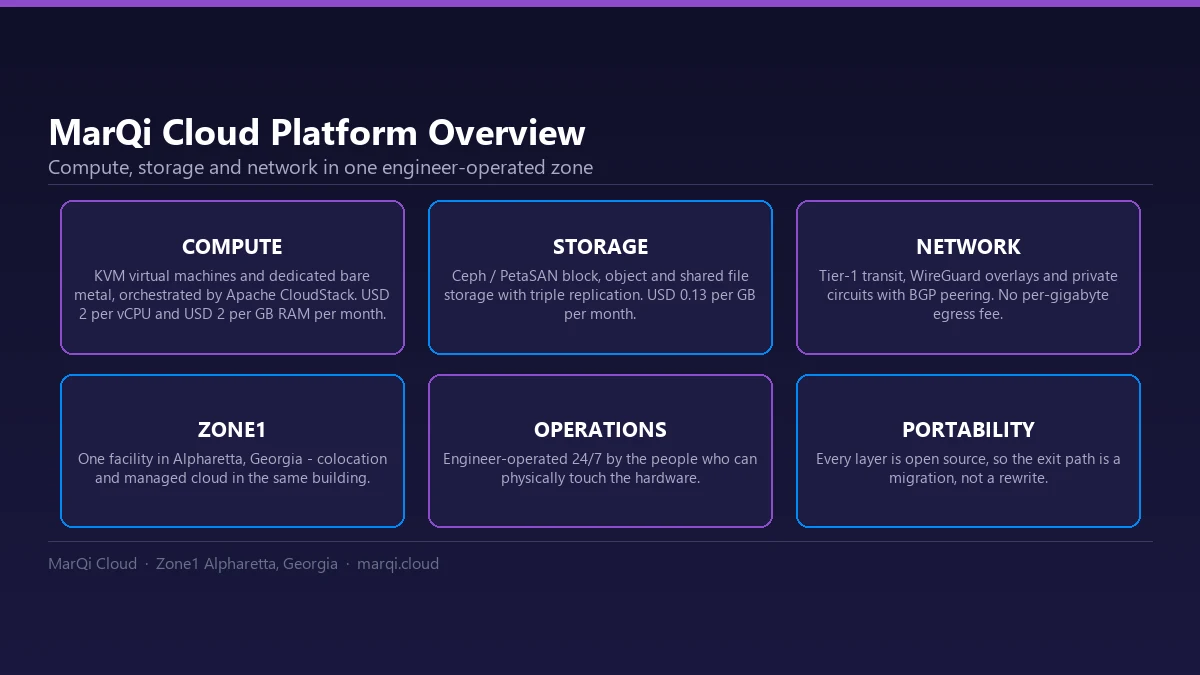
- Independent Data Center: MarQi Cloud is an independent data center that gives businesses more control and flexibility over their cloud setup.
- Reliable Storage System: It uses its own storage cluster, built to deliver consistent performance and dependable data access.
- Secure, Redundant Network: A redundant network design ensures stable, secure, and uninterrupted connectivity at all times.
- Private Cloud Connectivity: MarQi Cloud supports private cloud connectivity, helping businesses achieve smoother data flow and better network performance.
Conclusion
Private cloud connectivity solutions are very important for businesses that want secure, reliable, and high-performing cloud environments. When combined with cloud network optimization, organizations can improve data flow, reduce latency, and ensure smoother application performance. Adding direct peering services further strengthens connectivity by enabling faster, more secure communication between networks without relying on the public internet. Together, these technologies create a stable, efficient, and future-ready cloud setup that supports performance, security, and long-term growth.