How Cloud-Native Apps Transform Modern Businesses
November 21, 2025
Building Growth-Ready Systems with Scalable Cloud Tech
December 7, 2025

Why Open Source Is the Future of Hybrid Cloud
Introduction – The Shift Toward Open Source Hybrid Cloud
Technology is moving faster than ever, and businesses need cloud systems that can grow and adapt with it. As digital transformation continues, companies are seeking solutions that offer both flexibility and scalability to keep up with evolving demands.
More organizations now want modern cloud environments that support innovation and give them the freedom to build on their own terms. This is why open source technology is becoming a key part of today’s cloud strategies. It’s helping shape a new generation of hybrid clouds that blend the best of public and private systems.
Because of this, many companies are putting their believe in open source hybrid cloud providers. These providers give businesses the control, transparency, and freedom they need ,without being tied down to one vendor or platform. It’s a smarter, more open way to manage the cloud, and it’s quickly becoming the future of enterprise operations.
Understanding the Role of an Open-Source Hybrid Cloud Provider
An open-source hybrid cloud provider is a company that builds and manages cloud systems using open-source technologies. This model connects both public and private cloud environments, giving businesses the freedom to run their applications smoothly across different platforms, whether on-site, in private data centers, or through public cloud networks. It’s designed for organizations that value scalability, flexibility, and independence.
What Makes an Open-Source Hybrid Cloud Provider Different
An open-source hybrid cloud provider offers more than just cloud storage or hosting, it delivers a powerful, flexible infrastructure supported by community-driven innovation. Here’s what sets them apart:
- Based on open-source technologies:
Providers use tools like Linux, Kubernetes, and OpenStack to build reliable and transparent hybrid cloud systems. These technologies are not owned by a single vendor, which gives users full control and flexibility. - Standardized and consistent platform:
They offer a unified technology stack across public and private clouds, making it easier to develop, deploy, and manage applications in different environments. - Freedom from vendor lock-in:
Because the system is open source, businesses aren’t tied to a single provider. They can migrate workloads, change configurations, or scale resources without restrictions. - Scalability and portability:
The use of container-based technologies allows applications to be easily moved between clouds — ensuring performance, stability, and smooth operations anywhere. - Transparency and collaboration:
Open-source software is built by global communities, ensuring ongoing innovation, strong security practices, and transparent updates that benefit all users.
Why Businesses Choose Open-Source Hybrid Cloud Providers
Choosing an open-source hybrid cloud provider helps companies overcome the challenges of traditional, proprietary cloud systems. Instead of being limited by closed software or costly licensing models, organizations gain:
- Better control over their infrastructure
- Lower operational costs through flexible scaling
- Improved security and reliability thanks to peer-reviewed open-source code
- Faster innovation with access to open development communities
MarQi Cloud – A Leading Example
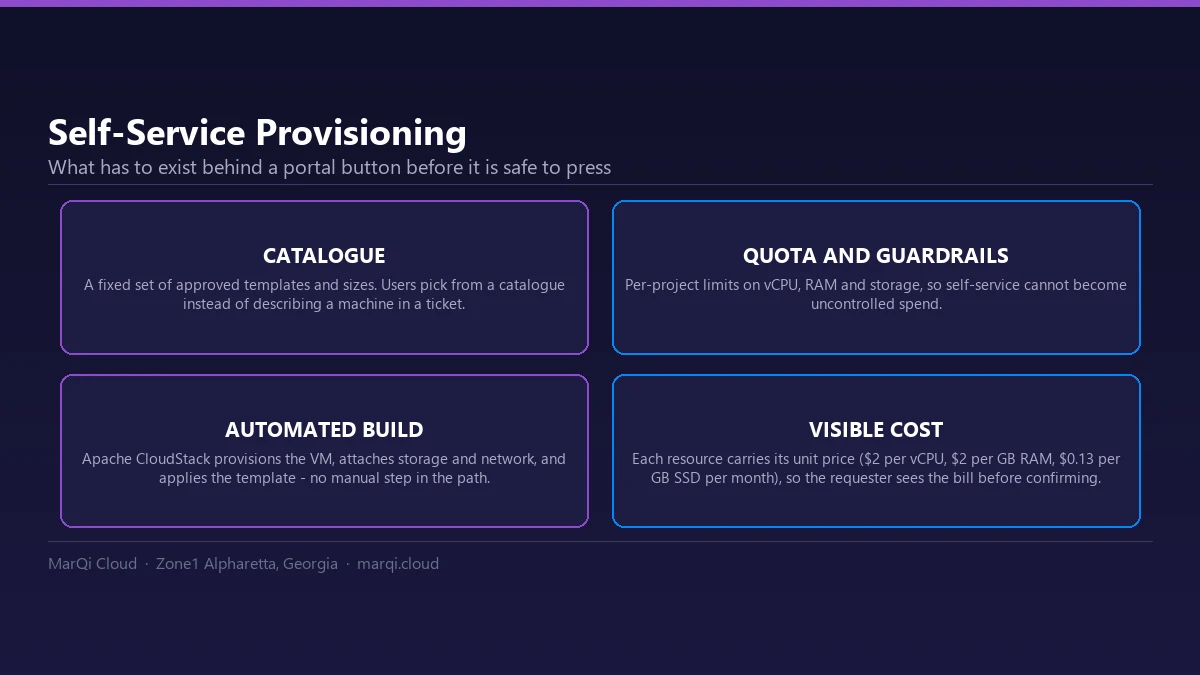
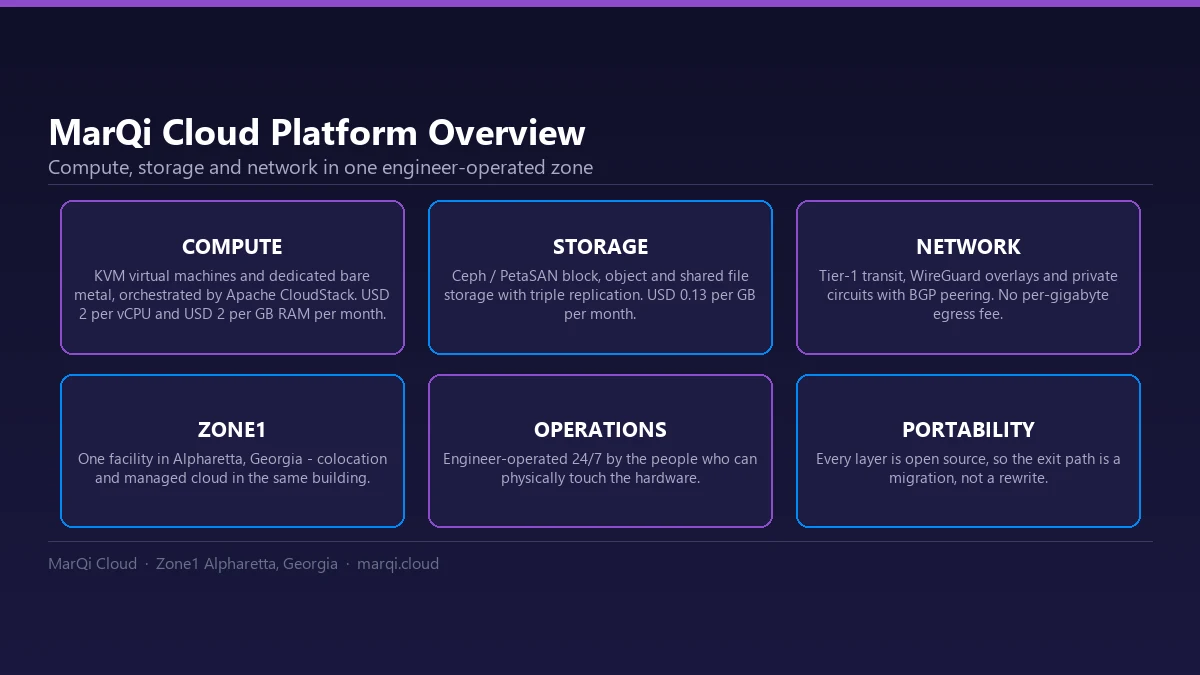
MarQi Cloud is a perfect example of an open-source hybrid cloud provider leading this shift. It operates its own independent data center, complete with a dedicated storage cluster and redundant network fabric to ensure reliability, security, and high performance.
By leveraging open-source technologies, MarQi Cloud offers businesses:
- Enterprise-grade cloud infrastructure built for scalability and performance
- Secure and transparent operations with no hidden limitations
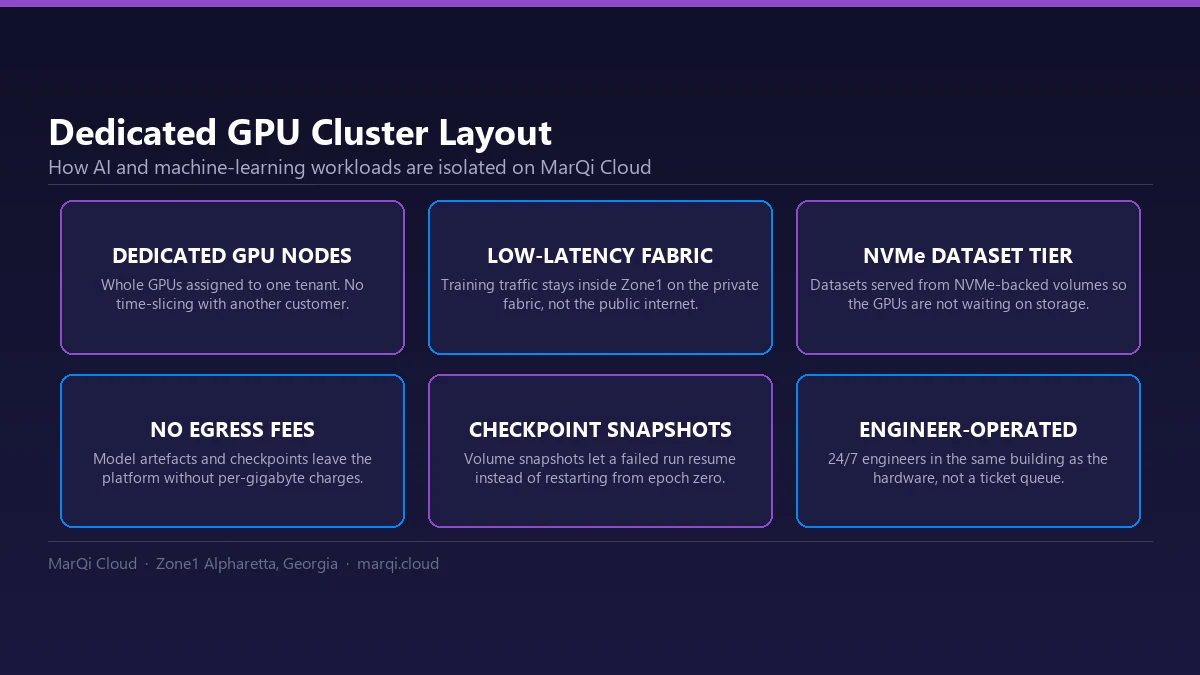
- Flexible deployment options for AI, automation, and enterprise workloads
- Freedom from vendor lock-in, allowing clients to grow on their own terms.
As an open-source hybrid cloud provider, MarQi Cloud focuses on giving businesses complete control, scalability, and independence, enabling them to innovate faster and operate smarter. This approach reflects the growing trend of openness and collaboration that defines the future of hybrid cloud computing.
Understanding Enterprise-Grade Cloud Infrastructure
Enterprise-grade cloud infrastructure is a strong and reliable framework designed to meet the high demands of large businesses. It combines the flexibility of cloud computing with the control and security needed for mission-critical applications. This type of infrastructure ensures that organizations can run their systems efficiently, scale easily, and maintain high performance without compromising safety.
- Strong Security
- Includes advanced measures like encryption, identity and access management, and multi-layered protection.
- Providers like MarQi Cloud maintain certifications to guarantee security and compliance.
- Flexible and Scalable
- Businesses can easily scale computing, storage, and network resources up or down according to demand.
- Transforms fixed, costly infrastructure into a dynamic and adaptable system.
- MarQi Cloud ensures that growing enterprises or fluctuating workloads are handled smoothly.
- High Performance
- Designed for speed, efficiency, and reliability.
- Features like disaster recovery, load balancing, and optimized resource management help keep systems running without interruption.
- Seamless Integration
- Connects smoothly with existing systems like CRM, ERP, and other enterprise platforms.
- Supports end-to-end business operations without disrupting workflows.
- MarQi Cloud provides integration-friendly infrastructure for easy adoption.
- Reliable Management
- Includes centralized dashboards to monitor and control computing, storage, and network resources.
- Redundant systems and disaster recovery options ensure minimal downtime.
- MarQi Cloud’s independent data center, dedicated storage clusters, and redundant network fabric guarantee consistent reliability.
How MarQi Cloud Delivers Enterprise-Grade Cloud Infrastructure
MarQi Cloud is a leading provider of enterprise-grade cloud infrastructure, offering solutions that combine flexibility, security, and high performance:
- Scalable Cloud Services: Adjust resources anytime to meet business demands.
- High Security and Compliance: Protects sensitive data and meets industry standards.
- Reliable Operations: Redundant systems and disaster recovery ensure continuous uptime.
- Easy Integration: Connects with enterprise software and workflows seamlessly.
- Open-Source Flexibility: Uses Kubernetes, OpenStack, and other open-source technologies to give businesses freedom and control over their cloud environment.
With its combination of open-source innovation and independent infrastructure, MarQi Cloud provides businesses with a flexible, secure, and future-ready cloud environment, a true example of enterprise-grade cloud infrastructure in action.
Scalable Cloud Services – Flexible, Reliable, and Cost-Effective
Scalable cloud services are IT resources that adjust automatically to meet the changing demands of a business. They allow companies to increase or decrease computing power, storage, and network resources as needed. This ensures that systems remain fast and reliable during busy periods while minimizing costs during slower times.
Key Benefits of Scalable Cloud Services
- Handles Changing Demand
- Automatically scales up during high-traffic events, like product launches or sales, to maintain smooth performance.
- Scales down during off-peak periods to reduce costs.
- Ensures uninterrupted operations and a seamless user experience.
- Flexibility and Adaptability
- Supports vertical scaling (upgrading a single server) and horizontal scaling (adding more servers).
- Elasticity allows rapid, short-term adjustments for sudden spikes in demand.
- Provides a dynamic infrastructure that adapts as the business grows.
- Improved Performance and Reliability
- Distributes workloads across multiple resources to prevent bottlenecks or system overload.
- Enhances resilience and uptime for critical applications and data-heavy workloads.
- Maintains consistent performance for enterprise-level operations and AI-based applications.
- Cost Efficiency
- Optimizes resource usage so businesses pay only for what they need.
- Reduces unnecessary operational expenses without compromising performance.
- Offers a flexible and budget-friendly cloud environment for growing enterprises.
How MarQi Cloud Provides Scalable Cloud Services
MarQi Cloud, a leading open-source hybrid cloud provider, leverages advanced open-source frameworks like Kubernetes and OpenStack to deliver highly flexible scalable cloud services. Their approach includes:
- Automatic Resource Scaling: Adjusts computing power, storage, and network capacity in real time based on demand.
- Enterprise-Grade Reliability: Built on an independent data center with a dedicated storage cluster and redundant network fabric, ensuring high uptime and performance.
- Integration-Friendly: Supports enterprise applications, AI workloads, and critical business systems without disruption.
- Flexible Pricing: Uses a pay-as-you-go model, so businesses only pay for the resources they use, making costs predictable and efficient.
- Optimized Efficiency: Ensures resources are utilized effectively, balancing performance with cost savings.
By offering scalable cloud services, MarQi Cloud enables businesses to stay agile, handle growth, and maintain a reliable and cost-effective cloud environment. Their combination of flexibility, performance, and transparent pricing makes them a trusted open-source hybrid cloud provider for enterprises of all sizes.
Cloud Without Vendor Lock-In – Freedom and Flexibility for Your Business
A cloud without vendor lock-in gives your business the freedom to use cloud services without being tied to a single provider. This means you can switch providers, use multiple cloud services, or adopt new technologies without disruption or high costs. By using open standards and cloud-native tools like Docker and Kubernetes, you avoid proprietary systems that can limit flexibility and choice.
MarQi Cloud provides a cloud without vendor lock-in, helping businesses stay flexible, scalable, and in control of their cloud environment.
Key Benefits of Cloud Without Vendor Lock-In
- Easy Portability
- Move your applications and data between different cloud providers without extra effort or cost.
- Reduces downtime and ensures business continuity.
- Standardized and Open
- Uses industry standards and open-source technologies.
- Works across multiple cloud providers, making multi-cloud setups simple.
- Flexible and Adaptable
- Easily switch providers or combine services from different vendors.
- Quickly adapt to new technologies and changing business needs.
- No Dependency on Proprietary Services
- Avoids vendor-specific tools that only work on one platform.
- Encourages open-source and cloud-agnostic solutions for long-term freedom.
Why Businesses Choose This Approach
- Traditional cloud systems often lock you into one provider, limiting flexibility and increasing costs.
- Open-source hybrid clouds, like MarQi Cloud, solve this by providing a cloud without vendor lock-in, transparency, and flexibility.
- Industries like e-commerce, healthcare, finance, and enterprise IT benefit the most, gaining control, cost savings, and the ability to innovate freely.
By offering a cloud without vendor lock-in, MarQi Cloud lets businesses grow, scale, and innovate confidently without being tied down to a single provider.
Why Choose MarQi Cloud – Excellence in Open Source Hybrid Cloud
MarQi Cloud is a leading open-source hybrid cloud provider that gives businesses a secure, flexible, and future-ready cloud environment. It combines advanced technology with freedom and transparency, allowing companies to grow and innovate without limits.
What Makes MarQi Cloud Different
- Independent Data Center:
Operates its own data center with a dedicated storage cluster and redundant network fabric, ensuring reliable performance and minimal downtime. - Enterprise-Grade Infrastructure:
Offers high-performance cloud resources designed for demanding workloads like AI, automation, and large-scale enterprise systems. - Scalable Cloud Services:
Resources can be easily scaled up or down based on business needs, keeping performance high during busy periods and reducing costs when demand is low. - Cloud Without Vendor Lock-In:
Built on open-source technologies, MarQi Cloud provides freedom to switch providers or use multiple cloud services without disruption.
Flexibility and Control:
Businesses can fully customize and manage their cloud environment, maintaining control over resources, applications, and workloads
Conclusion – The Future of Open-Source Hybrid Cloud
The future of cloud technology is moving toward openness, flexibility, and freedom. Businesses today want cloud systems that they can fully control and easily scale as they grow. This is where open-source hybrid cloud providers play a big role.
With open-source technology, companies get more control, better security, and freedom from vendor lock-in. They can choose what works best for them and move between different platforms without any limits.
MarQi Cloud is leading this change by offering enterprise-grade cloud infrastructure that is secure, scalable, and transparent. Its scalable cloud services and open-source hybrid setup help businesses .