The Complete Guide to Private Cloud Backup and Snapshot Management
July 31, 2026
Why Private Cloud TCO Analysis Favors Dedicated Over Shared Public Cloud
July 31, 2026
What is self-service provisioning in a private cloud?
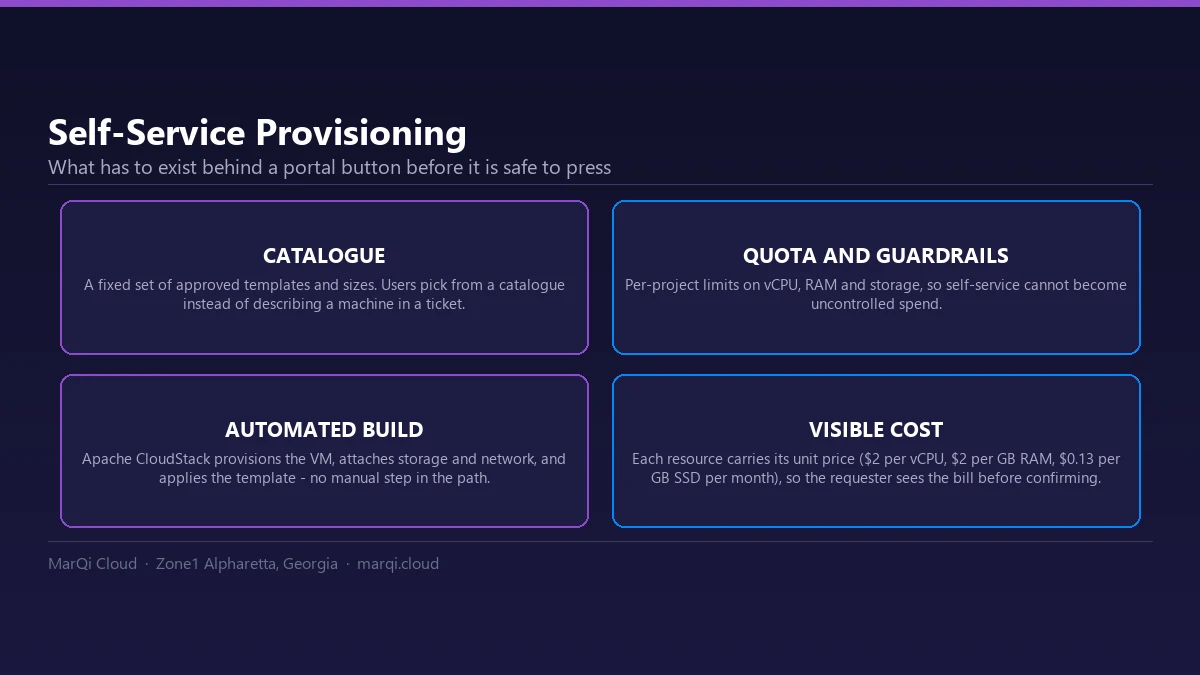
Self-service provisioning lets a user create approved infrastructure from a catalogue without raising a ticket. Four things have to sit behind that button: a fixed template catalogue, per-project quotas, an automated build path, and visible unit cost — otherwise self-service becomes uncontrolled spend rather than speed.
Ultimate Guide: Implementing Self-Service Provisioning in Private Cloud
In the ever-evolving landscape of cloud computing, organizations are increasingly seeking ways to enhance operational efficiency and agility. Self-service provisioning within a private cloud environment stands out as a strategic approach that empowers IT departments and end-users alike. This comprehensive guide will explore how to implement self-service provisioning effectively, leveraging the strengths of private cloud infrastructure while ensuring security, compliance, and scalability.
What is Self-Service Provisioning?
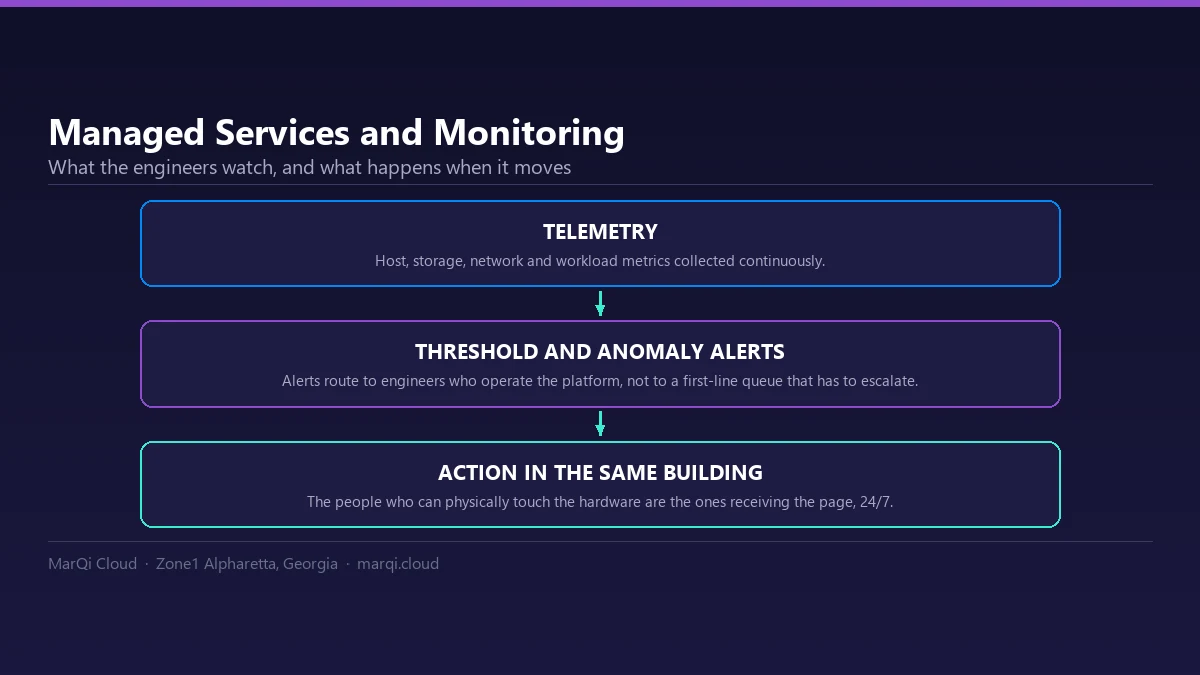
Self-service provisioning refers to the process that allows users to independently request and manage their IT resources without direct intervention from IT staff. In the context of a private cloud, this means that users can spin up virtual machines, allocate storage, and deploy applications on demand, streamlining workflows and reducing wait times. By placing the power of provisioning into the hands of end-users, organizations can foster innovation and responsiveness while maintaining control over the infrastructure. Where a team would rather not run that layer at all, managed cloud services put the same controls under engineer operation.
Benefits of Self-Service Provisioning
Implementing self-service provisioning within a private cloud offers numerous benefits, including:
- Enhanced Agility: Users can quickly provision resources as needed, enabling faster development cycles and reducing time to market.
- Cost Efficiency: By allowing departments to manage their own resources, organizations can optimize resource utilization and reduce waste.
- Improved User Satisfaction: Empowering users to control their own environments leads to greater satisfaction and productivity.
- Centralized Management: IT retains oversight and governance capabilities while users operate within defined policies.
- Scalability: Self-service provisioning facilitates rapid scaling of resources in response to changing business needs.
Key Components of Self-Service Provisioning
To successfully implement self-service provisioning, several key components must be in place:
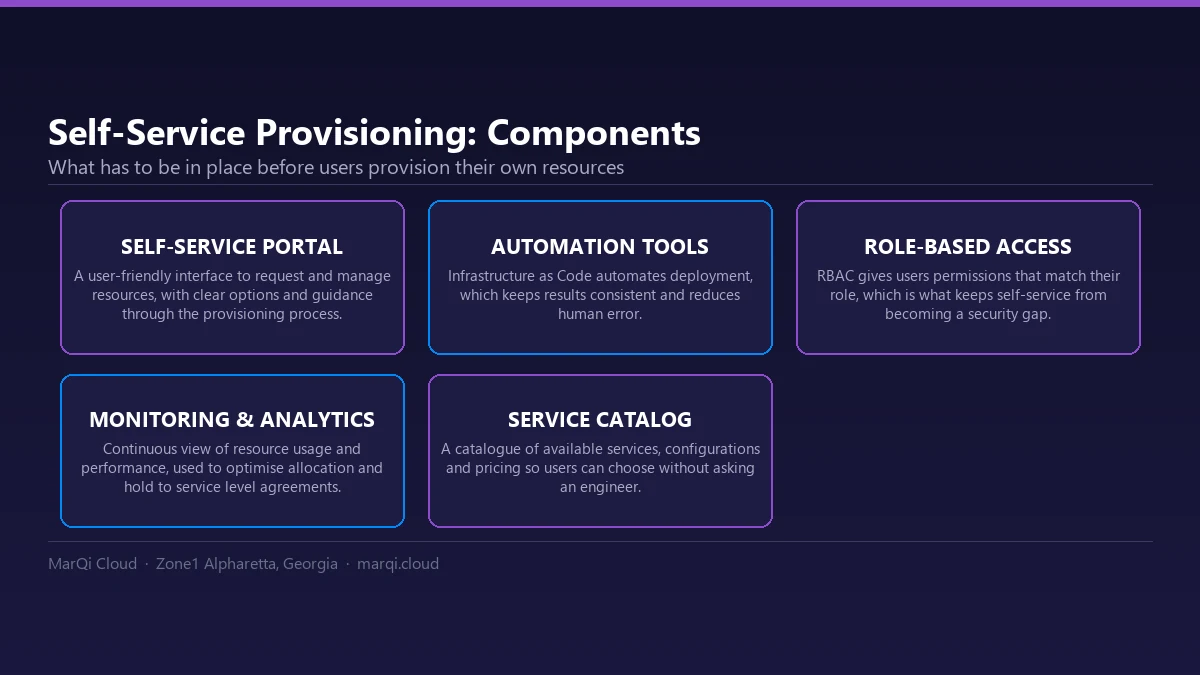
- Intuitive User Interface: A user-friendly portal that allows users to request and manage resources effortlessly is essential. This interface should provide clear options and guidance for users to navigate the provisioning process.
- Automation Tools: Automation is crucial for streamlining resource provisioning. Tools such as Infrastructure as Code (IaC) can help automate the deployment of resources, ensuring consistency and reducing human error.
- Role-Based Access Control (RBAC): Implementing RBAC ensures that users have appropriate permissions based on their roles, maintaining security and compliance within the private cloud environment.
- Monitoring and Analytics: Continuous monitoring of resource usage and performance is vital for optimizing resource allocation and ensuring compliance with service level agreements (SLAs).
- Self-Service Catalog: A comprehensive catalog that outlines available services, configurations, and pricing enables users to make informed decisions when provisioning resources.
Steps to Implement Self-Service Provisioning
| Component | What it does | What goes wrong without it |
|---|---|---|
| Template catalogue | A fixed set of approved builds users pick from | Every request becomes bespoke and the ticket queue returns |
| Quotas and guardrails | Per-project limits on vCPU, RAM and storage | Resource sprawl — self-service becomes uncontrolled spend |
| Automated build path | Provisioning runs with no manual step in it | The speed the portal promised is lost again |
| Access control | Who may request what, and where approval is needed | Provisioning turns into an unguarded door |
| Visible unit cost | The price is shown before the resource is created | Cost surprises arrive after the fact instead of before |
Implementing self-service provisioning requires a structured approach. Here’s a step-by-step guide:
- Assess Current Infrastructure: Evaluate your current private cloud infrastructure to identify capabilities and gaps that need to be addressed to support self-service provisioning.
- Define User Roles and Permissions: Establish clear roles and permissions for users based on their job functions. This step is critical for maintaining security and compliance.
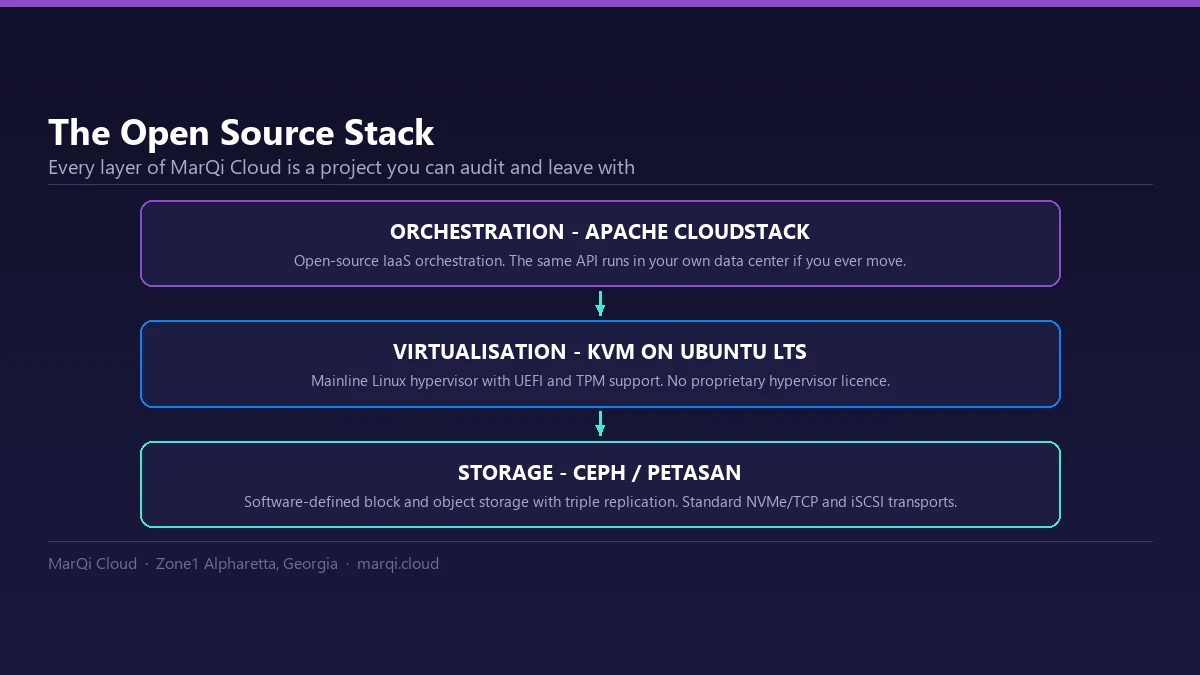
- Select Tools and Technologies: Choose the right tools for automation, orchestration, and monitoring. Solutions like OpenStack, VMware vRealize Automation can facilitate self-service capabilities.
- Develop a Self-Service Portal: Create an intuitive user interface that allows users to request resources easily. Ensure that this portal integrates with automation tools and provides real-time feedback.
- Create a Self-Service Catalog: Develop a catalog that outlines the available services, configurations, and pricing. This catalog should be easily accessible within the self-service portal.
- Implement Monitoring and Reporting: Set up monitoring tools to track resource usage, performance, and compliance. Regular reporting can help identify trends and optimize resource allocation.
- Train Users: Conduct training sessions to familiarize users with the self-service portal and its functionalities. This step is crucial for ensuring adoption and effective use of the system.
- Launch and Iterate: Roll out the self-service provisioning system and gather feedback from users. Use this feedback to make continuous improvements to the system.
Best Practices for Self-Service Provisioning
To maximize the effectiveness of self-service provisioning, consider the following best practices:
- Maintain Security: Regularly review and update security policies to ensure that self-service provisioning does not expose the organization to risks. Implement strong authentication methods and encryption for sensitive data.
- Monitor Resource Usage: Keep an eye on resource consumption to prevent over-provisioning and ensure compliance with budget constraints.
- Regularly Update the Self-Service Catalog: Continuously update the service catalog to reflect new offerings and changes in pricing or availability.
- Foster Collaboration: Encourage collaboration between IT and business units to ensure that the self-service provisioning system meets the needs of all stakeholders.
- Implement Feedback Loops: Establish mechanisms for users to provide feedback on the self-service portal and provisioning process. Use this feedback to drive improvements.
Challenges and Solutions
While implementing self-service provisioning offers numerous benefits, it also comes with challenges:
1. Security Risks
Challenge: Allowing users to provision resources independently can lead to security vulnerabilities if not managed properly.
Solution: Implement strict access controls and regularly audit resource usage to ensure compliance with security policies.
2. Resource Sprawl
Challenge: Users may create unnecessary resources, leading to resource sprawl and increased costs.
Solution: Set up quotas and limits for resource allocation based on user roles and needs.
3. User Confusion
Challenge: Users may struggle to navigate the self-service portal if it is not intuitive.
Solution: Invest in user training and create comprehensive documentation to guide users through the provisioning process.
Case Study: Successful Implementation
Consider a mid-sized enterprise that implemented self-service provisioning within its private cloud environment. Initially, the IT department was inundated with requests for virtual machines and storage, leading to long wait times and frustration among users. By establishing a self-service portal, defining user roles, and creating a comprehensive service catalog, the enterprise saw a significant reduction in provisioning times from days to mere hours. Furthermore, user satisfaction scores improved dramatically, and the IT department could focus on more strategic initiatives rather than routine provisioning tasks.
Frequently Asked Questions
What is self-service provisioning?
Self-service provisioning allows users to independently request and manage IT resources without needing direct IT intervention.
What are the benefits of self-service provisioning?
Benefits include enhanced agility, cost efficiency, improved user satisfaction, centralized management, and scalability.
How do I implement self-service provisioning?
Implementing self-service provisioning involves assessing current infrastructure, defining user roles, selecting tools, developing a self-service portal, creating a service catalog, and training users.
What tools are commonly used for self-service provisioning?
Popular tools include OpenStack, VMware vRealize Automation.
What challenges might arise with self-service provisioning?
Challenges include security risks, resource sprawl, and user confusion.
How can I ensure security in a self-service provisioning environment?
Implement strict access controls, regularly audit resource usage, and provide user training on security best practices.
Is self-service provisioning suitable for all organizations?
While self-service provisioning can benefit many organizations, it is crucial to evaluate specific needs and capabilities before implementation.
How can I monitor resource usage in a self-service provisioning model?
Utilize monitoring tools to track resource consumption and performance, ensuring compliance with budget constraints.