Private Cloud Connectivity Solutions & Cloud Network Optimization
December 18, 2025
How Cloud Native App Development Supports Rapid Innovation
December 25, 2025

Open Source Cloud Computing for Strong Enterprise Infrastructure
Introduction
Enterprises today are turning to open source cloud platforms because they offer the flexibility, control, and affordability that traditional clouds often lack. With the growing need for enterprise-grade cloud infrastructure, businesses want solutions that are transparent, easy to scale, and built for long-term reliability. Open source ecosystems also make it easier to innovate and stay ahead without the constraints of vendor lock-in. It’s a cleaner, smarter, and more future-ready approach to cloud computing.
What Makes an Enterprise-Grade Cloud Infrastructure?
An enterprise-grade cloud infrastructure provides large organizations with a secure, flexible, and reliable cloud environment. It combines the speed of public clouds with the control of private data centers, making it ideal for handling critical applications and large datasets.
Key benefits include:
- Security & Compliance: Keeps data safe with encryption, prevents loss, and follows rules like HIPAA and GDPR.
- Scalability & Performance: Easily adjusts resources up or down to handle growing workloads while maintaining high performance.
- Flexibility (Hybrid/Multi-Cloud): Supports integration with private data centers and multiple public clouds (AWS, Azure, GCP) for optimal operations.
- Advanced Capabilities: Offers AI-driven insights, automation, and unified management tools to simplify operations.
- Reliability & Availability: Ensures minimal downtime with disaster recovery, backups, and fault-tolerant systems.
An enterprise-grade cloud infrastructure allows businesses to:
- Innovate faster with flexible, open ecosystems.
- Stay in control without being locked into a single vendor.
- Optimize costs with pay-as-you-go and resource-efficient models.
Overall, an enterprise-grade cloud infrastructure gives organizations the control, reliability, and flexibility they need to grow and stay competitive. With the right setup, like an open-source platform, enterprises can fully leverage modern cloud technology.
Open Source Cloud Storage: A Smarter Way to Manage Data
Open source cloud storage lets businesses securely store and manage their data with full control. Unlike proprietary cloud services, it can be hosted on your own servers, customized to your needs, and keeps your information private. Platforms like Nextcloud and ownCloud make file syncing and sharing simple, fast, and reliable.
Benefits of Open Source Cloud Storage
- Transparency: Open code can be checked and audited for better security.
- Self-Hosting: Store data on your own servers for complete control.
- Customizable: Modify features and integrate with your existing tools.
- Community Support: Regular updates and improvements from a global developer community.
- Scalable & Fast: Works well with large datasets and grows with your business.
- Cost-Effective: Reduces long-term costs by avoiding expensive licenses.
With open source cloud storage, enterprises can manage data safely, efficiently, and flexibly. It’s a smart choice for businesses that want control, reliability, and easy scalability.
Why Open Source Cloud Infrastructure Is Great for Enterprises
- Better Security: Open code reduces hidden risks and is continuously improved.
- Scalable & Efficient: Expands resources easily as business needs grow.
- Optimized Performance: Supports AI, analytics, and large workloads with smooth operations.
Why Open Source Strengthens Enterprise Capabilities
- Transparent and reliable system architecture
- Customizable components to match business needs
- Easy integration with existing IT systems
The Power of Open Source Cloud Computing Platforms
An open source cloud computing platform enables businesses to build and manage cloud environments using freely available and customizable code. These platforms give organizations flexibility, cost savings, and freedom from vendor lock-in, allowing full control over their cloud infrastructure. Popular examples include OpenStack and Apache CloudStack for private and hybrid clouds, and Kubernetes for managing cloud-native applications efficiently.
Key Benefits of Open Source Cloud Computing
- Openness & Flexibility: Open code allows you to check, modify, and update security quickly.
- Cost-Effective: Eliminates expensive licensing fees associated with proprietary solutions.
- No Vendor Lock-In: Provides freedom to migrate, scale, or modify infrastructure as needed.
- Interoperability: Easily integrates with other tools, systems, and vendors.
- Growth-Friendly & Adaptable: Easily handles larger workloads and evolving business demands.
How Open Source Clouds Reduce Costs and Improve Control
- Customize tools and workflows freely
- Avoid costly licensing fees
- Stay independent from vendor restrictions
Freedom from Cloud Vendor Lock-In
- Full platform ownership and control
- Ability to migrate, scale, or adjust infrastructure at any time
- Protects against sudden pricing changes or limitations
With an open source cloud computing platform, enterprises can build secure, flexible, and scalable cloud systems. It allows businesses to save costs, maintain control, and efficiently manage modern cloud workloads.
Cloud Without Vendor Lock-In: Freedom and Flexibility for Your Business
A cloud without vendor lock-in gives businesses the freedom to run their applications anywhere, without being tied to a single provider. By using open-source and cloud-agnostic tools like Kubernetes, S3-compatible storage, and open databases, and by adopting multi-cloud or hybrid strategies, organizations can move workloads easily, maintain control over costs, and avoid disruptions if a vendor changes services or faces downtime.
Benefits of a Cloud without Vendor Lock-In
- Flexibility: Easily switch providers or adopt new cloud services.
- Cost Control: Take advantage of competitive pricing and avoid unexpected vendor price hikes.
- Resilience: Quickly shift workloads during outages or security issues.
- Innovation: Freedom to adopt new technologies and tools from any provider.
How to Achieve a Cloud without Vendor Lock-In
- Build Portable Applications: Design systems that can run on any platform.
- Use Open Standards: Rely on open-source and standards-based solutions for compatibility.
- Plan Ahead: Have an exit or migration strategy in place before you need it.
- Leverage Abstraction Layers: Use tools like universal API gateways to manage services across multiple clouds.
With a cloud without vendor lock-in, enterprises gain control, flexibility, and freedom. It allows businesses to innovate faster, reduce risk, and choose the best services across different providers without being restricted by a single ecosystem.
How MarQi Cloud Delivers Reliable Open Source Cloud Infrastructure
Independent Data Center for Full Control
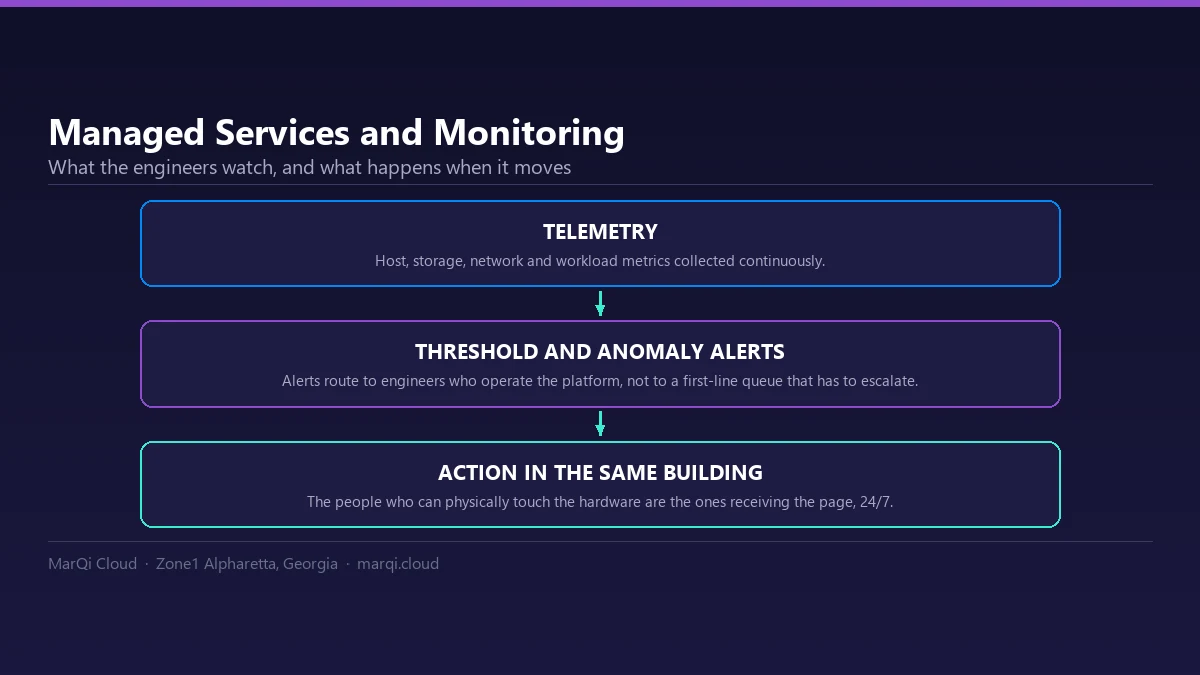
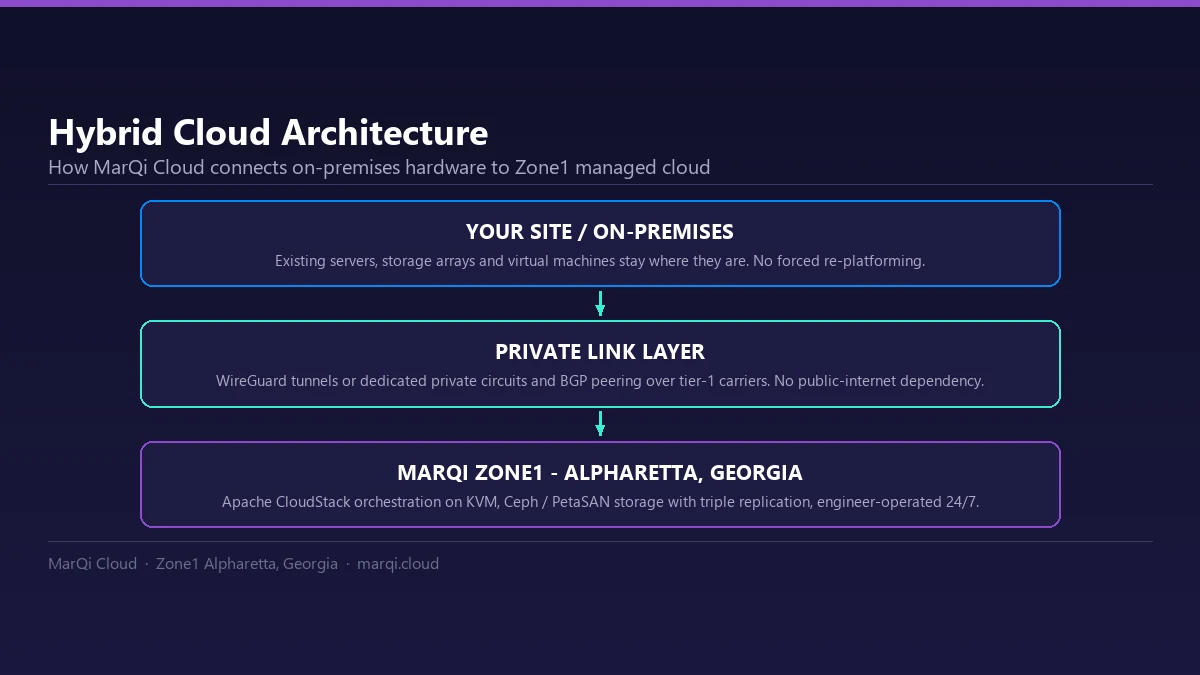
MarQi Cloud provides an enterprise-grade cloud infrastructure with its own data center and storage cluster, ensuring fast, smooth, and reliable performance for all workloads.
Redundant Network for Zero Downtime
With smart routing and backup pathways, MarQi Cloud keeps mission-critical applications running without interruption.
True Open Source Cloud Computing
Built on open technologies, MarQi Cloud allows full customization and offers a cloud without vendor lock-in, giving businesses freedom, control, and flexibility.
Conclusion – A Strong, Open, and Future-Ready Cloud
Open source platforms empower enterprises with control and innovation. Enterprise-grade cloud infrastructure ensures performance and scalability, while open source cloud storage keeps data secure and flexible. Partnering with MarQi Cloud delivers a stable, powerful, and vendor-free cloud environment that businesses can trust.