The MarQi Cloud Production Checklist: 15 Things to Configure Before Going Live
April 5, 2026
MarQi Cloud + Cloudflare: The Performance Stack That Defeats Any Traffic Spike
April 6, 2026
How to Connect MarQi Cloud to Your GitHub Actions CI/CD Pipeline
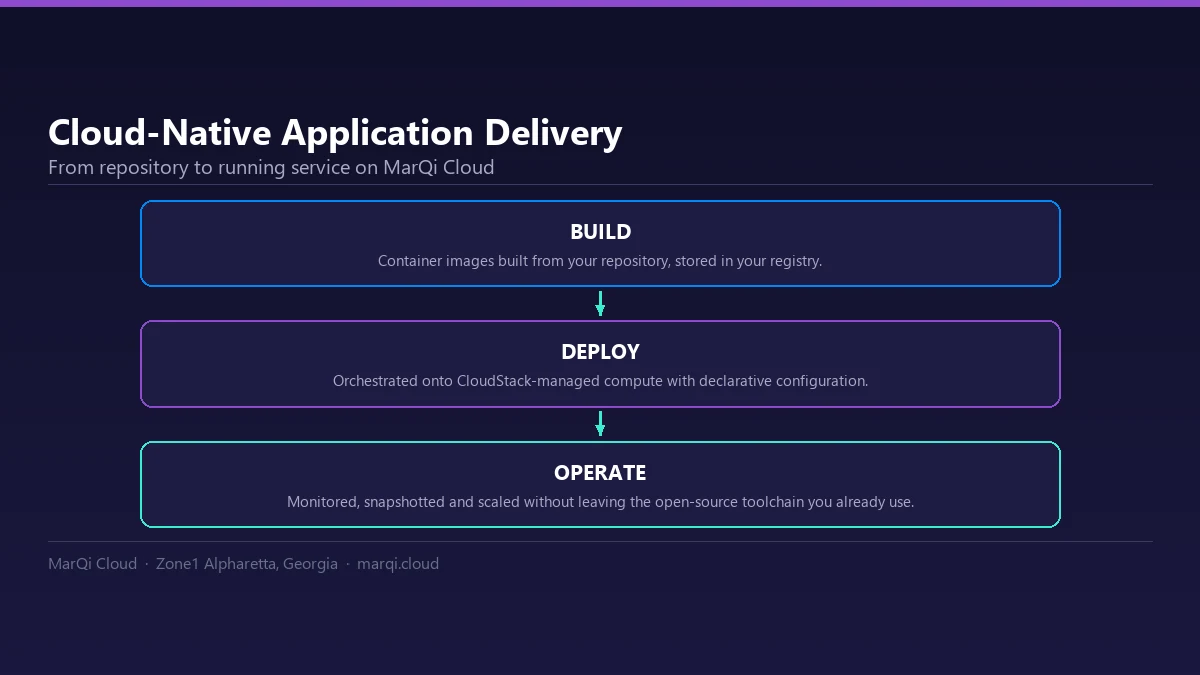
In today’s fast-paced software development environment, continuous integration and continuous deployment (CI/CD) practices have become essential for teams looking to deliver high-quality products efficiently. GitHub Actions has emerged as a powerful tool that allows developers to automate workflows directly from their GitHub repositories. When combined with MarQi Cloud’s robust infrastructure, teams can achieve seamless deployments, scaling, and management of applications. In this article, we will explore how to connect MarQi Cloud to your GitHub Actions CI/CD pipeline to enhance your development workflow.
Understanding CI/CD and GitHub Actions
Before diving into the integration process, let’s briefly discuss CI/CD and how GitHub Actions works.
What is CI/CD?
CI/CD stands for Continuous Integration and Continuous Deployment. CI is the practice of automatically testing and integrating code changes into a shared repository frequently, which helps detect issues early. CD extends this by automating the deployment of code to production environments, ensuring that software is always in a deployable state.
What are GitHub Actions?
GitHub Actions is a feature within GitHub that allows developers to automate tasks within their software development lifecycle. With GitHub Actions, you can create workflows that build, test, package, release, and deploy your code directly from your GitHub repository. This flexibility makes it an ideal choice for CI/CD pipelines.
Why Choose MarQi Cloud for Your CI/CD Pipeline?
MarQi Cloud offers enterprise-grade cloud infrastructure and various deployment models that are essential for modern application development. Here are some reasons to consider MarQi Cloud:
1. Enterprise-grade Cloud Infrastructure
MarQi Cloud provides a robust and reliable infrastructure designed to meet the demands of enterprise applications. This means you can rely on high availability and performance for your deployments.
2. Hybrid Cloud Deployment Models
With hybrid cloud capabilities, you can utilize both public and private cloud resources, giving you flexibility in how you deploy your applications and manage your workloads.
3. Private and Secure Hosting Environments
Security is paramount in today’s digital landscape. MarQi Cloud offers secure hosting environments to protect your data and applications while complying with industry regulations.
4. Scalable Compute and Storage Resources
As your applications grow, you need to scale your resources accordingly. MarQi Cloud provides easily scalable compute and storage options, enabling you to adjust resources based on demand.
5. Business Continuity and Disaster Recovery Solutions
MarQi Cloud ensures that your applications remain operational even in the face of unforeseen events, offering reliable business continuity and disaster recovery solutions.
6. Performance-driven Infrastructure Design
The infrastructure design at MarQi Cloud is optimized for performance, ensuring your applications run smoothly and efficiently.
7. US-based Infrastructure and Support
With US-based infrastructure and support, you can expect reliable service and assistance whenever you need it.
8. Flexible Pricing Models
MarQi Cloud provides flexible pricing options, allowing you to choose a plan that best fits your budget and resource needs.
Connecting MarQi Cloud to GitHub Actions
Now that we understand the benefits of MarQi Cloud, let’s walk through the steps to connect it to your GitHub Actions CI/CD pipeline.
Step 1: Set Up Your MarQi Cloud Environment
Before integrating with GitHub Actions, ensure that you have a MarQi Cloud account and have set up your infrastructure. This could include virtual machines, storage, and networking configurations. Make sure you have the necessary credentials and access tokens ready for the next steps.
Step 2: Create a GitHub Repository
If you haven’t already, create a new repository in GitHub where your application code will reside. This repository will be the source for your CI/CD pipeline.
Step 3: Add Secrets to GitHub
To securely store your MarQi Cloud credentials, navigate to your GitHub repository settings and add the following secrets:
- MARQI_CLOUD_API_KEY: Your MarQi Cloud API key for authentication.
- MARQI_CLOUD_SECRET_KEY: Your MarQi Cloud secret key for secure access.
- MARQI_CLOUD_REGION: The region where your MarQi Cloud resources are located.
Step 4: Create a GitHub Actions Workflow
In your GitHub repository, create a new directory called .github/workflows and within it, create a file named ci-cd.yml. This YAML file will define your CI/CD workflow. Below is a basic example of what this file might look like:
name: CI/CD Pipeline for MarQi Cloud

on:
  push:
    branches:
      - main

jobs:
  build:
    runs-on: ubuntu-latest

    steps:
    - name: Checkout code
      uses: actions/checkout@v2

    - name: Set up Node.js
      uses: actions/setup-node@v2
      with:
        node-version: '14'

    - name: Install dependencies
      run: npm install

    - name: Run tests
      run: npm test

  deploy:
    runs-on: ubuntu-latest
    needs: build

    steps:
    - name: Checkout code
      uses: actions/checkout@v2

    - name: Deploy to MarQi Cloud
      env:
        MARQI_CLOUD_API_KEY: ${{ secrets.MARQI_CLOUD_API_KEY }}
        MARQI_CLOUD_SECRET_KEY: ${{ secrets.MARQI_CLOUD_SECRET_KEY }}
        MARQI_CLOUD_REGION: ${{ secrets.MARQI_CLOUD_REGION }}
      run: |
        echo "Deploying to MarQi Cloud..."
        # Add your deployment commands here
This workflow will trigger on every push to the main branch, building and testing your application before deploying it to MarQi Cloud.
Step 5: Customize Your Deployment Commands
Within the deployment step of your workflow, you will need to replace the placeholder comment with the actual commands necessary to deploy your application to MarQi Cloud. This might involve using the MarQi Cloud CLI or API to create resources, upload files, or configure your environment.
Step 6: Test Your CI/CD Pipeline
Once you have configured your workflow, commit your changes to the repository. This should trigger the GitHub Actions pipeline. Monitor the Actions tab on your GitHub repository to see the progress of your build and deployment.
Best Practices for Using GitHub Actions with MarQi Cloud
To get the most out of your CI/CD pipeline, consider these best practices:
1. Keep Your Workflows Modular
Break your workflows into smaller, reusable steps. This not only makes your pipeline easier to manage but also reduces duplication.
2. Use Caching
To speed up your builds, leverage caching mechanisms provided by GitHub Actions to store dependencies between runs.
3. Monitor Your Pipeline
Regularly check the performance of your pipelines. Look for bottlenecks and optimize your build and deployment processes.
4. Implement Notifications
Set up notifications for your team to be informed about the status of builds and deployments, ensuring everyone is aligned.
5. Keep Security in Mind
Always use secrets for sensitive information and regularly audit your GitHub repository’s security settings.
Conclusion
Integrating MarQi Cloud with GitHub Actions allows you to take full advantage of both platforms, automating your CI/CD processes while leveraging enterprise-grade cloud infrastructure. With the steps outlined in this article, you can easily set up a robust pipeline that enhances your development workflow, ensuring faster deployments and improved collaboration among your team.
FAQs
1. What is CI/CD?
CI/CD stands for Continuous Integration and Continuous Deployment, which are practices that automate the process of integrating code changes and deploying applications.
2. How does GitHub Actions work?
GitHub Actions allows you to automate workflows directly from your GitHub repositories, facilitating tasks like building, testing, and deploying code.
3. Why should I use MarQi Cloud?
MarQi Cloud offers enterprise-grade infrastructure, hybrid deployment models, and flexible pricing, making it ideal for modern application development.
4. How do I secure my MarQi Cloud credentials in GitHub?
You can store your credentials in the GitHub repository settings under Secrets to prevent exposure in your workflow files.
5. Can I customize my GitHub Actions workflow?
Yes, GitHub Actions workflows are highly customizable, allowing you to define steps and actions tailored to your project needs.
6. How do I trigger a GitHub Actions workflow?
Workflows can be triggered by various events, including pushes to branches, pull requests, and scheduled times.
7. What should I do if my pipeline fails?
Review the logs provided by GitHub Actions to identify the issue and troubleshoot accordingly.
8. Can I use MarQi Cloud with other CI/CD tools?
Yes, MarQi Cloud can be integrated with various CI/CD tools, not just GitHub Actions.
9. How do I know if my deployment to MarQi Cloud was successful?
You can monitor the status of your deployments through the MarQi Cloud dashboard or by checking logs generated during your CI/CD workflow.
10. Is there support available for using MarQi Cloud?
Yes, MarQi Cloud offers US-based infrastructure and support to assist you with any issues you may encounter.