When to Choose Managed Services: A Cost Comparison vs Hiring In-House
February 26, 2026
Hybrid Cloud for Manufacturing and Logistics: Keeping Edge Systems Close to Core Applications
February 26, 2026
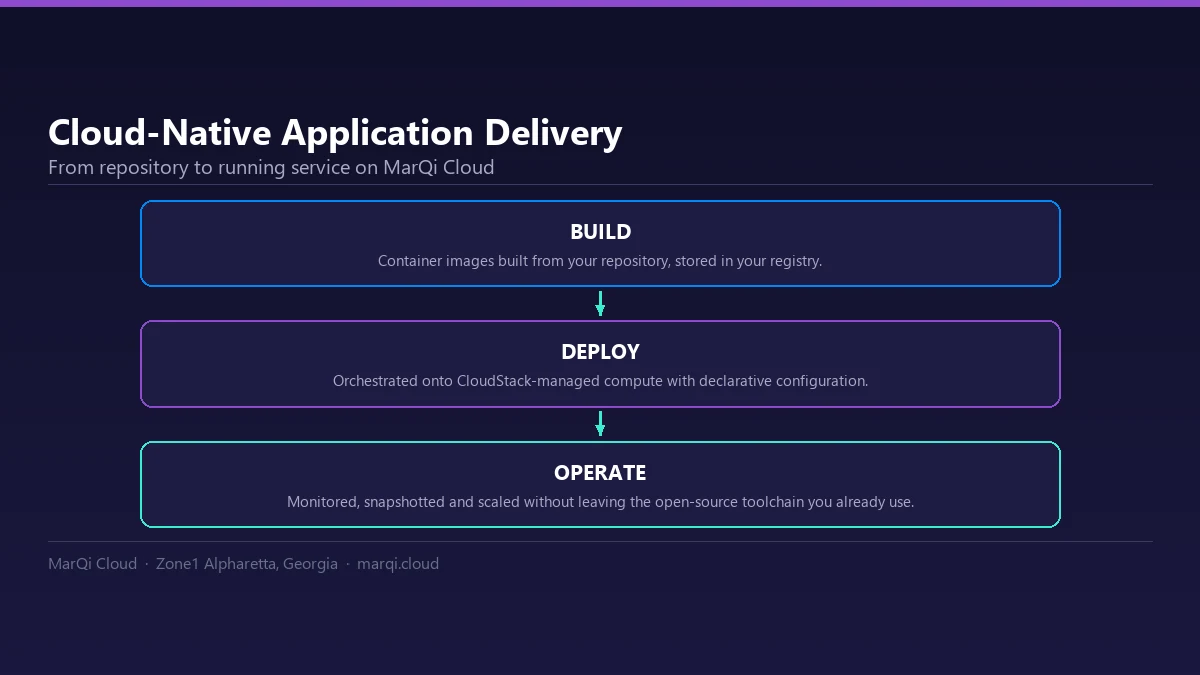
Application Development and Hosting: How ‘Build and Run’ Accelerates Delivery
In today’s fast-paced digital landscape, businesses must innovate rapidly to meet customer demands and remain competitive. Application development and hosting play a crucial role in this process, as they directly impact the speed and efficiency with which new applications can be delivered. The ‘Build and Run’ approach has emerged as a transformative strategy that accelerates the application delivery process. In this article, we will explore the concept of ‘Build and Run,’ its benefits, and how it can be effectively implemented using enterprise-grade cloud infrastructure.
Understanding the ‘Build and Run’ Approach
The ‘Build and Run’ approach refers to a development strategy that integrates application development and hosting into a single, efficient process. This methodology allows teams to design, build, and deploy applications while simultaneously managing their performance and scalability. By breaking down silos between development and operations, businesses can streamline their workflows and respond more quickly to market changes.
The Key Components of ‘Build and Run’
1. Integrated Development Environments (IDEs): These tools provide developers with a unified platform for writing, testing, and debugging code. By incorporating cloud capabilities, IDEs can facilitate collaboration and enhance productivity.
2. Continuous Integration and Continuous Deployment (CI/CD): This practice automates the testing and deployment of applications, ensuring that updates can be pushed rapidly without sacrificing quality.
3. Cloud Hosting: Leveraging cloud infrastructure allows businesses to host applications in a flexible, scalable environment. This can significantly reduce the time and resources required for deployment.
Benefits of the ‘Build and Run’ Strategy
Implementing a ‘Build and Run’ approach can yield numerous benefits for organizations:
1. Accelerated Time to Market
By integrating development and hosting, businesses can significantly reduce the time it takes to bring new applications to market. Teams can quickly iterate on their designs and deploy them without the need for extensive coordination between different departments.
2. Enhanced Collaboration
The ‘Build and Run’ model fosters collaboration among development, operations, and business teams. This cross-functional approach ensures that everyone is aligned on the project’s goals and can contribute to its success.
3. Increased Flexibility and Scalability
With cloud infrastructure, applications can be easily scaled based on demand. This flexibility allows businesses to accommodate unexpected traffic spikes and ensure optimal performance at all times.
4. Improved Resource Management
Cloud hosting enables organizations to optimize their resource usage, reducing costs associated with maintaining physical servers. Businesses only pay for the resources they need, allowing for more efficient budgeting.
5. Enhanced Security and Compliance
Enterprise-grade cloud infrastructure often comes with built-in security features and compliance certifications. This ensures that applications are hosted in a secure environment, protecting sensitive data and meeting regulatory requirements.
Implementing the ‘Build and Run’ Approach
To successfully adopt a ‘Build and Run’ strategy, organizations can follow these steps:
1. Assess Your Infrastructure Needs
Evaluate your current infrastructure to determine if it can support the demands of a ‘Build and Run’ approach. Consider migrating to a hybrid cloud model to balance performance and security.
2. Invest in the Right Tools
Choose integrated development environments and CI/CD tools that align with your team’s workflow. Ensure that these tools can seamlessly connect with your cloud hosting environment.
3. Foster a Culture of Collaboration
Encourage cross-functional teamwork by breaking down silos and promoting open communication. Regularly hold meetings to ensure that all teams are aligned on project goals.
4. Emphasize Testing and Quality Assurance
Incorporate automated testing into your CI/CD pipeline to catch issues early in the development process. This will help maintain high-quality standards while accelerating delivery.
5. Monitor Performance and Gather Feedback
Utilize monitoring tools to track application performance and gather user feedback post-deployment. This information will be valuable for future iterations and improvements.
Conclusion
The ‘Build and Run’ approach is revolutionizing application development and hosting by enabling businesses to deliver high-quality applications at an unprecedented speed. By leveraging enterprise-grade cloud infrastructure, organizations can streamline their workflows, enhance collaboration, and ensure optimal performance. As the digital landscape continues to evolve, adopting a ‘Build and Run’ strategy will be essential for businesses looking to stay ahead of the competition.
FAQ
1. What is the ‘Build and Run’ approach?
The ‘Build and Run’ approach integrates application development and hosting into a unified process, allowing teams to design, build, and deploy applications efficiently.
2. How does cloud hosting support the ‘Build and Run’ strategy?
Cloud hosting provides a flexible and scalable environment for applications, enabling rapid deployment and resource optimization.
3. What tools are essential for implementing ‘Build and Run’?
Key tools include integrated development environments (IDEs), continuous integration and continuous deployment (CI/CD) tools, and cloud hosting platforms.
4. What are the benefits of ‘Build and Run’?
Benefits include accelerated time to market, enhanced collaboration, increased flexibility, improved resource management, and enhanced security.
5. How can organizations foster collaboration in ‘Build and Run’?
Encourage cross-functional teamwork, promote open communication, and hold regular meetings to align all teams on project goals.
6. Why is automated testing important in ‘Build and Run’?
Automated testing helps catch issues early in the development process, ensuring high-quality applications while maintaining speed.
7. How can businesses ensure application security in cloud hosting?
By choosing enterprise-grade cloud infrastructure with built-in security features and compliance certifications.
8. What should organizations monitor post-deployment?
Monitor application performance, gather user feedback, and track resource usage to inform future improvements.