The Complete Guide to Cloud Backup Automation with Retention Policy Enforcement
September 10, 2026
The Future of Enterprise Cloud: Hybrid, Open Source & Performance-Driven
September 10, 2026
How Automated Cloud Scaling Adapts to Traffic Patterns Efficiently
In today’s fast-paced digital landscape, businesses are increasingly reliant on their online presence to drive revenue and engage with customers. As a result, managing traffic patterns effectively has never been more critical. Automated cloud scaling is an innovative solution that allows organizations to respond to fluctuating traffic demands without manual intervention, ensuring optimal performance and cost-efficiency. In this comprehensive guide, we will explore how automated cloud scaling works, its benefits, best practices, and how companies like MarQi Cloud provide enterprise-grade solutions to meet these needs.
Understanding Automated Cloud Scaling
Automated cloud scaling refers to the dynamic process of adjusting computing resources in real-time based on current demand. This capability is crucial for businesses that experience varying traffic patterns, such as e-commerce platforms during holiday sales or streaming services during peak viewing times. By automating the scaling process, organizations can ensure that their applications remain responsive, maintain performance, and reduce costs associated with underutilized resources.
How Automated Cloud Scaling Works
Automated cloud scaling operates through a combination of monitoring tools, predefined policies, and cloud management platforms. Here’s a breakdown of how it functions:
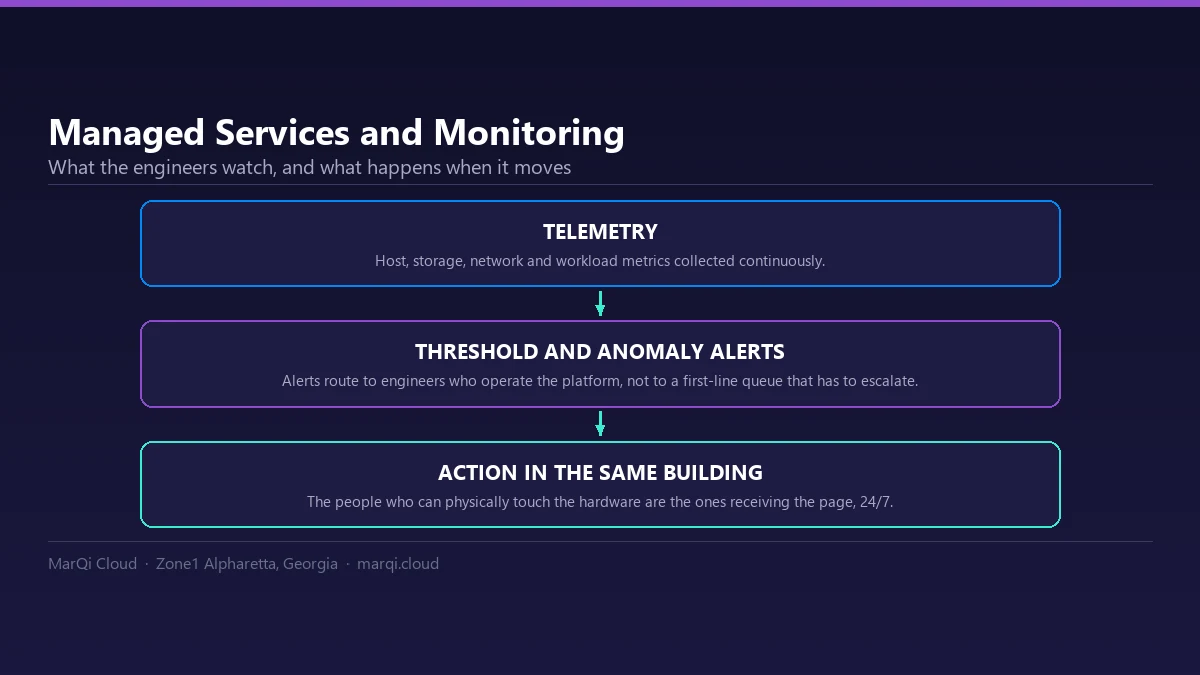
- Monitoring: Continuous monitoring of resource utilization metrics such as CPU usage, memory consumption, and network bandwidth is essential. This data is collected in real-time to assess whether current resources are sufficient to handle incoming traffic.
- Thresholds and Policies: Organizations set predefined thresholds that trigger scaling actions. For example, if CPU usage exceeds 70% for a sustained period, the system may automatically add additional instances to handle the load.
- Scaling Actions: When thresholds are breached, the cloud management system executes scaling actions, which can involve adding or removing virtual machines, database instances, or storage resources. This process can be configured for both vertical scaling (adding resources to existing instances) and horizontal scaling (adding more instances). Kubernetes implements the horizontal case directly: a HorizontalPodAutoscaler “automatically updates a workload resource (such as a Deployment or StatefulSet), with the aim of automatically scaling capacity to match demand”.
- Load Balancing: As new resources are provisioned, load balancers distribute traffic evenly across instances to ensure optimal performance. This step is crucial for maintaining application responsiveness during traffic spikes.
Benefits of Automated Cloud Scaling
Adopting automated cloud scaling offers numerous advantages for businesses:
- Cost Efficiency: By scaling resources up or down based on demand, businesses avoid paying for unused capacity, leading to significant cost savings.
- Improved Performance: Automated scaling ensures that applications remain responsive during traffic spikes, enhancing the user experience and reducing bounce rates.
- Greater Flexibility: Organizations can quickly adapt to changing traffic patterns without the need for manual intervention, allowing for a more agile response to market demands.
- Enhanced Reliability: By distributing workloads across multiple instances, automated scaling helps prevent system overload, minimizing downtime and ensuring high availability.
Best Practices for Implementing Automated Scaling
To maximize the benefits of automated cloud scaling, organizations should consider the following best practices:
- Define Clear Scaling Policies: Establish thresholds that align with business objectives and anticipated traffic patterns. Regularly review and adjust these policies based on historical data.
- Utilize Predictive Analytics: Leverage predictive analytics tools to forecast traffic spikes and prepare scaling actions in advance. This proactive approach can help mitigate potential performance issues.
- Regularly Test Scaling Configurations: Conduct routine testing of scaling configurations to identify any potential issues and ensure that resources scale as expected during peak traffic.
- Monitor Performance Metrics: Continuously track performance metrics to ensure that the scaling process is effective and aligns with business goals.
- Consider Multi-Cloud Strategies: Implementing a multi-cloud strategy can provide additional flexibility and redundancy, allowing organizations to leverage multiple cloud providers for optimal resource allocation.
Case Studies and Examples
To illustrate the effectiveness of automated cloud scaling, let’s explore a few real-world examples:
Example 1: E-commerce Platform
An e-commerce company experienced significant traffic spikes during holiday sales. By implementing automated cloud scaling, they were able to dynamically adjust their server capacity based on user demand. As a result, they improved their website’s uptime to 99.9% during peak periods, leading to a 25% increase in sales compared to the previous year.
Example 2: Streaming Service
A popular streaming service utilized automated scaling to manage fluctuating viewership during live events. By scaling resources up during peak viewing times and down during off-peak hours, they reduced operational costs by 30% while maintaining optimal streaming quality for their users.
Common Challenges and Solutions
While automated cloud scaling offers numerous benefits, organizations may encounter challenges such as:
- Over-scaling or Under-scaling: Implementing inaccurate thresholds can lead to over-provisioning or under-provisioning resources. Regularly revisiting scaling policies and optimizing them based on performance data can mitigate this issue.
- Complexity in Management: Managing multiple cloud resources and scaling configurations can become complex. Utilizing unified cloud management platforms can streamline this process.
- Inadequate Testing: Failing to test scaling configurations can lead to unexpected failures during high traffic. Regular testing and simulations can help ensure that systems respond appropriately.
The Future of Automated Cloud Scaling
The future of automated cloud scaling is likely to be shaped by advancements in AI and machine learning. As these technologies become more integrated into cloud management, organizations will benefit from even more intelligent scaling solutions that can predict traffic patterns with greater accuracy. This evolution will enable businesses to maintain optimal performance levels while minimizing costs and maximizing resource utilization.
FAQ
What is automated cloud scaling?
Automated cloud scaling is the process of dynamically adjusting cloud resources based on current demand, allowing organizations to respond to traffic fluctuations without manual intervention.
How does automated scaling improve performance?
By automatically adding or removing resources based on real-time demand, automated scaling ensures that applications remain responsive and available during traffic spikes, enhancing the user experience.
What are the benefits of implementing automated cloud scaling?
Benefits include cost efficiency, improved performance, greater flexibility, and enhanced reliability.
What types of scaling are available?
There are two primary types of scaling: vertical scaling (adding resources to existing instances) and horizontal scaling (adding more instances).
How can businesses determine their scaling thresholds?
Organizations can analyze historical traffic data to identify patterns and set thresholds that reflect their business objectives and anticipated traffic levels.
Is automated cloud scaling suitable for all types of businesses?
While automated scaling is beneficial for most businesses, it is particularly advantageous for those with fluctuating traffic patterns, such as e-commerce and streaming services.
What challenges might companies face with automated scaling?
Common challenges include over-scaling or under-scaling, complexity in management, and inadequate testing of scaling configurations.
How can companies optimize their automated scaling strategies?
Organizations can optimize their strategies by defining clear scaling policies, utilizing predictive analytics, regularly testing configurations, and monitoring performance metrics.