Building Flexible Applications with Hybrid Cloud App Development
January 29, 2026
Key Capabilities of a Reliable Cloud-Native Development Partner
February 5, 2026

Benefits of Building a Cloud Strategy without Vendor Lock-In
Cloud computing enables businesses to work faster and more efficiently, but it also presents some challenges. Many companies face higher costs, limited flexibility, and heavy dependence on one cloud provider. Over time, this can make it difficult to change systems or adapt to new business needs.
Because of this, businesses are starting to rethink how they use the cloud. Instead of relying on a single vendor, they want more control over their data and technology. They are looking for cloud solutions that allow them to grow without restrictions or complicated migrations.
This has led to a growing interest in building a cloud without vendor lock-in. This approach gives businesses more freedom, better control, and the flexibility to choose what works best for them, both now and in the future.
cloud without vendor lock-in
A cloud without vendor lock-in allows businesses to stay flexible instead of being tied to a single cloud provider. Rather than relying on proprietary tools, this approach utilizes open technologies and intelligent design choices that facilitate seamless migration of applications and data when business needs evolve. It helps organizations stay in control of their cloud environment without facing high migration costs or technical barriers.
A cloud without vendor lock-in is usually built using the following strategies:
- Multi-cloud and hybrid cloud setups that spread workloads across different public and private clouds
- Containerization with tools like Docker and Kubernetes, making applications easy to move between environments
- Open standards and open-source technologies, such as open-source databases and APIs
- Abstraction layers that separate business logic from cloud-specific services
- Data portability, using standard formats and APIs to simplify data movement
- Designing for exit, ensuring systems can be migrated whenever needed
Businesses choose a cloud without vendor lock-in because it reduces long-term risks and supports smarter growth:
- Greater flexibility to choose the best technology for each workload
- Better cost control by avoiding sudden price increases from a single provider
- Lower risk of being stuck with unreliable or limiting services
- More room for innovation by using best-of-breed tools across platforms
Overall, adopting a cloud without vendor lock-in helps organizations build a future-ready cloud strategy that prioritizes control, adaptability, and long-term success.
Open-Source Cloud Storage: Secure, Flexible, and Vendor-Free Data Management
Open-source cloud storage is a modern data storage solution built on publicly available code that allows users to store, sync, and share files with greater transparency and control. Unlike proprietary platforms, it puts users in charge of their data while supporting private, public, or hybrid cloud deployments through reliable platforms such as Nextcloud, OpenStack, ownCloud, and MarQi Cloud as well.
Key Features of Open-Source Cloud Storage
- Transparency: The open codebase allows organizations to clearly see how data is stored, processed, and secured.
- Full Control: Users can self-host the system, customize features, and maintain complete ownership of their data.
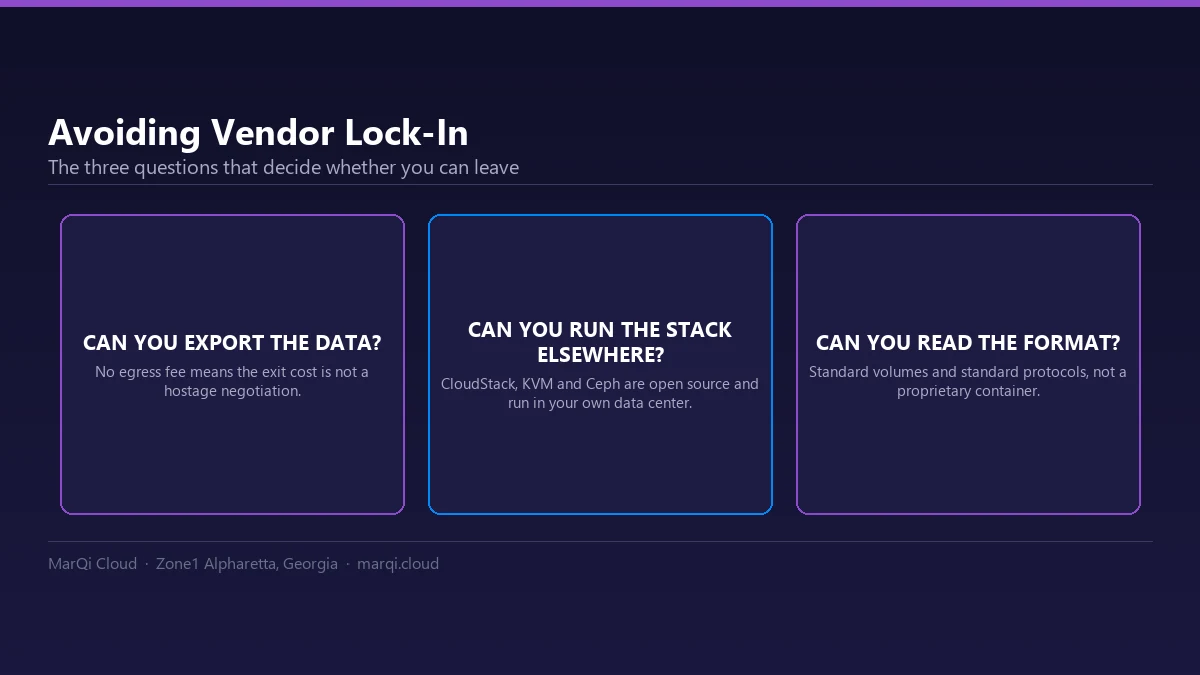
- No Vendor Lock-In: Data can be moved easily between platforms without being tied to a single provider.
- Community-Driven Innovation: A global developer community continuously enhances security, performance, and functionality.
- Flexible Deployment: Suitable for private clouds, hybrid setups, or integration with existing public cloud environments.
Business Benefits
- Stronger Security: Community-reviewed code and support for advanced encryption standards help protect sensitive information.
- Cost Savings: Reduces dependency on expensive licensing fees, especially for organizations using self-hosted infrastructure.
- Customization: The system can be adapted to match specific business workflows, compliance needs, and scalability goals.
In simple terms, open-source cloud storage gives organizations freedom, flexibility, and confidence in how their data is managed. By combining transparency, security, and open standards, open-source cloud storage offers a reliable and future-ready approach to cloud data management without long-term vendor dependency.
Open-Source Cloud Computing Made Simple
Open-source cloud computing means building and running cloud systems using publicly available software. Anyone can use it, customize it, and improve it. This gives businesses more freedom, better control over their systems, and the ability to avoid being locked into one cloud vendor.
Why Businesses Choose Open-Source Cloud Computing
- Clear and Transparent: The code is open, so teams can understand how the system works and how data is handled.
- More Control: Companies can customize the platform and host it on their own infrastructure.
- No Vendor Lock-In: You are free to move your data and applications when needed.
- Lower Costs: Most open-source platforms are free to use, with optional paid support.
Popular Open-Source Cloud Platforms
- OpenStack: Helps build private or public clouds by managing computing, storage, and networking resources.
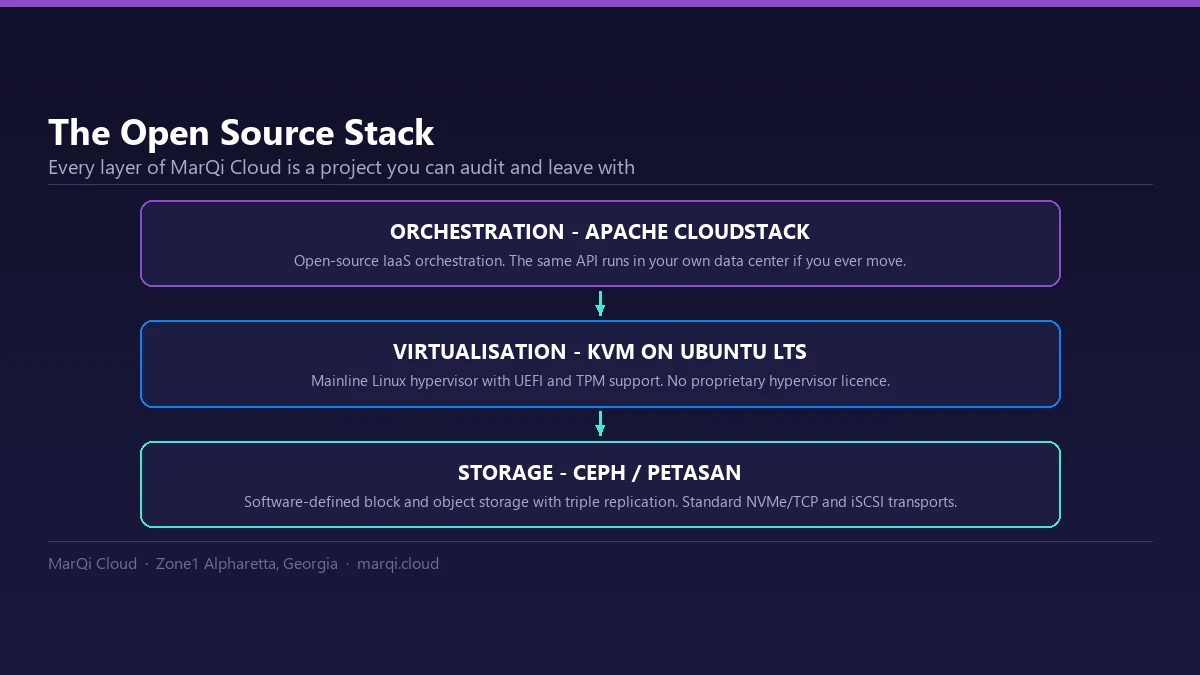
- Apache CloudStack: Used to create and manage large virtual machine environments.
- Cloud Foundry and OpenShift: Make it easier for developers to build and deploy applications.
Key Benefits
- Flexible: Easy to adjust as business needs change.
- Secure: Open-source communities help find and fix security issues quickly.
- Scalable: Add more computing or storage resources as your business grows.
How MarQi Cloud Supports Open-Source Cloud
MarQi Cloud helps businesses use open-source cloud computing in a simple and reliable way. By building cloud solutions on trusted open-source platforms, MarQi Cloud enables secure private and hybrid cloud setups while ensuring full data ownership, smooth performance, and long-term flexibility.
Avoiding Vendor Lock-In with Open Source
- Data Ownership: Full control over where data is stored and who can access it.
- Easy Portability: Move workloads and data across different platforms without hassle.
- Better Compatibility: Works smoothly with multiple cloud environments.
Enterprise-Grade Cloud Infrastructure Explained Simply
Enterprise-grade cloud infrastructure is a powerful cloud setup made for large businesses and organizations. It is designed to handle important systems, large amounts of data, and heavy workloads while staying secure, reliable, and fast.
Main Features
- Scales Easily: Computing power and storage can increase or decrease as business needs change.
- Strong Security: Uses encryption, access controls, and multi-factor authentication to protect sensitive data.
- High Reliability: Backup systems keep applications running and reduce downtime.
- Flexible Setup: Works with private, public, and hybrid cloud environments.
- Automation: Handles updates, backups, and maintenance automatically.
- Central Management: Let teams manage everything from one dashboard.
Why Businesses Use It
- Keeps critical applications running smoothly
- Supports growth without performance issues
- Helps meet security and compliance requirements
In short, enterprise-grade cloud infrastructure gives businesses a stable and secure foundation for their operations. By supporting flexible cloud models and reliable performance, enterprise-grade cloud infrastructure helps organizations grow with confidence.
Why MarQi Cloud Is Great for a Vendor-Neutral Cloud
MarQi Cloud is perfect for businesses that want a cloud without vendor lock-in. It gives full control, flexibility, and reliability.
- Independent Data Center: Full control over your cloud resources.
- Enterprise-Grade Infrastructure: Strong, flexible, and built for high performance.
- Dedicated Storage Cluster: Keep full control of your data and scale as needed.
- Redundant Network: Ensures your cloud stays online and fast.
- Supports Open-Source Platforms: Works well with open-source cloud computing and open-source cloud storage for more freedom.
Conclusion
A cloud strategy without vendor lock-in gives businesses flexibility, control, and security while also saving costs and supporting innovation. By choosing an independent and reliable partner like MarQi Cloud, organizations can build a scalable, secure, and future-ready cloud that meets their needs today and grows with them over time.