The Complete Guide to Open Source Cloud Security Tools and Practices
August 3, 2026Why Enterprises Are Choosing Open Source Cloud for Sovereign Infrastructure Projects
August 4, 2026
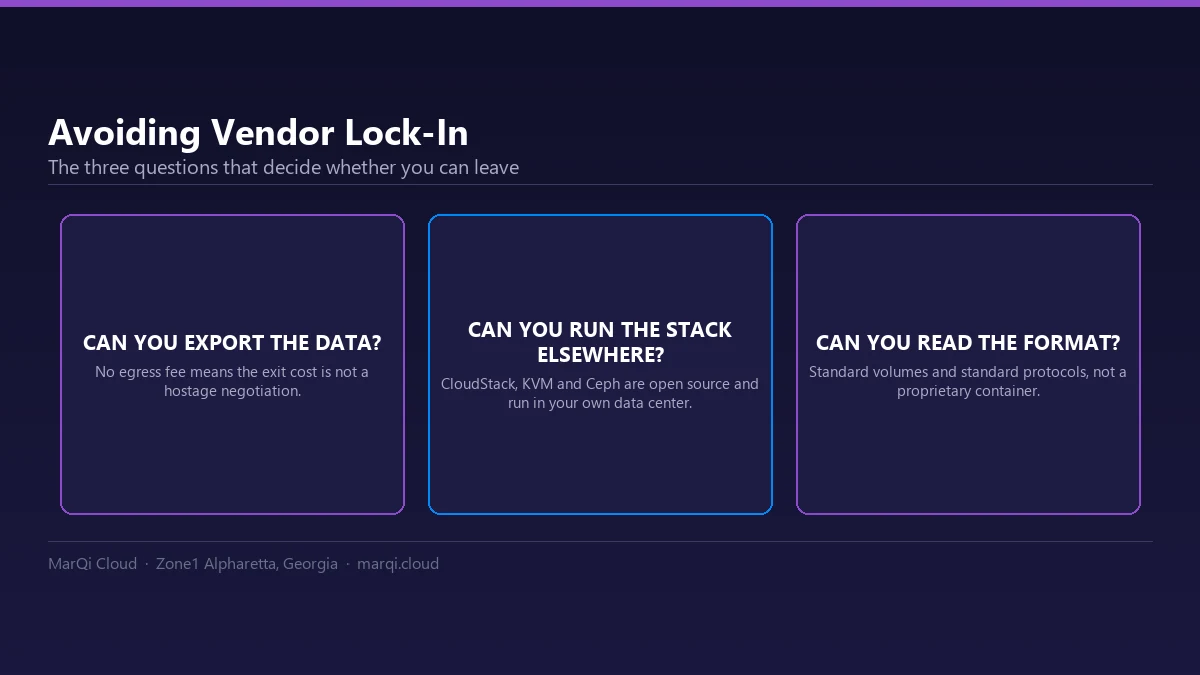
How do open source cloud APIs help avoid vendor lock-in?
Open source cloud APIs promote interoperability between different cloud platforms, allowing organizations to move workloads and data seamlessly without being tied to a specific vendor.
Unlocking Multi-Cloud Portability: The Role of Open Source Cloud APIs
As organizations increasingly seek flexibility and scalability in their cloud solutions, the demand for multi-cloud strategies has surged. One of the primary obstacles to achieving true multi-cloud portability is vendor lock-in, which can limit an organization’s ability to move workloads and data seamlessly between different cloud providers. Open source cloud APIs offer a powerful solution to this challenge, enabling businesses to avoid vendor lock-in while ensuring that their cloud architecture remains flexible and adaptable. In this article, we will explore how open source cloud APIs facilitate multi-cloud portability, the advantages they offer, and how MarQi Cloud stands at the forefront of this movement.
Understanding Vendor Lock-In
Vendor lock-in occurs when a customer becomes dependent on a single vendor for products and services, making it challenging to switch to another vendor without incurring substantial costs or operational disruptions. This can be particularly prevalent in cloud computing, where proprietary APIs and services can create substantial barriers to migration. According to a report by the National Institute of Standards and Technology (NIST), vendor lock-in can lead to increased costs, loss of data control, and reduced flexibility in IT operations.
Organizations that rely on proprietary cloud services often find themselves trapped in a cycle of escalating costs and limited options, unable to leverage the best features from multiple providers. The result is a fragmented cloud strategy that hinders innovation and agility, which are critical for today’s competitive landscape.
What Are Open Source Cloud APIs?
Open source cloud APIs are application programming interfaces that are publicly available, allowing developers to interact with cloud services without being tied to proprietary systems. These APIs provide the building blocks for creating and managing cloud applications, enabling interoperability across different cloud platforms.
By leveraging open source cloud APIs, organizations can develop applications that are portable across multiple cloud environments. This portability is essential for businesses that wish to optimize performance, reduce costs, and maintain control over their cloud infrastructure.
Some popular open source cloud API frameworks include:
- OpenStack: A cloud computing platform for building and managing public and private clouds.
- Kubernetes: An open-source container orchestration system for automating application deployment, scaling, and management.
- Cloud Foundry: A platform as a service (PaaS) that provides a choice of clouds, developer frameworks, and application services.
Benefits of Open Source Cloud APIs for Multi-Cloud Portability
Open source cloud APIs offer several key benefits that enhance multi-cloud portability:
- Interoperability: Open source APIs promote compatibility between different cloud providers, enabling organizations to move workloads seamlessly.
- Cost Efficiency: By utilizing open source solutions, businesses can reduce licensing costs associated with proprietary software.
- Flexibility: Organizations can customize and extend open source APIs to meet their specific needs, allowing for greater agility in cloud deployment.
- Community Support: Open source projects benefit from a global community of developers who contribute to ongoing improvements and innovations.
How Open Source Cloud APIs Enhance Flexibility
Flexibility is one of the primary advantages of using open source cloud APIs. By allowing organizations to build applications that can operate across various cloud environments, these APIs enable businesses to optimize their cloud strategies based on performance, cost, and compliance needs.
For instance, a company may choose to host sensitive data in a private cloud for compliance reasons while leveraging public cloud resources for less sensitive applications. Open source APIs facilitate this hybrid approach, allowing for a cohesive strategy that maximizes the benefits of both environments.
Case Study: Multi-Cloud Deployment with Open Source APIs
Consider a healthcare organization that needs to manage sensitive patient data while also providing scalable applications for telehealth services. By using open source cloud APIs, the organization can:
- Host patient data in a private cloud environment compliant with healthcare regulations.
- Deploy telehealth applications in a public cloud for scalability and cost-effectiveness.
- Utilize API-driven architectures to ensure seamless data transfer and communication between the two environments.
Real-World Applications of Open Source Cloud APIs
Open source cloud APIs are being utilized across various industries to enhance multi-cloud portability. Here are a few examples:
1. Financial Services
Financial institutions are increasingly adopting open source cloud APIs to create flexible and secure banking solutions. By deploying applications across multiple cloud environments, they can enhance customer experiences while ensuring compliance with financial regulations.
2. E-Commerce
E-commerce businesses leverage open source APIs to create scalable platforms that can handle fluctuating demand. This flexibility allows them to deploy resources in the cloud that best meet their needs at any given time.
3. Education
Educational institutions are using open source cloud APIs to deliver online learning solutions that can scale effectively. By avoiding vendor lock-in, they can choose the best cloud services for their specific requirements.
MarQi Cloud’s Approach to Open Source APIs
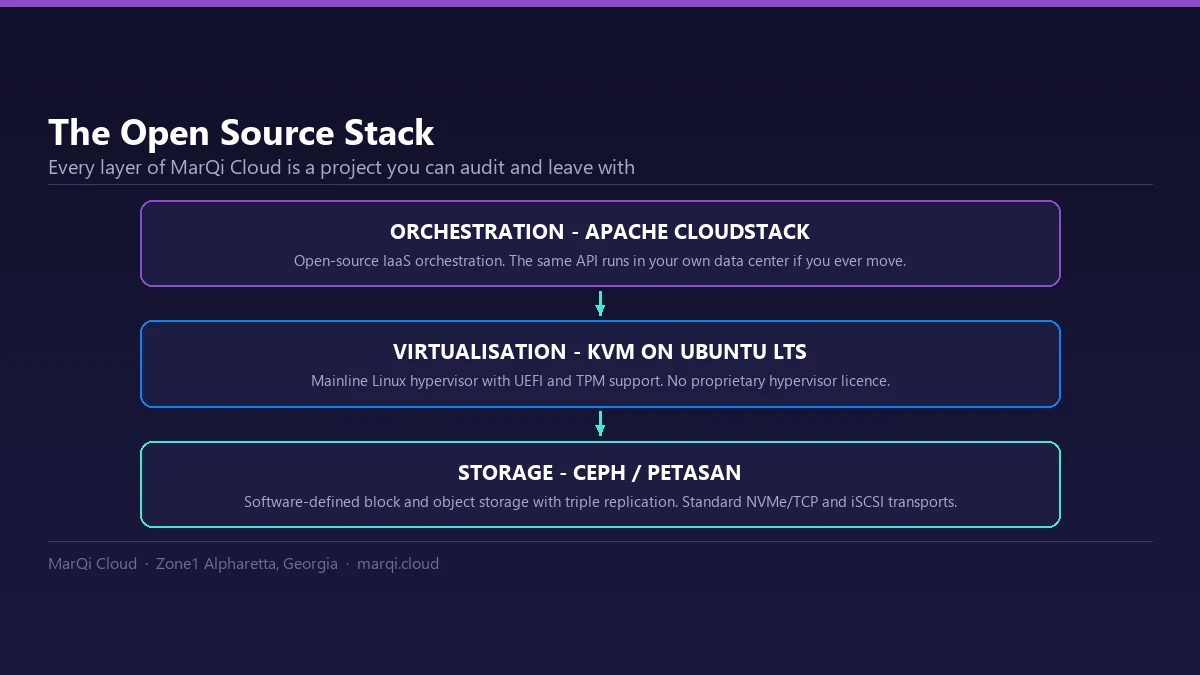
At MarQi Cloud, we understand the importance of flexibility and portability in today’s cloud landscape. Our hybrid cloud infrastructure is designed to support open source cloud APIs, allowing enterprises to deploy applications across multiple environments without the fear of vendor lock-in.
With our enterprise-grade cloud infrastructure and managed services, organizations can easily migrate workloads, optimize performance, and maintain compliance. We provide a comprehensive set of tools and resources to help businesses leverage the power of open source APIs effectively.
To learn more about our cloud migration services and how we can help your organization transition to a multi-cloud strategy, visit our solutions page.
Best Practices for Implementing Open Source Cloud APIs
To maximize the benefits of open source cloud APIs, organizations should consider the following best practices:
- Assess Compatibility: Before implementing open source APIs, ensure that they are compatible with your existing cloud infrastructure.
- Focus on Security: Implement robust security measures to protect data when using open source APIs.
- Train Your Team: Provide training for your development team to ensure they understand how to leverage open source APIs effectively.
- Monitor Performance: Continuously monitor the performance of applications using open source APIs to identify and resolve potential issues.
Conclusion
Open source cloud APIs play a crucial role in enabling multi-cloud portability without vendor lock-in. By leveraging these APIs, organizations can achieve greater flexibility, cost efficiency, and interoperability across different cloud environments. MarQi Cloud is committed to providing enterprise-grade cloud solutions that empower businesses to take full advantage of open source technologies. To explore how our infrastructure can support your multi-cloud strategy, contact us today.
FAQ
1. What is vendor lock-in in cloud computing?
Vendor lock-in refers to the situation where a customer becomes dependent on a specific cloud provider, making it difficult to switch to another provider without incurring significant costs or operational disruptions.
2. How do open source cloud APIs help avoid vendor lock-in?
Open source cloud APIs promote interoperability between different cloud platforms, allowing organizations to move workloads and data seamlessly without being tied to a specific vendor.
3. What are the benefits of using open source cloud APIs?
Open source cloud APIs offer cost efficiency, flexibility, interoperability, and community support, making them an attractive choice for organizations looking to optimize their cloud strategies.
4. Can open source APIs be used in hybrid cloud environments?
Yes, open source APIs are designed to facilitate integration between public and private cloud environments, making them ideal for hybrid cloud deployments.
5. What industries are adopting open source cloud APIs?
Industries such as financial services, e-commerce, and education are increasingly adopting open source cloud APIs to enhance flexibility and scalability in their cloud strategies.
6. How can organizations implement open source cloud APIs effectively?
Organizations can implement open source cloud APIs effectively by assessing compatibility, focusing on security, training their teams, and continuously monitoring performance.
7. What role does MarQi Cloud play in supporting open source cloud APIs?
MarQi Cloud provides enterprise-grade cloud infrastructure and managed services that support open source cloud APIs, enabling organizations to leverage their benefits without vendor lock-in.
8. Are there any risks associated with using open source cloud APIs?
While open source cloud APIs offer many benefits, organizations should be aware of potential security risks and ensure robust measures are in place to protect their data.