Why Platform Engineering Teams Embrace Internal Developer Platforms on Cloud Infrastructure
August 16, 2026
How Automated Runbooks Reduce Mean Time to Recovery for Cloud Incidents
August 17, 2026
What does cloud infrastructure monitoring actually cover?
Cloud infrastructure monitoring tracks the performance, availability and security of cloud resources: virtual machines, storage systems, network traffic and applications. The point is to identify problems before they escalate into downtime rather than to collect metrics for their own sake. Open source tools cover the same ground as commercial suites when they are combined deliberately, and this guide compares the ones that do.
The Complete Guide to Cloud Infrastructure Monitoring with Open Source Tools
In today’s fast-paced digital landscape, effective cloud infrastructure monitoring is essential for maintaining the performance, security, and reliability of your enterprise systems. With organizations increasingly embracing hybrid cloud solutions, the need for comprehensive monitoring tools has never been more critical. This guide will delve into the intricacies of cloud infrastructure monitoring, particularly focusing on open source tools that can be leveraged for optimal results. By the end of this article, you will understand how to implement robust monitoring strategies, evaluate various tools, and utilize best practices to ensure your cloud environment operates smoothly.
Understanding Cloud Infrastructure Monitoring
Cloud infrastructure monitoring involves tracking the performance, availability, and security of cloud-based resources. This can include virtual machines, storage systems, network traffic, and applications. Effective monitoring allows organizations to identify potential issues before they escalate, ensuring business continuity and optimal performance.
Importance of Cloud Monitoring
Monitoring is vital for several reasons:
- Performance Optimization: Regular monitoring helps identify bottlenecks and inefficiencies, allowing for timely adjustments.
- Security Management: Monitoring tools can detect unauthorized access attempts and vulnerabilities, enhancing security posture.
- Cost Management: By tracking resource usage, organizations can optimize their expenditures, avoiding unnecessary costs associated with underutilized resources.
- Compliance and Reporting: For businesses in regulated industries, monitoring can help ensure compliance with various standards and provide audit trails.
Key Features of Effective Monitoring Tools
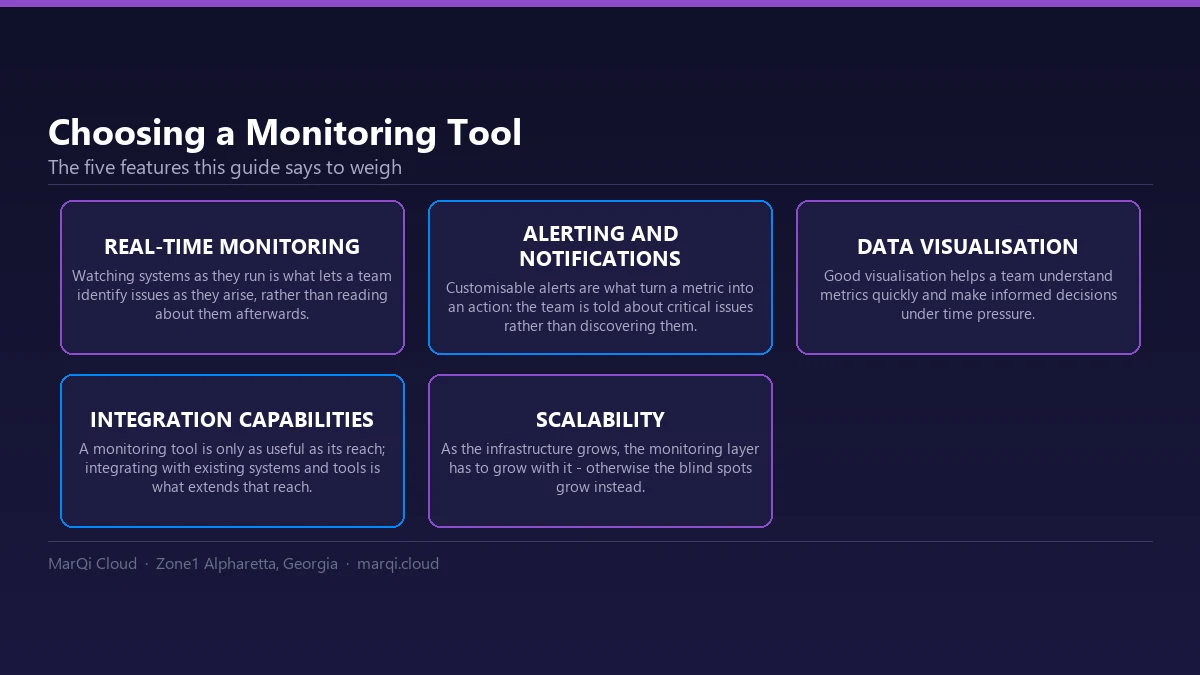
When selecting monitoring tools, consider the following features:
- Real-time Monitoring: The ability to monitor systems in real-time is crucial for identifying issues as they arise.
- Alerting and Notifications: Effective tools should provide customizable alerts to notify teams of critical issues.
- Data Visualization: Good visualization capabilities help teams understand metrics quickly and make informed decisions.
- Integration Capabilities: The ability to integrate with existing systems and tools enhances the effectiveness of monitoring solutions.
- Scalability: As your infrastructure grows, your monitoring tools should be able to scale accordingly.
Top Open Source Monitoring Tools
Open source tools offer flexibility and cost-effectiveness for organizations seeking to enhance their cloud infrastructure monitoring. Here are some of the most popular options:
1. Prometheus
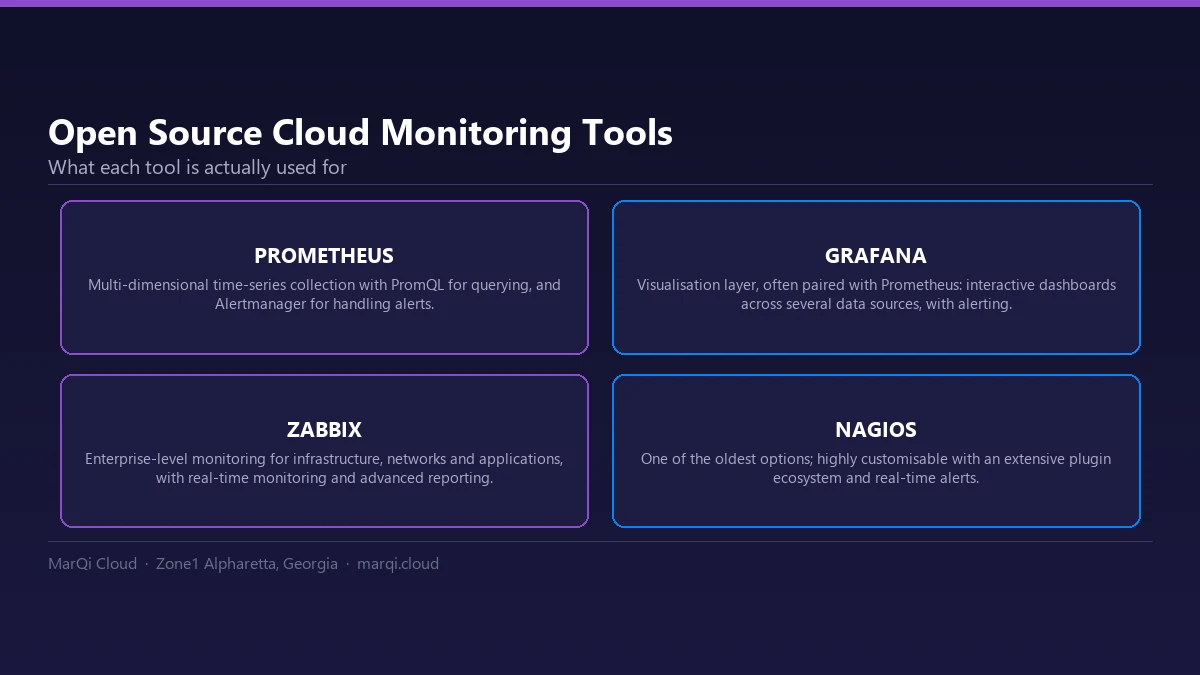
Prometheus is a powerful open-source monitoring solution widely used in cloud environments. It provides a multi-dimensional data model, allowing users to collect metrics from various sources. Key features include:
- Time-series data collection
- Powerful querying language (PromQL)
- Alertmanager for handling alerts
2. Grafana
Grafana is often used in conjunction with Prometheus for data visualization. It provides interactive dashboards to visualize metrics, making it easier for teams to monitor performance. Key features include:
- Customizable dashboards
- Support for various data sources
- Alerting capabilities
3. Zabbix
Zabbix is an enterprise-level monitoring solution that supports monitoring of cloud infrastructure, networks, and applications. It offers a comprehensive suite of features, including:
- Real-time monitoring
- Advanced reporting capabilities
- Customizable alerts
4. Nagios
Nagios is one of the oldest monitoring solutions available and is known for its robustness. It is highly customizable and can monitor a wide range of devices. Key features include:
- Extensive plugin ecosystem
- Real-time alerts
- Flexible configuration options
5. ELK Stack (Elasticsearch, Logstash, Kibana)
The ELK Stack is a powerful set of tools for log management and analysis. It allows organizations to collect, store, and visualize log data, providing insights into system performance. Key features include:
- Centralized logging
- Powerful search capabilities
- Customizable visualizations
Comparison Table of Open Source Monitoring Tools
| Tool | Real-time Monitoring | Data Visualization | Alerting | Integration |
|---|---|---|---|---|
| Prometheus | Yes | Grafana | Yes | High |
| Grafana | Yes | Yes | Yes | High |
| Zabbix | Yes | Yes | Yes | Medium |
| Nagios | Yes | Limited | Yes | High |
| ELK Stack | Yes | Yes | Limited | High |
Implementing Monitoring Strategies
To effectively implement monitoring strategies in your organization, follow these steps:
- Define Your Objectives: Identify what you want to achieve with monitoring, such as performance optimization or security enhancement.
- Choose the Right Tools: Evaluate the features and capabilities of various tools to select the ones that best meet your needs.
- Set Up Monitoring Metrics: Determine which metrics are most important for your environment and configure your tools accordingly.
- Establish Alerting Mechanisms: Set up alerts to notify your team of critical issues, ensuring they are actionable and relevant.
- Regularly Review and Optimize: Continuously review your monitoring setup to ensure it remains effective and relevant as your infrastructure evolves.
Best Practices for Cloud Monitoring
Here are some best practices to keep in mind when monitoring your cloud infrastructure:
- Centralize Monitoring: Use a centralized monitoring solution to collect data from all your cloud resources to streamline visibility.
- Automate Alerts: Automate alerts to ensure immediate notification of issues, reducing response times.
- Utilize Dashboards: Create dashboards that provide at-a-glance views of system performance for your team.
- Implement Anomaly Detection: Use tools that can identify unusual patterns in your data, which may indicate potential issues.
- Regular Audits: Conduct regular audits of your monitoring setup to ensure it aligns with your business objectives.
Common Challenges and How to Overcome Them
Monitoring cloud infrastructure can present several challenges:
- Data Overload: With extensive data being collected, it can be challenging to focus on what matters. To overcome this, prioritize key metrics and set up relevant alerts.
- Integration Issues: Ensuring all tools work seamlessly together can be difficult. Choose tools that offer robust integration capabilities.
- Cost Management: Monitoring tools can incur costs if not managed properly. Use open source tools to minimize expenses and regularly review usage.
FAQ
What is cloud infrastructure monitoring?
Cloud infrastructure monitoring involves tracking the performance, availability, and security of cloud resources to ensure optimal operation.
Why is monitoring important in cloud environments?
Monitoring is crucial for performance optimization, security management, cost management, and compliance with regulations.
What are the best open source tools for cloud monitoring?
Some of the best open source tools include Prometheus, Grafana, Zabbix, Nagios, and the ELK Stack.
How can I implement cloud monitoring effectively?
Effective implementation involves defining objectives, choosing the right tools, setting up relevant metrics, and regularly reviewing the setup.
What metrics should I monitor in the cloud?
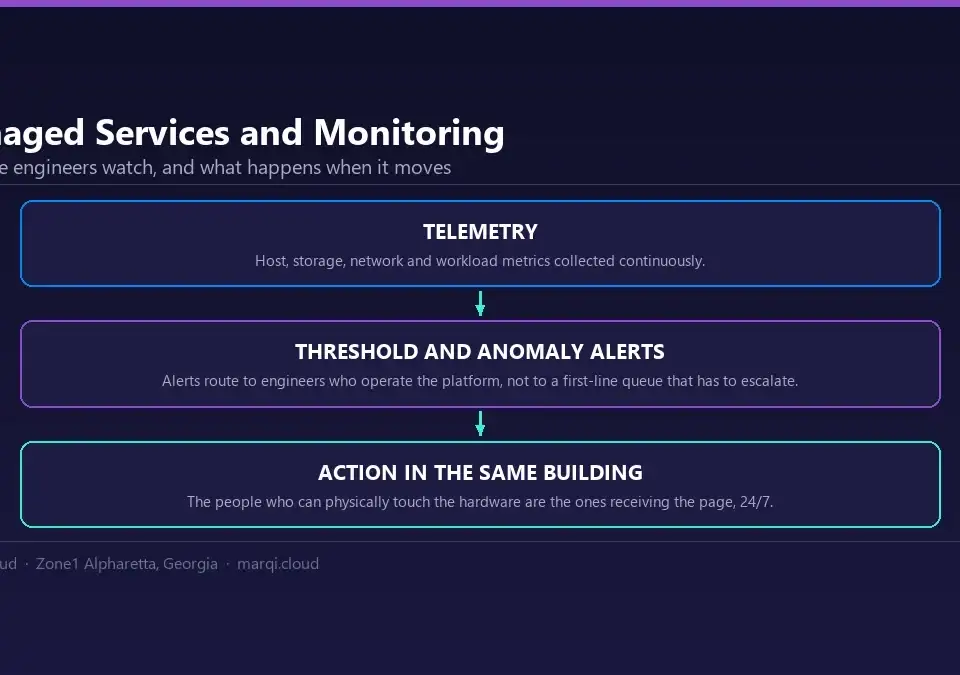
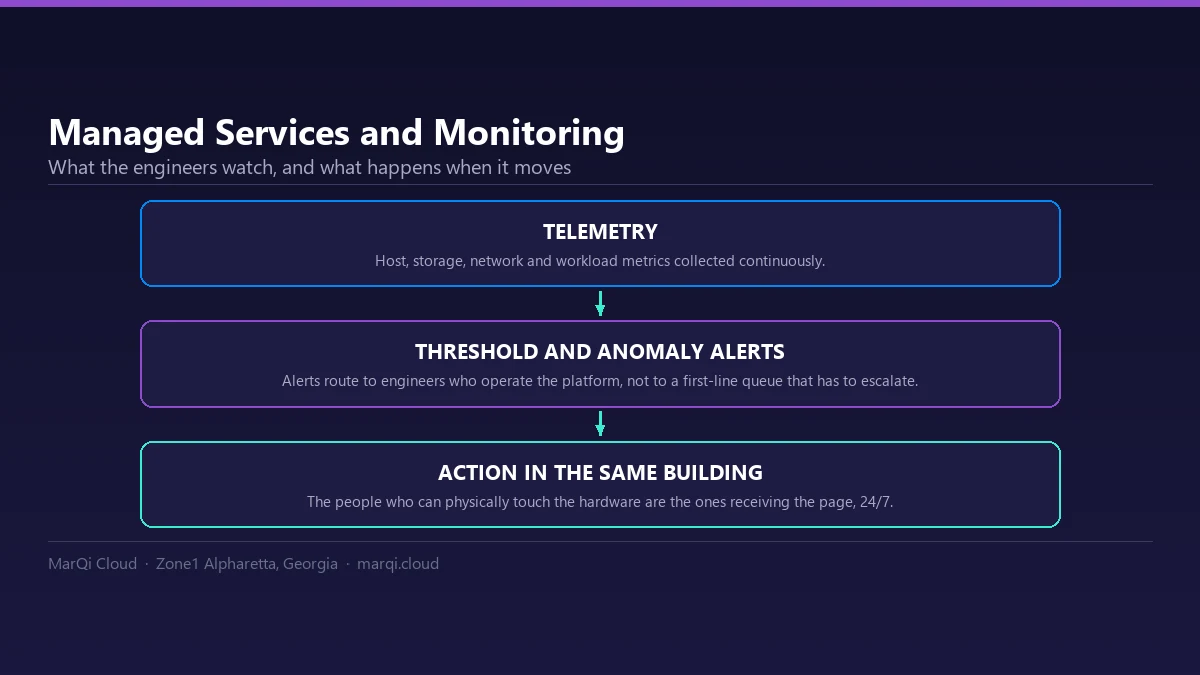
Key metrics include CPU usage, memory usage, network traffic, disk I/O, and application response times. Watching them is only half of it — someone has to act when a threshold breaks, which is what enterprise cloud monitoring with a 24/7 NOC is for.
How can I optimize cloud monitoring costs?
Utilize open source tools, regularly review resource usage, and prioritize key metrics to optimize monitoring costs.
What is the difference between open source and proprietary monitoring tools?
Open source tools are typically free and customizable, whereas proprietary tools often come with licensing fees and limited customization options.
How often should I review my monitoring setup?
Regular audits should be conducted at least quarterly to ensure your monitoring setup remains effective and aligned with business goals.