Why MarQi Cloud’s Dedicated GPU Clusters Are Ideal for LLM Fine-Tuning
July 2, 2026
MarQi Cloud Year in Review 2026: Innovations and Future Outlook
July 2, 2026
Cloud Security in 2026: How MarQi Cloud Keeps Your Data Safe by Default
As we move further into the digital age, the importance of cloud security continues to grow exponentially. By 2026, the landscape of cloud security will have transformed, driven by advancements in technology, regulatory changes, and evolving threats. For enterprises, ensuring the safety and integrity of data stored in the cloud is not just a priority; it’s a necessity. MarQi Cloud stands at the forefront of this evolution, providing enterprise-grade cloud solutions designed with security as a foundational element. In this article, we will explore how MarQi Cloud keeps your data safe by default, examining the strategies, technologies, and best practices that make our infrastructure robust against the myriad of cyber threats.
Understanding Cloud Security
Cloud security encompasses a broad range of policies, technologies, and controls designed to protect data, applications, and infrastructures involved in cloud computing. It includes both physical and virtual security measures, ensuring that sensitive information remains confidential and protected from unauthorized access. In 2026, as more businesses transition to cloud environments, understanding the nuances of cloud security becomes paramount.
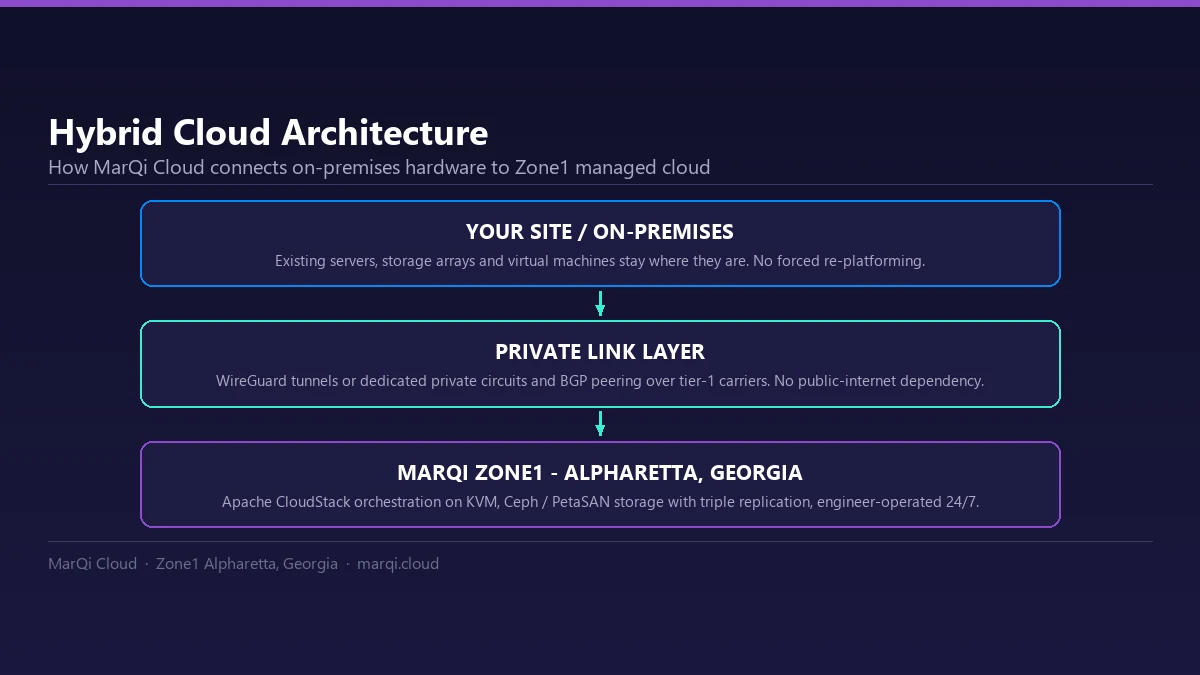
MarQi Cloud recognizes that security is not a one-size-fits-all solution. Our approach is tailored to meet the unique needs of each enterprise client, ensuring that their specific security requirements are met. With our hybrid cloud solutions, we provide a flexible environment that can adapt to the evolving security landscape.
The Evolving Threat Landscape in 2026
The threat landscape is continuously changing, with cybercriminals employing increasingly sophisticated methods to exploit vulnerabilities. In 2026, we expect to see a rise in the following threats:
- Advanced Persistent Threats (APTs): These are prolonged and targeted cyberattacks, often orchestrated by well-funded groups aiming to steal sensitive information.
- Ransomware Attacks: Ransomware will continue to evolve, targeting not just individual users but also entire organizations, making robust security measures essential.
- Insider Threats: Employees or contractors with malicious intent can pose a significant risk, necessitating stringent access controls and monitoring.
- IoT Vulnerabilities: As the Internet of Things (IoT) expands, the number of connected devices increases, creating more entry points for attackers.
MarQi Cloud is committed to addressing these challenges head-on. Our managed services incorporate advanced security measures, ensuring that our clients are protected against these evolving threats.
MarQi Cloud’s Security Framework
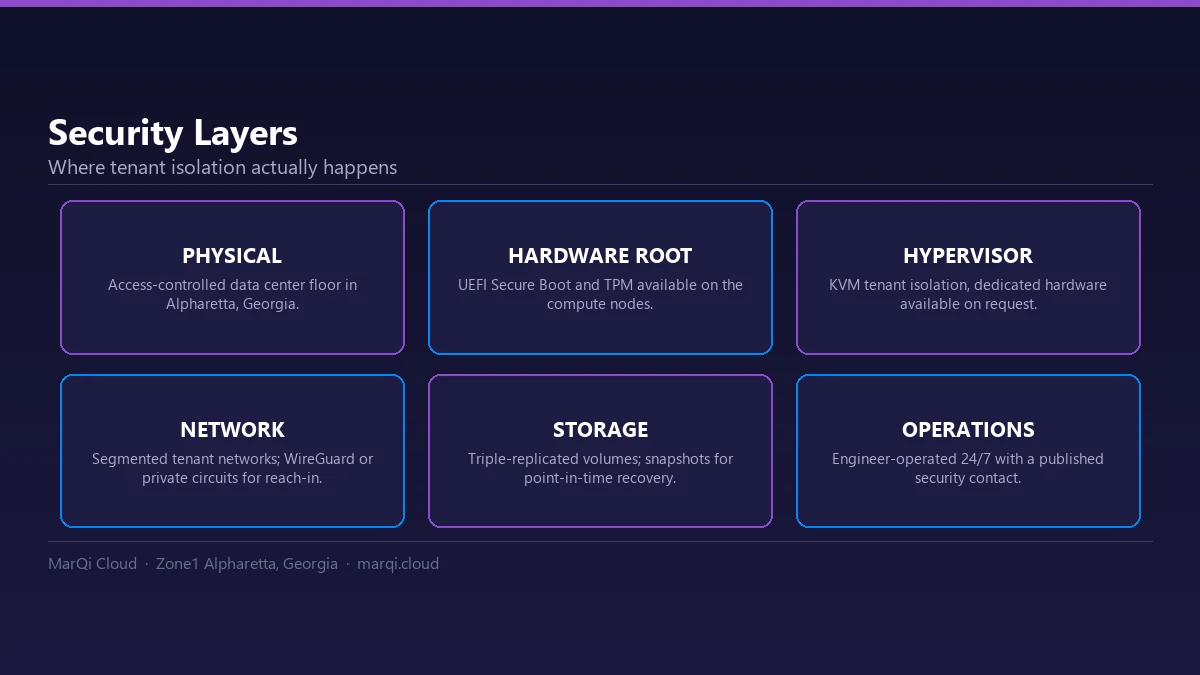
At MarQi Cloud, security is embedded into every layer of our infrastructure. Our security framework is built on the following key pillars:
1. Data Encryption
Data encryption is a fundamental component of our security approach. All data stored in MarQi Cloud is encrypted both at rest and in transit, utilizing industry-standard encryption protocols. This ensures that even if data is intercepted, it remains unintelligible to unauthorized users.
2. Zero Trust Architecture
We implement a zero trust architecture, which means that no one, whether inside or outside the organization, is automatically trusted. Every access request is verified, and strict identity and access management protocols are enforced. This minimizes the risk of insider threats and unauthorized access.
3. Regular Security Audits
Regular security audits are essential for identifying vulnerabilities and ensuring compliance with industry standards. MarQi Cloud does not claim compliance certifications, so plan your own audits of the workloads you run on the platform.
4. Advanced Threat Detection
Utilizing AI and machine learning, our advanced threat detection systems monitor network traffic for unusual patterns and potential threats. This proactive approach allows us to respond swiftly to any suspicious activity.
5. Compliance and Regulatory Standards
We support compliance with relevant regulations, including GDPR, HIPAA, and PCI DSS, which govern data protection and privacy. This commitment to compliance not only protects our clients but also enhances our reputation as a trustworthy cloud provider.
Best Practices for Cloud Security
To further enhance cloud security, organizations must adopt best practices that complement the security measures provided by their cloud provider. Here are some actionable tips:
- Implement Strong Password Policies: Encourage the use of complex passwords and multi-factor authentication (MFA) to add an additional layer of security.
- Regularly Update Software: Ensure that all software is kept up-to-date to protect against known vulnerabilities.
- Educate Employees: Provide training to employees on recognizing phishing attempts and other social engineering tactics.
- Backup Data Regularly: Implement a robust backup strategy to ensure data can be restored in case of an incident. MarQi Cloud offers snapshot and backup solutions that integrate seamlessly with your infrastructure.
- Monitor User Activity: Utilize monitoring tools to track user activity and detect any anomalies that may indicate a security breach.
The Future of Cloud Security
As we look to the future, cloud security will continue to evolve, driven by technology advancements and emerging threats. Here are some trends to watch in 2026:
- Increased Automation: Automation will play a critical role in enhancing security measures, allowing for faster threat detection and response.
- Greater Focus on User Education: Organizations will prioritize user education to mitigate risks associated with human error.
- Integration of AI in Security Tools: AI and machine learning will become integral in analyzing data patterns and predicting potential threats.
MarQi Cloud is committed to staying ahead of these trends, continuously innovating our security measures to ensure that our clients’ data remains safe.
FAQ
1. What is cloud security?
Cloud security refers to the set of policies, technologies, and controls designed to protect data, applications, and infrastructures involved in cloud computing.
2. How does MarQi Cloud ensure data security?
MarQi Cloud protects data with isolated private networks and encrypted WireGuard VPN access; your organization evidences its own compliance with regulatory standards.
3. What are the common threats to cloud security?
Common threats include advanced persistent threats, ransomware attacks, insider threats, and IoT vulnerabilities.
4. Why is data encryption important?
Data encryption is crucial because it protects sensitive information by making it unreadable to unauthorized users, even if data is intercepted.
5. What is zero trust architecture?
Zero trust architecture is a security model that requires verification for every access request, regardless of the user’s location within the network.
6. How often should organizations conduct security audits?
Organizations should conduct security audits regularly, at least annually, to identify vulnerabilities and ensure compliance with industry standards.
7. What role does employee training play in cloud security?
Employee training is vital in recognizing phishing attempts and other social engineering tactics, which can significantly reduce the risk of security breaches.
8. How can I get started with MarQi Cloud?
To get started with MarQi Cloud, visit our Getting Started page for detailed instructions and support.