How Database Clustering on Cloud Infrastructure Ensures High Availability
August 18, 2026
How In-Memory Caching Layers Reduce Database Load on Cloud Infrastructure
August 19, 2026
The Ultimate IT Engineer’s Guide to Cloud Storage IOPS Optimization
In today’s fast-paced digital landscape, the performance of cloud storage systems is paramount, especially for demanding workloads. As businesses increasingly adopt cloud infrastructure solutions, understanding how to optimize Input/Output Operations Per Second (IOPS) becomes crucial. This guide aims to equip IT engineers with the knowledge and tools necessary for effective cloud storage IOPS optimization. Here, we will explore best practices, strategies, and actionable insights tailored for enterprise environments, ensuring your cloud storage meets the high performance demands of modern applications.
Understanding IOPS in Cloud Storage
Input/Output Operations Per Second (IOPS) is a critical metric that measures the performance of storage devices, particularly in cloud environments. It indicates how many read and write operations a storage system can perform in one second. For IT engineers, understanding IOPS is essential for ensuring that applications run smoothly and efficiently. In cloud storage, IOPS can be influenced by various factors, including the type of storage (e.g., SSD vs. HDD), the architecture of the cloud environment, and the workload characteristics.
Types of IOPS
IOPS can be categorized into two main types:
- Random IOPS: Refers to the ability of a storage system to handle multiple read and write requests that are not sequential. This is particularly important for databases and applications that require quick access to data.
- Sequential IOPS: Involves reading and writing data in a sequential manner. This type of IOPS is essential for workloads that process large files, such as data backups and video streaming.
The Importance of IOPS Optimization
Optimizing IOPS is crucial for several reasons:
- Performance Enhancement: Higher IOPS translates to faster data access and improved application performance. This is vital for mission-critical applications that require real-time data processing.
- Cost Efficiency: By optimizing storage resources, organizations can minimize costs associated with over-provisioning and improve their overall cloud spending. The MarQi Cloud offers flexible pricing models that can help businesses optimize their cloud storage costs while maintaining high performance.
- Scalability: As businesses grow, their storage needs evolve. Optimizing IOPS ensures that cloud storage can scale effectively to meet increasing demands without compromising performance.
- Business Continuity: Ensuring high IOPS performance reduces the risk of downtime and enhances disaster recovery capabilities. This is particularly important for enterprises that rely on continuous data availability.
Factors Affecting IOPS in Cloud Environments
Several factors can impact IOPS performance in cloud storage:
1. Storage Type
The type of storage used significantly affects IOPS. Solid State Drives (SSDs) typically offer higher IOPS compared to Hard Disk Drives (HDDs) due to their faster data access speeds. Organizations should evaluate their workload requirements to choose the appropriate storage type.
2. Network Latency
Network latency can hinder IOPS performance, especially in hybrid cloud environments. The storage protocol adds its own overhead: how NVMe-oF and iSCSI differ. Latency refers to the delay in data transmission between the storage and the application. Implementing dedicated connections or private circuits can help minimize latency and enhance IOPS performance.
3. Workload Characteristics
The nature of the workload also plays a significant role. For instance, applications that demand high random read/write operations will require different IOPS configurations compared to those that handle large sequential data transfers.
4. Configuration and Tuning
Proper configuration of storage systems is vital for optimizing IOPS. This includes selecting the right block sizes, adjusting cache settings, and implementing Quality of Service (QoS) policies. Regularly tuning these parameters can lead to significant performance improvements.
5. Resource Contention
In multi-tenant environments, multiple applications may compete for the same storage resources, leading to decreased IOPS performance. Implementing isolation techniques and resource allocation strategies can help mitigate this issue.
Strategies for Optimizing IOPS
To achieve optimal IOPS performance, IT engineers can implement several strategies:
1. Choose the Right Storage Solution
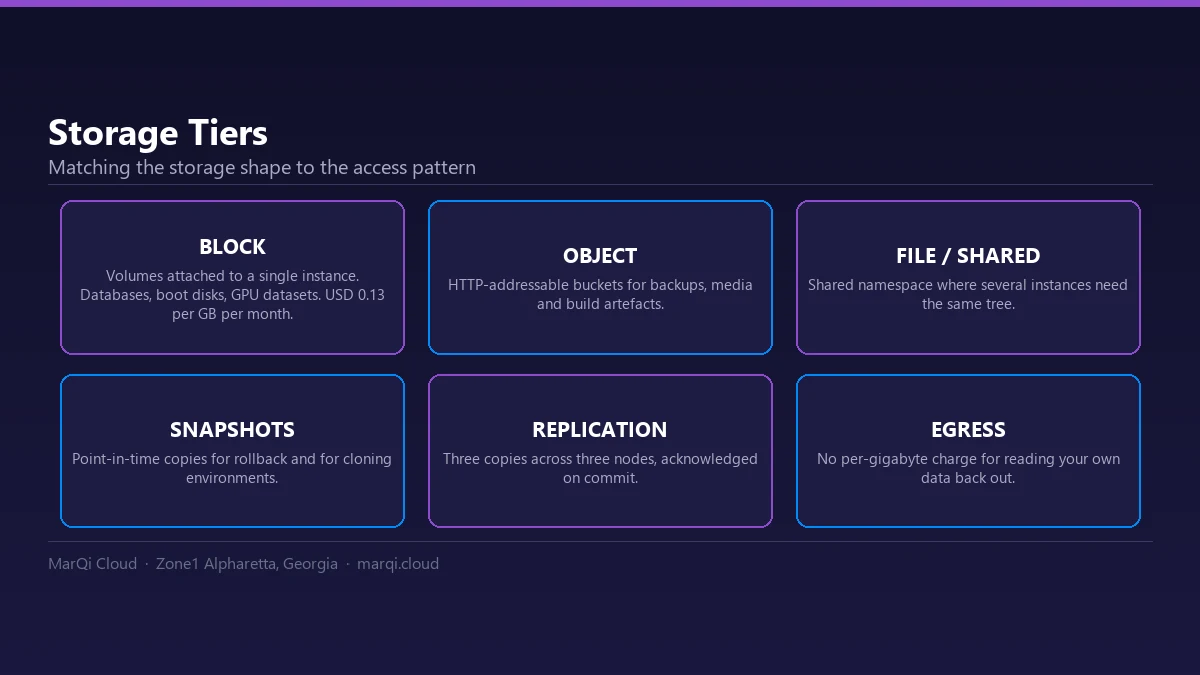
Selecting the appropriate storage solution is the first step in IOPS optimization. MarQi Cloud offers enterprise-grade cloud infrastructure that supports both SSD and HDD options, allowing businesses to tailor their storage solutions to their specific workload requirements.
2. Implement Caching Mechanisms
Caching can significantly improve IOPS performance by storing frequently accessed data in faster storage media. Consider using in-memory databases or caching layers to enhance application responsiveness.
3. Optimize Block Sizes
Adjusting block sizes can have a profound impact on IOPS performance. Smaller block sizes may improve random IOPS, while larger block sizes can benefit sequential workloads. Evaluate your applications to determine the optimal block size configuration.
4. Utilize Quality of Service (QoS) Policies
Implementing QoS policies can help prioritize critical workloads, ensuring that they receive the necessary IOPS even during peak usage. This is especially important in multi-tenant cloud environments.
5. Monitor and Analyze Performance
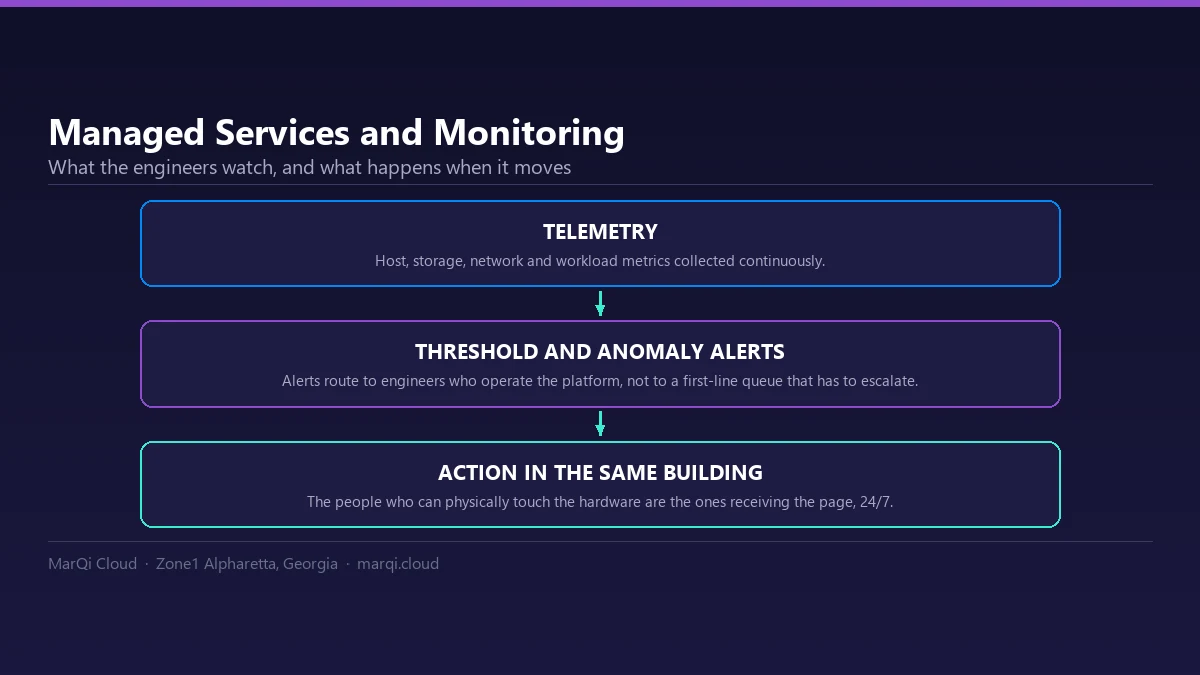
Regular monitoring of IOPS performance is essential for identifying bottlenecks and optimizing configurations. Use monitoring tools to track performance metrics and analyze trends over time. MarQi Cloud’s status and monitoring solutions provide real-time insights into your cloud infrastructure.
6. Leverage Hybrid Cloud Solutions
Utilizing hybrid cloud solutions can enhance IOPS performance by allowing organizations to distribute workloads across on-premise and cloud environments. This flexibility enables better resource allocation and performance optimization. Learn more about MarQi Cloud’s hybrid cloud offerings to see how they can benefit your organization.
| Storage Type | Average IOPS | Use Cases |
|---|---|---|
| SSD | 30,000+ | High-performance databases, virtual machines |
| HDD | 150-300 | Backup storage, archival data |
| Cloud SAN | Up to 100,000 | Enterprise applications, large-scale workloads |
Monitoring and Measuring IOPS Performance
Effective monitoring is key to maintaining optimal IOPS performance. IT engineers should employ the following practices:
1. Use Performance Monitoring Tools
Implement performance monitoring tools to track IOPS metrics continuously. Tools like Prometheus and Grafana can provide valuable insights into storage performance. Additionally, consider using MarQi Cloud’s built-in monitoring solutions to keep an eye on your infrastructure.
2. Analyze Historical Data
Review historical performance data to identify trends and potential issues. This analysis can help you make informed decisions about resource allocation and configuration adjustments.
3. Set Alerts for Performance Degradation
Establish alerts for significant drops in IOPS performance. Timely notifications can help IT teams respond quickly to performance issues before they impact end-users.
Example Scenarios: Applying IOPS Optimization
The scenarios below are illustrative, not customer case studies; they show how the strategies above map to common workloads.
Scenario 1: E-commerce Platform
An e-commerce platform whose product catalog and checkout share one database volume would typically start by moving that volume to SSD-backed storage, adding a read cache for catalog queries, and applying QoS limits so batch jobs cannot starve checkout I/O. The gain depends on the starting point and should be measured with the monitoring approach described above.
Scenario 2: Financial Services
A financial services team running real-time analytics alongside transactional systems might keep latency-sensitive databases on dedicated high-IOPS volumes and move reporting workloads to separate storage, so analytical scans do not compete with transaction writes.
Scenario 3: Media Streaming Service
A media streaming service serving large sequential files would usually tune block size for large reads and place a cache in front of popular content, which reduces the number of I/O operations the storage layer has to serve during peak traffic.
Frequently Asked Questions
What is IOPS in cloud storage?
IOPS stands for Input/Output Operations Per Second and measures the number of read and write operations a storage system can perform in a second. It is a critical metric for assessing storage performance.
Why is IOPS important for cloud workloads?
High IOPS is essential for ensuring fast data access and optimal application performance, particularly for workloads that require real-time data processing.
How can I optimize IOPS in my cloud environment?
To optimize IOPS, consider choosing the right storage solution, implementing caching mechanisms, adjusting block sizes, and utilizing QoS policies.
What factors affect IOPS performance?
Factors affecting IOPS include storage type, network latency, workload characteristics, configuration, and resource contention.
What types of storage provide the highest IOPS?
Solid State Drives (SSDs) typically provide the highest IOPS compared to Hard Disk Drives (HDDs) and other storage solutions.
How can I monitor IOPS performance?
Use performance monitoring tools to track IOPS metrics, analyze historical data, and set alerts for performance degradation.
What is the role of caching in IOPS optimization?
Caching improves IOPS performance by storing frequently accessed data in faster storage media, reducing access times for applications.
How does MarQi Cloud support IOPS optimization?
MarQi Cloud offers enterprise-grade infrastructure, flexible storage options, and monitoring solutions designed to optimize IOPS performance for demanding workloads.
What are the benefits of hybrid cloud solutions for IOPS?
Hybrid cloud solutions allow for better resource allocation and performance optimization by distributing workloads across on-premise and cloud environments.
Can IOPS optimization reduce cloud costs?
Yes, optimizing IOPS can lead to more efficient resource utilization, reducing costs associated with over-provisioning and improving overall cloud spending.
How do I choose the right storage type for my workload?
Evaluate your workload requirements, considering factors like performance needs, data access patterns, and budget constraints to select the appropriate storage type.
Where can I learn more about cloud storage options?
Explore MarQi Cloud’s storage architecture page for detailed insights into storage solutions tailored for enterprise needs.
Conclusion
In conclusion, optimizing IOPS in cloud storage is essential for ensuring high performance, cost efficiency, and scalability for demanding workloads. By understanding the factors that influence IOPS and implementing effective strategies, IT engineers can significantly enhance their cloud storage performance. With MarQi Cloud’s enterprise-grade solutions and expert support, businesses can thrive in the ever-evolving digital landscape. Take the first step towards optimizing your cloud infrastructure by exploring our cloud solutions today!