Cloud Storage for Enterprises: Understanding Block, Object, and File Storage
March 4, 2026
Hosting for MSPs: How to Offer Private Cloud to US Clients
March 4, 2026
What counts as high IOPS cloud storage, and when do you need it?
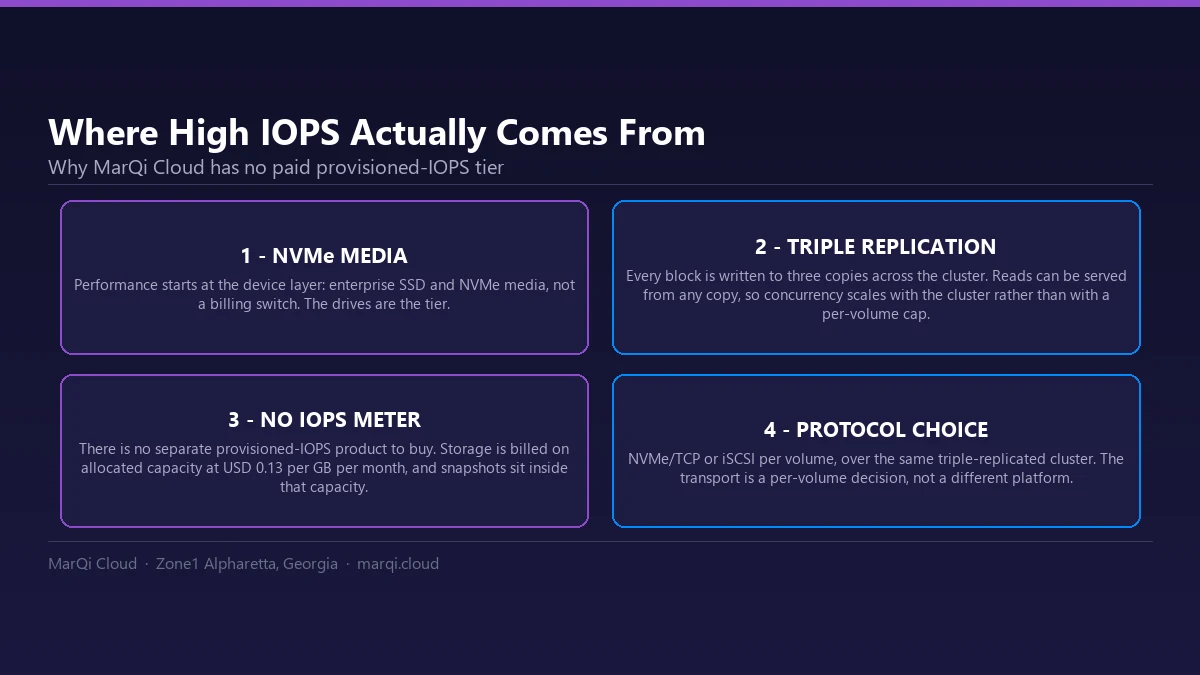
IOPS matters when your workload is limited by how many small operations the storage can complete per second — transactional databases and analytics queries, not bulk file transfer. The number to watch is latency under concurrency: sustained IOPS at low queue latency is what a database actually experiences.
High-IOPS Storage: Why It Matters for Databases and Analytics
In the rapidly evolving landscape of data management, businesses are consistently seeking ways to enhance performance and efficiency. One of the critical factors that influence these aspects is the type of storage solution implemented, particularly in the context of databases and analytics. High-IOPS (Input/Output Operations Per Second) storage has emerged as a game-changer. This article delves deep into the significance of High-IOPS storage, exploring its impact on databases and analytics, and why it is an essential consideration for modern enterprises.
What Is High-IOPS Storage and When Do You Need It?
High-IOPS storage refers to storage systems designed to handle a high number of read and write operations per second. This performance metric is particularly crucial for applications that require rapid access to data, such as databases and analytical tools. Unlike traditional storage solutions that may struggle under heavy loads, High-IOPS storage is engineered to deliver consistent performance even during peak usage times.
The Importance of IOPS
IOPS is a key performance indicator that reflects the speed at which a storage system can read from or write to storage media. On a cloud SAN the transport between host and storage matters just as much — see NVMe over TCP vs iSCSI. Higher IOPS values indicate a storage system’s ability to handle more operations in less time, making it vital for:
- Database Performance: Databases often require quick access to data for transactions, queries, and updates. High-IOPS storage ensures that these operations are completed swiftly, minimizing latency.
- Analytics Efficiency: Analytics applications often process vast amounts of data. With High-IOPS storage, data can be accessed and analyzed faster, leading to timely insights and decision-making.
Key Benefits of High-IOPS Storage
Implementing High-IOPS storage solutions can yield numerous benefits for businesses. Here are some of the most compelling advantages: How those writes actually reach durable storage, and what a commit costs when they do, is described in PostgreSQL’s WAL configuration documentation. Database engines also expose their own controls for this; PostgreSQL’s resource consumption settings cover the buffer and I/O concurrency parameters that decide how much of the available IOPS a server will actually use.
1. Enhanced Performance
High-IOPS storage significantly improves application performance. By reducing the time it takes to retrieve or store data, businesses can enjoy quicker response times and a better user experience. This is particularly important for applications that rely on real-time data access.
2. Scalability
As businesses grow, so do their data needs. High-IOPS storage solutions are designed to scale seamlessly, allowing organizations to expand their storage capabilities without sacrificing performance. This scalability is crucial for accommodating increased data volumes and user demands.
3. Improved Reliability
High-IOPS storage systems often come with built-in redundancy and failover capabilities, ensuring that data remains accessible even in the event of hardware failures. This reliability is essential for maintaining business continuity and minimizing downtime.
4. Better Resource Utilization
High-IOPS storage maximizes resource utilization by enabling multiple applications to run simultaneously without performance degradation. This efficiency can lead to cost savings as businesses can optimize their infrastructure.
5. Enhanced Data Integrity
Data integrity is critical for businesses that depend on accurate information. High-IOPS storage solutions often incorporate advanced data protection features, ensuring that data remains consistent and secure throughout its lifecycle.
Use Cases for High-IOPS Storage
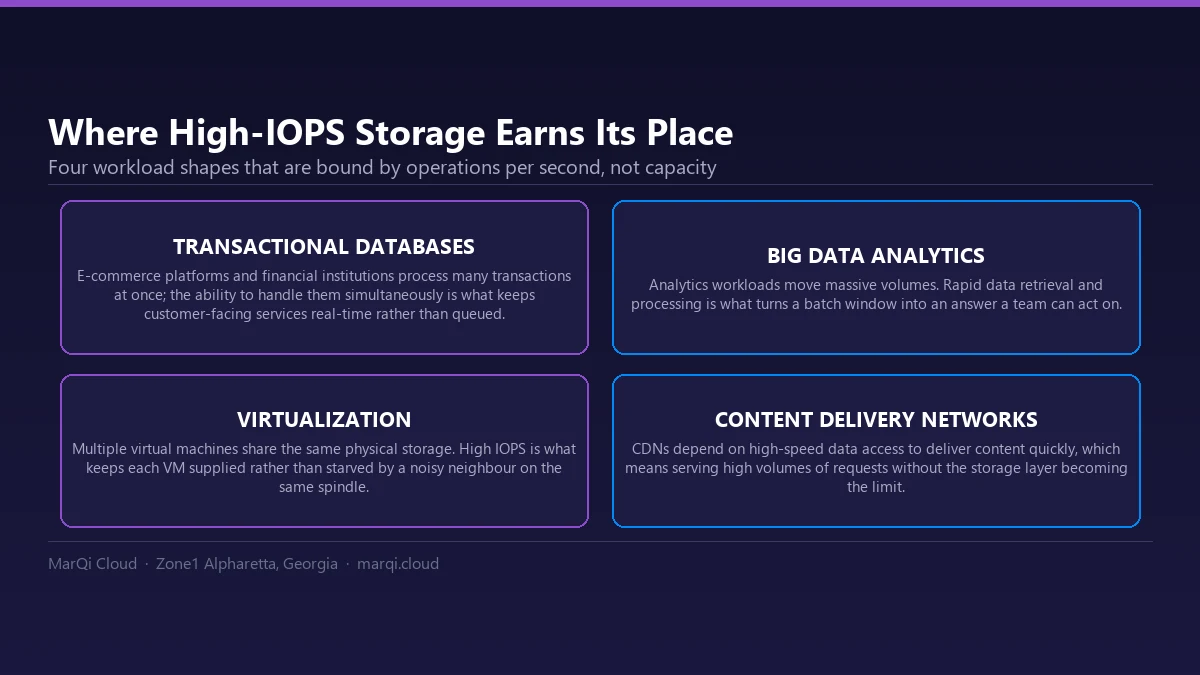
High-IOPS storage is particularly beneficial in various scenarios, including:
1. Transactional Databases
For businesses that rely on transactional databases, such as e-commerce platforms or financial institutions, High-IOPS storage is crucial. The ability to process numerous transactions simultaneously ensures that customers receive real-time services without delay.
2. Big Data Analytics
Organizations leveraging big data analytics require storage solutions that can handle massive workloads. High-IOPS storage facilitates rapid data retrieval and processing, enabling businesses to derive insights more efficiently.
3. Virtualization
In virtualized environments, multiple virtual machines (VMs) share the same physical storage. High-IOPS storage ensures that each VM receives the necessary resources to operate effectively, enhancing overall system performance.
4. Content Delivery Networks (CDNs)
CDNs depend on high-speed data access to deliver content quickly to users. High-IOPS storage solutions provide the speed required to serve high volumes of requests efficiently.
Choosing the Right High-IOPS Storage Solution
When selecting a High-IOPS storage solution, businesses should consider several factors:
1. Type of Storage
There are various types of storage solutions, including SSDs (Solid State Drives) and traditional HDDs (Hard Disk Drives). SSDs typically offer higher IOPS and faster data access speeds, making them a preferred choice for high-performance applications.
2. Storage Architecture
The architecture of the storage system, whether it’s block storage, file storage, or object storage, will impact performance. Businesses should choose an architecture that aligns with their specific needs.
3. Cost Considerations
While High-IOPS storage solutions can be more expensive than traditional options, the performance benefits can justify the investment. Organizations should evaluate the potential return on investment (ROI) based on their specific workloads and requirements.
4. Vendor Support
Choosing a reliable vendor that offers robust support is crucial. Businesses should look for vendors that provide ongoing maintenance, updates, and customer support to ensure optimal performance.
Conclusion
In today’s data-driven world, High-IOPS storage is not just a luxury; it is a necessity for businesses that rely on databases and analytics. With its ability to enhance performance, scalability, and reliability, High-IOPS storage can empower organizations to make informed decisions, optimize operations, and stay competitive. As businesses continue to navigate the complexities of data management, investing in High-IOPS storage solutions will undoubtedly yield significant benefits.
FAQs
1. What is IOPS in storage?
IOPS stands for Input/Output Operations Per Second, a performance measurement that indicates how many read and write operations a storage system can perform in one second.
2. Why is High-IOPS storage important for databases?
High-IOPS storage is crucial for databases as it ensures quick access to data, minimizes latency, and enhances overall application performance.
3. How does High-IOPS storage benefit analytics applications?
High-IOPS storage allows analytics applications to process large volumes of data rapidly, leading to timely insights and better decision-making.
4. What are the main types of High-IOPS storage?
The primary types of High-IOPS storage include Solid State Drives (SSDs) and certain configurations of high-performance Hard Disk Drives (HDDs).
5. Can High-IOPS storage solutions scale with business growth?
Yes, High-IOPS storage solutions are designed to scale effectively, allowing businesses to expand their storage capabilities without sacrificing performance.
6. What factors should businesses consider when choosing High-IOPS storage?
Businesses should consider the type of storage, storage architecture, cost, and vendor support when selecting High-IOPS storage solutions.
7. How does High-IOPS storage ensure data integrity?
High-IOPS storage often includes advanced data protection features, ensuring data remains consistent and secure throughout its lifecycle.
8. What industries benefit the most from High-IOPS storage?
Industries such as finance, e-commerce, healthcare, and any organization relying on big data analytics greatly benefit from High-IOPS storage.