The Complete Guide to Cloud Backup Storage Strategies for Enterprise Data Protection
September 14, 2026
How Cloud Storage Deduplication Cuts Costs While Ensuring Data Integrity
September 15, 2026

How Erasure Coding in Cloud Storage Provides Durability Without Performance Penalty
Introduction
In the evolving landscape of cloud storage solutions, ensuring data durability while maintaining optimal performance is a critical challenge. As organizations increasingly migrate to cloud environments, the need for robust data protection mechanisms becomes paramount. Enter erasure coding—an innovative data protection technique that effectively balances durability and performance in cloud storage. This article delves into how erasure coding works, its advantages over traditional redundancy methods, and why it is becoming a preferred choice among enterprise cloud providers.
Readers will learn about the fundamental principles of erasure coding, its implementation in cloud storage systems, and the significant benefits it offers, particularly in enterprise-grade environments. We will also explore the unique offerings of MarQi Cloud, where our hybrid cloud solutions leverage cutting-edge technology to ensure your data remains secure and accessible.
What is Erasure Coding?
Erasure coding is a data protection technique that breaks data into fragments, expands it with redundant data pieces, and stores it across a distributed storage system. This method is designed to ensure that even if some fragments are lost, the original data can still be reconstructed. Unlike traditional replication methods, where entire copies of data are stored, erasure coding optimizes storage efficiency while enhancing durability.
Erasure Coding vs. Replication
To illustrate the differences between erasure coding and traditional replication, consider the following:
| Feature | Erasure Coding | Replication |
|---|---|---|
| Storage Efficiency | High (requires less storage space) | Low (multiple copies of data) |
| Durability | High (data can be reconstructed from fragments) | Moderate (data is lost if the copy is lost) |
| Performance Impact | Minimal | Higher due to multiple copies |
How Erasure Coding Works
The process of erasure coding involves several steps:
- Data Fragmentation: The original data is divided into smaller fragments.
- Redundant Data Generation: Additional redundant fragments are created using algorithms such as Reed-Solomon.
- Distribution: Both the original and redundant fragments are distributed across different storage nodes.
- Reconstruction: In the event of data loss, the original data can be reconstructed from the remaining fragments.
This technique not only enhances data durability but also optimizes storage resources, making it an ideal solution for enterprise cloud environments.
Advantages of Erasure Coding over Traditional Methods
Erasure coding offers numerous advantages compared to traditional data protection methods:
- Improved Durability: With erasure coding, data can withstand node failures without loss, providing a higher level of data protection.
- Increased Storage Efficiency: Since it uses less storage space than replication, organizations can save on costs while maximizing their data protection capabilities.
- Lower Performance Overheads: Unlike traditional methods, erasure coding incurs minimal performance penalties, allowing for faster data access and retrieval.
- Scalability: Erasure coding can easily scale with growing data requirements, making it suitable for businesses of all sizes.
Erasure Coding in Cloud Storage
In cloud storage environments, erasure coding plays a pivotal role in ensuring data integrity and availability. Major cloud providers, including MarQi Cloud, implement erasure coding to enhance their storage solutions.
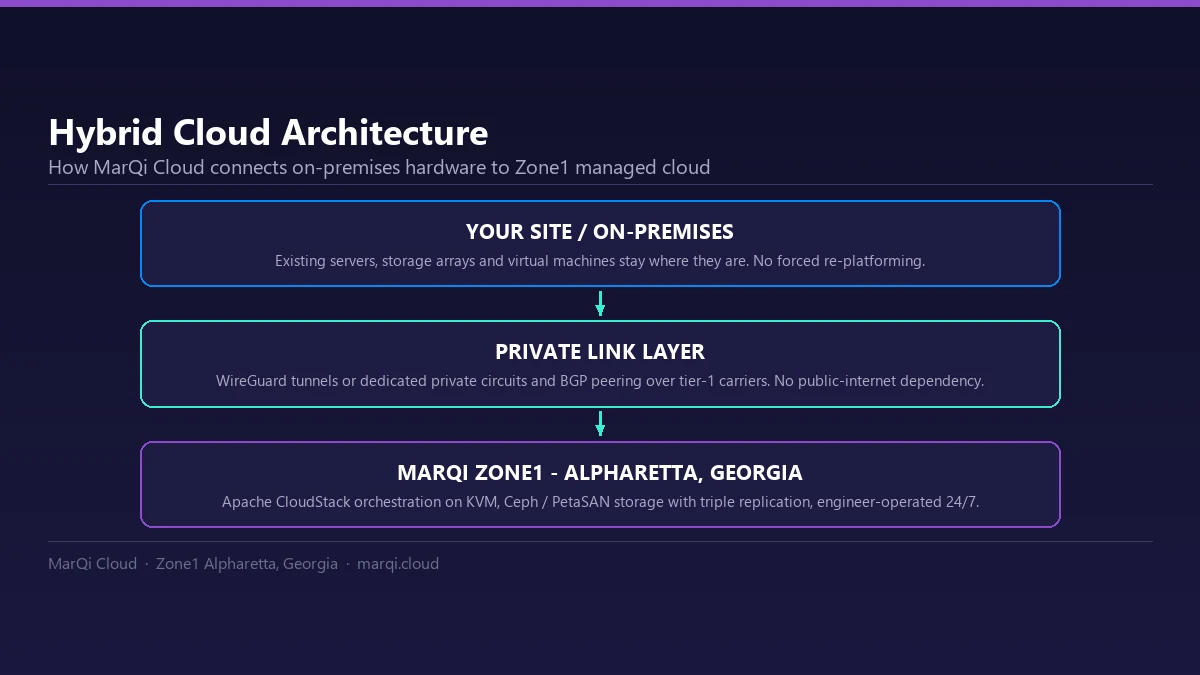
For instance, MarQi Cloud’s hybrid cloud infrastructure incorporates erasure coding to provide enterprise clients with secure and efficient data storage solutions. This is particularly beneficial for organizations that rely on scalable compute and storage resources, as it ensures high availability without compromising performance.
Performance Implications of Erasure Coding
One of the primary concerns regarding erasure coding is its potential impact on performance. However, modern implementations have proven that:
- Minimal Latency: The added overhead from encoding and decoding processes is often negligible, especially compared to the benefits of enhanced data durability.
- Optimized Read/Write Operations: Advanced storage systems can handle erasure coding efficiently, ensuring that read and write operations remain fast.
- Resource Utilization: By optimizing storage resources, organizations can allocate their infrastructure more effectively, leading to improved overall performance.
Best Practices for Implementing Erasure Coding
To maximize the benefits of erasure coding, organizations should consider the following best practices:
- Assess Data Types: Not all data may require erasure coding. Evaluate the criticality of data to determine suitable protection levels.
- Choose the Right Algorithm: Different erasure coding algorithms offer varying degrees of redundancy and performance. Select one that aligns with your business needs.
- Monitor Performance: Continuously monitor the performance of your storage system to ensure that erasure coding does not adversely affect operations.
- Regularly Test Data Recovery: Implement regular testing of data recovery processes to ensure that erasure coding functions as intended.
Case Studies: Erasure Coding in Action
Several organizations have successfully implemented erasure coding to enhance their data storage solutions:
Case Study 1: Healthcare Provider
A leading healthcare provider adopted erasure coding to secure sensitive patient data across its cloud environment. The implementation not only improved data durability but also ensured compliance with healthcare regulations, resulting in a 30% reduction in storage costs.
Case Study 2: E-commerce Platform
An e-commerce platform utilized erasure coding to protect its vast product catalog and transactional data. By adopting this technology, they achieved a 99.99% data availability rate, significantly boosting customer confidence and satisfaction.
Frequently Asked Questions
What is erasure coding?
Erasure coding is a data protection technique that divides data into fragments, adds redundant pieces, and distributes them across a storage system, allowing for data recovery even if some fragments are lost.
How does erasure coding differ from data replication?
Unlike data replication, which creates complete copies of data, erasure coding optimizes storage by using fragments and redundancy, resulting in better space efficiency and durability.
What are the main benefits of erasure coding?
Erasure coding offers improved durability, increased storage efficiency, lower performance overheads, and scalability, making it ideal for enterprise cloud storage.
Is erasure coding suitable for all types of data?
Not all data requires erasure coding. It’s best suited for critical data that demands high durability and availability.
How can I implement erasure coding in my cloud storage?
To implement erasure coding, assess your data types, choose the right algorithm, and continuously monitor performance to ensure optimal results.
Does erasure coding affect performance?
Modern implementations of erasure coding incur minimal performance penalties, allowing for fast data access while ensuring durability.
How does MarQi Cloud utilize erasure coding?
MarQi Cloud incorporates erasure coding in its hybrid cloud infrastructure to provide clients with secure, efficient, and scalable data storage solutions.
What should I consider when choosing a cloud provider?
Consider factors such as data durability, performance, compliance, and the implementation of technologies like erasure coding when selecting a cloud provider.
Conclusion
Erasure coding represents a significant advancement in data protection strategies, enabling organizations to achieve high durability without sacrificing performance. As businesses continue to embrace cloud storage solutions, understanding and implementing erasure coding will be essential in protecting critical data. With providers like MarQi Cloud offering robust hybrid cloud solutions that leverage this technology, organizations can confidently secure their data while optimizing storage resources.
For more information on how erasure coding can enhance your cloud storage strategy, contact MarQi Cloud today.