The Complete Guide to Cloud Infrastructure Decommissioning & Data Sanitization
October 17, 2026
How MarQi Cloud’s Performance, Security, and Zero Lock-In Shape Enterprise Infrastructure
October 18, 2026
Why Enterprise Cloud Architecture Should Be Designed for the Next Decade Not the Next Quarter
In an era defined by rapid technological advancements and shifting business landscapes, the architecture of enterprise cloud solutions must evolve beyond short-term thinking. As organizations strive to maintain competitive advantages, the need for a robust, future-oriented cloud architecture has never been more critical. This article will explore why enterprise cloud architecture should be designed for the next decade, not just the next quarter, and how organizations can leverage this approach for long-term success.
Understanding Enterprise Cloud Architecture
Enterprise cloud architecture refers to the structured design and implementation of cloud resources and services that support an organization’s operations. This architecture encompasses various components, including hardware, software, network, and data management systems. The goal is to create a cohesive and scalable environment that meets current and future business needs.
According to a report by the Gartner Group, global spending on cloud services is expected to reach $500 billion by 2023, underscoring the urgency for organizations to invest in a robust cloud architecture. To stay competitive, enterprises must not only adopt cloud solutions but also architect them to be adaptable to emerging technologies and market demands.
The Importance of Long-Term Planning
Short-term planning often leads to reactive decision-making, which can result in suboptimal cloud architecture that fails to meet the evolving needs of the business. Here are several reasons why long-term planning is essential:
- Adaptability: A long-term strategy allows for adaptability to new technologies and market shifts. Organizations can avoid the pitfalls of being locked into outdated systems.
- Cost Efficiency: While short-term solutions may seem cost-effective, they can lead to higher costs in the long run due to frequent upgrades and changes. A future-ready architecture reduces the need for constant reinvestment.
- Scalability: As businesses grow, their cloud needs will also expand. A decade-focused architecture ensures that scaling up can be done smoothly without major disruptions.
- Competitive Advantage: Organizations that invest in future-ready cloud solutions can leverage innovative technologies faster than competitors, positioning themselves as industry leaders.
Key Elements of Decade-Ready Cloud Architecture
Designing cloud architecture for the next decade requires a focus on several key elements:
1. Scalability
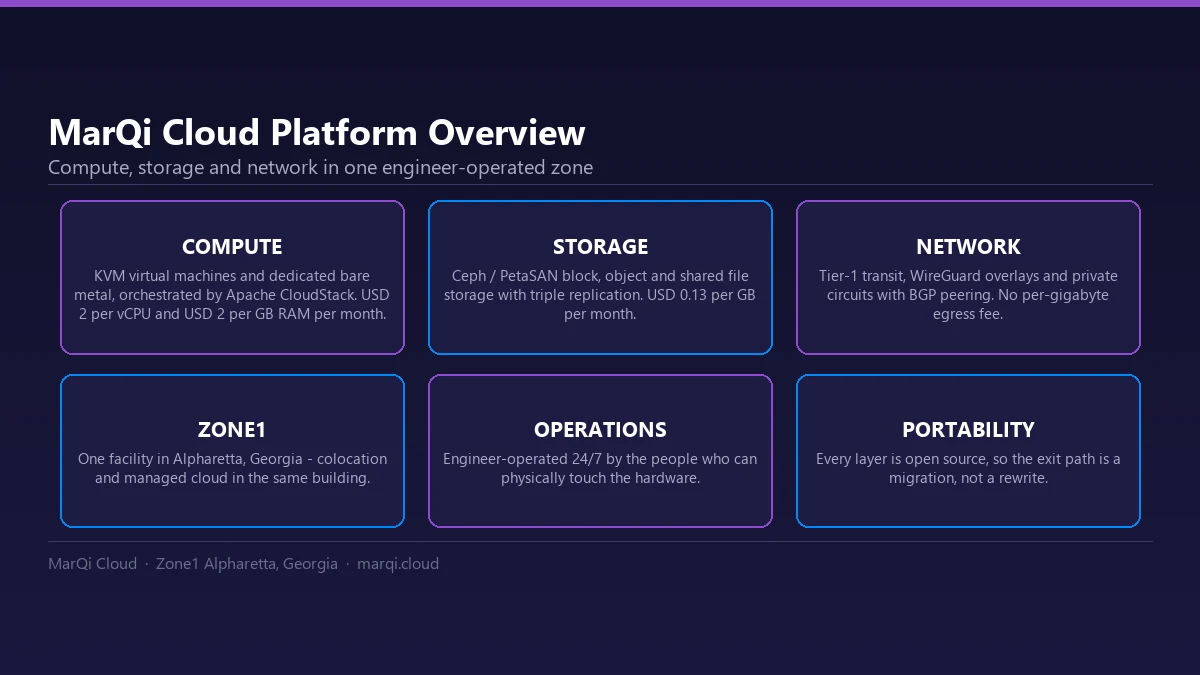
Scalability is crucial for any enterprise cloud architecture. It allows organizations to expand their resources seamlessly as business demands increase. For example, MarQi Cloud offers scalable compute and storage resources tailored to enterprise needs, ensuring that businesses can grow without worrying about infrastructure constraints.
2. Hybrid Cloud Solutions
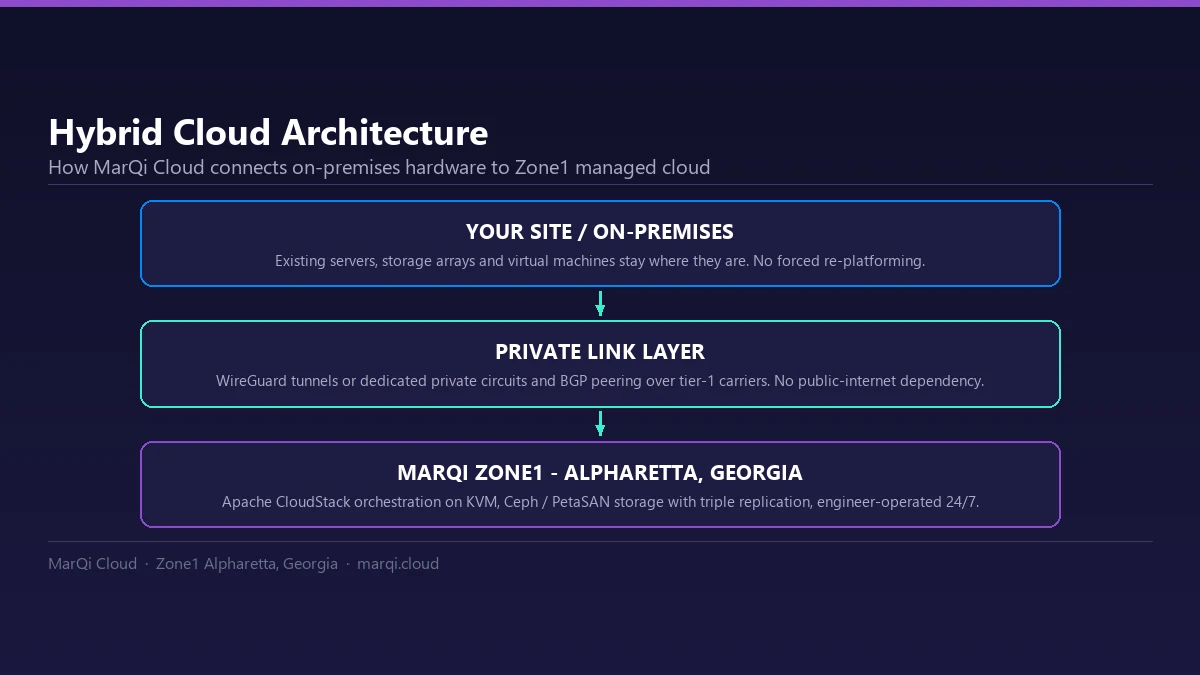
Hybrid cloud solutions combine private and public cloud resources, providing flexibility and control. This approach allows enterprises to optimize their workloads based on specific requirements, such as compliance and performance. The hybrid cloud solutions offered by MarQi Cloud are designed with future scalability in mind, making them ideal for organizations looking to adapt to changing market dynamics.
3. Security and Compliance
As cyber threats continue to evolve, security must be a top priority in cloud architecture. A decade-ready architecture includes robust security measures that are compliant with industry regulations. For instance, MarQi Cloud provides secure hosting solutions that prioritize data protection and compliance, which is particularly crucial for sectors like healthcare and finance.
4. Open Source Flexibility
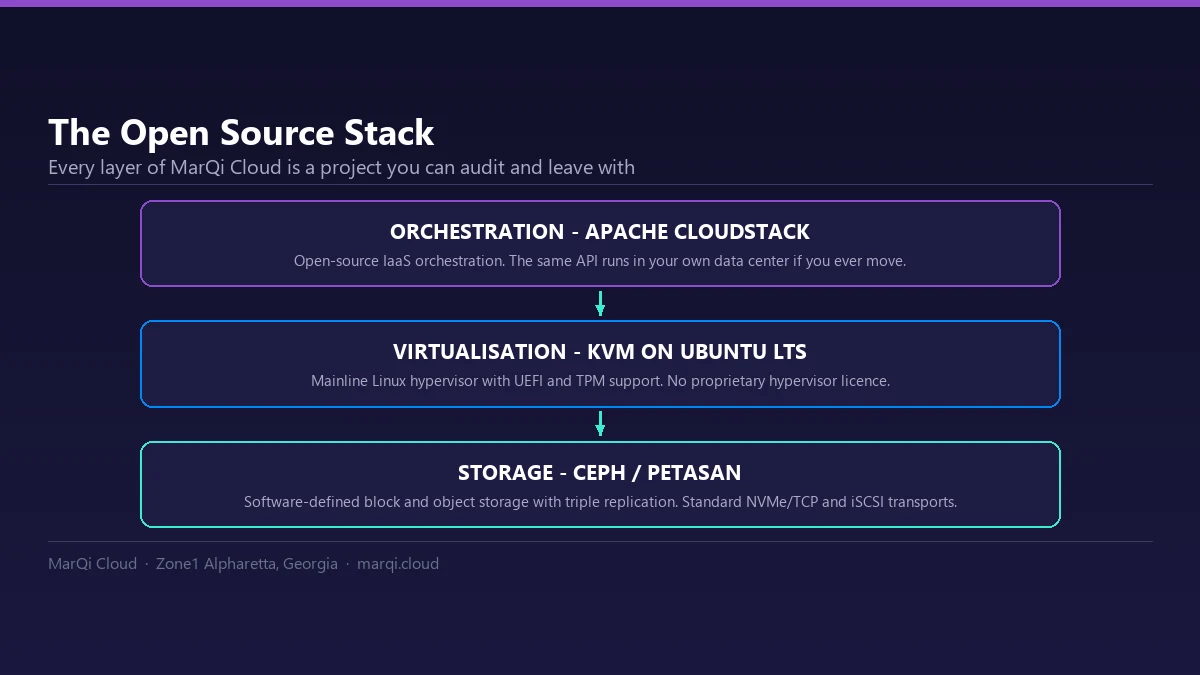
Utilizing open-source technologies allows organizations to avoid vendor lock-in while maintaining full control over their infrastructure. Open-source solutions promote innovation and customization, enabling enterprises to tailor their cloud environments to their specific needs. MarQi Cloud’s commitment to open-source cloud platforms empowers businesses to leverage this flexibility.
5. Business Continuity and Disaster Recovery
Long-term cloud architecture must also include comprehensive business continuity and disaster recovery solutions. The ability to recover quickly from disruptions is vital for maintaining operations. MarQi Cloud offers disaster recovery solutions that ensure data integrity and availability, minimizing downtime and losses.
Case Studies: Successful Long-Term Cloud Strategies
Several organizations have successfully implemented long-term cloud strategies that serve as examples for others:
Case Study 1: A Healthcare Provider
A leading healthcare provider adopted a hybrid cloud strategy that integrated private cloud for sensitive patient data and public cloud for less critical applications. This approach not only enhanced data security but also improved operational efficiency, allowing for scalable growth as patient numbers increased.
Case Study 2: A Fintech Startup
A fintech startup leveraged MarQi Cloud’s secure enterprise hosting to ensure compliance with financial regulations while maintaining agility in product development. By focusing on a future-ready infrastructure, the startup was able to scale its operations rapidly and capture market share.
How MarQi Cloud Supports Future-Ready Infrastructure
MarQi Cloud is uniquely positioned to support organizations in building a decade-ready cloud architecture. With enterprise-grade infrastructure, flexible pricing models, and zero lock-in contracts, businesses can confidently transition to a future-focused cloud environment.
In addition to the above offerings, MarQi Cloud provides comprehensive cloud migration services that ensure a seamless transition from existing infrastructure to a more scalable and secure environment. This service is particularly beneficial for non-technical teams, as it simplifies the migration process and minimizes disruptions.
Conclusion
In conclusion, designing enterprise cloud architecture for the next decade rather than the next quarter is a strategic imperative for organizations aiming for long-term success. By focusing on scalability, security, hybrid solutions, and compliance, businesses can build a robust infrastructure that meets their evolving needs. MarQi Cloud’s offerings are tailored to support this vision, ensuring that organizations are equipped to thrive in an ever-changing landscape.
FAQs
1. What is enterprise cloud architecture?
Enterprise cloud architecture is the structured design of cloud resources and services that support an organization’s operations, encompassing hardware, software, network, and data management systems.
2. Why is long-term planning important for cloud architecture?
Long-term planning ensures adaptability, cost efficiency, scalability, and a competitive advantage, allowing organizations to avoid the pitfalls of reactive decision-making.
3. What are the key elements of a decade-ready cloud architecture?
Key elements include scalability, hybrid cloud solutions, security and compliance, open-source flexibility, and business continuity and disaster recovery.
4. How can MarQi Cloud help with cloud migration?
MarQi Cloud offers comprehensive cloud migration services designed to simplify the transition process, making it easier for organizations to move to a more scalable and secure environment.
5. What is hybrid cloud architecture?
Hybrid cloud architecture combines private and public cloud resources, offering flexibility and control over workloads based on specific requirements.
6. Why is security important in cloud architecture?
Security is crucial due to the increasing sophistication of cyber threats. Robust security measures protect sensitive data and ensure compliance with industry regulations.
7. What benefits does open-source cloud technology provide?
Open-source cloud technology allows organizations to avoid vendor lock-in, offers customization options, and promotes innovation in cloud architecture.
8. How does business continuity impact cloud architecture?
Business continuity ensures that organizations can recover quickly from disruptions, maintaining operations and minimizing losses during unexpected events.