Why Local Data Centers Beat Hyperscalers for AI
March 14, 2026
How to Reduce AI Training Costs in Atlanta: Strategies for Businesses
March 15, 2026

GPU Infrastructure for FinTech Startups in Georgia: A Game Changer for Innovation and Scalability
In recent years, the financial technology (FinTech) sector has exploded in Georgia, with startups leveraging innovative solutions to disrupt traditional banking and financial services. Among the various technological advancements, Graphics Processing Unit (GPU) infrastructure has emerged as a critical enabler for these startups, offering unmatched computational power and efficiency. In this article, we explore the significance of GPU infrastructure for FinTech startups in Georgia, discussing its advantages, deployment strategies, and the role of MarQi Cloud in facilitating this transformation.
Understanding the Importance of GPU Infrastructure
As FinTech startups strive to develop sophisticated algorithms, manage vast datasets, and deliver real-time analytics, the demand for efficient computing resources continues to grow. Traditional CPUs (Central Processing Units) often fall short in handling the complex calculations required for tasks such as risk assessment, fraud detection, and algorithmic trading. This is where GPU infrastructure offers a distinct advantage.
What is GPU Infrastructure?
GPU infrastructure refers to the deployment of Graphics Processing Units to perform parallel processing tasks, which significantly speeds up computation times for data-intensive applications. Unlike CPUs, which are designed for sequential processing, GPUs can handle thousands of threads simultaneously, making them ideal for machine learning, artificial intelligence, and data analytics applications.
The Role of GPU Infrastructure in FinTech
For FinTech startups, GPU infrastructure can be a game changer in several ways:
- Real-time Data Processing: In the fast-paced world of finance, the ability to process and analyze data in real-time is crucial. GPU infrastructure allows startups to quickly execute complex algorithms that power trading strategies, customer insights, and risk management.
- Enhanced Machine Learning Capabilities: Machine learning models require significant computational resources, especially when training on large datasets. GPUs accelerate model training, enabling startups to develop sophisticated predictive models that enhance their offerings.
- Cost Efficiency: While traditional computing resources can be expensive and inefficient, GPU infrastructure offers flexible pricing models and scalable resources that align with the needs of growing startups.
- Improved Security: With sensitive financial data at stake, the secure hosting environments provided by companies like MarQi Cloud ensure that FinTech startups can operate without compromising data integrity.
GPU Deployment Models for FinTech Startups
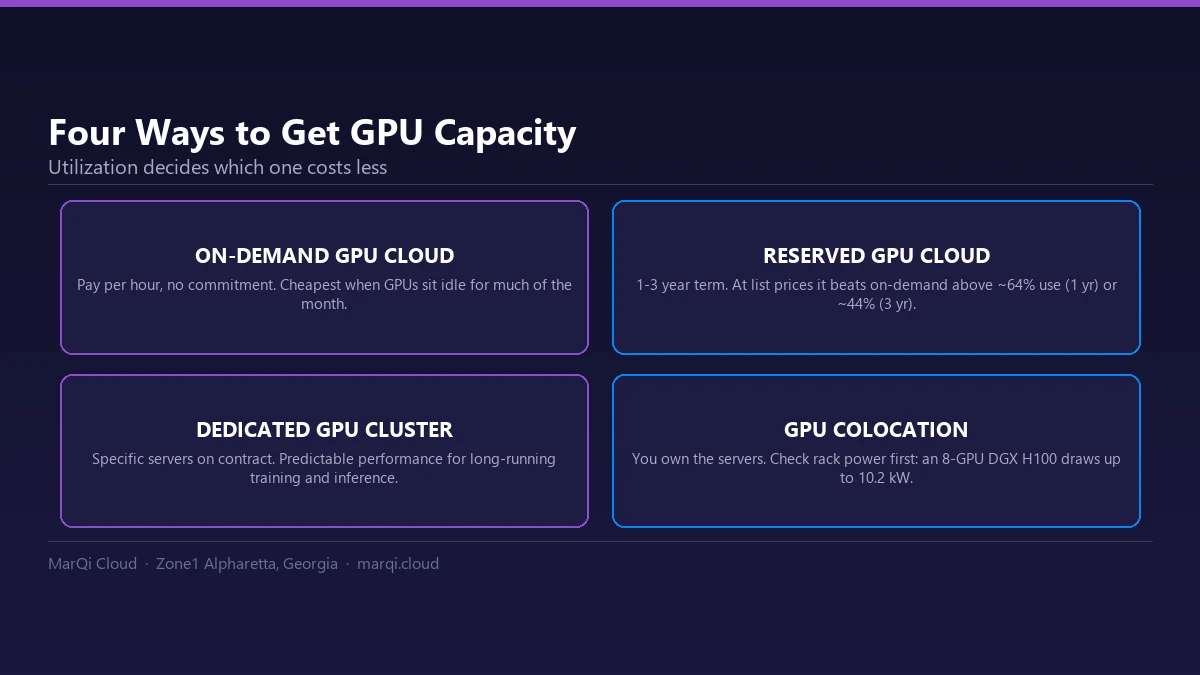
When considering GPU infrastructure, FinTech startups in Georgia have several deployment models to choose from, each with its unique advantages.
1. On-Premises GPU Infrastructure
Some startups may prefer to invest in on-premises GPU infrastructure, providing complete control over their hardware and security protocols. This model is ideal for companies that require high-performance computing and have the financial resources to manage their own data centers.
2. Cloud-Based GPU Infrastructure
Cloud-based GPU infrastructure offers a flexible and scalable solution for FinTech startups. Providers like MarQi Cloud deliver enterprise-grade cloud infrastructure with the flexibility to scale compute and storage resources as needed. This model eliminates the need for significant upfront investments and allows startups to pay only for the resources they use.
3. Hybrid Deployment Models
For startups looking to balance the benefits of both on-premises and cloud solutions, hybrid deployment models provide a viable option. This approach allows companies to maintain critical workloads on-premises while leveraging cloud resources for burst computing or data analytics.
Performance-Driven Infrastructure Design
To maximize the benefits of GPU infrastructure, FinTech startups must focus on performance-driven infrastructure design. This involves optimizing the configuration of GPU resources, ensuring that they are aligned with the specific needs of the applications being developed.
1. GPU Selection
Choosing the right GPU is essential for achieving optimal performance. Startups should consider factors such as memory size, processing power, and compatibility with their software stack when selecting GPUs for their infrastructure.
2. Load Balancing and Resource Allocation
Efficient load balancing ensures that the computational workload is evenly distributed across multiple GPUs, preventing bottlenecks and optimizing performance. Startups should implement resource allocation strategies to ensure that GPU resources are utilized effectively.
3. Monitoring and Optimization
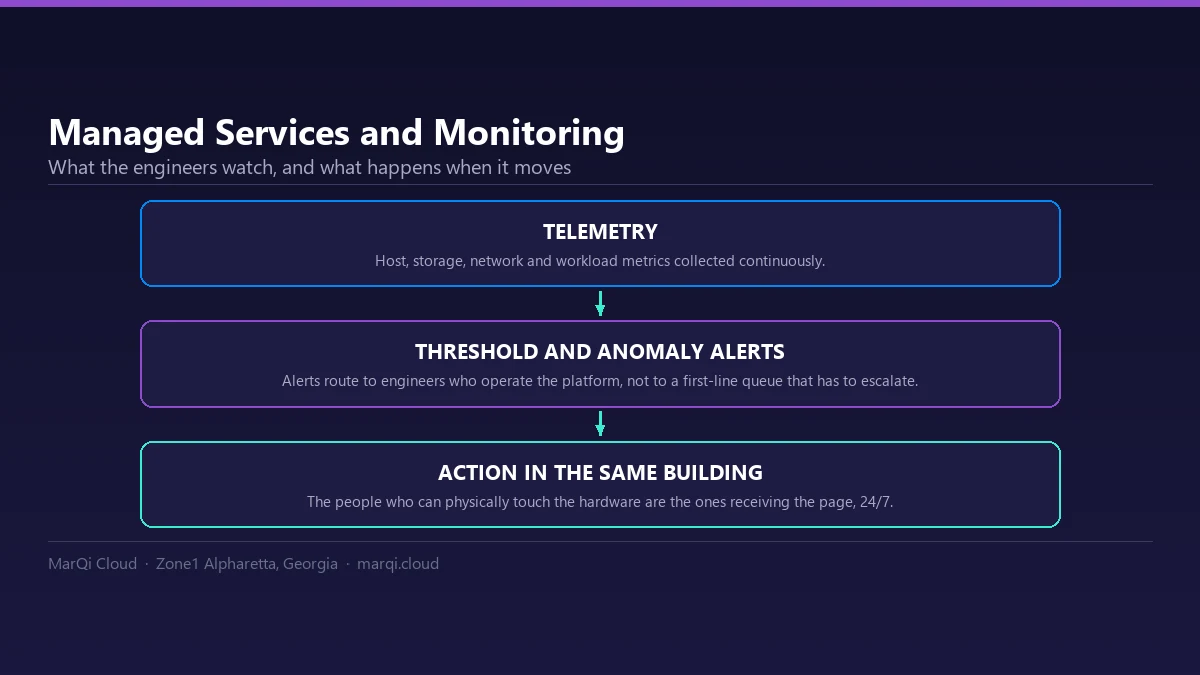
Continuous monitoring of GPU performance can identify potential issues and areas for optimization. Utilizing performance metrics and analytics can help startups fine-tune their infrastructure, ensuring that it meets the demands of their applications.
Business Continuity and Disaster Recovery Solutions
In the financial sector, business continuity and disaster recovery are paramount. GPU infrastructure must be backed by robust solutions that ensure data integrity and availability in the event of unexpected disruptions.
1. Backups and Redundancies
Implementing regular backups and redundancies within the GPU infrastructure ensures that critical data is not lost. Cloud providers like MarQi Cloud offer automated backup solutions that seamlessly integrate with GPU resources.
2. Disaster Recovery Plans
Establishing a well-defined disaster recovery plan is essential for FinTech startups. This plan should outline the steps to be taken in the event of a hardware failure or data breach, ensuring minimal downtime and quick recovery.
MarQi Cloud: Your Partner in GPU Infrastructure
As the demand for GPU infrastructure among FinTech startups in Georgia continues to grow, MarQi Cloud stands out as a trusted partner. With US-based infrastructure and support, MarQi Cloud offers:
- Enterprise-grade cloud infrastructure: Designed to meet the needs of complex FinTech applications.
- Hybrid cloud deployment models: Providing the flexibility to scale resources as needed.
- Private and secure hosting environments: Ensuring data protection and compliance with regulations.
- Scalable compute and storage resources: Allowing startups to grow without constraints.
- Flexible pricing models: Enabling cost-effective solutions tailored to startup budgets.
Conclusion
In the competitive landscape of FinTech, leveraging GPU infrastructure can provide startups in Georgia with a significant edge. By embracing the power of GPUs, these companies can enhance their data processing capabilities, improve machine learning efforts, and ensure business continuity. With the support of providers like MarQi Cloud, FinTech startups can confidently navigate the complexities of building a robust infrastructure that drives innovation and scalability.
Frequently Asked Questions (FAQs)
1. What is GPU infrastructure?
GPU infrastructure refers to the use of Graphics Processing Units to perform parallel processing tasks, enabling faster computations for data-intensive applications.
2. How does GPU infrastructure benefit FinTech startups?
It enables real-time data processing, enhances machine learning capabilities, improves cost efficiency, and ensures data security.
3. What are the different deployment models for GPU infrastructure?
Deployment models include on-premises, cloud-based, and hybrid models.
4. Why is performance-driven infrastructure design important?
It maximizes the benefits of GPU infrastructure by ensuring optimal configuration and efficient utilization of resources.
5. How can startups ensure business continuity with GPU infrastructure?
By implementing backup solutions and disaster recovery plans tailored to their infrastructure.
6. What role does MarQi Cloud play in supporting FinTech startups?
MarQi Cloud provides enterprise-grade cloud infrastructure, hybrid deployment models, and secure hosting environments tailored for FinTech needs.
7. Can GPU infrastructure be cost-effective for startups?
Yes, with flexible pricing models and scalable resources, startups can manage their costs effectively.
8. How can startups monitor GPU performance?
Continuous monitoring using performance metrics and analytics can help optimize GPU performance.
9. What considerations should be made when selecting GPUs?
Consider memory size, processing power, and compatibility with the software stack when selecting GPUs.
10. Is on-premises GPU infrastructure suitable for all startups?
Not necessarily; on-premises infrastructure requires significant investment and management, making it more suitable for companies with established needs.