Essential Colocation Security Checklist: Access Controls, Audit Trails, and Remote Hands
February 23, 2026
Optimizing LLM Fine-Tuning Infrastructure: A Deep Dive into Storage Throughput, Networking, and GPU Scheduling
February 24, 2026
GPU Servers for Startups: How to Avoid Overpaying for AI Compute
As technology continues to advance, startups often find themselves at the forefront of innovation, particularly in the realm of artificial intelligence (AI). One crucial component that can make or break these innovative projects is the computing power behind AI workloads. Graphics Processing Units (GPUs) have emerged as a pivotal resource for startups looking to harness AI capabilities. However, the associated costs of GPU servers can be daunting. In this article, we’ll explore how startups can effectively leverage GPU servers without overspending, ensuring they get the most value for their investment.
Understanding GPU Servers
Before delving into cost-saving strategies, it’s essential to grasp what GPU servers are and why they are critical for AI applications. Unlike traditional CPUs, GPUs are designed to handle parallel processing, making them uniquely suited for the complex mathematical computations required in machine learning and AI tasks.
What is a GPU Server?
A GPU server is a type of server specifically equipped with multiple GPUs, allowing it to perform high-performance computing tasks efficiently. These servers are commonly used for tasks such as training neural networks, processing large datasets, and executing simulations.
Key Benefits of Using GPU Servers
- Enhanced Performance: GPU servers provide significant speed increases for AI workloads compared to CPU-only servers.
- Scalability: Startups can scale their GPU resources according to their growing needs, ensuring optimal performance without unnecessary costs.
- Cost Efficiency: By utilizing GPU servers, startups can achieve faster results, which can translate to reduced time-to-market for their products.
Identifying Your AI Compute Needs
Before investing in GPU servers, startups must assess their specific AI compute requirements. This involves understanding the types of AI workloads they will be undertaking and how much processing power is necessary.
Types of AI Workloads
Not all AI workloads are created equal, and the type of workload will dictate the kind of GPU resources needed. Here are some common AI workloads:
- Machine Learning: Involves training models on large datasets.
- Deep Learning: Requires extensive computational resources for tasks such as image and speech recognition.
- Data Processing: Involves cleaning and preparing datasets for analysis.
Estimating Resource Requirements
Startups can utilize benchmarking tools and performance metrics to gauge their resource needs. Factors to consider include the size of the datasets, the complexity of the models, and the desired training time.
Choosing the Right Deployment Model
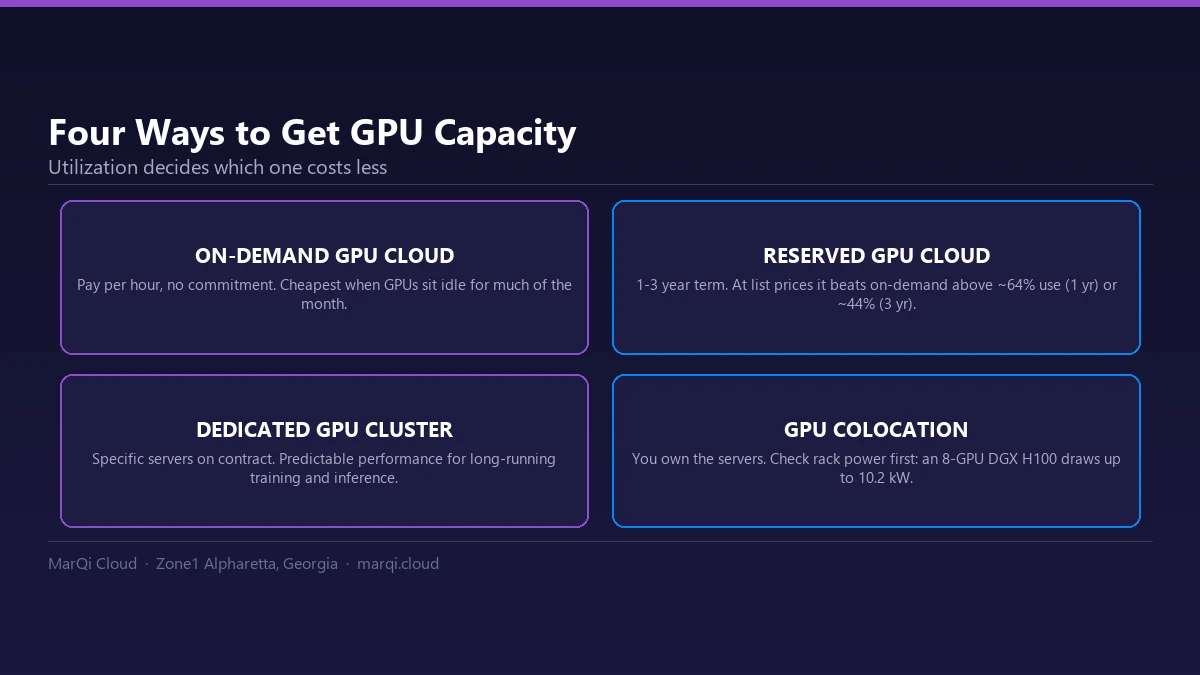
When it comes to deploying GPU servers, startups face a crucial decision: Should they opt for cloud-based services, on-premises solutions, or hybrid models? Each option has its own set of advantages and disadvantages.
Cloud-Based GPU Solutions
Cloud providers offer GPU servers on a pay-as-you-go basis, making it a flexible option for startups that may not want to invest heavily upfront. Here are some benefits:
- Cost-Effective: Startups only pay for what they use, allowing for better budget management.
- Scalability: Easily scale resources up or down based on project demands.
- No Maintenance: The cloud provider handles hardware and software updates.
On-Premises GPU Servers
Investing in on-premises GPU servers can be beneficial for startups with predictable workloads and long-term projects. However, this option comes with higher upfront costs and requires maintenance:
- Control: Startups have complete control over their hardware and data.
- Performance: Dedicated resources can lead to optimized performance for specific tasks.
- Security: Greater control over security measures for sensitive data.
Hybrid Deployment Models
A hybrid model combines both cloud and on-premises solutions, providing flexibility while still allowing for significant control over resources. Startups can leverage the benefits of both worlds, especially during peak demand periods.
Cost Management Strategies
To avoid overpaying for AI compute resources, startups should implement a variety of cost management strategies when utilizing GPU servers.
Budgeting Wisely
Create a detailed budget that outlines expected costs for GPU usage, including potential spikes in resource needs. This proactive approach will help startups avoid unexpected expenses.
Monitor Usage and Performance
Regularly monitor GPU usage and performance metrics to identify inefficiencies. Tools like cloud provider dashboards can help analyze workload performance, revealing opportunities for optimization.
Leverage Flexible Pricing Models
Select GPU server providers that offer flexible pricing models. Pay-as-you-go and reserved instances can save costs, especially for startups that may not have consistent workloads.
Optimize Your Workloads
Optimize machine learning models and algorithms to reduce the computational load. Techniques such as model pruning, quantization, and using pre-trained models can significantly decrease resource requirements.
Benchmark Different Providers
Not all GPU server providers are created equal. Benchmark different providers based on performance, price, and additional features. This diligence can lead to substantial savings.
Essential Factors to Consider When Selecting a GPU Server Provider
Choosing the right GPU server provider is crucial for startups looking to maximize their investment. Here are key factors to consider:
Performance
Evaluate the performance of the GPU servers offered by different providers. Look for benchmarks and user reviews to gauge real-world performance.
Support
US-based infrastructure and support can be invaluable for startups. Ensure that the provider offers responsive customer service and technical support.
Security
Data security should be a top priority. Investigate the security measures in place, especially if handling sensitive information.
Scalability
Make sure the provider can accommodate your startup’s growth. Look for options that allow for easy scaling of resources.
Reputation
Research the provider’s reputation within the industry. Customer testimonials and case studies can provide insights into their reliability and performance.
Conclusion
For startups venturing into the world of AI, harnessing the power of GPU servers is essential for success. By understanding their needs, selecting the right deployment models, and implementing cost management strategies, startups can avoid the pitfalls of overspending on AI compute resources. With the right approach, they can leverage the capabilities of GPU servers to drive innovation and growth without breaking the bank.
FAQs
1. What are GPU servers used for?
GPU servers are primarily used for high-performance computing tasks such as training machine learning models, rendering graphics, and processing large datasets.
2. How do I choose the right GPU for my needs?
Consider the type of workloads you will be running, the size of your datasets, and performance benchmarks from various providers.
3. Are cloud-based GPU servers more cost-effective than on-premises servers?
Cloud-based GPU servers can be more cost-effective for startups due to their pay-as-you-go pricing and scalability. However, it depends on your specific usage patterns.
4. Can I switch from on-premises to cloud GPU servers?
Yes, many startups transition from on-premises to cloud solutions as their needs change. Ensure that data migration plans are well-defined before switching.
5. What are the risks of using GPU servers?
Potential risks include security vulnerabilities, unexpected costs, and performance issues if not monitored correctly.
6. How can I optimize my AI workloads on GPU servers?
Optimization techniques include model pruning, algorithm adjustments, and using pre-trained models to reduce resource consumption.
7. What factors should I consider when selecting a GPU server provider?
Key factors include performance, support, security, scalability, and the provider’s reputation.
8. Is it possible to get discounted rates for GPU servers?
Many providers offer reserved instances or discounts for long-term commitments, which can reduce costs significantly.
9. How often should I monitor my GPU server usage?
Regular monitoring is recommended, ideally on a daily or weekly basis, to ensure that resources are being used efficiently.
10. What is the future of GPU servers in startups?
The future looks promising as AI continues to grow. Startups that leverage GPU servers will have a competitive edge in developing innovative solutions.