
Why GPU Infrastructure Is the Backbone of Modern AI Innovation
March 6, 2026
Database Hosting in the Cloud: HA Patterns for PostgreSQL and SQL Server
March 6, 2026

How Enterprises Scale Faster with Cloud Native Development Services
Introduction
Today, businesses work in a fast digital world. Everything is changing quickly, and customers expect fast and smooth online services. As companies grow, they face challenges such as managing more users, maintaining systems, and keeping their websites and apps running smoothly.
To succeed in this competitive market, businesses need systems that can grow with them. They must be able to make updates quickly and adjust to changes without slowing down. Old traditional systems are often slow and hard to scale, which makes growth difficult.
That is why many companies are now using cloud native application development services. These services help build modern applications that are flexible, scalable, and easy to manage. By moving to cloud-based solutions, enterprises can grow faster and work more efficiently.
What Are Cloud Native Application Development Services?
Cloud-native application development services help businesses build and manage applications designed to run in the cloud. These services focus on creating apps that are flexible, scalable, and easy to update.
With cloud native application development services, companies design applications using modern methods instead of old, heavy systems. This means the apps can handle more users, run smoothly, and grow without major problems. Businesses use these services to improve performance, reduce downtime, and launch updates faster.
In simple words, cloud native application development services help companies build cloud-ready applications that are faster, smarter, and easier to manage.
Understanding Cloud Native Architecture
Cloud native architecture is built in a modern and simple way:
- Modular design: The application is divided into small parts, and each part does one specific task.
- API communication: These services connect using APIs.
- Scalable infrastructure: The system can automatically increase or decrease resources based on traffic.
- Faster updates: Changes can be made quickly without stopping the whole application.
Core Components of Cloud Native Development
Important tools and practices used in cloud native development include:
- Microservices: Breaking large applications into smaller parts for better flexibility.
- Containers (like Docker) – Packaging the app with everything it needs to run anywhere.
- Kubernetes: Managing and scaling containers automatically.
- DevOps practices; Improving teamwork between development and operations.
- CI/CD pipelines: Automating testing and deployment for quick and safe updates.
- Serverless computing: Running code without managing physical servers.
- System Setup as Code (IaC): Using code to set up and manage systems instead of doing it manually.
Difference Between Traditional and Cloud Native Models
Here is the simple difference:
Traditional Model:
- One large application (monolithic)
- Fixed servers
- Manual updates
- Harder to scale
Cloud Native Model:
- Small independent services (microservices)
- Cloud-based and scalable
- Automated updates
- Easy to grow and manage
Overall, cloud native application development services provide better scalability, faster updates, strong reliability, and cost savings. That’s why modern businesses prefer this approach to support long-term growth.
Why Enterprises Choose Cloud-Native Software Development
Cloud-native software development is a modern approach to building applications that are designed specifically for the cloud. Unlike traditional software, these applications are flexible, scalable, and easier to manage. Using this approach, businesses can develop applications that grow with their needs, update quickly, and perform reliably under heavy use.
Key Components and Practices
- Service-Based Design: This method breaks an application into small parts. Each part works on its own and connects with others through APIs, making the system easier to manage and grow.
- Containers and Orchestration: Tools like Docker and Kubernetes package applications and manage them automatically, ensuring they run smoothly in any environment.
- Development Operations & Continuous Delivery: Automatic workflows handle testing and releasing updates, making improvements faster and safer.
- Serverless Computing: Developers focus on writing code while cloud providers manage the infrastructure, offering automatic scaling and cost savings.
- Immutable Infrastructure: Components are replaced instead of updated, which ensures consistency and reduces errors.
Benefits of Cloud-Native Software Development
- Faster Time-to-Market: Applications can be launched quickly, updated frequently, and improved without downtime.
- Scalability: Systems automatically adjust resources based on demand, keeping performance smooth and efficient.
- Reliability and Security: Microservices isolate problems, automated patches improve security, and cloud infrastructure keeps systems available.
- Cost-Effectiveness and Portability: Pay-as-you-go cloud models reduce costs, and applications can run across public, private, or hybrid clouds.
The Role of Containerized Application Development in Enterprise Growth
Containerized application development is a modern way of building software where an application, along with its code, libraries, and dependencies, is packaged into a single, self-contained unit called a container. Containers are lightweight, share the host operating system, and can run the same way in any environment, from a developer’s laptop to cloud servers, making them highly portable and reliable.
What Is Containerized Application Development?
- All-in-one packaging: Each container holds the application and everything it needs to run, reducing setup and compatibility issues.
- Runs anywhere: Containers can move seamlessly between development, testing, and production environments.
- Consistent behaviour: Applications perform the same in every environment.
Benefits for Enterprises
- Stable environments: Development, testing, and production remain consistent, reducing errors.
- Easier migration: Containers make it simple to move applications between servers or cloud platforms.
- Faster deployment: Updates can be applied to individual containers without affecting the whole system.
How Containers Help Business Continuity
- Quick recovery: Containers can be restarted or moved rapidly in case of failures.
- High availability: Applications stay online even during maintenance or issues.
- Efficient scaling: Only containers that need more resources are scaled, allowing smooth handling of peak traffic.
In short, containerized application development helps businesses deploy applications faster, scale efficiently, and keep systems reliable. Containers make software easier to maintain, consistent across environments, and ready to support enterprise growth.
How DevOps and Cloud Native Services Help Businesses Grow
DevOps and cloud native services help companies build and manage applications in a faster and smarter way. DevOps brings developers and IT operations teams together so they can work as one team. Cloud native services are applications designed to run in the cloud using modern tools like microservices and containers.
When businesses use DevOps and cloud native services, they can release updates quickly, fix issues faster, and scale their systems easily.
How DevOps and Cloud Native Services Support Scaling
- Quick Testing and Deployment: Updates are tested and released faster.
- Better Team Collaboration: Problems are solved quickly because teams work closely.
- Real-Time Monitoring: Businesses can track performance and fix issues before they become serious.
Business Benefits
- Lower Costs: Pay-as-you-go cloud services reduce hardware and maintenance costs.
- Flexibility: Easy to try new ideas and add new technologies.
- Global Reach: Applications can run in different regions for a better user experience.
In simple words, DevOps and cloud native services help businesses move faster, scale smoothly, and keep their applications reliable while saving money.
Why Choose the Right Infrastructure Partner
The right infrastructure partner gives businesses more control and security. Independent data centers offer:
- Better control over data
- Stronger security
- Less dependence on third-party providers
High-Performance Infrastructure for Cloud-Native Development
A good infrastructure ensures applications run smoothly and reliably:
- Dedicated storage clusters for fast performance
- Redundant networks to avoid downtime
- High availability for continuous operations
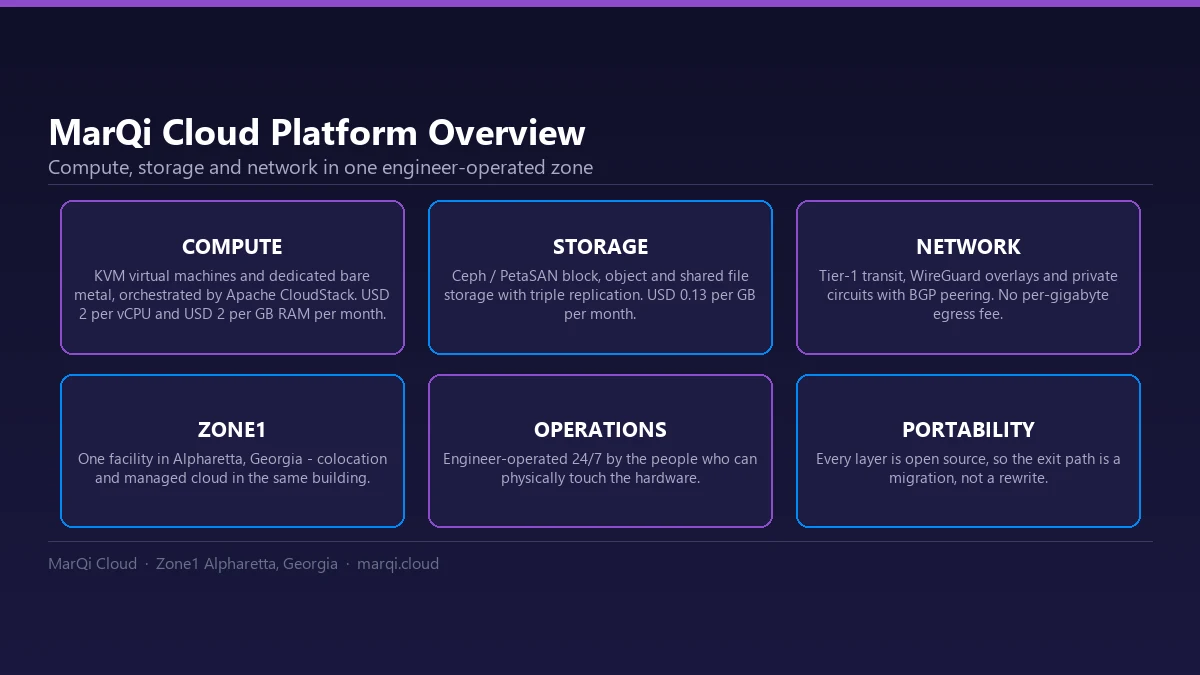
Why Enterprises Trust MarQi Cloud
MarQi Cloud provides a reliable environment for cloud-native applications:
- Own independent data center
- Dedicated storage clusters for better performance
- Redundant network fabric for uninterrupted services
- Secure and scalable setup for growing applications
Scaling Enterprise Applications with MarQi Cloud
- Migrated enterprise applications to cloud-native architecture
- Used containerized application development for easier management
- Integrated DevOps and cloud-native services for faster updates
- Improved performance and scaling results
- Increased uptime with redundant network infrastructure
Conclusion
Cloud native application development services give businesses the ability to scale faster and work more efficiently. They offer key benefits like flexibility, automation, and improved performance, helping enterprises respond quickly to changing needs.
Having a strong infrastructure, such as independent data centers and reliable networks, is crucial to support these services and keep applications running smoothly. By investing in cloud-native software development strategies, enterprises can not only improve their current operations but also ensure long-term growth and success in today’s fast-paced digital world.
Frequently Asked Questions
What Are Cloud Native Application Development Services?
Cloud-native application development services help businesses build and manage applications designed to run in the cloud.
What is containerized application development?
Containerized application development is a modern way of building software where an application, along with its code, libraries, and dependencies, is packaged into a single, self-contained unit called a container.