Ultimate Guide to Building a DevOps Pipeline on MarQi Cloud
June 30, 2026
MarQi Cloud Case Study: How a Startup Replaced AWS and Cut Costs by 55%
July 1, 2026
How MarQi Cloud Private Peering Ensures Sub-Millisecond Latency
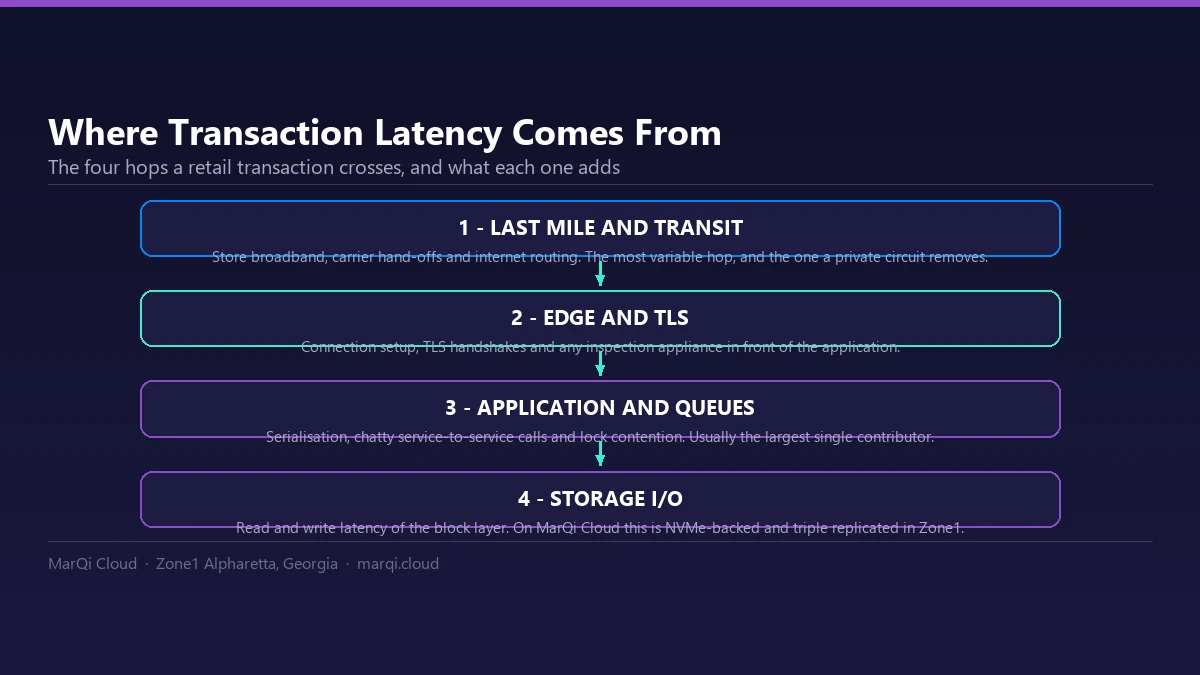
In today’s digital landscape, speed is a critical factor that can make or break a business’s success. For organizations relying on cloud infrastructure, the importance of low latency cannot be overstated. This is where MarQi Cloud’s private peering solutions come into play, delivering consistent, sub-millisecond latency that is essential for performance-driven applications. This article will explore how MarQi Cloud’s private peering works, its benefits, and how it can enhance your organization’s cloud infrastructure.
What is Private Peering?
Private peering is a direct connection between two networks, allowing them to exchange traffic without going through the public internet. This setup minimizes the number of hops data must take, effectively reducing latency and improving reliability. Unlike public peering, where multiple networks share the same infrastructure, private peering provides a dedicated path for data transfer, ensuring that your data travels swiftly and securely.
How MarQi Cloud Private Peering Works
MarQi Cloud’s private peering utilizes dedicated circuits that connect your infrastructure directly to our cloud services. This setup is designed to optimize performance, offering a seamless experience with minimal latency. Here’s how it works:
- Dedicated Connections: MarQi Cloud establishes private circuits that bypass public internet pathways, ensuring that your data travels through a secure and efficient route.
- Direct Access to Data Centers: By connecting directly to MarQi’s data centers, clients benefit from reduced latency and increased bandwidth.
- Network Optimization: Our advanced network architecture is optimized for speed and reliability, allowing for real-time data exchange without bottlenecks.
These elements combined result in a highly efficient and reliable private peering solution that can significantly enhance your organization’s operational capabilities.
Benefits of Private Peering with MarQi Cloud
The advantages of utilizing MarQi Cloud’s private peering solutions are manifold:
- Consistent Performance: With a dedicated connection, you can expect consistent performance without the fluctuations often associated with public internet traffic.
- Enhanced Security: Private peering inherently offers a higher level of security by reducing exposure to potential threats on the public internet.
- Scalability: MarQi Cloud’s infrastructure is designed to scale with your business needs, allowing for easy adjustments as your data traffic increases.
- Cost-Effective: By eliminating egress fees and providing predictable pricing models, private peering can lead to significant cost savings in the long run.
Understanding Sub-Millisecond Latency
Sub-millisecond latency refers to the time it takes for data to travel from one point to another, measured in milliseconds (ms). Achieving sub-millisecond latency is crucial for applications requiring real-time data processing, such as financial trading platforms, online gaming, and video conferencing. According to a study by the National Institute of Standards and Technology (NIST), latency can significantly affect user experience, making low-latency solutions essential for businesses.
Real-World Applications of Private Peering
MarQi Cloud’s private peering solution has been effectively implemented in various industries:
1. Financial Services
In the fintech sector, milliseconds can mean the difference between profit and loss. MarQi Cloud’s private peering enables financial institutions to execute trades with minimal latency, ensuring they remain competitive in high-frequency trading environments.
2. Gaming
Online gaming platforms require low latency for an optimal user experience. MarQi Cloud’s infrastructure allows game developers to host their servers close to players, reducing lag and improving gameplay.
3. Healthcare
In healthcare, real-time data access is critical for patient care. Private peering ensures that sensitive data transfers occur swiftly and securely, supporting applications that require immediate access to patient information.
Comparison with Public Peering
When comparing private peering to public peering, the differences are clear:
| Feature | Private Peering | Public Peering |
|---|---|---|
| Latency | Sub-millisecond | Variable |
| Security | High | Moderate |
| Cost | Predictable | Variable |
| Scalability | High | Limited |
This comparison highlights the clear advantages of choosing MarQi Cloud’s private peering over public alternatives, particularly for organizations that prioritize performance and security.
Expert Insights on Private Peering
When considering a private peering solution, it’s important to understand the technical aspects involved. Here are some expert tips:
Additionally, regularly monitor your network performance to ensure that latency remains consistently low. Tools such as network performance monitoring can help you track this effectively.
Frequently Asked Questions
1. What is the difference between private and public peering?
Private peering offers a dedicated connection between two networks, providing lower latency and higher security compared to public peering, which shares infrastructure with multiple networks.
2. How does MarQi Cloud achieve sub-millisecond latency?
MarQi Cloud achieves sub-millisecond latency through dedicated connections that bypass public internet routes, optimizing data transfer paths.
3. Is private peering suitable for all businesses?
While private peering is beneficial for businesses that require low latency and high security, it is especially suitable for sectors like finance, gaming, and healthcare.
4. What are the cost implications of private peering?
Private peering typically eliminates egress fees and provides predictable pricing models, leading to potential long-term cost savings.
5. How can I monitor my network performance with MarQi Cloud?
MarQi Cloud offers monitoring tools that provide real-time insights into network performance, allowing you to track latency and other key metrics.
6. Can private peering be integrated with existing infrastructure?
Yes, MarQi Cloud’s private peering solutions can be seamlessly integrated into existing infrastructure, enhancing overall performance.
7. What industries benefit the most from private peering?
Industries such as finance, gaming, and healthcare benefit significantly from private peering due to their need for low latency and high security.
8. How do I get started with MarQi Cloud’s private peering?
To get started, contact MarQi Cloud’s support team to discuss your requirements and design a tailored private peering solution.
Conclusion
In conclusion, MarQi Cloud’s private peering solution offers a robust way to achieve consistent, sub-millisecond latency, crucial for performance-driven applications. By opting for a dedicated connection, businesses can enhance their operational capabilities, improve security, and reduce costs. If you’re looking to elevate your cloud infrastructure, consider leveraging MarQi Cloud’s private peering today.