Secure VPC Access with WireGuard VPN: Best Practices for IT Teams
February 20, 2026
Atlanta Area Colocation: Air Cooling vs Liquid Cooling—What Changes for GPU Racks
February 20, 2026
How to Build a Hybrid Kubernetes Platform: Integrating VMs and Bare Metal in One Zone
As organizations increasingly adopt cloud-native technologies, Kubernetes has emerged as a leader in orchestrating containerized applications. However, many enterprises find themselves in complex environments where they need to leverage both virtual machines (VMs) and bare metal servers. This article explores how to build a hybrid Kubernetes platform that effectively integrates VMs and bare metal in one zone, enabling organizations to optimize their resources and streamline operations.
Understanding Hybrid Kubernetes Architecture
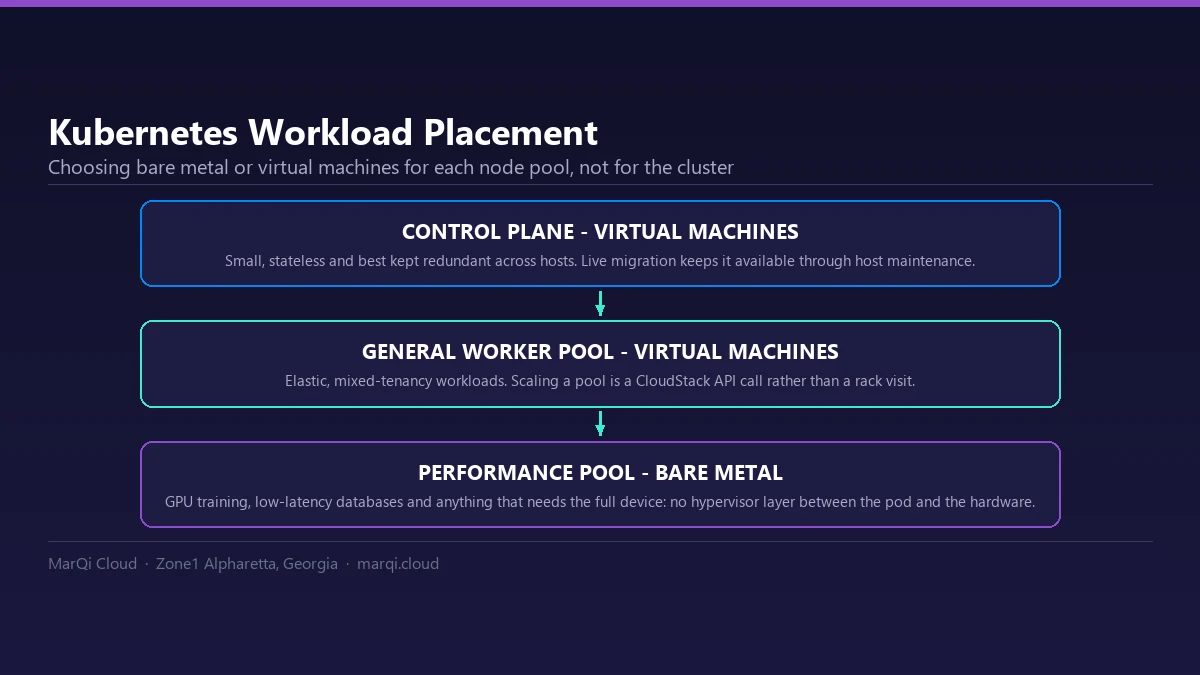
Hybrid Kubernetes architecture combines the best of both worlds: the flexibility of virtualized environments and the performance of bare metal servers. This allows organizations to run workloads where they are best suited, whether for cost efficiency, performance, or compliance.
Benefits of Hybrid Kubernetes
- Cost Efficiency: By utilizing existing VMs for less resource-intensive applications and leveraging bare metal for high-performance workloads, organizations can optimize costs.
- Performance: Bare metal servers provide lower latency and higher throughput, making them ideal for resource-intensive applications.
- Flexibility: A hybrid approach allows businesses to scale resources dynamically based on workload demands.
- Better Resource Utilization: With the right orchestration, organizations can ensure workloads are allocated to the most appropriate environments.
Prerequisites for Building a Hybrid Kubernetes Platform
Before diving into the implementation, it’s crucial to have a clear understanding of the components involved in building a hybrid Kubernetes platform:
1. Infrastructure Requirements
Your infrastructure should include:
- Virtual Machines: These can be provisioned using platforms like VMware, OpenStack, or cloud providers like AWS and Azure.
- Bare Metal Servers: High-performance servers capable of running Kubernetes node components.
- Networking: A robust networking solution that allows seamless communication between VMs and bare metal servers.
2. Kubernetes Distribution
Select a Kubernetes distribution that supports hybrid environments. Popular choices include:
- Rancher: A complete container management platform.
- OpenShift: An enterprise Kubernetes platform that supports hybrid deployments.
- Vanilla Kubernetes: The open-source version provides flexibility but may require more manual setup.
Steps to Build Your Hybrid Kubernetes Platform
Step 1: Set Up Your Infrastructure
Begin by provisioning your VMs and bare metal servers. Ensure that they are configured with the necessary operating systems and have the required resources allocated based on the workloads you plan to run.
Step 2: Install Kubernetes
Use your chosen Kubernetes distribution to install Kubernetes on both your VMs and bare metal servers. This may involve:
- Using tools like kubeadm for a manual installation.
- Employing a managed Kubernetes service if using cloud providers.
- Following documentation specific to your distribution for deployment steps.
Step 3: Configure Networking
Networking is critical in hybrid environments. Ensure that:
- All nodes (both VMs and bare metal) can communicate with each other.
- You implement a Container Network Interface (CNI) that supports both environments, such as Calico or Flannel.
Step 4: Integrate Storage Solutions
Choose a storage solution that can be accessed by both VMs and bare metal nodes. Options include:
- Network File Systems (NFS): For shared storage across nodes.
- Distributed Storage Systems: Solutions like Ceph or GlusterFS can provide scalable storage options.
Step 5: Deploy Your Applications
With your hybrid Kubernetes platform set up, you can now deploy your applications. Utilize Kubernetes manifests to define your deployments, services, and other resources. Ensure that you specify the appropriate node selectors or affinity rules to control where your workloads run.
Step 6: Monitor and Optimize
Implement monitoring tools such as Prometheus and Grafana to keep track of your hybrid Kubernetes environment. Regularly assess resource utilization and adjust your deployment strategy as needed to ensure optimal performance.
Best Practices for Hybrid Kubernetes Deployments
1. Use Node Affinity and Taints
Utilizing node affinity and taints can help control where workloads are scheduled, ensuring that high-performance applications are deployed on bare metal while less critical workloads run on VMs.
2. Regularly Update and Maintain
Keep your Kubernetes cluster and its components up to date to benefit from performance improvements and security patches.
3. Implement Security Best Practices
Secure your hybrid environment by enforcing role-based access control (RBAC), network policies, and regular audits.
4. Plan for Disaster Recovery
Integrate disaster recovery solutions to ensure business continuity. Regularly back up your Kubernetes configurations and data.
Frequently Asked Questions (FAQ)
1. What is a hybrid Kubernetes platform?
A hybrid Kubernetes platform combines both virtual machines and bare metal servers within a single Kubernetes cluster, allowing organizations to optimize resource utilization and performance.
2. Why should I use bare metal servers in a hybrid Kubernetes environment?
Bare metal servers offer superior performance for resource-intensive applications due to lower latency and higher throughput compared to VMs.
3. How do I ensure seamless communication between VMs and bare metal in Kubernetes?
Implement a robust networking solution and a compatible Container Network Interface (CNI) to facilitate communication between different node types.
4. Can I use existing VMs in my hybrid Kubernetes deployment?
Yes, you can integrate existing VMs as part of your hybrid Kubernetes platform, ensuring they meet the necessary resource requirements.
5. What Kubernetes distribution is best for a hybrid environment?
Popular choices include Rancher, OpenShift, and Vanilla Kubernetes, depending on your specific needs and expertise.
6. How can I monitor a hybrid Kubernetes platform?
Tools like Prometheus and Grafana can be used to monitor the performance and resource utilization of your hybrid Kubernetes environment.
7. What storage solutions work best for hybrid Kubernetes deployments?
Network File Systems (NFS) and distributed storage solutions like Ceph or GlusterFS are ideal for hybrid environments.
8. How do I handle disaster recovery in a hybrid Kubernetes setup?
Implement regular backups of your Kubernetes configurations and data, and consider using dedicated disaster recovery solutions to ensure business continuity.
9. What are node affinity and taints in Kubernetes?
Node affinity allows you to control which nodes your workloads are scheduled on, while taints prevent workloads from being scheduled on certain nodes unless specific tolerations are applied.
10. How often should I update my hybrid Kubernetes cluster?
Regular updates should be performed to ensure the cluster benefits from security patches and performance improvements, ideally every few months or as new releases are available.
In conclusion, building a hybrid Kubernetes platform that integrates VMs and bare metal servers allows organizations to maximize resource utilization, enhance performance, and streamline operations. By following the steps outlined in this article, you can create a powerful hybrid environment that meets your organization’s unique needs.