MarQi Cloud for Python Developers: The Fastest Way to Deploy ML Applications
April 25, 2026
The MarQi Cloud Networking Guide: VLANs, Subnets, and Private Networking Explained
April 26, 2026
How to Build a Serverless Architecture on MarQi Cloud Without Vendor Lock-In
In the ever-evolving landscape of cloud computing, businesses are increasingly adopting serverless architecture to streamline application development, enhance scalability, and reduce operational overhead. MarQi Cloud provides a robust platform for building serverless applications while ensuring you remain free from vendor lock-in. In this article, we will explore what serverless architecture is, its benefits, and the steps to build a serverless architecture on MarQi Cloud.
Understanding Serverless Architecture
Serverless architecture is a cloud computing model where the cloud provider dynamically manages the allocation of machine resources. In this approach, developers can focus on writing code without worrying about the underlying infrastructure. Although the term ‘serverless’ implies that servers are not involved, servers are still present; they are simply abstracted away from the developers.
Key Characteristics of Serverless Architecture
- Event-driven: Serverless applications are triggered by events such as HTTP requests, database changes, or file uploads.
- Automatic Scaling: The cloud provider automatically scales the application based on demand, ensuring optimal performance.
- Pay-as-you-go Model: Users are billed only for the compute resources they consume, which can lead to cost savings.
- Microservices: Serverless architecture encourages the use of microservices, allowing for modular and maintainable code.
Benefits of Serverless Architecture
Adopting serverless architecture offers numerous advantages for businesses:
1. Cost Efficiency
With a pay-as-you-go pricing model, organizations can significantly reduce costs associated with idle server time. You only pay for the compute power you use, which is ideal for applications with variable workloads.
2. Enhanced Scalability
Serverless applications automatically scale with the number of incoming requests, ensuring that performance remains consistent during peak usage times without manual intervention.
3. Faster Time to Market
By eliminating infrastructure management tasks, development teams can focus on writing code and deploying applications quickly, leading to shorter development cycles and faster time to market.
4. Improved Reliability
Major cloud providers, like MarQi Cloud, offer highly reliable infrastructure that includes built-in redundancies and failover capabilities, ensuring that your applications remain available even in the event of a failure.
Building Serverless Architecture on MarQi Cloud
Now that we understand the fundamentals of serverless architecture, let’s explore how to build a serverless application on MarQi Cloud without falling into the trap of vendor lock-in.
Step 1: Define Your Application Requirements
Before diving into the technical aspects, take the time to define your application’s requirements. Consider the following:
- Functionality: What features will your application include?
- Expected Load: What is the expected number of users and requests?
- Data Storage Needs: What type of data will your application handle?
Step 2: Choose Your Tech Stack
Selecting the right technology stack is crucial for building a serverless architecture. MarQi Cloud supports a variety of programming languages, frameworks, and tools. Some popular choices include:
- Programming Languages: Python, JavaScript, Java, Go
- Frameworks: AWS Lambda, Azure Functions, Google Cloud Functions
Step 3: Design Your Microservices
Break down your application into smaller, manageable microservices. Each microservice should be designed to perform a specific function, making it easier to develop, test, and deploy. Ensure that your microservices communicate effectively through APIs, which will help maintain flexibility and reduce dependencies.
Step 4: Leverage MarQi Cloud’s Infrastructure
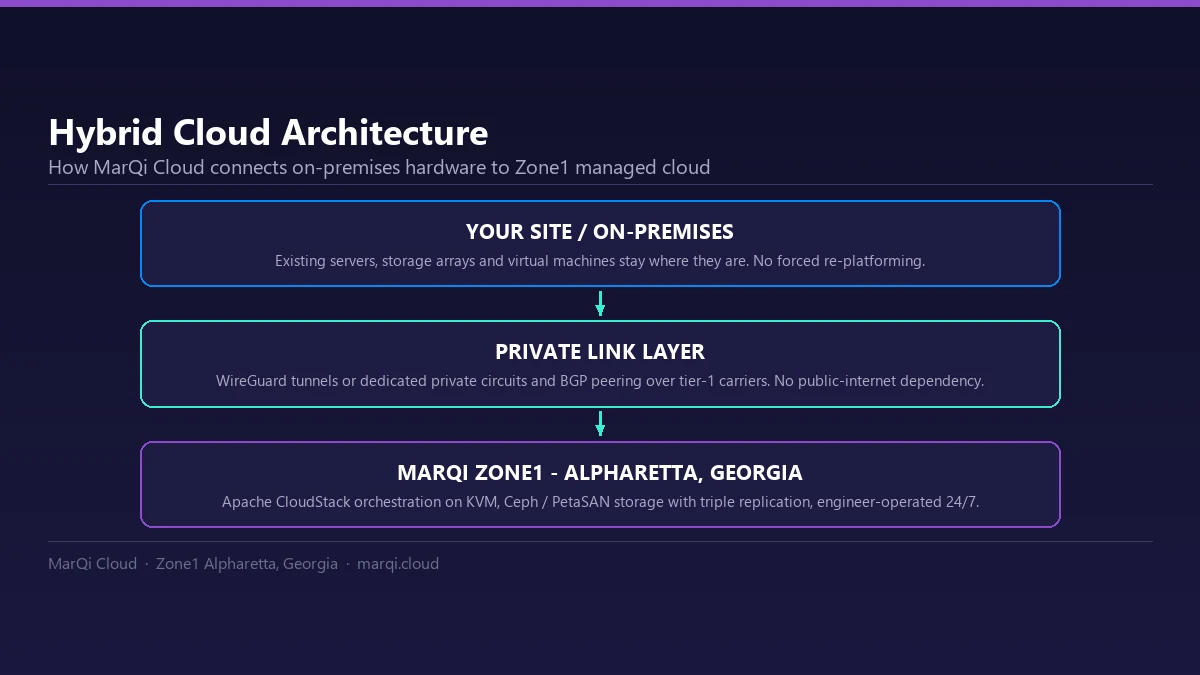
MarQi Cloud provides enterprise-grade cloud infrastructure that supports hybrid cloud deployment models. This allows you to run your serverless applications in a private and secure hosting environment. Utilize MarQi Cloud’s scalable compute and storage resources to ensure your application can grow alongside your business needs.
Step 5: Implement Business Continuity and Disaster Recovery Solutions
To protect your application from unexpected failures, implement business continuity and disaster recovery solutions. MarQi Cloud offers robust options to help you maintain data integrity and minimize downtime.
Step 6: Monitor and Optimize Performance
Once your serverless application is live, it’s essential to monitor its performance. Use analytics tools to gather insights into user behavior, application performance, and bottlenecks. Continuously optimize your microservices to enhance performance and user experience.
Avoiding Vendor Lock-In
Vendor lock-in can be a significant concern when adopting cloud services. To prevent this, consider the following strategies:
1. Use Open Standards
Opt for open-source tools and frameworks that are compatible with multiple cloud providers. This approach makes it easier to migrate your application if needed.
2. Maintain Flexibility
Design your architecture to be modular, allowing you to swap out components without affecting the entire system. This flexibility ensures that you can adapt to changing technologies and requirements.
3. Avoid Proprietary Services
Steer clear of proprietary services that lock you into a specific cloud provider. Instead, use generic APIs and services that can run on any cloud platform.
4. Regularly Review Your Architecture
Conduct periodic reviews of your architecture to identify areas where you may be too dependent on a specific vendor. This proactive approach will help you maintain your freedom of choice.
Conclusion
Building a serverless architecture on MarQi Cloud provides an excellent opportunity to leverage enterprise-grade infrastructure while avoiding vendor lock-in. By following the steps outlined in this article, you can create a flexible, scalable, and cost-effective application that meets your business needs. Embrace the power of serverless computing with MarQi Cloud and position your organization for success in the digital age.
FAQ
1. What is serverless architecture?
Serverless architecture is a cloud computing model where the cloud provider manages the infrastructure, allowing developers to focus solely on writing code.
2. How does MarQi Cloud support serverless architecture?
MarQi Cloud offers enterprise-grade cloud infrastructure, hybrid cloud deployment models, and scalable resources suitable for serverless applications.
3. What are the advantages of serverless architecture?
Benefits include cost efficiency, enhanced scalability, faster time to market, and improved reliability.
4. Can I avoid vendor lock-in while using MarQi Cloud?
Yes, by using open standards, maintaining flexibility, and avoiding proprietary services, you can minimize the risk of vendor lock-in.
5. What programming languages can I use on MarQi Cloud?
MarQi Cloud supports various programming languages, including Python, JavaScript, Java, and Go.
6. How do I ensure business continuity with a serverless architecture?
Implement business continuity and disaster recovery solutions provided by MarQi Cloud to protect your application from unexpected failures.
7. What tools can I use to monitor the performance of my serverless application?
Utilize analytics tools to gather insights into user behavior and application performance to optimize your serverless application.
8. Is serverless architecture suitable for all types of applications?
While serverless architecture is beneficial for many applications, it may not be suitable for all, particularly those with consistent high workloads.
9. How do I get started with building a serverless application on MarQi Cloud?
Begin by defining your application requirements, selecting your tech stack, designing your microservices, and leveraging MarQi Cloud’s infrastructure.
10. What are microservices, and how do they relate to serverless architecture?
Microservices are small, independent services that perform specific functions. They are a key component of serverless architecture, enabling modular and maintainable code.