How Cloud Infrastructure Automation Reduces Human Error and Improves Consistency
September 7, 2026
Why Declarative Infrastructure Configuration Outperforms Imperative Scripting
September 8, 2026
The Complete Guide to Infrastructure as Code Best Practices for Enterprise Cloud
In today’s rapidly evolving technological landscape, the shift towards Infrastructure as Code (IaC) has become not just a trend but a necessity for enterprise cloud environments. As organizations increasingly rely on cloud solutions for scalability, flexibility, and cost-efficiency, understanding the best practices for implementing IaC can significantly enhance operational efficiency and reduce deployment errors. This comprehensive guide aims to provide you with in-depth insights into IaC best practices tailored for enterprise cloud, specifically designed for mid-size to enterprise-level organizations looking to optimize their infrastructure management.
What is Infrastructure as Code?
Infrastructure as Code is a modern approach to managing and provisioning IT infrastructure through machine-readable definition files, rather than physical hardware configuration or interactive configuration tools. This method allows for automated deployment, configuration, and monitoring of infrastructure resources, all while maintaining high levels of consistency and reliability.
With IaC, organizations can treat their infrastructure in the same way they treat application code: version-controlled, tested, and deployed automatically. This paradigm shift not only streamlines operations but also facilitates collaboration between development and operations teams, commonly referred to as DevOps.
Benefits of Infrastructure as Code
Implementing Infrastructure as Code brings several advantages to enterprise cloud environments:
- Improved Consistency: IaC eliminates configuration drift by ensuring that the same code is used across all environments, from development to production.
- Faster Deployment: Automated provisioning and configuration lead to quicker deployment times, enabling businesses to respond rapidly to market changes.
- Enhanced Collaboration: By treating infrastructure as code, development and operations teams can collaborate more effectively, reducing the chances of miscommunication.
- Cost Efficiency: IaC can reduce operational costs by minimizing human error and the time spent on manual configurations.
- Scalability: With IaC, enterprises can easily scale their infrastructure up or down, adapting to varying workloads without significant manual intervention.
Key Infrastructure as Code Tools
Several tools are essential for implementing Infrastructure as Code effectively. Here are some of the most widely used:
| Tool | Description | Best Use Case |
|---|---|---|
| Terraform | An open-source tool that enables users to define and provision data center infrastructure using a declarative configuration language. | Multi-cloud deployments and complex infrastructure management. |
| CloudFormation | A service provided by AWS that allows users to define their cloud resources in a JSON or YAML template. | AWS-centric deployments. |
| Ansible | A configuration management tool that automates software provisioning, configuration management, and application deployment. | Configuration management and application deployment. |
| Puppet | A tool for automating the delivery and operation of software across the entire lifecycle. | Continuous delivery and compliance. |
| Chef | A configuration management tool that uses code to automate the configuration, deployment, and management of infrastructure. | Complex deployments requiring flexibility and customization. |
Best Practices for Implementing Infrastructure as Code
To maximize the benefits of Infrastructure as Code, enterprises should adhere to the following best practices:
1. Version Control Your Infrastructure
Just like application code, all infrastructure configurations should be stored in a version control system (VCS) such as Git. This practice not only provides a history of changes but also enables collaboration among team members.
2. Use Modular Code
Breaking down infrastructure code into reusable modules can enhance maintainability and readability. This approach allows teams to share modules across projects, reducing duplication of effort.
3. Implement Continuous Integration and Continuous Deployment (CI/CD)
Integrating IaC with CI/CD pipelines automates the testing and deployment of infrastructure changes. This ensures that any modifications are validated before going live, minimizing the risk of errors.
4. Test Your Infrastructure Code
Regular testing of infrastructure code is essential. Tools like Terraform validate can help ensure that configurations are syntactically correct, while integration tests can confirm that the infrastructure behaves as expected.
5. Maintain Documentation
Keeping thorough documentation of your IaC processes and configurations is crucial for onboarding new team members and for reference during troubleshooting. Clear documentation helps maintain knowledge continuity.
6. Monitor and Audit Infrastructure
Continuous monitoring of your infrastructure can help detect configuration drift, performance issues, and security vulnerabilities. Implementing auditing practices ensures compliance with industry regulations.
7. Foster a Culture of Collaboration
Encouraging collaboration between development and operations teams is vital for successful IaC implementation. Regular meetings to discuss infrastructure changes and challenges can foster a collaborative environment.
8. Embrace Security Best Practices
Security should be integrated into the IaC process from the beginning. Adopting practices such as least privilege access, encryption, and regular security audits can significantly reduce vulnerabilities.
Common Challenges and Solutions
While implementing Infrastructure as Code can yield significant benefits, organizations may encounter several challenges:
1. Complexity of Infrastructure
As infrastructure grows in complexity, managing IaC can become challenging. Adopting modular design principles can help manage this complexity effectively.
2. Skill Gaps
Not all teams are equipped with the necessary skills to implement IaC. Investing in training and leveraging managed services can bridge this gap.
3. Tooling Overload
With numerous IaC tools available, choosing the right one can be daunting. Organizations should assess their specific needs and choose tools that align with their infrastructure goals.
Case Studies of Successful IaC Implementations
Several enterprises have successfully implemented Infrastructure as Code, leading to improved efficiency and reduced operational costs:
Case Study 1: Global Retailer
A global retailer adopted Terraform to manage their multi-cloud infrastructure. By implementing IaC, they reduced deployment times by 70% and improved consistency across environments.
Case Study 2: Financial Services Firm
A financial services firm utilized CloudFormation to automate their infrastructure management. This move decreased their operational costs by 30% and ensured compliance with regulatory standards.
The Future of Infrastructure as Code
The future of Infrastructure as Code is bright, with trends indicating further integration of AI and machine learning to automate infrastructure management. As enterprises continue to adopt cloud solutions, the need for efficient and scalable infrastructure management will only grow.
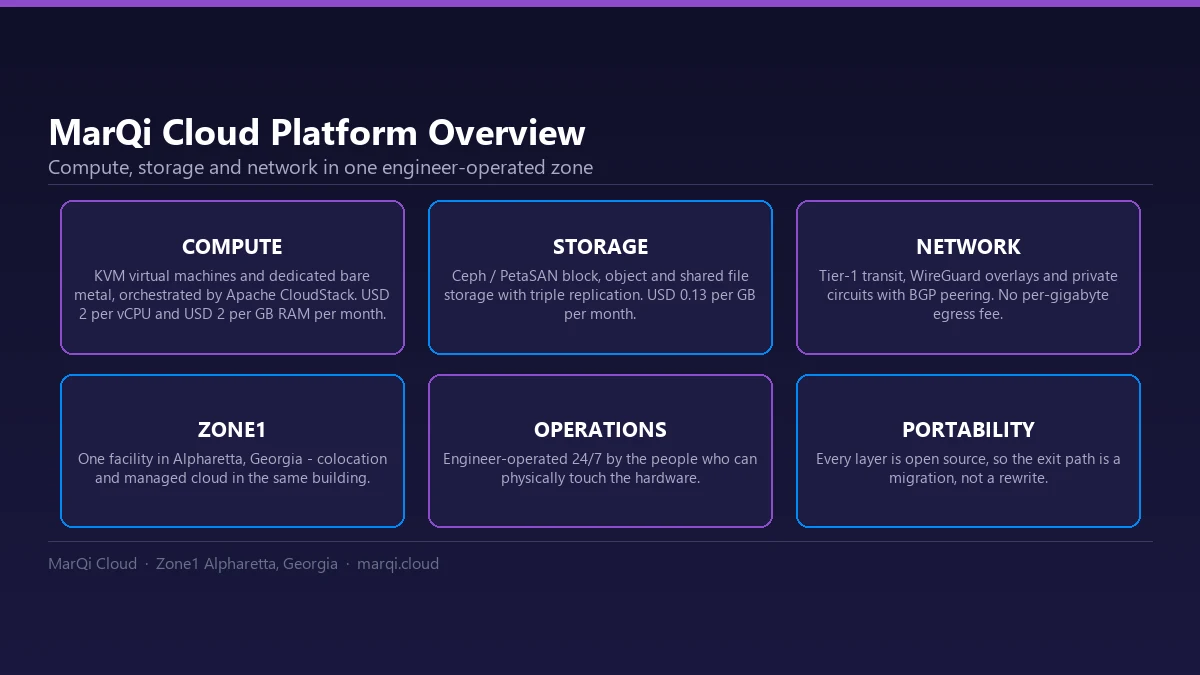
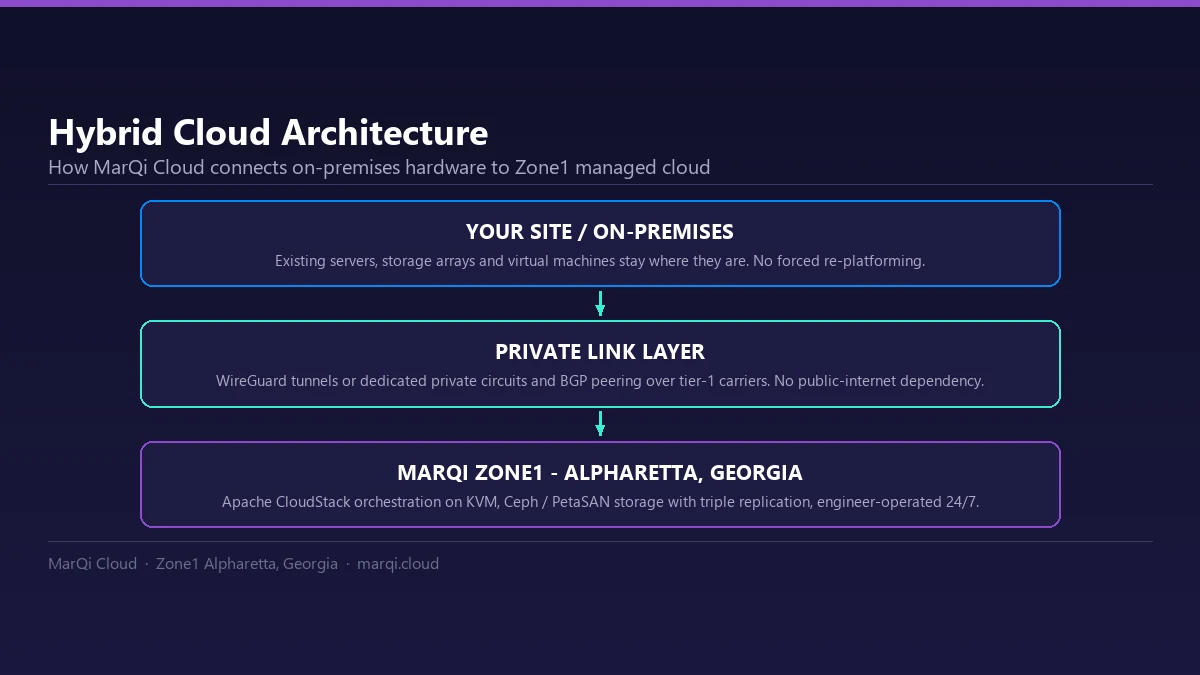
At MarQi Cloud, we understand the complexities of enterprise cloud infrastructure and offer tailored hybrid cloud solutions that align with your specific needs. Our expertise in managed services ensures that your IaC implementation is seamless and efficient, paving the way for future growth.
Frequently Asked Questions
What is Infrastructure as Code?
Infrastructure as Code (IaC) is a modern approach to managing IT infrastructure through machine-readable definition files, enabling automated deployment and configuration.
What are the benefits of using IaC?
Benefits of IaC include improved consistency, faster deployment, enhanced collaboration, cost efficiency, and scalability.
Which tools are commonly used for IaC?
Common tools for IaC include Terraform, CloudFormation, Ansible, Puppet, and Chef.
How does IaC improve collaboration between teams?
IaC fosters collaboration by treating infrastructure like code, allowing development and operations teams to work together more effectively.
What challenges might organizations face when implementing IaC?
Challenges include complexity of infrastructure, skill gaps, and tooling overload.
How can organizations ensure security in IaC?
Organizations can ensure security by adopting practices such as least privilege access, encryption, and regular security audits.
What role does CI/CD play in IaC?
CI/CD integrates IaC with automated testing and deployment, ensuring infrastructure changes are validated before going live.
How can I learn more about IaC?
There are numerous resources available, including online courses, documentation from IaC tools, and community forums.
Conclusion
Infrastructure as Code is a transformative approach that can significantly enhance the efficiency and reliability of enterprise cloud environments. By following best practices, leveraging the right tools, and fostering a culture of collaboration, organizations can unlock the full potential of IaC. At MarQi Cloud, we are committed to providing enterprise-grade cloud solutions that empower your business to thrive in a digital-first world. Contact us today to learn how we can support your Infrastructure as Code journey.