How Cloud Hosting Enables Real-Time Data Processing for Manufacturing Analytics
August 24, 2026
The Complete Guide to Cloud Hosting for Multi-Location Retail Technology Platforms
August 24, 2026
Why Insurance Companies Need Cloud Infrastructure That Meets State Regulatory Requirements
In an era where digital transformation is not just a trend but a necessity, insurance companies are increasingly turning to cloud infrastructure to optimize operations, enhance customer experience, and ensure compliance with state regulatory requirements. This shift is particularly crucial given the stringent regulations governing the insurance industry, which demand secure data management and transparency. In this article, we will explore why insurance companies must adopt cloud infrastructure that not only meets these regulatory requirements but also supports their business objectives. You’ll learn about the benefits of cloud solutions, the specific compliance needs of the insurance sector, and how MarQi Cloud can provide tailored solutions for your organization.
Understanding State Regulatory Requirements
Insurance companies operate within a heavily regulated environment, governed by state-specific laws and regulations. These regulations are designed to protect consumer data, ensure fair practices, and maintain the financial stability of the insurance sector. Some of the key regulatory frameworks that insurance companies must adhere to include:
- Gramm-Leach-Bliley Act (GLBA): This federal law requires financial institutions, including insurance companies, to explain their information-sharing practices and protect sensitive customer data.
- Health Insurance Portability and Accountability Act (HIPAA): For insurers dealing with health-related services, compliance with HIPAA is mandatory to safeguard patient information.
- State-Specific Regulations: Each state has its own set of regulations that may include data protection laws, reporting requirements, and more.
Failing to comply with these regulations can result in severe penalties, including fines and reputational damage. Therefore, it is imperative that insurance companies invest in cloud infrastructure that is designed to meet these specific requirements.
The Role of Cloud Infrastructure in Insurance
Cloud infrastructure plays a pivotal role in modernizing the operations of insurance companies. It allows for greater flexibility, scalability, and cost efficiency. Here are some ways cloud infrastructure supports the insurance sector:
- Data Management: With the increasing volume of data generated, cloud solutions provide robust data management capabilities that facilitate easy access, storage, and processing of information.
- Disaster Recovery: Solutions like MarQi Cloud offer business continuity and disaster recovery options that ensure data is backed up and recoverable in case of an incident.
- Scalability: As insurance businesses grow, their cloud infrastructure can easily scale to accommodate increased workloads without significant capital investment.
Moreover, cloud infrastructure can enhance customer experiences through personalized services and faster claims processing. This is particularly important in a competitive marketplace where customer satisfaction directly impacts retention rates.
Key Features of Compliant Cloud Solutions
When selecting a cloud provider, insurance companies should look for specific features that ensure compliance with state regulations:
- Data Encryption: Ensure that sensitive data is encrypted both in transit and at rest to protect against unauthorized access.
- Access Controls: Robust identity and access management (IAM) features are essential to restrict access to sensitive information.
- Auditing and Reporting: Compliance-ready cloud solutions should provide detailed logs and reports to assist in audits and regulatory reporting.
- Geolocation Compliance: Data residency requirements may dictate where data can be stored. Choose a provider that offers solutions in specific regions to meet these laws.
- Regular Security Assessments: A trustworthy cloud provider will conduct regular security assessments and provide compliance certifications.
These features not only help in meeting compliance requirements but also enhance the overall security posture of the organization.
Benefits of Adopting Cloud Infrastructure
Transitioning to cloud infrastructure provides numerous benefits for insurance companies:
| Benefit | Description |
|---|---|
| Cost Efficiency | Reduces capital expenditures by eliminating the need for physical hardware. |
| Agility | Enables faster deployment of applications and services, improving responsiveness to market changes. |
| Enhanced Security | Provides advanced security features that protect sensitive customer data. |
| Collaboration | Facilitates better collaboration among teams, even in remote settings. |
| Compliance Management | Streamlines compliance management processes with built-in tools and features. |
These advantages collectively contribute to improved operational efficiency and competitive differentiation in the market.
How MarQi Cloud Meets Insurance Compliance
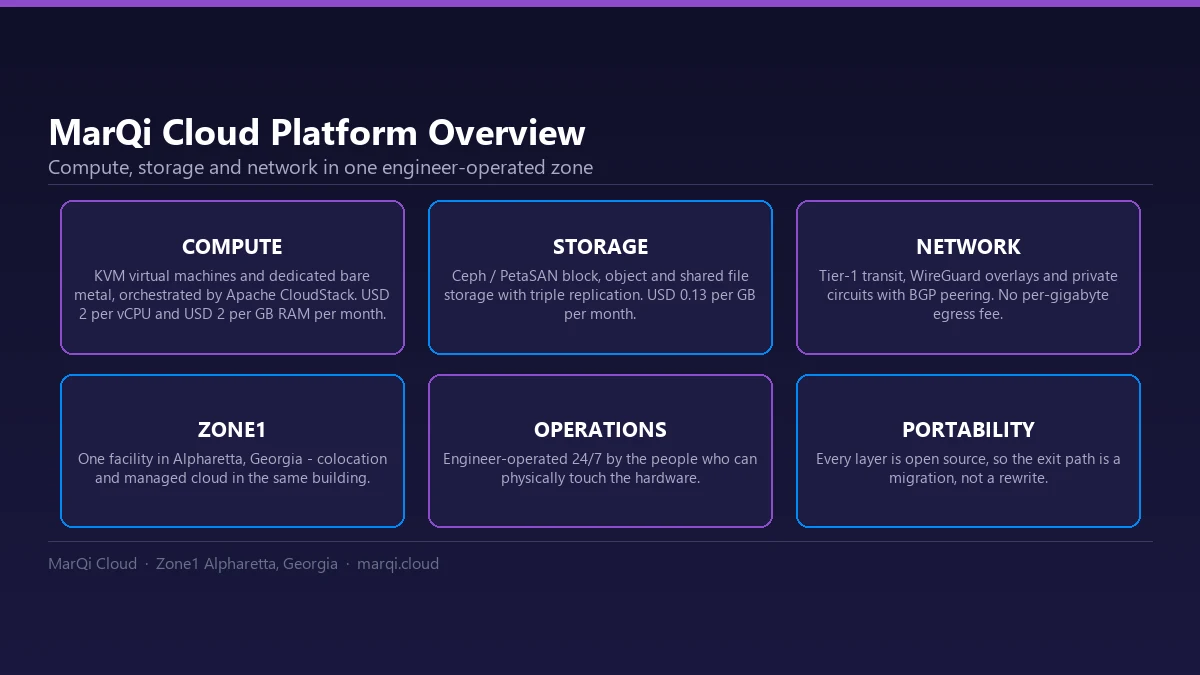
At MarQi Cloud, we understand the unique challenges faced by insurance companies regarding compliance with state regulations. Our enterprise-grade cloud infrastructure is designed to support your specific needs:
- US-Based Infrastructure: Our Zone1 data center is in Alpharetta, Georgia, in the United States, which supports state and federal data-residency requirements; your organization evidences its own compliance.
- White-Glove Managed Services: We offer personalized support to help you navigate compliance requirements effectively.
- Zero Lock-In, Zero Egress Fees: Our flexible pricing models allow you to scale as needed without incurring unexpected costs.
By partnering with MarQi Cloud, insurance companies can run on private cloud infrastructure that supports their operational needs; these controls support, but do not replace, their own regulatory compliance.
Expert Tips for Transitioning to the Cloud
Transitioning to cloud infrastructure can be daunting, but with the right approach, it can be a smooth process. Here are some expert tips:
- Choose the Right Provider: Evaluate multiple cloud providers based on their compliance capabilities, security features, and support services.
- Develop a Migration Plan: Create a detailed migration plan that outlines timelines, responsibilities, and resource allocation.
- Train Your Team: Provide training for your staff on the new systems to ensure smooth adoption.
- Monitor and Optimize: After migration, continuously monitor the cloud environment for compliance and performance, making adjustments as necessary.
Conclusion
In conclusion, insurance companies must adopt cloud infrastructure that meets state regulatory requirements to protect sensitive customer data and ensure compliance. The benefits of such a transition are significant, ranging from cost efficiency to enhanced security. With MarQi Cloud’s tailored solutions, insurance organizations can navigate the complexities of compliance while leveraging the advantages of cloud technology. If you’re ready to make the transition, contact us today to learn more about how we can support your journey.
FAQs
1. What are the benefits of cloud infrastructure for insurance companies?
Cloud infrastructure offers cost efficiency, scalability, enhanced security, and improved collaboration.
2. How does cloud infrastructure help with compliance?
Cloud solutions provide features such as data encryption, access controls, and auditing capabilities that aid in meeting regulatory requirements.
3. What regulations must insurance companies comply with?
Insurance companies must comply with regulations such as GLBA, HIPAA, and state-specific laws governing data protection.
4. Why is data encryption important for insurance companies?
Data encryption protects sensitive customer information from unauthorized access and breaches.
5. How can MarQi Cloud support my insurance company?
MarQi Cloud offers private cloud infrastructure and managed services for insurers, with security controls that support, but do not replace, their own compliance.
6. What should I consider when choosing a cloud provider?
Evaluate the provider’s compliance capabilities, security features, support services, and geographical data residency options.
7. How can I ensure a smooth transition to the cloud?
Conduct a cloud readiness assessment, develop a migration plan, and train your team on new systems.
8. What are the consequences of non-compliance?
Non-compliance can lead to significant fines, legal issues, and reputational damage.