GPU Cloud for AI/ML: Training vs Inference—How to Choose the Right Cluster
February 19, 2026
How Enterprises Modernize Legacy Systems with Cloud Native Apps
February 19, 2026
KVM Virtualization for Enterprises: Why It’s Still a Power Move
In today’s fast-paced digital landscape, enterprises are constantly seeking ways to enhance efficiency, reduce costs, and improve scalability. One of the most effective strategies to achieve these goals is through virtualization. Among the various virtualization technologies available, Kernel-based Virtual Machine (KVM) has emerged as a leading choice for organizations looking to optimize their IT infrastructure. This article delves into KVM virtualization, its advantages for enterprises, and why it remains a powerful option in 2026.
What is KVM Virtualization?
KVM, or Kernel-based Virtual Machine, is an open-source virtualization technology integrated into the Linux kernel. It allows users to turn their Linux operating systems into hypervisors, enabling the creation and management of multiple virtual machines (VMs) on a single physical server. Each VM operates as a complete system, capable of running its own operating system and applications, isolated from others.
The Architecture of KVM
The KVM architecture consists of several components:
- QEMU: A hardware emulator that provides the user interface for managing VMs.
- Libvirt: A toolkit that simplifies the management of KVM, providing a consistent API for virtualization tasks.
- Linux Kernel: The core component that turns the Linux OS into a hypervisor.
Advantages of KVM Virtualization for Enterprises
KVM virtualization offers numerous benefits, making it an attractive choice for enterprises. Here are some of the key advantages:
1. Cost Efficiency
One of the most compelling reasons to adopt KVM virtualization is the potential for significant cost savings. By consolidating multiple servers into a single physical machine, organizations can reduce hardware costs, power consumption, and cooling expenses. Additionally, KVM is open-source, which means there are no licensing fees associated with its use.
2. Scalability
KVM allows enterprises to scale their IT resources easily. As business demands grow, IT departments can quickly spin up new VMs to accommodate increased workloads without the need for additional hardware. This flexibility allows organizations to respond rapidly to market changes.
3. Performance
With KVM, enterprises can achieve high performance levels. Since it is built into the Linux kernel, KVM can leverage native Linux performance optimizations. Additionally, KVM supports various hardware virtualization technologies, such as Intel VT and AMD-V, providing enhanced performance for virtual machines.
4. Security
Security is a top concern for enterprises, and KVM addresses this with robust isolation features. Each VM operates independently, ensuring that potential security breaches in one VM do not affect others. Furthermore, KVM benefits from the extensive security features of the Linux kernel, including SELinux and AppArmor, which provide additional layers of protection.
5. Flexibility and Customization
KVM virtualization allows enterprises to customize their virtual environments according to their specific needs. Organizations can choose their preferred Linux distribution, configure performance parameters, and install necessary applications, enabling tailored solutions that meet unique business requirements.
6. Hybrid Cloud and Multi-Cloud Capabilities
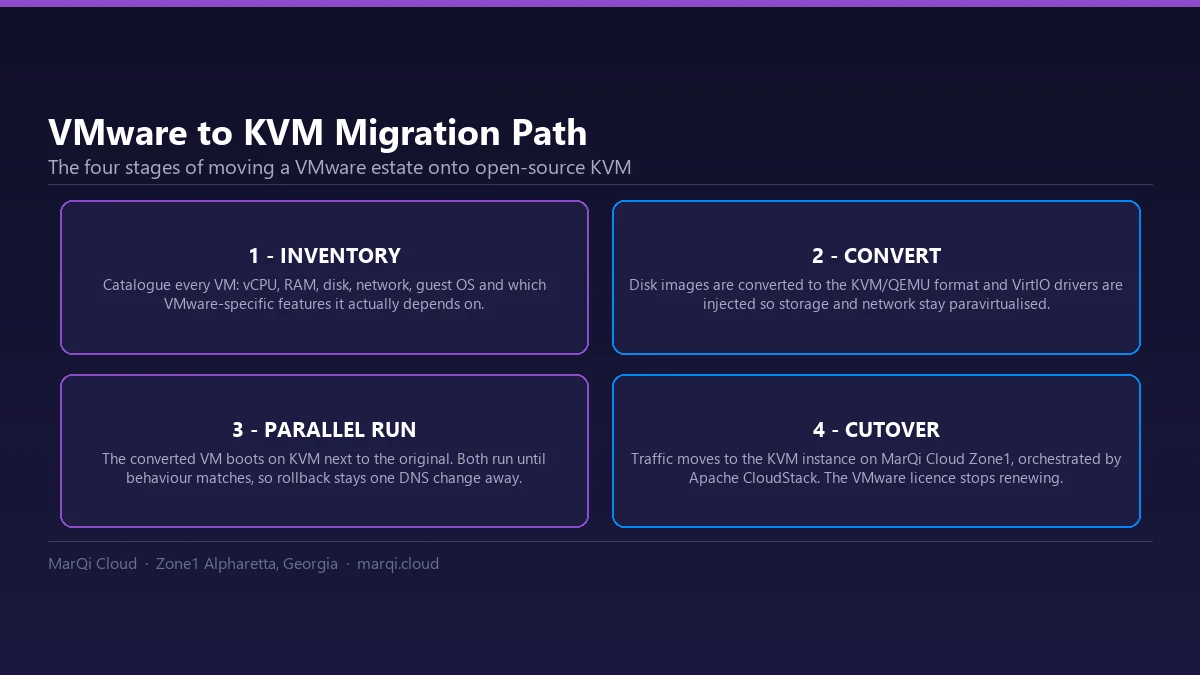
As businesses increasingly adopt hybrid and multi-cloud strategies, KVM stands out for its compatibility with various cloud platforms. Organizations can easily migrate workloads between on-premises infrastructure and cloud environments, ensuring optimal resource utilization and cost-effectiveness.
7. Business Continuity and Disaster Recovery
With KVM, enterprises can implement effective business continuity and disaster recovery solutions. Virtual machines can be easily backed up, replicated, and restored, ensuring that critical applications remain operational even in the event of a failure. This capability is essential for maintaining uptime and minimizing disruption.
Why KVM Virtualization is Still a Power Move in 2026
As we progress further into 2026, several factors reaffirm KVM virtualization’s position as a powerful option for enterprises:
1. Increased Adoption of Open-Source Technologies
The trend towards open-source software continues to grow, with organizations recognizing the benefits of flexibility, lower costs, and community support. KVM’s open-source nature aligns perfectly with this trend, making it an attractive choice for enterprises looking to leverage innovative technologies.
2. Enhanced Support for Containerization
With the rise of containerization technologies like Docker and Kubernetes, KVM has adapted to support these environments. Organizations can run containers alongside VMs, providing a robust solution for microservices architectures and hybrid deployments.
3. Evolving Technologies and Features
KVM is continuously evolving, with new features and enhancements being introduced regularly. The community-driven development ensures that KVM remains relevant and capable of meeting modern enterprise demands.
4. Strong Community and Ecosystem
The KVM ecosystem boasts a vibrant community of developers, users, and vendors. This collaborative environment fosters innovation and ensures that enterprises have access to a wealth of resources, tools, and support.
Implementing KVM Virtualization in Your Enterprise
For organizations considering KVM virtualization, the implementation process involves several key steps:
1. Assessing Your Needs
Before implementation, it’s essential to evaluate your organization’s specific requirements, including workload types, resource demands, and budget constraints.
2. Choosing the Right Hardware
To maximize KVM’s performance, select hardware that supports virtualization technologies such as Intel VT or AMD-V. Additionally, ensure sufficient CPU, memory, and storage resources to accommodate your virtual machines.
3. Installing KVM
KVM installation involves setting up the necessary packages, configuring networking, and enabling virtualization features in the BIOS. Various guides and resources are available to assist with this process.
4. Configuring Virtual Machines
Once KVM is installed, you can begin creating and configuring virtual machines based on your organization’s requirements. This includes choosing operating systems, allocating resources, and setting up networking.
5. Monitoring and Optimizing
Ongoing monitoring and optimization are essential to ensure optimal performance and resource utilization. Tools such as Libvirt and various monitoring solutions can help track VM performance and resource usage.
Conclusion
KVM virtualization remains a powerful move for enterprises in 2026, offering cost savings, scalability, performance, and security. As organizations continue to embrace cloud technologies and seek efficient IT solutions, KVM stands out as a versatile and reliable option. By understanding its benefits and implementing it effectively, businesses can position themselves for success in the ever-evolving digital landscape.
FAQ
1. What is KVM virtualization?
KVM virtualization is an open-source technology that allows Linux systems to act as hypervisors, enabling the creation and management of multiple virtual machines on a single physical server.
2. What are the benefits of KVM virtualization?
The benefits include cost efficiency, scalability, performance, security, flexibility, hybrid cloud capabilities, and robust disaster recovery solutions.
3. How does KVM compare to other virtualization technologies?
KVM offers robust performance, cost savings, and strong security features compared to other virtualization technologies like VMware and Hyper-V.
4. Is KVM suitable for large enterprises?
Yes, KVM is highly scalable and can accommodate the needs of large enterprises by managing extensive workloads efficiently.
5. Can KVM support containerization?
Yes, KVM can run alongside container technologies like Docker and Kubernetes, providing a flexible environment for various applications.
6. How can I implement KVM in my organization?
To implement KVM, assess your needs, choose the right hardware, install KVM, configure virtual machines, and monitor performance regularly.
7. Is KVM secure?
KVM is secure due to its strong isolation features and the security enhancements available in the Linux kernel.
8. What resources are available for KVM support?
There is a vibrant community and numerous online resources, including forums, documentation, and tutorials available for KVM support.
9. What type of applications can run on KVM?
KVM can run various applications, including web servers, databases, and enterprise applications, making it suitable for diverse workloads.
10. Is KVM free to use?
Yes, KVM is open-source and free to use, making it a cost-effective solution for enterprises.