How Automated Rollback Mechanisms Safeguard Cloud Deployments
September 22, 2026
The Complete Guide to Synthetic Monitoring for Cloud Application Health Verification
September 22, 2026
Why Mean Time to Detection Matters More Than Mean Time to Recovery
In the rapidly evolving world of enterprise cloud infrastructure, organizations are increasingly challenged by the need to maintain robust security and operational efficiency. One critical metric that often gets overlooked in favor of recovery metrics is Mean Time to Detection (MTTD). While Mean Time to Recovery (MTTR) has traditionally been the focus for incident response teams, a shift towards prioritizing MTTD can lead to significantly improved outcomes for businesses. In this article, we will explore why MTTD is more important than MTTR, how it impacts overall system reliability, and strategies for optimizing detection times in your cloud infrastructure.
Understanding Mean Time to Detection (MTTD)
Mean Time to Detection (MTTD) refers to the average time taken to identify a security incident or system failure after it occurs. This metric is crucial for organizations, particularly those that rely on hybrid cloud solutions and managed services, as it directly influences the effectiveness of incident response strategies.
Organizations that can quickly detect anomalies or breaches can implement corrective actions more swiftly, minimizing damage and potential data loss. MTTD is often measured in minutes or hours, depending on the complexity of the systems in place.
The Importance of MTTD in Cloud Infrastructure
In the context of cloud infrastructure, MTTD is particularly vital. As businesses transition to cloud environments, they expose themselves to various security threats, including data breaches and ransomware attacks. According to a report by the Cybersecurity and Infrastructure Security Agency (CISA), organizations with faster detection capabilities can mitigate the impact of such threats more effectively.
Here are some reasons why MTTD is crucial for cloud infrastructure:
- Proactive Threat Management: A lower MTTD enables organizations to adopt a more proactive approach to security. By identifying threats early, businesses can reduce the likelihood of severe incidents.
- Compliance and Governance: Many industries are subject to strict compliance regulations. Faster detection helps organizations meet these requirements, avoiding potential fines and legal repercussions.
- Cost Efficiency: The financial implications of a data breach can be staggering. The IBM Cost of a Data Breach Report indicates that organizations with high MTTD can significantly reduce costs associated with breaches.
How MTTD Affects Business Continuity
Business continuity is fundamentally linked to MTTD. A rapid detection time ensures that organizations can maintain operations with minimal disruption. When incidents go undetected for extended periods, the recovery efforts become more complex and resource-intensive.
For example, consider a scenario where a security breach goes unnoticed for several hours. During that time, sensitive data may be exfiltrated, leading to compliance violations and reputational damage. On the other hand, a swift detection allows for immediate containment measures, preserving business integrity.
Comparing MTTD and MTTR
While MTTD focuses on detection, Mean Time to Recovery (MTTR) emphasizes the time taken to restore services after an incident. Both metrics are essential, but prioritizing MTTD can yield more significant benefits. The table below illustrates the differences and interdependencies between MTTD and MTTR:
| Metric | Focus | Implications |
|---|---|---|
| Mean Time to Detection (MTTD) | Time to identify an incident | Early intervention, reduced impact |
| Mean Time to Recovery (MTTR) | Time to restore services | Recovery efficiency, service uptime |
As illustrated, a shorter MTTD can lead to a more efficient MTTR. Organizations that excel in detection can often expedite recovery efforts, demonstrating the interconnected nature of these metrics.
Strategies for Reducing MTTD
To optimize MTTD, organizations can implement several strategies:
- Invest in Advanced Monitoring Tools: Utilize AI-driven analytics and machine learning algorithms to enhance threat detection capabilities. Tools that leverage behavioral analytics can identify anomalies faster.
- Implement Regular Security Audits: Conduct frequent security assessments to identify vulnerabilities. This proactive approach helps in fine-tuning detection mechanisms.
- Enhance Employee Training: Employees are often the first line of defense. Regular training on recognizing suspicious activities can improve overall detection rates.
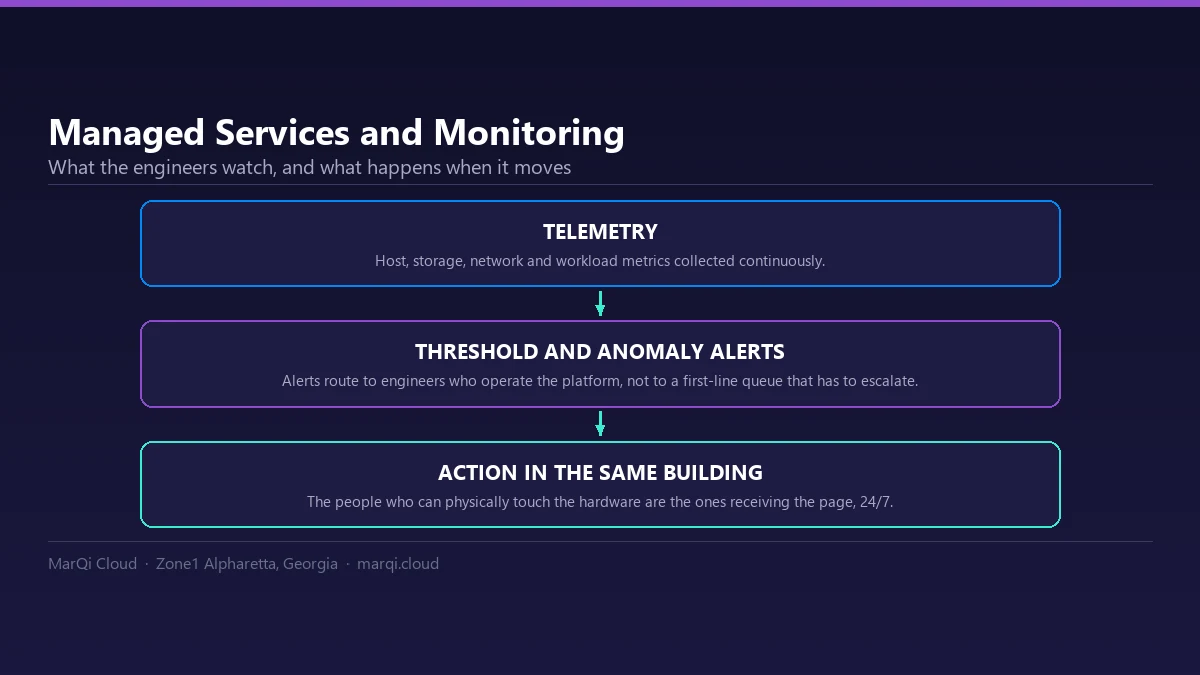
- Utilize Real-time Alerts: Set up systems that provide instant alerts for potential threats. This ensures that the appropriate teams can respond promptly.
- Establish a Response Plan: A well-defined incident response plan can facilitate faster detection and response times. Teams should practice their response strategies regularly.
Conclusion
In conclusion, while both Mean Time to Detection and Mean Time to Recovery are essential metrics in the realm of cloud infrastructure, prioritizing MTTD can lead to more effective incident management and improved business continuity. By investing in advanced detection tools, enhancing employee training, and implementing proactive strategies, organizations can significantly reduce their MTTD, ultimately safeguarding their operations and reputation.
FAQs
What is Mean Time to Detection (MTTD)?
Mean Time to Detection (MTTD) is the average time taken to identify a security incident or system failure after it occurs.
Why is MTTD more important than MTTR?
MTTD is crucial because early detection allows for faster response and mitigation of threats, reducing overall impact and recovery costs.
How can organizations reduce MTTD?
Organizations can reduce MTTD by investing in advanced monitoring tools, conducting regular security audits, enhancing employee training, and utilizing real-time alerts.
What are the financial implications of a high MTTD?
A high MTTD can lead to significant financial losses due to data breaches, compliance violations, and reputational damage.
How does MTTD affect business continuity?
Faster detection ensures that organizations can maintain operations with minimal disruption, preserving business integrity.
What role does employee training play in MTTD?
Employee training helps staff recognize suspicious activities, improving overall detection rates and enhancing organizational security.
Are there specific tools for improving MTTD?
Yes, AI-driven analytics and machine learning tools can enhance threat detection capabilities and identify anomalies faster.
How often should organizations conduct security audits?
Organizations should conduct security audits regularly, ideally on a quarterly or bi-annual basis, to identify vulnerabilities and improve detection mechanisms.