How In-Memory Caching Layers Reduce Database Load on Cloud Infrastructure
August 19, 2026
The Complete Guide to Cloud GPU Computing for AI Workloads
August 19, 2026
Why Network Latency Optimization Is Critical for Real-Time Cloud Applications
As businesses increasingly migrate to the cloud, the performance of real-time applications is paramount. One of the most critical factors affecting this performance is network latency. Network latency optimization is not just a technical necessity; it is a strategic imperative for organizations that rely on real-time cloud applications. In this article, we will explore what network latency is, why it is critical for real-time applications, and how to optimize it effectively. You will learn about the implications of latency on user experience, performance metrics, and ultimately, business outcomes, all while leveraging MarQi Cloud’s expertise in enterprise cloud solutions.
What Is Network Latency?
Network latency refers to the time it takes for data to travel from one point to another within a network. This delay can be caused by various factors, including the distance data must travel, the number of hops it takes to reach its destination, and the processing time at each node along the way. Latency is typically measured in milliseconds (ms), and lower latency is crucial for applications where real-time data processing is required.
Why Latency Matters for Real-Time Applications
Real-time applications, such as video conferencing, online gaming, and financial trading platforms, demand minimal latency to function effectively. High latency can lead to delays, buffering, and a poor user experience, which can ultimately affect a business’s bottom line. For example, a delay of just 100 milliseconds in a financial trading application can lead to significant financial losses. Therefore, understanding and optimizing network latency is essential for enterprises that rely on these applications.
Performance Metrics Affected by Latency
Latency impacts several key performance metrics, including:
- Throughput: The amount of data transmitted successfully over a network in a given time frame.
- Response Time: The time it takes for a user to receive a response after making a request.
- User Satisfaction: Higher latency can lead to frustration and decreased user engagement.
Impact of Latency on User Experience
The user experience is directly linked to network latency. In an age where users expect instantaneous feedback, even minor delays can lead to dissatisfaction. According to a study by the Nielsen Norman Group, users perceive delays of 100 milliseconds as instantaneous, while delays of 1 second can cause users to lose their focus on a task. This is particularly pertinent for applications that require quick decision-making, such as trading platforms and real-time data analytics dashboards.
Measuring Network Latency
Measuring network latency is crucial for identifying bottlenecks and areas for improvement. Common tools and methodologies for measuring latency include:
- Ping: A basic tool that measures the time it takes for a packet to travel to a destination and back.
- Traceroute: A tool that shows the path packets take to reach a destination, helping identify where delays occur.
- Network Monitoring Tools: Advanced solutions that provide real-time data on latency and other performance metrics.
Causes of Network Latency
Understanding the causes of network latency is vital for effective optimization. Common causes include:
- Distance: The physical distance between the client and server can significantly impact latency.
- Network Congestion: High traffic volumes can lead to delays as packets queue for processing.
- Routing and Switching Delays: Each hop a packet makes introduces potential delays.
- Hardware Limitations: Older networking equipment may not process data as quickly as modern alternatives.
Latency Optimization Strategies
To minimize network latency, organizations can employ several optimization strategies:
1. Content Delivery Networks (CDNs)
CDNs distribute content across multiple geographically dispersed servers, reducing the distance data must travel to reach end-users. By caching content closer to users, CDNs can significantly lower latency.
2. Edge Computing
Edge computing processes data closer to the source, minimizing the time it takes to send data to a central server. This is particularly beneficial for IoT applications and real-time analytics.
3. Network Infrastructure Upgrades
Investing in modern networking equipment can enhance speed and reduce latency. Upgrading to fiber-optic connections and deploying high-performance routers can yield significant improvements.
4. Optimizing Routing
By selecting the most efficient routes for data packets, organizations can reduce the number of hops and minimize delays. Utilizing advanced routing protocols can help achieve this.
5. Traffic Shaping and Quality of Service (QoS)
Implementing traffic shaping and QoS policies can prioritize critical application traffic, ensuring that real-time applications receive the bandwidth they need to function optimally.
The Role of Hybrid Cloud in Latency Reduction
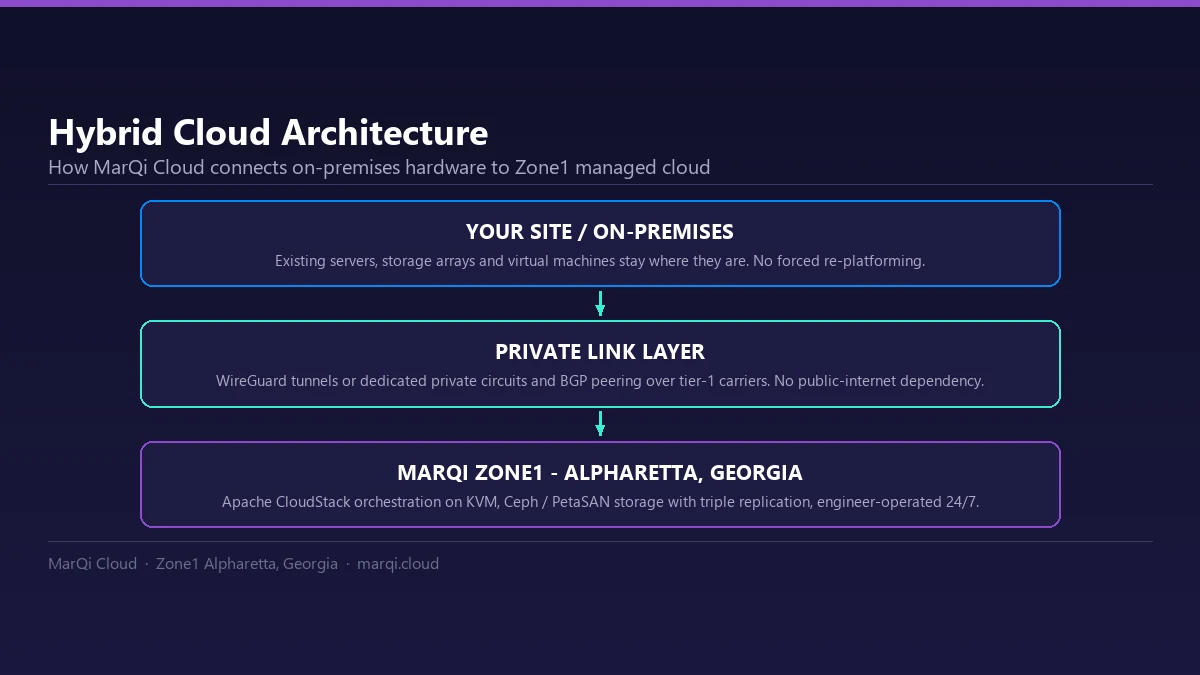
Hybrid cloud solutions, such as those offered by MarQi Cloud, can effectively reduce latency for real-time applications. By leveraging both public and private cloud resources, businesses can optimize their infrastructure to achieve lower latency. For example, sensitive data can be processed in a private cloud environment while less sensitive data can be handled in a public cloud, ensuring both security and performance.
Benefits of Hybrid Cloud for Latency Optimization
- Geographical Distribution: Hybrid clouds allow businesses to deploy applications in multiple regions, ensuring that users connect to the nearest data center.
- Scalability: Organizations can scale their resources dynamically based on demand, minimizing latency during peak usage times.
- Cost Efficiency: Hybrid clouds can reduce the need for expensive dedicated infrastructure while still providing high performance.
Example Scenarios: Applying Latency Optimization
The scenarios below are illustrative, not customer case studies; they show how the strategies above apply to two latency-sensitive workloads.
Scenario 1: Financial Trading Platform
A trading platform would typically place order-matching components as close as possible to the exchanges and data feeds it depends on, use dedicated network paths instead of the public internet for those links, and monitor round-trip time continuously so a regression is caught before it affects trades.
Scenario 2: Online Gaming Company
An online gaming company seeing players drop off during matches would usually measure latency by region first, then serve static assets through a CDN and move game servers closer to its largest player populations.
Frequently Asked Questions
What is network latency?
Network latency is the time it takes for data to travel from one point to another within a network, typically measured in milliseconds.
Why is network latency important for real-time applications?
High latency can lead to delays and a poor user experience, significantly affecting applications that require real-time data processing.
How can I measure network latency?
Network latency can be measured using tools like Ping, Traceroute, and advanced network monitoring solutions.
What are the main causes of network latency?
Common causes include distance, network congestion, routing and switching delays, and hardware limitations.
What strategies can optimize network latency?
Effective strategies include utilizing CDNs, implementing edge computing, upgrading network infrastructure, optimizing routing, and applying traffic shaping techniques.
How does hybrid cloud reduce latency?
Hybrid cloud solutions enable geographical distribution of resources, allowing businesses to connect users to the nearest data center and ensuring efficient resource allocation.
What are the benefits of using a CDN?
CDNs reduce latency by caching content closer to users, which minimizes the distance data must travel, resulting in faster load times.
How can businesses evaluate their latency issues?
Businesses can evaluate latency issues by measuring performance metrics, analyzing user feedback, and utilizing network monitoring tools.
What is the ideal latency for real-time applications?
A latency of less than 100 milliseconds is generally considered optimal for real-time applications to ensure a seamless user experience.
How does MarQi Cloud help with latency optimization?
MarQi Cloud provides enterprise-grade cloud infrastructure and hybrid deployment models that optimize performance and reduce latency for real-time applications.
What role does network congestion play in latency?
Network congestion can significantly increase latency as data packets queue for processing, leading to delays in data transmission.
How can traffic shaping improve user experience?
Traffic shaping prioritizes critical application traffic, ensuring that real-time applications receive the necessary bandwidth to function optimally, thereby improving user experience.
In conclusion, network latency optimization is not just a technical requirement; it is a critical component of delivering high-performance real-time cloud applications. By understanding the causes of latency and implementing effective optimization strategies, organizations can enhance user experiences, improve operational efficiency, and drive business success. If you’re looking to optimize your cloud infrastructure for real-time applications, consider partnering with MarQi Cloud for enterprise-grade solutions tailored to your business needs.