Why NVIDIA Blackwell GPUs on MarQi Cloud Outperform Every Competitor
June 18, 2026
What Is Bare Metal Cloud and Why It Destroys Shared Hosting for Performance
June 19, 2026
Open Source Cloud Infrastructure: Why MarQi Cloud Bets on Transparency
In the ever-evolving world of cloud computing, transparency has emerged as a cornerstone of trust and reliability. As businesses increasingly migrate to the cloud, they seek solutions that not only meet their technological needs but also adhere to principles of openness and accountability. MarQi Cloud stands at the forefront of this movement, championing the use of open source cloud infrastructure to foster transparency and empower businesses. In this article, we will explore the significance of open source cloud infrastructure, the advantages it offers, and why MarQi Cloud is committed to this transformative approach.
Understanding Open Source Cloud Infrastructure
Open source cloud infrastructure refers to cloud computing solutions built on open source software, which allows anyone to view, modify, and distribute the source code. This model contrasts sharply with proprietary software, where the underlying code is kept secret and access is restricted. By embracing open source, companies can leverage a community-driven approach to innovation, resulting in robust, flexible, and cost-effective solutions.
The Core Principles of Open Source
Open source is built on several key principles:
- Transparency: Anyone can inspect the code, which helps ensure security and fosters trust.
- Collaboration: A community of developers can contribute to the project, driving innovation and improvement.
- Accessibility: Open source solutions are often free or have minimal costs, making them accessible to a wide range of users.
- Flexibility: Users can customize the software to fit their specific needs, providing greater control over the infrastructure.
The Benefits of Open Source Cloud Infrastructure
Choosing open source cloud infrastructure offers several compelling benefits for businesses:
1. Enhanced Security and Reliability
One of the most significant advantages of open source cloud infrastructure is the inherent security it provides. With the source code available for public scrutiny, vulnerabilities can be identified and addressed more quickly than in proprietary systems. This collaborative approach to security ensures that any potential threats are mitigated effectively.
2. Cost-Effectiveness
Open source solutions are often more cost-effective than their proprietary counterparts. Businesses can avoid hefty licensing fees and invest in resources that drive growth. Additionally, the flexibility to customize solutions means companies can tailor their infrastructure to meet specific needs without incurring additional costs.
3. Flexibility and Customization
Open source cloud infrastructure allows businesses to tailor their solutions to their unique requirements. Whether it’s scaling compute resources, adapting storage solutions, or integrating with existing tools, open source frameworks provide the flexibility necessary to create a bespoke environment that aligns with business goals.
4. Community Support and Innovation
With a vibrant community of developers and users, open source projects benefit from continuous improvement and innovation. Users can access a wealth of knowledge, resources, and expertise that is often lacking in proprietary ecosystems. This community-driven approach ensures that the infrastructure evolves alongside technological advancements and user needs.
5. Vendor Independence
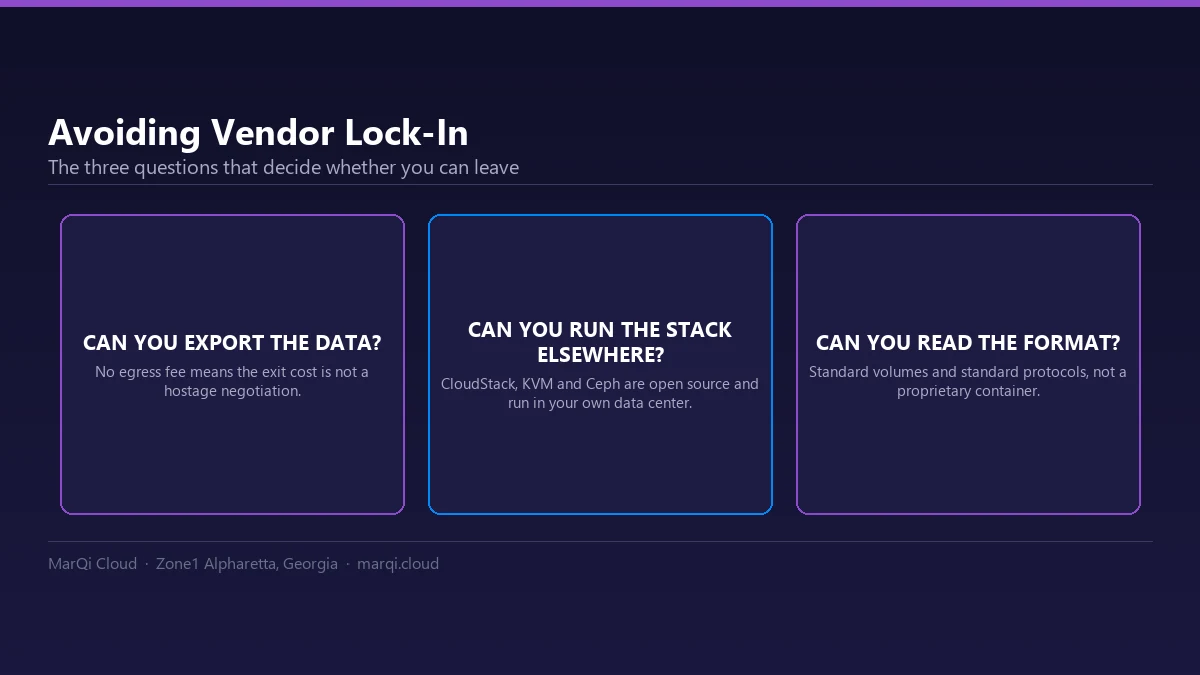
Open source cloud infrastructure empowers businesses with vendor independence. Organizations can avoid being locked into a single vendor’s ecosystem, providing the freedom to choose the best solutions for their needs. This independence fosters competition and drives innovation across the industry.
Why MarQi Cloud Chooses Open Source
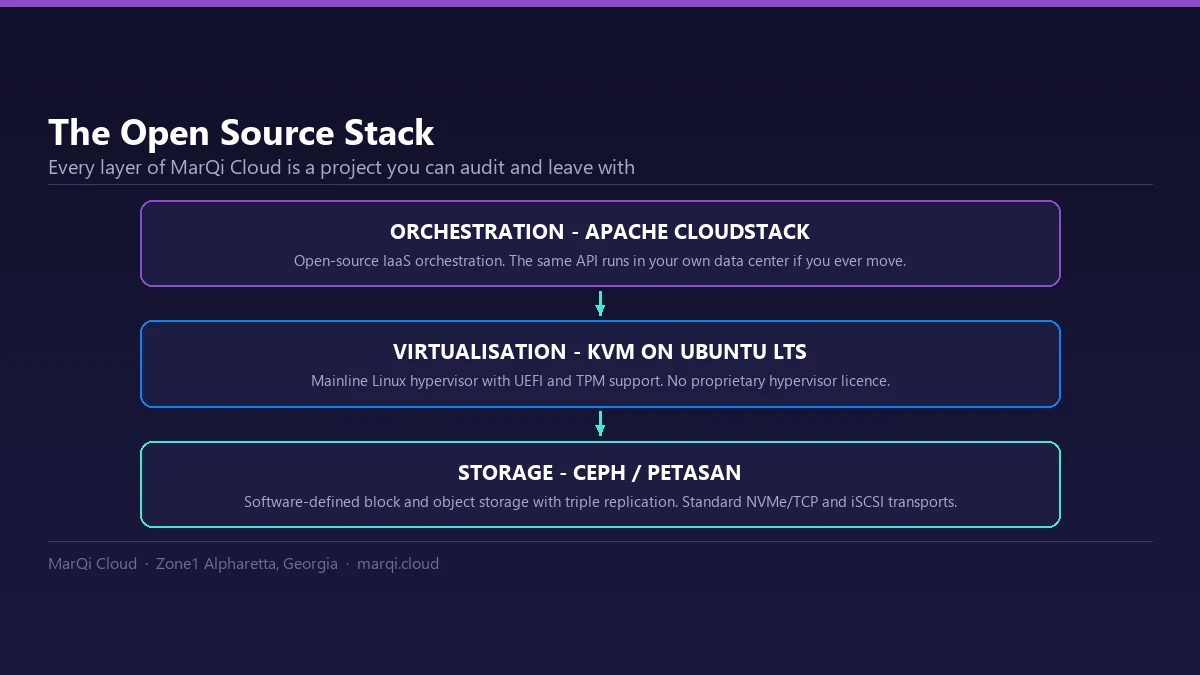
At MarQi Cloud, we believe in the transformative power of open source cloud infrastructure. Our commitment to transparency is rooted in the following principles:
1. Building Trust with Clients
Transparency is essential for building trust with our clients. By utilizing open source technology, we ensure that our clients have full visibility into their cloud infrastructure. This openness fosters confidence in our solutions and reinforces our commitment to security and reliability.
2. Empowering Clients with Control
MarQi Cloud is dedicated to empowering our clients with control over their infrastructure. Our open source solutions allow businesses to customize their environments, ensuring they have the tools they need to succeed. This flexibility is crucial for organizations looking to adapt to changing market conditions and customer demands.
3. Fostering Collaboration
By embracing open source, MarQi Cloud encourages a culture of collaboration among developers and clients. Our team actively contributes to open source projects, sharing knowledge and resources with the broader community. This collaborative spirit drives innovation and enhances the quality of our offerings.
4. Delivering Cost-Effective Solutions
MarQi Cloud is committed to delivering cost-effective solutions without compromising quality. Our open source cloud infrastructure allows us to provide enterprise-grade services at competitive prices, ensuring our clients can scale their operations without breaking the bank.
5. Supporting Continuous Improvement
We believe in the power of continuous improvement. By leveraging open source technologies, MarQi Cloud can rapidly adapt to changes in the industry, incorporating new features and enhancements that meet our clients’ evolving needs.
Case Studies: Success Stories with Open Source Cloud Infrastructure
Numerous organizations have successfully adopted open source cloud infrastructure, demonstrating its effectiveness across various industries. Here are a few examples:
1. Company A: Scaling with OpenStack
Company A, a rapidly growing tech startup, needed a scalable infrastructure to support its expanding operations. By deploying OpenStack, an open source cloud platform, Company A achieved significant cost savings while enjoying the flexibility to scale its resources as needed. The company reported increased efficiency and reduced downtime, leading to improved customer satisfaction.
2. Company B: Enhancing Security with Kubernetes
Company B, a financial services firm, faced challenges related to security and compliance. By implementing Kubernetes, an open source container orchestration platform, the company enhanced its security posture while maintaining flexibility in its deployment processes. The transparent nature of Kubernetes allowed Company B to ensure compliance with industry regulations, ultimately bolstering client trust.
3. Company C: Driving Innovation with Cloud Foundry
Company C, a healthcare organization, sought to innovate its application development process. By leveraging Cloud Foundry, an open source platform-as-a-service (PaaS), the organization accelerated its development cycles and improved collaboration among teams. The result was faster deployment of critical applications that improved patient care and operational efficiency.
Challenges and Considerations
While the benefits of open source cloud infrastructure are abundant, organizations should also consider potential challenges:
1. Skill Gaps
Implementing open source solutions may require specialized skills that are not always readily available within an organization. Businesses should invest in training and development to ensure their teams can effectively manage and maintain open source technologies.
2. Integration Complexities
Integrating open source solutions with existing systems can present challenges. Organizations must carefully plan and execute these integrations to avoid disruptions to their operations.
3. Support and Maintenance
While community support is a significant advantage of open source, organizations may need to establish internal support structures to address specific issues. Businesses should assess their support needs and consider how to best align them with their open source initiatives.
Conclusion: The Future of Cloud Infrastructure
As we move forward in the digital age, the demand for transparency, flexibility, and cost-effectiveness in cloud infrastructure will only increase. At MarQi Cloud, we are proud to champion open source cloud infrastructure as a means to empower businesses and foster trust. By embracing transparency, we not only enhance our offerings but also contribute to a broader movement that prioritizes collaboration, security, and innovation in the cloud computing landscape.
Frequently Asked Questions (FAQ)
1. What is open source cloud infrastructure?
Open source cloud infrastructure refers to cloud computing solutions built on open source software, allowing users to view and modify the source code.
2. What are the benefits of using open source cloud solutions?
Benefits include enhanced security, cost-effectiveness, flexibility, community support, and vendor independence.
3. How does MarQi Cloud utilize open source technologies?
MarQi Cloud uses open source technologies to provide transparent, customizable, and cost-effective cloud infrastructure solutions.
4. Is open source software secure?
Yes, open source software can be more secure due to community scrutiny that helps identify and fix vulnerabilities quickly.
5. Can open source solutions integrate with existing systems?
Yes, open source solutions can be integrated with existing systems, but careful planning is required to ensure smooth transitions.
6. What challenges might organizations face with open source cloud infrastructure?
Challenges can include skill gaps, integration complexities, and the need for internal support structures.
7. How does community support work in open source projects?
Community support involves contributions from developers and users who collaborate to improve the software and address issues.
8. Why is transparency important in cloud infrastructure?
Transparency fosters trust, allows for better security practices, and empowers clients with control over their infrastructure.