How Automated Cloud Resource Provisioning Reduces Time to Deploy New Environments
September 8, 2026
The Complete Guide to Cloud Automation Testing and Validation Frameworks
September 9, 2026
Why Self-Healing Infrastructure Automatically Recovers from Common Failure Modes
In the fast-paced world of enterprise IT, ensuring system reliability is paramount. Self-healing infrastructure is a revolutionary approach that automatically addresses and recovers from common failure modes, ensuring business continuity and minimizing downtime. This article will delve into the intricacies of self-healing infrastructure, exploring its mechanics, benefits, and how it can transform your cloud environment. We will demonstrate how MarQi Cloud’s innovative approach to infrastructure aligns with the best practices in the industry, thereby providing robust, secure, and scalable solutions.
What is Self-Healing Infrastructure?
Self-healing infrastructure refers to systems that automatically detect and rectify issues without human intervention. This concept is rooted in several key technologies, including automation, artificial intelligence, and machine learning. By leveraging these technologies, self-healing systems can monitor their own health, identify anomalies, and initiate corrective actions to restore normal operations. This proactive approach significantly enhances reliability and performance in enterprise environments.
How Does Self-Healing Infrastructure Work?
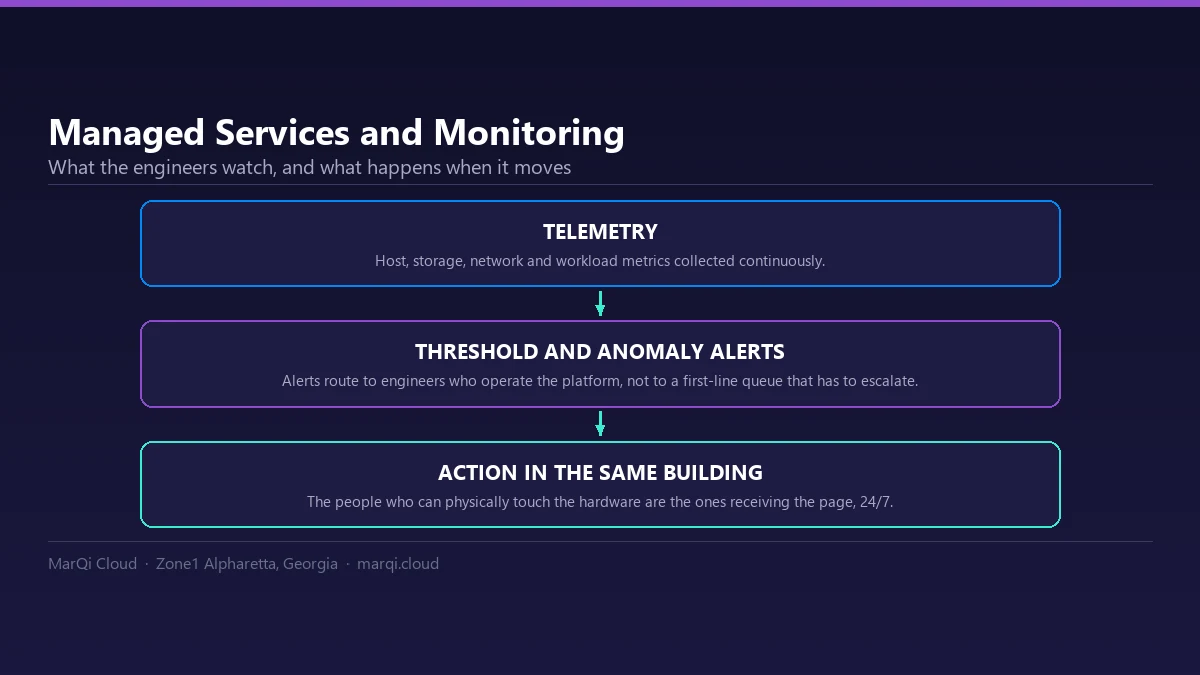
At its core, self-healing infrastructure relies on a combination of monitoring, automation, and orchestration. The process typically involves several steps:
- Monitoring: Continuous monitoring tools collect data on system performance, resource utilization, and potential failure indicators.
- Detection: Advanced algorithms analyze the collected data to identify anomalies or deviations from expected behavior.
- Response: Once an issue is detected, the system automatically initiates predefined remediation actions, such as restarting services, reallocating resources, or scaling up infrastructure.
- Learning: Post-incident analysis helps refine detection algorithms, improving future responses and reducing recurrence.
This cycle of monitoring, detection, response, and learning is critical to maintaining a self-healing ecosystem. With MarQi Cloud’s managed services, enterprises can leverage these capabilities to ensure a robust infrastructure.
Common Failure Modes Addressed
Self-healing infrastructure is designed to tackle various common failure modes, including:
- Hardware Failures: Physical components may fail due to wear and tear, overheating, or power surges. Self-healing systems can automatically reroute traffic or workloads to functional hardware, ensuring minimal disruption.
- Software Bugs: Software issues can lead to application crashes or degraded performance. Self-healing infrastructure can restart affected services or roll back to stable versions without manual intervention.
- Network Issues: Connectivity problems can arise from a variety of sources, such as misconfigurations or outages. Automated systems can quickly identify the issue and reroute traffic through alternative paths.
- Resource Exhaustion: Systems may run out of CPU, memory, or storage resources. Self-healing infrastructure can automatically allocate additional resources or scale services up or down as needed.
Benefits of Self-Healing Infrastructure
The advantages of implementing self-healing infrastructure are manifold:
- Increased Reliability: By automatically addressing issues, self-healing systems reduce the likelihood of prolonged outages and downtime.
- Cost Efficiency: Automating recovery processes minimizes the need for human intervention, reducing operational costs associated with IT support.
- Enhanced Performance: Continuous monitoring and automatic adjustments ensure optimal performance levels, improving user experience.
- Scalability: Self-healing systems can adapt to changing workloads, making them ideal for businesses experiencing growth or fluctuations in demand.
- Improved Compliance: Robust self-healing mechanisms can help organizations maintain compliance with industry regulations by ensuring consistent performance and security standards.
Implementing Self-Healing Infrastructure
To successfully implement self-healing infrastructure, organizations should consider the following steps:
- Assess Current Infrastructure: Evaluate existing systems to identify areas that would benefit from automation and self-healing capabilities.
- Choose the Right Tools: Select monitoring and automation tools that provide the necessary functionalities, such as anomaly detection and automated recovery actions. MarQi Cloud offers comprehensive solutions tailored for enterprise needs.
- Develop Response Protocols: Create predefined protocols for common failure scenarios, ensuring that automated systems can respond effectively.
- Test and Refine: Regularly test self-healing processes to identify gaps and refine response mechanisms, ensuring optimal performance.
- Train Staff: Equip IT teams with the knowledge to manage and maintain self-healing infrastructure effectively.
Case Studies and Real-World Examples
Several organizations have successfully implemented self-healing infrastructure, leading to remarkable improvements in operational efficiency:
Case Study: E-Commerce Platform
An e-commerce platform implemented self-healing infrastructure to address frequent downtime during peak sales periods. By automating resource allocation and service recovery, they reduced downtime by 75%, significantly increasing customer satisfaction and sales revenue.
Case Study: Financial Services
A financial institution adopted self-healing mechanisms to ensure compliance with stringent regulatory standards. By implementing automated monitoring and response protocols, they enhanced system reliability and maintained compliance without the need for constant manual oversight.
Frequently Asked Questions
What is self-healing infrastructure?
Self-healing infrastructure refers to systems that automatically detect and rectify issues without human intervention, ensuring continuous operation.
How does self-healing infrastructure work?
It works through continuous monitoring, detection of anomalies, automated response actions, and learning from incidents to improve future performance.
What are common failure modes addressed by self-healing systems?
Common failure modes include hardware failures, software bugs, network issues, and resource exhaustion.
What are the benefits of self-healing infrastructure?
Benefits include increased reliability, cost efficiency, enhanced performance, scalability, and improved compliance.
How can I implement self-healing infrastructure in my organization?
Implementing it involves assessing current systems, choosing the right tools, developing response protocols, testing, and staff training.
Is self-healing infrastructure suitable for all businesses?
Yes, it can be tailored to fit businesses of all sizes, especially those with critical uptime requirements.
What tools are available for self-healing infrastructure?
Many tools exist, including monitoring solutions, automation platforms, and orchestration tools. MarQi Cloud offers integrated solutions for these needs.
Can self-healing infrastructure help with compliance?
Yes, it helps maintain compliance by ensuring consistent performance and security standards, reducing the risk of non-compliance.
How do I measure the effectiveness of self-healing infrastructure?
Effectiveness can be measured by monitoring downtime, recovery time, resource utilization, and overall system performance.
What is the cost of implementing self-healing infrastructure?
Costs vary depending on existing infrastructure, chosen tools, and implementation complexity, but the return on investment is often significant.
How does self-healing infrastructure impact IT staff?
It allows IT staff to focus on strategic initiatives rather than routine maintenance, improving job satisfaction and productivity.
Are there industry standards for self-healing infrastructure?
While there are no strict standards, following best practices in automation, monitoring, and response protocols is essential for effective implementation.