The Complete Guide to Cloud Infrastructure Proof of Concept Testing Methodology
October 10, 2026
Why Understanding Cloud Provider Network Backbone Quality Predicts Application Performance
October 11, 2026

Essential Guide to Side-by-Side Cloud Migration Testing for Performance Validation
In today’s fast-paced digital landscape, organizations are increasingly turning to cloud infrastructure solutions to meet their growing demands for scalability, performance, and security. However, migrating to the cloud is not without its challenges. One of the most crucial steps in ensuring a successful transition is implementing side-by-side cloud migration testing. This method allows businesses to validate performance before making a full commitment to a new cloud environment. In this comprehensive guide, we will delve into the intricacies of side-by-side cloud migration testing, exploring its benefits, methodologies, and best practices, while also demonstrating how MarQi Cloud can facilitate this process for your organization.
What is Side-by-Side Cloud Migration Testing?
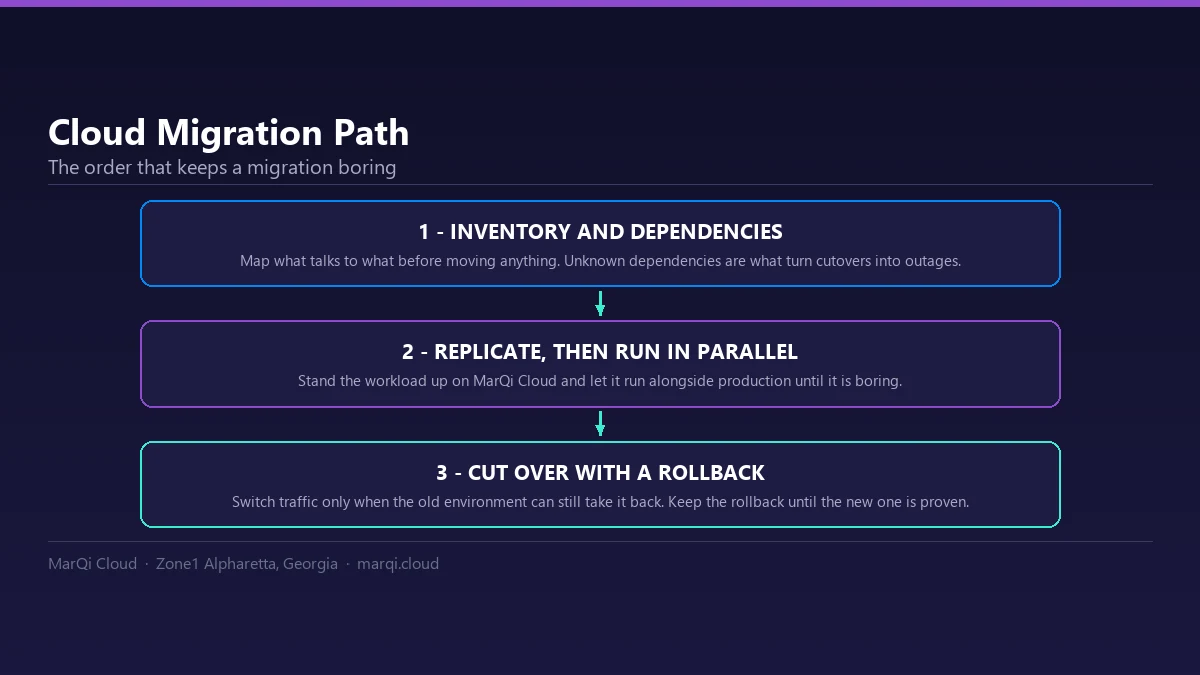
Side-by-side cloud migration testing is a strategy that allows organizations to run their applications in both the current and new cloud environments simultaneously. This approach provides an opportunity to compare performance, functionality, and user experience between the legacy infrastructure and the new cloud solution. By conducting this type of testing, businesses can identify potential issues and make informed decisions before fully committing to the migration.
Key Components of Side-by-Side Cloud Migration Testing
- Performance Benchmarking: This involves measuring key performance indicators (KPIs) such as response time, throughput, and resource utilization in both environments.
- Functional Testing: Ensuring that all application features work as expected in the new environment.
- User Acceptance Testing (UAT): Gathering feedback from end-users to assess their experience with the new system.
Benefits of Side-by-Side Cloud Migration Testing
Implementing side-by-side cloud migration testing comes with numerous benefits:
1. Risk Mitigation
By validating performance before full commitment, organizations can identify and address potential issues early, reducing the risk of downtime or performance degradation post-migration.
2. Enhanced Performance Insights
This testing method provides valuable insights into how applications behave in the new environment, enabling organizations to optimize configurations for better performance.
3. Improved User Experience
Gathering user feedback during UAT helps ensure that the new system meets user expectations, leading to higher satisfaction and productivity.
4. Cost Savings
Identifying performance issues early can prevent costly fixes after migration and help organizations make more informed decisions about resource allocation.
How to Implement Side-by-Side Cloud Migration Testing
Implementing side-by-side cloud migration testing requires careful planning and execution. Here’s a step-by-step guide to facilitate this process:
Step 1: Define Your Objectives
Clearly outline the goals of your migration testing. What specific aspects of performance or functionality are you looking to validate? This will guide your testing strategy.
Step 2: Select the Right Tools
Choose testing tools that can effectively monitor and compare performance metrics across both environments. Tools like Datadog and New Relic offer robust solutions for performance monitoring.
Step 3: Set Up the Testing Environment
Create a testing environment that mirrors your production setup as closely as possible. This ensures that results are accurate and applicable to real-world scenarios.
Step 4: Execute Performance Benchmarking
Run performance tests to gather data on response times, throughput, and other KPIs in both environments. Use this data to compare performance directly.
Step 5: Conduct Functional Testing
Test all application features to ensure they function correctly in the new environment. This includes regression testing to identify any new issues introduced during migration.
Step 6: Gather User Feedback
Conduct user acceptance testing to gather feedback from end-users. This qualitative data can provide insights into potential usability issues.
Step 7: Analyze Results and Make Decisions
Review the data collected during testing and compare it against your objectives. Use this analysis to make informed decisions about your migration strategy.
Best Practices for Side-by-Side Cloud Migration Testing
To maximize the effectiveness of your side-by-side cloud migration testing, consider the following best practices:
1. Plan Thoroughly
Invest time in planning your migration testing process. A well-structured plan will help streamline execution and ensure comprehensive coverage of all aspects of performance.
2. Involve Stakeholders Early
Engage key stakeholders, including IT teams, business leaders, and end-users, throughout the testing process. Their insights can help shape your testing strategy.
3. Monitor Continuously
Leverage monitoring tools to continuously track performance metrics during testing. This real-time data can provide immediate insights into potential issues.
4. Document Everything
Keep detailed records of your testing process, including objectives, methodologies, results, and any issues encountered. This documentation will be invaluable for future migrations.
5. Use a Phased Approach
Consider implementing a phased migration approach, gradually transitioning applications to the new environment while conducting side-by-side testing for each phase.
Case Studies and Examples
To illustrate the effectiveness of side-by-side cloud migration testing, let’s explore a few real-world scenarios:
Case Study 1: E-Commerce Platform Migration
An e-commerce company migrated its platform from a traditional data center to a hybrid cloud environment. By conducting side-by-side testing, they identified performance bottlenecks related to database queries in the new environment. As a result, they optimized their database configurations, leading to a 30% improvement in page load times.
Case Study 2: Healthcare Application Transition
A healthcare organization needed to migrate its patient management system to the cloud while ensuring compliance with data protection regulations. Through side-by-side testing, they validated that their application met HIPAA compliance standards in the new environment, enabling a smooth transition without compromising security.
Common Challenges and Solutions
While side-by-side cloud migration testing offers numerous benefits, organizations may encounter challenges. Here are some common obstacles and potential solutions:
Challenge 1: Data Synchronization
Maintaining data consistency between the legacy and new environments can be challenging. Solution: Implement real-time data synchronization tools to ensure that changes in one environment are reflected in the other.
Challenge 2: Performance Overhead
Running applications in both environments may lead to performance overhead. Solution: Optimize resource allocation and consider using lightweight testing tools to minimize the impact on performance.
Challenge 3: User Resistance
End-users may resist changes to their workflows. Solution: Provide comprehensive training and support to facilitate a smooth transition.
Conclusion
Side-by-side cloud migration testing is an essential strategy for validating performance before fully committing to a new cloud environment. By implementing this testing method, organizations can mitigate risks, enhance performance insights, and improve user experience. MarQi Cloud offers robust solutions for hybrid cloud infrastructure, enabling organizations to conduct effective side-by-side testing and ensure a seamless migration process. Ready to take the next step in your cloud journey? Contact MarQi Cloud today to learn how we can support your migration efforts.
FAQs
What is side-by-side cloud migration testing?
Side-by-side cloud migration testing is a method of running applications in both the current and new cloud environments simultaneously to compare performance and functionality.
Why is side-by-side testing important?
This testing method helps identify potential issues before full migration, reducing risks and ensuring a smoother transition.
What tools can I use for cloud migration testing?
Tools like Datadog and New Relic are popular for monitoring performance metrics during migration testing.
How can I gather user feedback during testing?
User acceptance testing (UAT) can be conducted to gather insights from end-users about their experience with the new system.
What are common challenges in side-by-side testing?
Challenges include data synchronization, performance overhead, and user resistance. Solutions involve using real-time synchronization tools and providing training.
How long does side-by-side testing take?
The duration depends on the complexity of the applications and the testing objectives. It can range from a few weeks to several months.
Can side-by-side testing help with compliance issues?
Yes, it allows organizations to validate compliance with regulations in the new environment before fully transitioning.
What should I document during the testing process?
Document objectives, methodologies, results, and any issues encountered to provide valuable insights for future migrations.