MarQi Cloud Community Forums: The Fastest Way to Solve Uncommon Infrastructure Problems
April 9, 2026
How MarQi Cloud Is Building the Most Transparent Cloud Community in the Industry
April 9, 2026

Step-by-Step Guide to Setting Up a Cloud GPU for Deep Learning Projects
How do you set up a cloud GPU for deep learning?
Choose the GPU by memory first, then attach fast block storage so the card is not idle waiting for data. Install the driver and CUDA stack your framework version expects, confirm the framework actually sees the GPU, and run a short version of the real training job before committing to a long one.
Introduction
The demand for cloud GPUs for AI and ML projects is growing quickly as more people start working with AI and data. Many tasks, like training models and handling large datasets, need strong computing power, which is hard to manage on personal computers.
That’s why businesses and developers are moving to cloud-based solutions. They are simple to use, flexible, and help save money because there is no need to buy expensive hardware. You can easily use powerful GPUs online whenever you need them.
Cloud GPUs are useful for tasks like deep learning, data science, and especially training LLMs in the cloud. With high-performance computing for machine learning, these platforms make it easier to build, train, and run AI projects smoothly.
Why Your AI Projects Need Cloud GPUs
Cloud GPUs for AI and ML projects are powerful computers that you can use through the internet instead of buying your own hardware. They help you do heavy work like training AI models and handling large data much faster.
If you use a local GPU, you need to spend a lot of money and manage everything yourself. But cloud GPUs for AI and ML projects are simple to use. You just log in, choose what you need, and start working right away.
Benefits of Using Cloud GPUs for AI and ML Projects
One big advantage of cloud GPUs for AI and ML projects is speed. They can do many tasks at the same time, which is great for AI and deep learning work.
They are also budget-friendly. You don’t need to buy expensive machines. You only pay for what you use, and you can increase or reduce resources anytime.
Another good thing is the quick setup. You can start in minutes without waiting. They also support high-performance computing for machine learning, which helps your work run smoothly.
Key Use Cases of Cloud GPUs
Cloud GPUs for AI and ML projects are used in many areas. They help train deep learning models and work with large datasets.
They are also used in apps like chatbots, recommendation systems, and image recognition. Another important use is training LLMs in the cloud, where strong computing power is needed.
With cloud GPUs, it becomes easier to build and improve AI models without worrying about hardware limits.
High-Performance Computing (HPC) for Machine Learning
High-Performance Computing (HPC) for machine learning (ML) is the use of powerful computing clusters to train and run large AI models faster than on normal systems. Instead of relying on a single machine, HPC uses multiple GPUs and fast network connections, making it possible to work with huge datasets and complex AI models efficiently.
Key Benefits of HPC for Machine Learning
- Parallel Processing: Tasks are split across many CPUs and GPUs, so calculations happen at the same time.
- Faster Training: HPC allows training large models, including LLMs and deep learning networks, in hours instead of weeks.
- High-Speed Connections: Technologies like NVLink and InfiniBand ensure smooth communication between nodes to prevent delays.
- Efficient Infrastructure: HPC systems include compute nodes, storage, and workload schedulers to manage large tasks effectively.
- Scalability: Ideal for AI projects like computer vision, autonomous vehicles, natural language processing, and generative AI.
Why HPC is Important for ML
- Reduces training time dramatically, speeding up AI development.
- Provides the computing power and storage needed for large datasets and complex algorithms.
- Enables AI teams to experiment and deploy models more efficiently.
Low-Latency AI Infrastructure
Low-latency AI infrastructure is a system built to make AI respond extremely fast, often in milliseconds. It uses powerful GPUs and TPUs, fast networks, and optimized software to deliver results almost instantly. This is very important for real-time applications like self-driving cars, financial trading, and chatbots.
Key Components
- Fast Hardware: GPUs and TPUs handle many tasks at the same time for quick AI responses.
- Edge Computing: Servers placed closer to users reduce the time data takes to travel.
- High-Speed Networking: Technologies like PCIe, InfiniBand, and gRPC move data quickly and efficiently.
- Optimized Software: Lightweight frameworks and AI models help process tasks faster.
Why It’s Important
- Real-Time Responses: Critical for autonomous vehicles, AI assistants, and other systems needing instant action.
- Better Performance: Reduces delays in high-speed trading or other time-sensitive applications.
- Improved User Experience: Minimizes lag in chatbots, voice AI, and interactive tools.
Challenges
- High Costs: Plan carefully to manage expenses.
- Latency Issues: A strong low-latency AI infrastructure helps keep response times fast.
- Setup Problems: Proper configuration prevents delays and ensures smooth operation.
- training LLMs in the cloud
Training LLMs in the Cloud
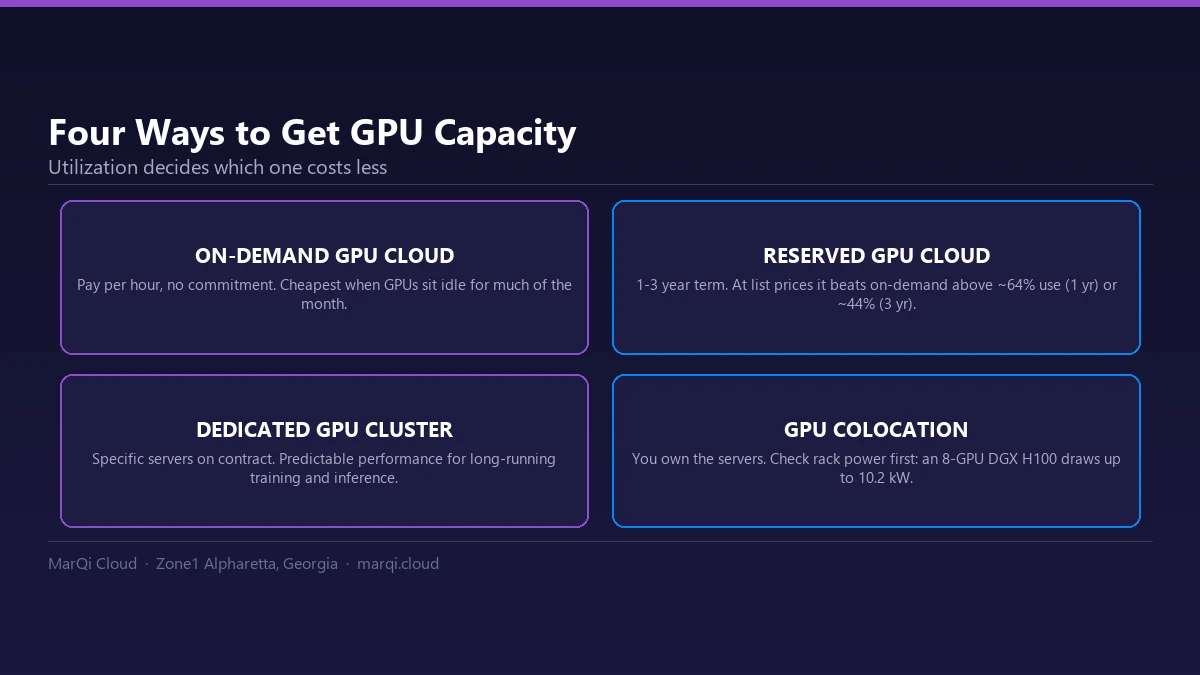
Training LLMs in the cloud allows developers and researchers to build and fine-tune large language models using powerful remote computing resources instead of expensive local hardware. Cloud platforms like AWS, Google Cloud, and Azure provide scalable GPU and TPU clusters that can handle massive datasets efficiently.
Key Benefits of Training LLMs in the Cloud
- Access to High Computational Power: Large language models with billions of parameters need many GPUs running in parallel, which cloud platforms provide.
- Scalability: Easily increase or decrease resources as needed, making training faster and more flexible.
- Ready-to-Use Infrastructure: Pre-configured environments with frameworks like PyTorch or TensorFlow, along with tools to monitor training and manage data.
- Cost-Effective: No need to maintain expensive on-premise servers while still using state-of-the-art hardware.
- Faster Experimentation: Teams can quickly test and fine-tune models, accelerating AI research and development.
Applications of Cloud LLM Training
- Healthcare: AI models for medical text analysis and patient support.
- Finance: Predictive models, risk analysis, and automated trading.
- E-commerce: Recommendation systems, chatbots, and personalized customer experiences.
Training LLMs in the cloud makes it easier for startups, researchers, and AI teams to scale models, experiment quickly, and deploy advanced AI solutions in real-world applications.
MarQi Cloud: Simple and Powerful Cloud for AI
| Stage | What you decide | What goes wrong if you skip it |
|---|---|---|
| Choose the GPU | Memory capacity first, throughput second | The model does not fit and the run fails late |
| Attach storage | Fast block storage close to the GPU | The GPU sits idle waiting for data |
| Install the stack | Driver and CUDA version your framework expects | The framework cannot see the GPU at all |
| Validate | A short run of the real training job | You find the mismatch after paying for a long run |
| Scale out | Add nodes only once single-node throughput is understood | The interconnect becomes the bottleneck, not the card |
- Trusted Provider: MarQi Cloud gives a reliable and secure cloud infrastructure.
- Own Data Center: Has its own storage system for safe and fast data handling.
- Always Available: Redundant network ensures your systems keep running without interruptions.
- Built for AI and ML: Perfect for high-performance computing and machine learning projects.
- Cloud GPUs Ready: Ideal for AI projects, including training large language models (LLMs).
- Fast Processing: Low-latency setup helps run tasks quickly and efficiently.
- Flexible and Scalable: Grow your projects easily without worrying about hardware limits.
Conclusion
Cloud GPUs make AI and machine learning faster and more efficient. Choosing a reliable provider like MarQi Cloud helps businesses run advanced projects smoothly, save costs, and stay ready for future growth.
Frequently Asked Questions
What is a cloud GPU and why use one for AI work?
A cloud GPU is a powerful machine you use over the internet instead of buying hardware. It handles heavy work such as training models and processing large datasets far faster than a personal computer. You log in, choose what you need and start straight away, paying only for what you use.
What does high-performance computing add to machine learning?
HPC uses clusters rather than a single machine. Tasks are split across many CPUs and GPUs so calculations run in parallel, large models including LLMs train in hours instead of weeks, and high-speed links such as NVLink and InfiniBand keep the nodes communicating without delay.
What are cloud GPUs typically used for?
Training deep learning models and working with large datasets, and applications such as chatbots, recommendation systems and image recognition. Another common use is training large language models in the cloud, where a lot of compute power is needed.