Why Built-In Load Balancing on MarQi Cloud Saves You Hundreds Per Month
June 23, 2026
How MarQi Cloud Private Circuits Reduce Latency to Near Zero
June 23, 2026
The Case for Colocation in 2026: Why MarQi Cloud’s BYO Hardware Wins
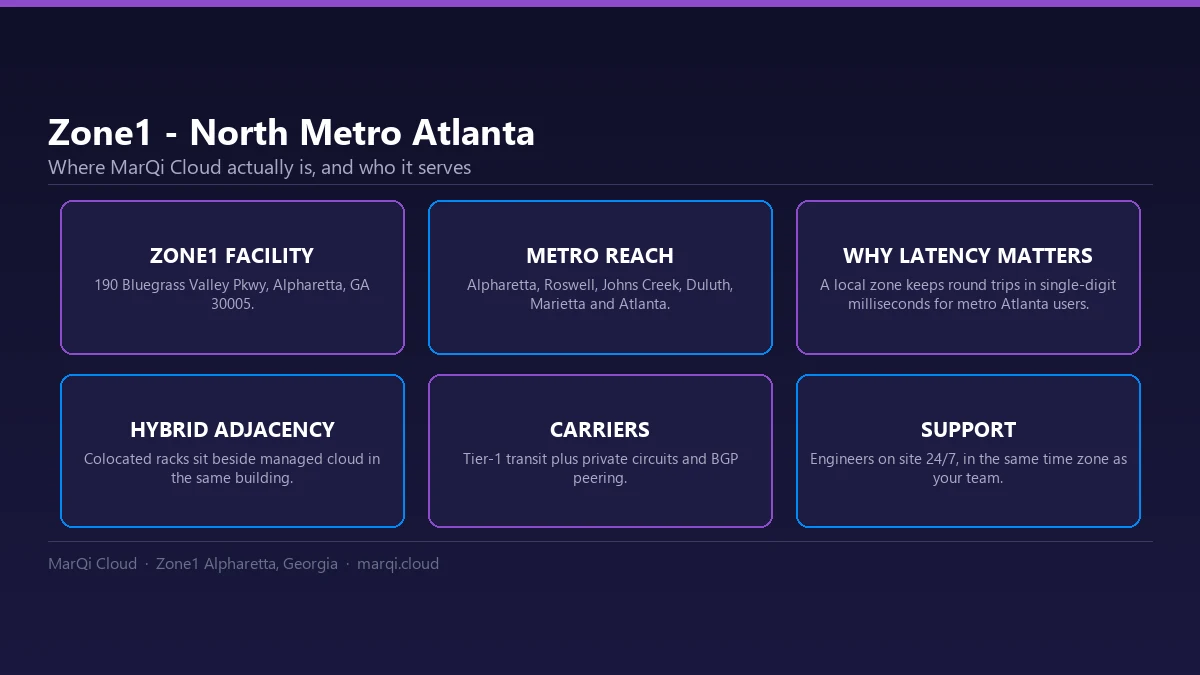
As we step into 2026, the landscape of data management and cloud computing is evolving rapidly. Businesses are increasingly seeking solutions that offer flexibility, scalability, and control. Among the myriad of options available, colocation has emerged as a compelling choice for enterprises looking to optimize their IT infrastructure while maintaining a robust and secure environment. This article will explore the advantages of colocation in 2026, with a particular focus on MarQi Cloud’s innovative Bring Your Own Hardware (BYO Hardware) model.
Understanding Colocation
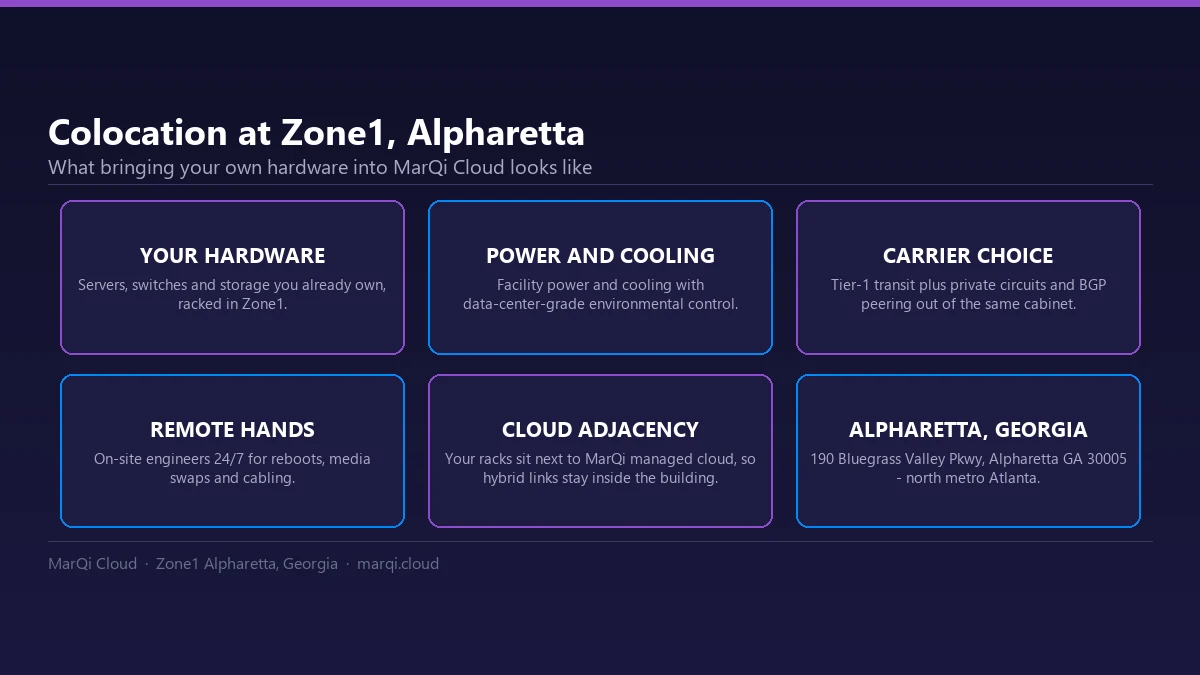
Colocation refers to the practice of housing privately-owned servers and networking equipment in a third-party data center. This arrangement allows businesses to leverage the physical infrastructure, power, and connectivity of the data center while retaining ownership of their hardware. As companies increasingly look to optimize their IT expenditures, colocation offers a strategic solution that combines the benefits of cloud computing with the control of on-premises infrastructure.
The Evolution of Cloud Computing
Cloud computing has undergone significant transformations over the last decade. With the rise of hybrid cloud models and the increasing demand for private and secure hosting environments, businesses are now faced with the challenge of selecting the right deployment model that meets their unique needs. The flexibility of hybrid cloud solutions allows organizations to blend on-premises, private cloud, and public cloud resources to create an optimized IT ecosystem. However, managing these environments can be complex, necessitating a solution that simplifies operations while maximizing performance.
Why Choose Colocation in 2026?
1. Enhanced Control and Customization
One of the primary advantages of colocation is the level of control it offers. Businesses can customize their server configurations, storage solutions, and networking equipment to meet their specific requirements. This level of flexibility is particularly beneficial for organizations with unique workloads or regulatory compliance needs.
2. Improved Security
With rising concerns over data breaches and cyber threats, security has become a top priority for businesses. Colocation facilities often provide state-of-the-art security measures, including physical security protocols, fire suppression systems, and advanced monitoring systems. By housing their hardware in a secure data center, businesses can significantly reduce their risk exposure.
3. Cost Efficiency
While the initial investment in colocation might seem substantial, the long-term cost savings can be significant. By utilizing a colocation provider, businesses can reduce expenses related to power, cooling, and infrastructure maintenance. MarQi Cloud’s flexible pricing models further enhance cost efficiency, allowing organizations to scale their resources as needed without incurring hefty upfront costs.
4. Business Continuity and Disaster Recovery
Data loss can be catastrophic for businesses. Colocation facilities typically offer robust disaster recovery solutions to ensure business continuity. By maintaining redundant systems and backup infrastructure, organizations can safeguard their data against unforeseen circumstances, such as natural disasters or hardware failures.
5. Access to Expertise
Colocation providers often employ skilled professionals who specialize in infrastructure management. By partnering with a reputable provider like MarQi Cloud, businesses can leverage the expertise of experienced staff to optimize their IT operations. This access to specialized knowledge can lead to improved performance and reduced downtime.
MarQi Cloud’s BYO Hardware Model
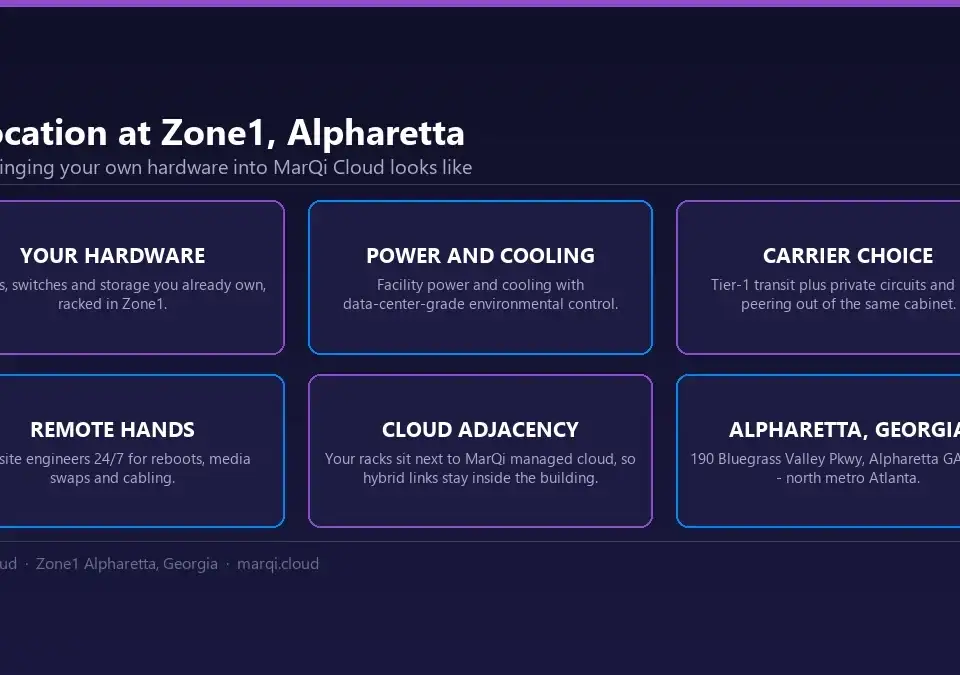
MarQi Cloud stands out in the colocation space with its innovative Bring Your Own Hardware (BYO Hardware) model. This approach allows businesses to utilize their existing hardware while benefiting from the advantages of a professional data center environment. Here’s why the BYO Hardware model is a game-changer in 2026:
1. Flexibility and Scalability
The BYO Hardware model provides businesses with unparalleled flexibility. Organizations can choose the hardware that best fits their needs, allowing them to scale their operations without being tied to a specific vendor’s equipment. This flexibility is especially crucial as IT demands continue to evolve.
2. Seamless Integration
MarQi Cloud’s infrastructure is designed to accommodate a wide range of hardware configurations. This seamless integration ensures that businesses can quickly deploy their systems without the need for extensive modifications or delays. By facilitating a smooth transition, MarQi Cloud enables organizations to focus on their core operations rather than infrastructure challenges.
3. Cost-Effective Solution
Investing in new hardware can be a significant financial burden for businesses. The BYO Hardware model alleviates this pressure by allowing organizations to leverage their existing investments. As a result, businesses can achieve a cost-effective solution that maximizes their return on investment.
4. Superior Performance
MarQi Cloud’s infrastructure is built with performance in mind. By utilizing high-quality hardware, businesses can ensure that their applications and services run smoothly and efficiently. This performance-driven infrastructure design allows organizations to meet the demands of their users while minimizing latency and downtime.
5. Robust Support
With MarQi Cloud, businesses benefit from US-based infrastructure and support. This geographical advantage ensures that organizations have access to timely assistance and expertise whenever needed. The combination of reliable support and a robust infrastructure creates a solid foundation for successful IT operations.
Conclusion
As we look ahead to 2026, the case for colocation continues to strengthen. With the rise of hybrid cloud models and the increasing need for secure, scalable, and cost-effective solutions, MarQi Cloud’s BYO Hardware model emerges as a leader in the colocation space. By offering enhanced control, improved security, and unparalleled flexibility, MarQi Cloud empowers businesses to optimize their IT infrastructure while focusing on growth and innovation.
Frequently Asked Questions (FAQ)
1. What is colocation?
Colocation is a service that allows businesses to house their servers and networking equipment in third-party data centers, leveraging the provider’s infrastructure, power, and connectivity.
2. How does colocation improve security?
Colocation facilities provide advanced security measures such as physical security protocols, fire suppression systems, and continuous monitoring to protect hardware and data.
3. What are the cost benefits of colocation?
Colocation can reduce costs related to power, cooling, and maintenance while offering a flexible pricing model that allows businesses to scale their resources as needed.
4. What is MarQi Cloud’s BYO Hardware model?
The BYO Hardware model allows businesses to bring their existing hardware to MarQi Cloud’s data center, offering flexibility and cost savings while benefiting from professional infrastructure.
5. How does colocation support disaster recovery?
Colocation facilities maintain redundant systems and backup infrastructure, enabling businesses to safeguard their data and ensure business continuity in case of unexpected events.
6. Can I customize my hardware in a colocation environment?
Yes, colocation allows businesses to customize their server configurations and networking equipment to meet their specific needs.
7. What kind of support does MarQi Cloud offer?
MarQi Cloud provides US-based infrastructure and support, ensuring timely assistance and expertise to optimize IT operations.
8. How does colocation compare to traditional hosting?
Colocation offers more control and customization options compared to traditional hosting, allowing businesses to manage their own hardware while benefiting from the data center’s facilities.
9. Is colocation suitable for small businesses?
Yes, colocation can be a cost-effective solution for small businesses looking to maintain control over their IT infrastructure while benefiting from professional data center services.
10. What industries benefit most from colocation?
Colocation can benefit a wide range of industries, including finance, healthcare, e-commerce, and technology, where data security and uptime are critical.