How to Architect a Fault-Tolerant Cloud Environment for Business Continuity
July 12, 2026
Why Cloud Infrastructure Consulting Prevents Costly Architecture Mistakes
July 12, 2026
The Complete Guide to Virtualization Services for Enterprise IT Modernization
In today’s fast-paced digital landscape, enterprise IT modernization is not just a trend; it’s a necessity. As organizations strive to enhance efficiency, reduce costs, and improve service delivery, virtualization services have emerged as a cornerstone of modern IT infrastructure. This comprehensive guide will delve into the various aspects of virtualization services, their benefits, implementation strategies, and how they can facilitate the modernization of enterprise IT.
What is Virtualization?
Virtualization is a technology that allows you to create multiple simulated environments or dedicated resources from a single, physical hardware system. It enables IT departments to run multiple operating systems and applications on a single server, optimizing resource utilization and reducing costs. As an enterprise cloud provider, MarQi Cloud specializes in delivering virtualization services that empower organizations to modernize their IT infrastructure.
Types of Virtualization
Understanding the various types of virtualization is crucial for selecting the right solution for your organization. Here are the most common types:
1. Server Virtualization
Server virtualization partitions a physical server into multiple virtual servers, each capable of running its own operating system and applications. This approach maximizes server utilization, reduces hardware costs, and simplifies management.
2. Desktop Virtualization
Desktop virtualization allows users to access their desktop environments remotely. This is particularly beneficial for organizations with remote workforces or those looking to provide secure access to applications without the need for physical hardware.
3. Application Virtualization
Application virtualization encapsulates applications from the underlying operating system, allowing them to run in isolated environments. This enhances security and simplifies application deployment.
4. Network Virtualization
Network virtualization abstracts the physical network infrastructure, allowing multiple virtual networks to operate on a single physical network. This improves network efficiency and security.
5. Storage Virtualization
Storage virtualization pools physical storage from multiple devices into a single storage device that is managed centrally. This simplifies storage management and improves resource allocation.
Benefits of Virtualization Services
The adoption of virtualization services offers numerous benefits, particularly for enterprise IT modernization:
- Cost Efficiency: Virtualization reduces hardware costs by maximizing resource utilization. Organizations can run multiple virtual instances on a single physical machine, leading to significant savings in hardware and energy costs.
- Improved Scalability: Virtualization allows organizations to scale their IT resources up or down quickly, adapting to changing business needs without the need for additional hardware.
- Enhanced Disaster Recovery: Virtualization simplifies disaster recovery solutions by enabling the quick replication and restoration of virtual machines. This is particularly important for maintaining business continuity.
- Increased Flexibility: Organizations can deploy applications and services faster, enhancing their ability to respond to market demands.
- Better Resource Management: Virtualization enables efficient resource allocation, ensuring that IT resources are utilized optimally.
How Virtualization Works
Virtualization operates through a hypervisor, a software layer that enables the creation and management of virtual machines (VMs). The hypervisor sits between the hardware and the operating systems, ensuring that the VMs can share the physical resources of the host server.
There are two main types of hypervisors:
1. Type 1 Hypervisor
Also known as a bare-metal hypervisor, it runs directly on the hardware without an underlying operating system. This type is known for its high performance and is commonly used in enterprise environments.
2. Type 2 Hypervisor
This type runs on top of an existing operating system. While it is easier to set up, it may introduce some performance overhead compared to Type 1 hypervisors.
Choosing the Right Virtualization Service
When selecting a virtualization service for your organization, consider the following factors:
- Business Needs: Assess your organization’s specific needs, including the types of applications you run and your growth projections.
- Performance: Evaluate the performance capabilities of the virtualization service, including resource allocation and management features.
- Scalability: Ensure that the service can scale with your organization as it grows.
- Support: Look for providers that offer robust support options, including managed services.
- Cost: Compare pricing models and ensure that the service fits within your budget while providing value.
Virtualization and Cloud Computing
Virtualization is a foundational technology for cloud computing. It enables the creation of cloud environments that are flexible, scalable, and efficient. By utilizing virtualization, cloud providers can offer services such as Infrastructure as a Service (IaaS), allowing businesses to rent virtualized resources as needed.
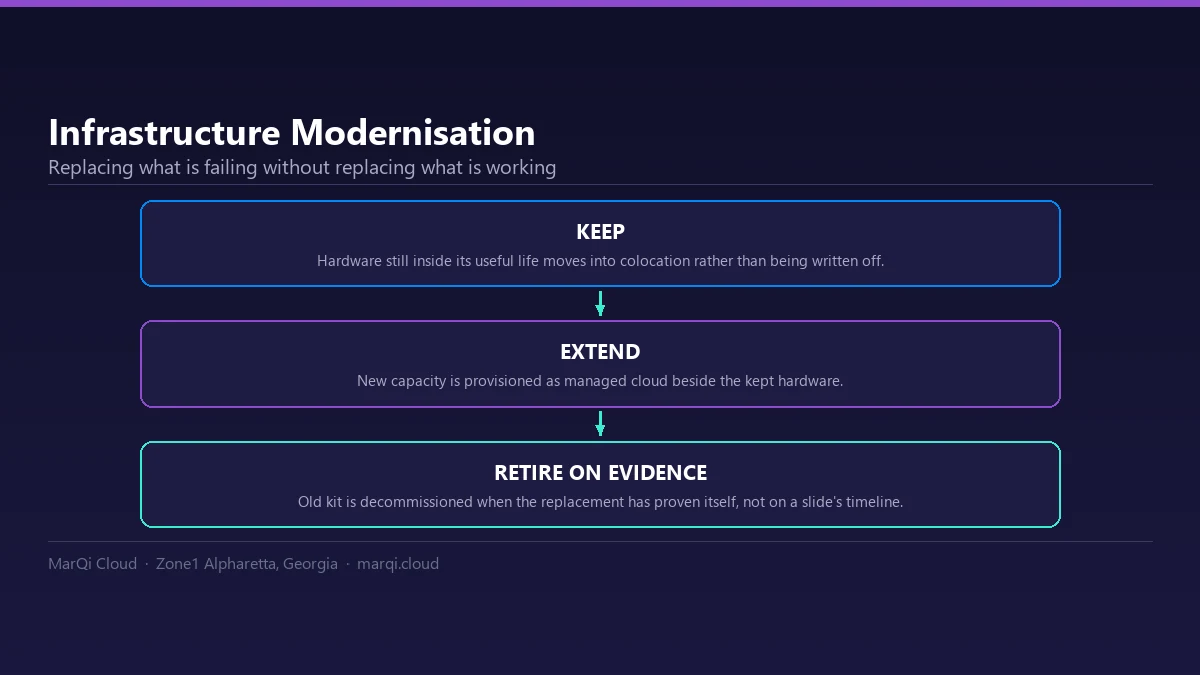
MarQi Cloud provides hybrid cloud solutions that leverage virtualization to deliver scalable and secure hosting environments. This allows organizations to modernize their IT infrastructure without the need for significant upfront investment.
Best Practices for Implementing Virtualization
Implementing virtualization requires careful planning and execution. Here are some best practices:
1. Assess Current Infrastructure
Before implementing virtualization, conduct a thorough assessment of your existing IT infrastructure, including hardware, software, and network capabilities.
2. Choose the Right Virtualization Technology
Select the virtualization technology that best fits your organization’s needs, taking into account factors like performance, scalability, and ease of management.
3. Plan for Security
Security should be a top priority when implementing virtualization. Ensure that your virtualization environment is secure by implementing appropriate security measures and protocols.
4. Train Your Staff
Provide training for your IT staff to ensure they are familiar with the new virtualization technologies and can manage them effectively.
5. Monitor and Optimize
Regularly monitor your virtualization environment to identify performance issues and optimize resource allocation as needed.
Example Scenarios
The scenarios below are illustrative examples of how organizations typically apply these practices; they do not describe specific MarQi Cloud customers or measured results.
Example Scenario: A Financial Services Firm
A financial services firm faced challenges with hardware costs and resource management. By implementing virtualization, they were able to reduce their physical server count, leading to significant cost savings. Additionally, the firm enhanced its disaster recovery capabilities, ensuring business continuity even during outages.
This case study exemplifies how virtualization services can drive efficiency and modernization in enterprise IT.
FAQs
1. What is the primary benefit of virtualization?
The primary benefit of virtualization is cost efficiency, as it allows multiple VMs to run on a single physical server, reducing hardware and energy costs.
2. How does virtualization improve disaster recovery?
Virtualization improves disaster recovery by enabling quick replication and restoration of virtual machines, ensuring business continuity during outages.
3. What types of businesses benefit from virtualization?
Businesses of all sizes can benefit from virtualization, particularly those looking to reduce costs, enhance scalability, and improve resource management.
4. Can virtualization be used for cloud computing?
Yes, virtualization is a foundational technology for cloud computing, enabling the creation of flexible and scalable cloud environments.
5. What is the difference between Type 1 and Type 2 hypervisors?
Type 1 hypervisors run directly on hardware, offering better performance, while Type 2 hypervisors run on top of an existing operating system.
6. How can organizations ensure security in a virtualized environment?
Organizations can ensure security by implementing appropriate security measures, including firewalls, encryption, and regular security audits.
7. What are some common challenges in virtualization implementation?
Common challenges include hardware compatibility issues, security concerns, and the need for staff training.
8. How can I choose the right virtualization service provider?
Consider factors like business needs, performance, scalability, support, and cost when choosing a virtualization service provider.
Conclusion
Virtualization services play a vital role in enterprise IT modernization, offering numerous benefits such as cost efficiency, improved scalability, and enhanced disaster recovery capabilities. By understanding the various types of virtualization and best practices for implementation, organizations can effectively leverage these services to transform their IT infrastructure. For businesses looking to modernize their IT, partnering with a trusted provider like MarQi Cloud can facilitate a smooth and successful transition.