Harnessing AI Compute for Robotics Companies: Transforming Automation and Efficiency
March 28, 2026
Unveiling the Atlanta AI Market Growth Statistics: Trends and Insights
March 28, 2026
Why AI Needs Bare Metal Performance: Unlocking the Potential of Artificial Intelligence
In the rapidly evolving world of technology, artificial intelligence (AI) has emerged as a game-changer across various industries. Its applications range from data analysis and machine learning to natural language processing and robotics. However, to harness the full potential of AI, it is crucial to understand the underlying infrastructure that supports it. One of the most significant aspects of this infrastructure is bare metal performance. In this article, we will explore why AI needs bare metal performance, the benefits it offers, and how it can be effectively utilized in cloud environments.
Understanding Bare Metal Performance
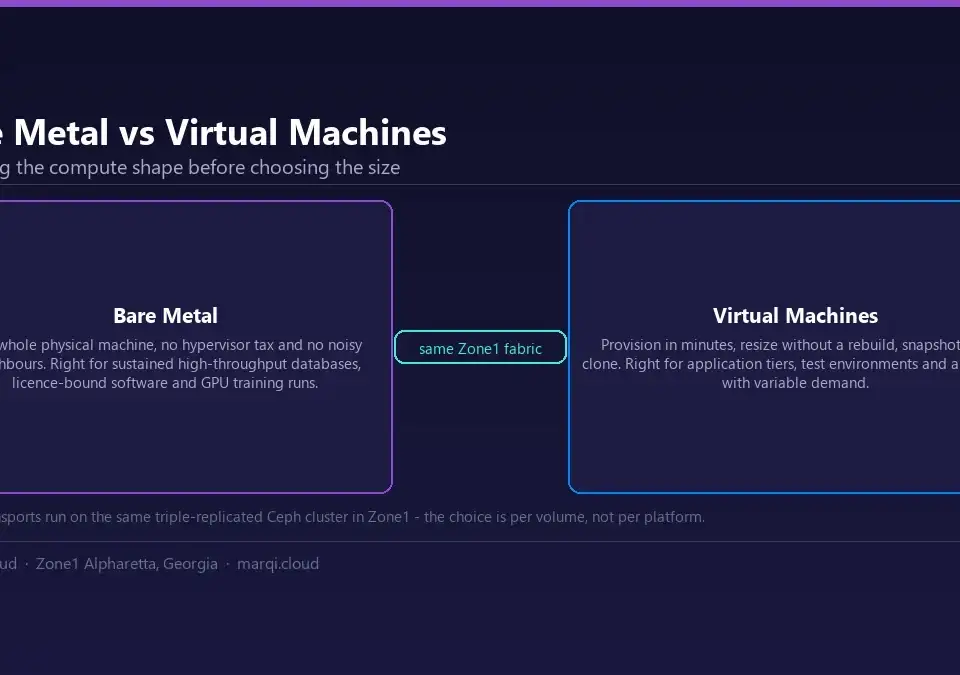
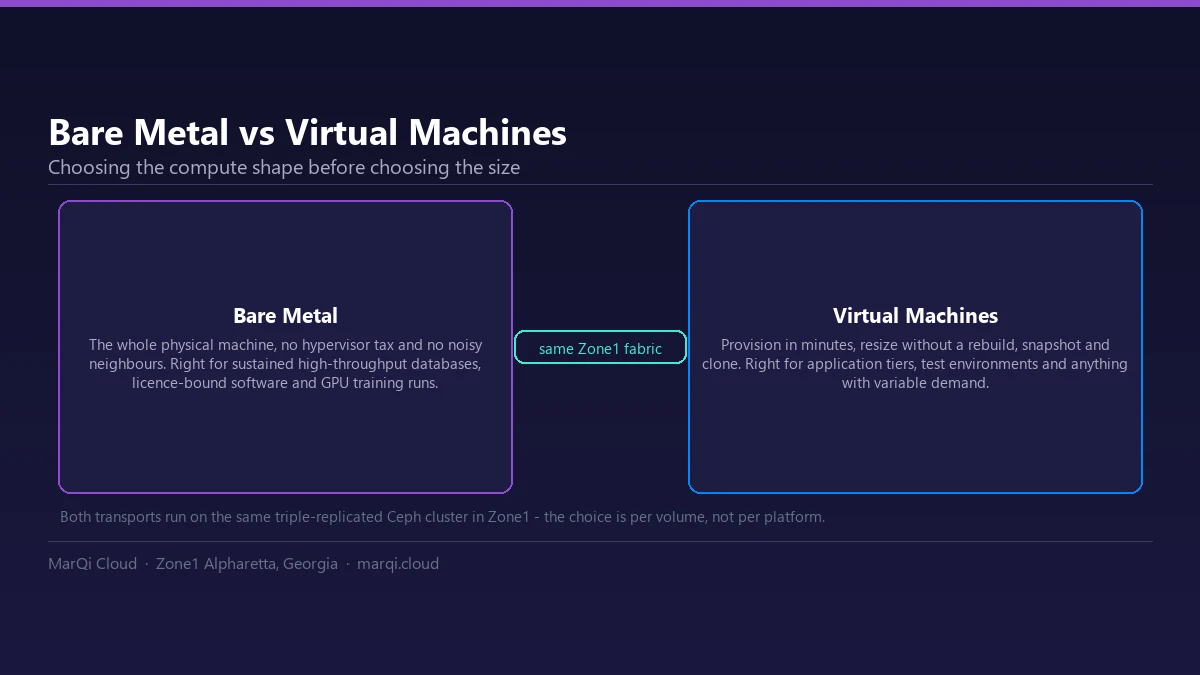
Bare metal performance refers to the computing power and efficiency achieved by directly utilizing physical hardware without the overhead of virtualization. Unlike traditional virtualized environments, where multiple virtual machines (VMs) share the same physical resources, bare metal servers provide dedicated resources to a single application or workload. This results in enhanced performance, reduced latency, and improved resource utilization.
The Importance of Bare Metal Performance for AI
1. Enhanced Computational Power
AI applications often require significant computational resources to process large datasets and execute complex algorithms. Bare metal servers provide unparalleled computational power as they leverage the full potential of CPUs and GPUs without the limitations imposed by virtualization layers. This is particularly vital for tasks such as deep learning, where large neural networks require extensive processing capabilities.
2. Reduced Latency
Latency is a critical factor in AI applications, especially those that require real-time processing, such as autonomous vehicles and financial trading systems. Bare metal performance minimizes latency by eliminating the virtualization overhead and providing direct access to hardware resources. This enables AI models to make quicker decisions, ultimately enhancing their effectiveness.
3. Resource Optimization
AI workloads can be resource-intensive, often consuming more CPU, memory, and storage than traditional applications. Bare metal servers allow for optimal resource allocation, ensuring that AI applications receive the necessary resources without contention from other processes. This is particularly important for organizations looking to scale their AI operations without compromising performance.
4. Predictable Performance
In AI, predictability is essential for achieving consistent results. Bare metal performance provides predictable performance metrics, allowing organizations to better plan and manage their AI workloads. This predictability is crucial for training AI models, as it ensures that the training process remains stable and efficient.
5. Customization and Flexibility
AI applications often have unique requirements that may not be met by standard configurations. Bare metal servers offer the flexibility to customize hardware components, such as choosing specific CPUs, GPUs, and memory configurations. This level of customization enables organizations to tailor their infrastructure to meet the specific demands of their AI workloads.
Use Cases for Bare Metal Performance in AI
1. Deep Learning
Deep learning is a subset of machine learning that relies on neural networks with multiple layers. Training these networks requires substantial computational resources, making bare metal performance an ideal choice. Organizations can utilize bare metal servers equipped with powerful GPUs to expedite the training process, leading to faster model development and deployment.
2. Data Analytics
AI-driven data analytics involves processing vast amounts of data to uncover insights and trends. Bare metal servers can efficiently handle large datasets, allowing organizations to perform complex analyses in real-time. This capability is vital for businesses seeking to make data-driven decisions quickly.
3. Natural Language Processing (NLP)
NLP applications, such as chatbots and virtual assistants, require significant processing power to understand and generate human language. Bare metal performance can enhance the responsiveness and accuracy of NLP models, leading to improved user experiences and interactions.
Integrating Bare Metal Performance with Cloud Infrastructure
As organizations increasingly move their AI operations to the cloud, the integration of bare metal performance with cloud infrastructure becomes paramount. Hybrid cloud deployment models offer the best of both worlds, allowing businesses to leverage the scalability of cloud resources while maintaining the performance benefits of bare metal servers.
1. Hybrid Cloud Deployment
Hybrid cloud deployment models enable organizations to run critical AI workloads on bare metal servers while utilizing cloud resources for less demanding tasks. This approach ensures that performance-sensitive applications receive the necessary resources while maintaining cost-effectiveness.
2. Private and Secure Hosting Environments
For organizations that deal with sensitive data, private and secure hosting environments are essential. Bare metal servers can be deployed in private cloud setups, ensuring that AI workloads are protected from external threats while benefiting from enhanced performance.
Conclusion
As AI continues to evolve and become more integral to various industries, the need for bare metal performance will only increase. By providing enhanced computational power, reduced latency, and resource optimization, bare metal servers empower organizations to unlock the full potential of their AI applications. As businesses explore hybrid cloud deployment models, the integration of bare metal performance will play a crucial role in achieving scalable, efficient, and high-performing AI solutions.
FAQs
1. What is bare metal performance?
Bare metal performance refers to the computing power and efficiency achieved by using physical hardware directly without virtualization overhead. It allows applications to leverage full hardware capabilities.
2. Why is bare metal important for AI?
Bare metal is important for AI as it provides enhanced computational power, reduced latency, and optimized resource allocation, which are crucial for AI workloads.
3. How does bare metal performance reduce latency?
By eliminating virtualization overhead, bare metal servers provide direct access to hardware resources, resulting in lower latency for time-sensitive AI applications.
4. Can bare metal servers be customized for AI workloads?
Yes, bare metal servers offer the flexibility to customize hardware components, allowing organizations to tailor their infrastructure to specific AI requirements.
5. What are some use cases for bare metal performance in AI?
Use cases include deep learning, data analytics, and natural language processing, where high computational power and low latency are essential.
6. How can organizations integrate bare metal performance with cloud infrastructure?
Organizations can utilize hybrid cloud deployment models to run critical AI workloads on bare metal servers while leveraging cloud resources for less demanding tasks.
7. What are the benefits of a hybrid cloud deployment model?
The benefits include scalability, cost-effectiveness, and the ability to maintain performance-sensitive applications on dedicated hardware.
8. Is bare metal performance suitable for all AI applications?
While bare metal performance is highly beneficial for resource-intensive AI applications, organizations should evaluate their specific needs to determine the best infrastructure approach.