How Private Cloud Supports Multi-Tenancy for MSPs and Service Providers
July 31, 2026
The Complete Guide to Migrating from Public Cloud to a Private Cloud Environment
August 1, 2026
Why Compliance-Ready Private Cloud Eliminates the Audit Headaches of Public Cloud
In today’s fast-paced digital landscape, organizations are increasingly turning to cloud solutions to enhance their operational efficiency and scalability. However, navigating the complexities of compliance in cloud environments can be a daunting task, particularly when relying on public cloud services. This is where a compliance-ready private cloud comes into play, providing a tailored solution that alleviates the audit headaches often associated with public cloud infrastructures. In this article, we will explore the advantages of private cloud solutions, particularly focusing on compliance, security, and operational efficiency.
What is a private cloud?
A private cloud is a dedicated cloud infrastructure that is exclusively used by a single organization. Unlike public clouds, where resources are shared among multiple users, private clouds offer enhanced control and customization. This infrastructure can be hosted on-premises or by a third-party provider, such as MarQi Cloud, which specializes in hybrid cloud infrastructure and private hosting solutions. Organizations often choose private clouds to address specific business needs, including security, compliance, and data sovereignty.
Compliance Challenges in Public Cloud
While public cloud providers offer vast resources and scalability, they also present significant compliance challenges. Organizations in regulated industries such as healthcare, finance, and government must adhere to strict compliance standards, such as HIPAA, PCI DSS, and GDPR. These regulations require organizations to safeguard sensitive data and maintain robust security protocols.
Public clouds often lack the transparency needed for organizations to fully understand how their data is managed and protected. This opacity can lead to compliance headaches, including:
- Data Sovereignty Issues: Data stored in public clouds may be subject to different legal jurisdictions, complicating compliance efforts.
- Inconsistent Security Controls: Public cloud providers may not implement uniform security measures across all services, increasing the risk of data breaches.
- Limited Audit Capabilities: Organizations may struggle to conduct thorough audits due to restricted access to underlying infrastructure and security logs.
These challenges can result in costly penalties and damage to an organization’s reputation. A compliance-ready private cloud mitigates these risks by offering enhanced visibility and control.
Benefits of Compliance-Ready Private Cloud
Choosing a compliance-ready private cloud, such as those offered by MarQi Cloud, can significantly reduce the audit headaches associated with public cloud environments. Here are some of the key benefits:
1. Enhanced Control and Customization
With a private cloud, organizations have complete control over their infrastructure, allowing them to tailor security measures and compliance protocols to meet specific regulatory requirements. This level of customization is essential for organizations subject to stringent compliance standards.
2. Improved Data Security
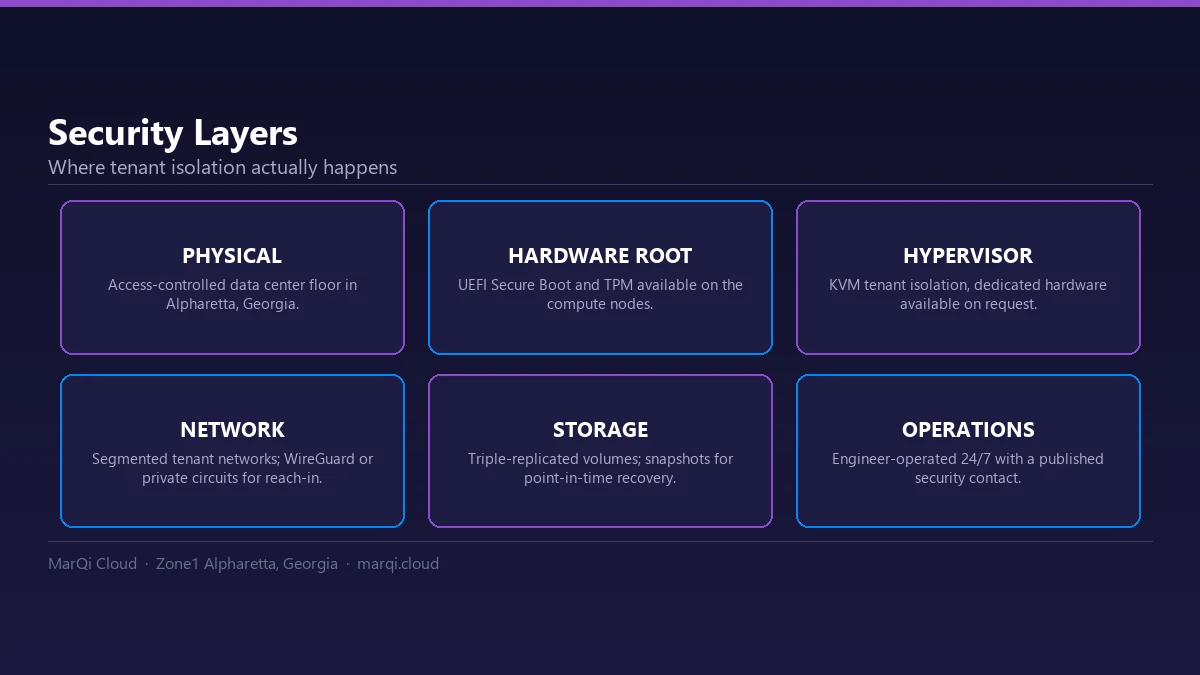
Private clouds provide a secure environment for sensitive data, reducing the risk of data breaches and unauthorized access. Organizations can implement advanced security measures, such as encryption, firewalls, and intrusion detection systems, to safeguard their data.
3. Simplified Compliance Management
Private clouds offer built-in compliance features that simplify the management of regulatory requirements. Organizations can easily conduct audits, generate compliance reports, and maintain records to demonstrate adherence to regulations.
4. Greater Transparency
Private cloud environments offer greater visibility into data management practices, enabling organizations to monitor compliance efforts effectively. This transparency is crucial for addressing regulatory concerns and demonstrating compliance during audits.
5. Reduced Risk of Penalties
By maintaining compliance in a private cloud, organizations can significantly reduce the risk of facing penalties associated with non-compliance. This proactive approach to compliance management not only protects the organization financially but also enhances its reputation in the industry.
| Feature | Public Cloud | Private Cloud |
|---|---|---|
| Control | Limited | Complete |
| Customization | Minimal | Extensive |
| Data Security | Variable | High |
| Compliance Management | Challenging | Simplified |
| Transparency | Low | High |
How to Ensure Compliance in Private Cloud
Implementing a compliance-ready private cloud requires a strategic approach to ensure adherence to regulations. Here are actionable steps organizations can take:
1. Define Compliance Requirements
Organizations should begin by identifying the specific compliance regulations applicable to their industry. This includes understanding the requirements of standards such as HIPAA, PCI DSS, and GDPR.
2. Implement Security Best Practices
Organizations must adopt industry-standard security practices, such as:
- Regular security assessments and penetration testing
- Data encryption in transit and at rest
- Multi-factor authentication for access control
3. Conduct Regular Audits
Regular audits are essential for ensuring compliance in a private cloud. Organizations should establish a schedule for internal audits and engage third-party auditors to validate compliance efforts.
4. Maintain Documentation
Keeping comprehensive documentation of compliance efforts is crucial. This includes maintaining records of security policies, audit results, and incident response plans.
5. Engage with Compliance Experts
Organizations should consider partnering with compliance experts or consultants to navigate the complexities of regulatory requirements and ensure best practices are followed.
Case Studies and Examples
To illustrate the effectiveness of compliance-ready private cloud solutions, let’s explore a few real-world examples:
Case Study 1: Healthcare Provider
A major healthcare provider transitioned from a public cloud to a private cloud solution to enhance its compliance with HIPAA regulations. By implementing a private cloud, the organization improved data security, streamlined compliance reporting, and reduced audit preparation time by 50%.
Case Study 2: Financial Institution
A financial institution faced challenges with PCI DSS compliance in its public cloud environment. After migrating to a private cloud, the organization achieved full compliance, minimized the risk of data breaches, and improved its overall security posture.
Conclusion
The complexities of compliance in cloud environments can create significant challenges for organizations relying on public cloud solutions. A compliance-ready private cloud offers a tailored approach that not only enhances security but also simplifies compliance management. By choosing a private cloud solution like those offered by MarQi Cloud, organizations can eliminate the audit headaches associated with public cloud environments, ensuring a more secure and compliant infrastructure.
FAQ
What is a compliance-ready private cloud?
A compliance-ready private cloud is a dedicated cloud infrastructure designed to meet specific regulatory requirements, offering enhanced control, security, and compliance management.
How does a private cloud improve security?
Private clouds provide a secure environment for sensitive data, allowing organizations to implement advanced security measures tailored to their compliance needs.
What are the compliance challenges of public cloud?
Public clouds can present challenges such as data sovereignty issues, inconsistent security controls, and limited audit capabilities, complicating compliance efforts.
How can organizations ensure compliance in a private cloud?
Organizations can ensure compliance in a private cloud by defining compliance requirements, implementing security best practices, conducting regular audits, maintaining documentation, and engaging with compliance experts.
What are the benefits of a compliance-ready private cloud?
Benefits include enhanced control, improved data security, simplified compliance management, greater transparency, and reduced risk of penalties.
Can a private cloud help with data residency compliance?
Yes, a private cloud allows organizations to control where their data is stored, helping ensure compliance with data residency regulations.
Is it easier to audit a private cloud than a public cloud?
Yes, private clouds offer greater transparency and control, making it easier for organizations to conduct audits and maintain compliance.
How does MarQi Cloud support compliance?
MarQi Cloud offers tailored private cloud solutions with built-in compliance features, security measures, and expert support to help organizations meet their regulatory requirements.