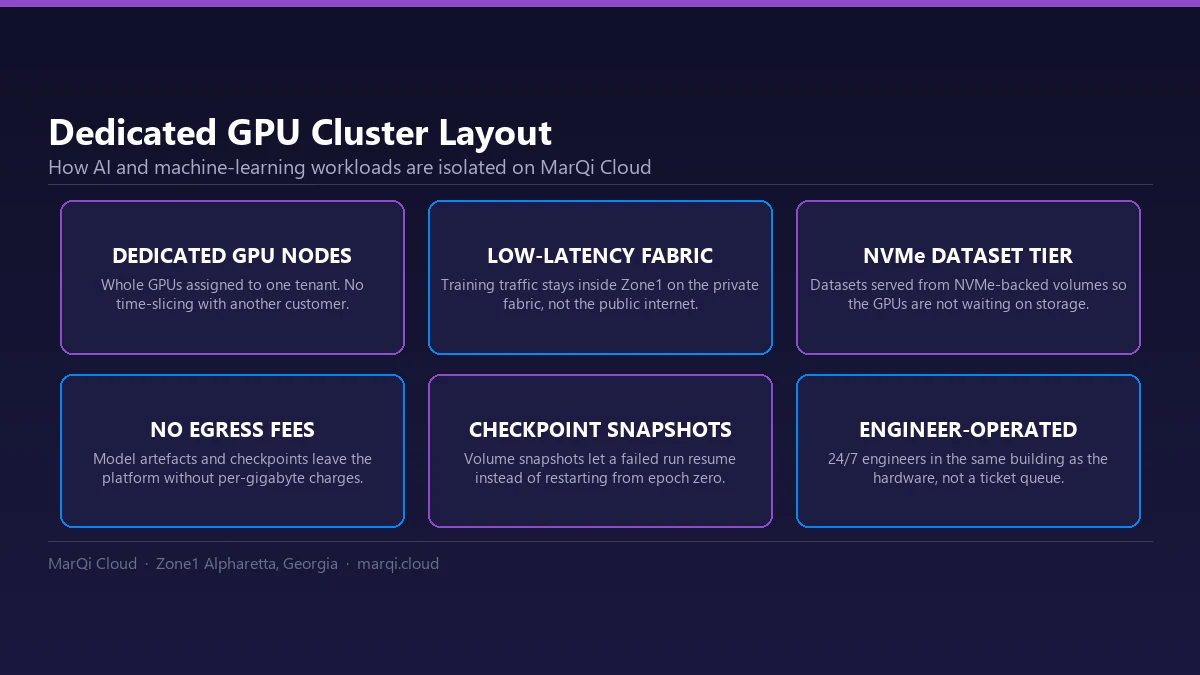
AI/ML GPU Pooling: Why Separate Compute Pools Improve Reliability
February 21, 2026
Building a Zero-Trust Hybrid Cloud: Practical Controls That Work
February 22, 2026
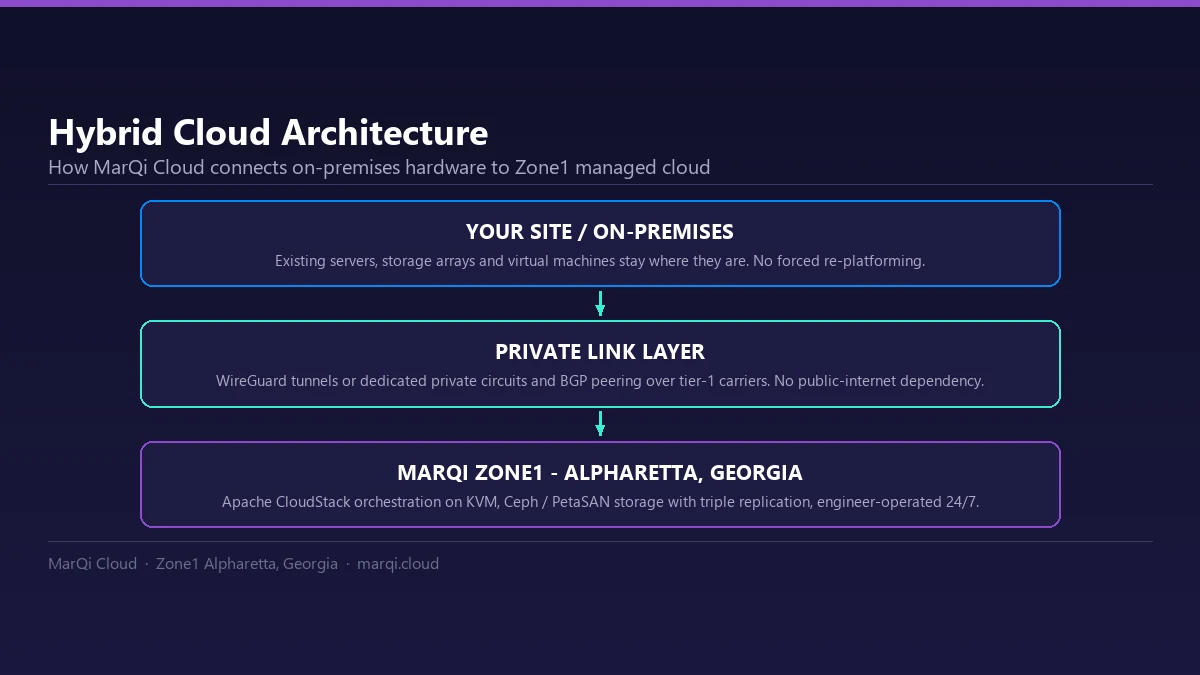
Hybrid Cloud Networking 101: Understanding VLAN vs VXLAN for Isolated Tenant Networks
As organizations increasingly migrate to hybrid cloud environments, the demand for effective networking solutions has become paramount. Two of the most prominent technologies in this space are Virtual Local Area Networks (VLANs) and Virtual Extensible Local Area Networks (VXLANs). Both are essential for creating isolated tenant networks, but they serve different purposes and offer distinct advantages. This article will explore the differences between VLAN and VXLAN, their respective use cases, and how they can be implemented in hybrid cloud architectures.
What is Hybrid Cloud Networking?
Hybrid cloud networking refers to the combination of on-premises and cloud-based resources that allow organizations to connect and utilize both environments seamlessly. This architecture enables businesses to leverage the scalability and flexibility of cloud services while maintaining control over critical data and applications in their private networks.
Understanding VLANs
What is a VLAN?
A Virtual Local Area Network (VLAN) is a logical partition of a physical network, allowing multiple distinct networks to coexist on the same physical infrastructure. VLANs are used to segregate network traffic, enhance security, and improve performance by reducing broadcast domains.
Key Features of VLANs
- Segmentation: VLANs enable network segmentation, which improves security and performance by isolating traffic.
- Scalability: VLANs can be easily scaled by adding new devices or users to the network.
- Broadcast Control: By limiting broadcast traffic, VLANs enhance overall network performance.
- Cost-Effective: VLANs reduce the need for additional physical hardware, lowering overall infrastructure costs.
Use Cases for VLANs
VLANs are ideal for organizations looking to improve security and performance within their local networks. Common use cases include:
- Creating separate networks for different departments within an organization.
- Isolating guest networks from internal company resources.
- Segmenting traffic for improved security in environments that handle sensitive data.
Understanding VXLANs
What is a VXLAN?
A Virtual Extensible Local Area Network (VXLAN) is an overlay networking technology that enables the creation of virtualized Layer 2 networks over Layer 3 infrastructure. VXLAN encapsulates Ethernet frames in a UDP packet, allowing for the creation of larger broadcast domains that can span geographically dispersed data centers.
Key Features of VXLANs
- Scalability: VXLANs can support up to 16 million logical networks, significantly more than traditional VLANs.
- Overlay Networking: VXLANs provide an overlay network that can be easily implemented over existing Layer 3 infrastructure.
- Multitenancy: VXLANs allow for better multitenant environments, making them ideal for cloud service providers.
- Improved Network Efficiency: By reducing broadcast traffic, VXLANs enhance network efficiency across large deployments.
Use Cases for VXLANs
VXLANs are particularly beneficial in cloud environments where scalability and flexibility are crucial. Common use cases include:
- Facilitating multitenancy in cloud service provider environments.
- Connecting geographically dispersed data centers while maintaining Layer 2 connectivity.
- Enabling large-scale virtualized environments that require isolation and segmentation.
Comparing VLAN and VXLAN
Scalability
While VLANs can support up to 4096 unique IDs, VXLANs can accommodate 16 million unique identifiers due to their 24-bit segment ID. This scalability makes VXLANs more suitable for large environments, especially in cloud scenarios.
Network Overhead
VLANs operate at Layer 2 and thus have lower overhead compared to VXLANs, which encapsulate packets in UDP headers. However, the additional overhead introduced by VXLANs is often justified by the significant scalability and flexibility advantages they offer.
Implementation Complexity
VLANs are generally simpler to implement and manage, particularly in smaller environments. In contrast, VXLANs require more advanced networking knowledge and tools for configuration and management, making them more complex but also more powerful for larger, dynamic networks.
Performance
In a simple local environment, VLANs may provide better performance due to their lower overhead. However, VXLANs can achieve comparable performance in larger, distributed environments by optimizing traffic management and reducing broadcast domains.
Choosing the Right Solution for Your Needs
When deciding between VLAN and VXLAN for isolated tenant networks, organizations must consider their specific requirements:
- For smaller, more controlled environments: VLANs may be the better choice due to their simplicity and lower overhead.
- For larger, scalable environments: VXLANs are more appropriate, especially in hybrid cloud architectures where multitenancy and flexibility are critical.
Implementing VLAN and VXLAN in Hybrid Cloud Environments
Best Practices for VLAN Implementation
- Carefully plan your VLAN architecture to avoid unnecessary complexity.
- Regularly review and update VLAN configurations to ensure they meet evolving business needs.
- Implement security measures, such as ACLs, to protect sensitive data within VLANs.
Best Practices for VXLAN Implementation
- Utilize automation tools to simplify VXLAN configuration and management.
- Monitor network performance to identify potential bottlenecks and optimize traffic flow.
- Ensure proper security measures are in place, including encryption for data in transit.
Conclusion
In the evolving landscape of hybrid cloud networking, understanding the differences between VLAN and VXLAN is crucial for organizations looking to optimize their network architectures. Both technologies offer unique benefits and are suited to different scenarios. By carefully assessing your organization’s needs and implementing the appropriate solutions, you can ensure a secure, scalable, and efficient network infrastructure.
FAQ
1. What is the primary difference between VLAN and VXLAN?
The primary difference lies in their scalability and implementation. VLANs are limited to 4096 unique networks, while VXLANs can support up to 16 million networks by utilizing overlay networking over Layer 3 infrastructure.
2. When should I use VLANs?
VLANs are ideal for smaller, controlled environments where simplicity and lower overhead are priorities, such as internal departmental segmentation.
3. What are the advantages of using VXLAN?
VXLANs offer higher scalability, improved multitenancy, and better support for large, distributed environments, making them suitable for cloud service providers.
4. Can I use VLANs and VXLANs together?
Yes, organizations can use both VLANs and VXLANs within their network architecture, leveraging the strengths of each technology based on specific requirements.
5. What is the impact of network overhead on performance?
While VLANs have lower overhead leading to potentially better performance in smaller setups, VXLANs can maintain performance in larger environments through optimized traffic management.
6. How do I secure my VLANs and VXLANs?
Implement security measures such as Access Control Lists (ACLs), encryption for data in transit, and regular audits to ensure the integrity and confidentiality of your networks.
7. What tools can help manage VXLANs?
Utilizing network automation and orchestration tools can simplify the configuration and management of VXLANs, ensuring efficient operations in complex environments.
8. Are VLANs suitable for cloud environments?
While VLANs can be used in cloud environments, they may be limited in scalability compared to VXLANs, making VXLANs a more suitable choice for large, dynamic cloud setups.