LLM Hosting on Private Infrastructure: Security, Cost, and Performance
February 21, 2026
Hybrid Cloud Networking 101: Understanding VLAN vs VXLAN for Isolated Tenant Networks
February 22, 2026
AI/ML GPU Pooling: Why Separate Compute Pools Improve Reliability
As artificial intelligence (AI) and machine learning (ML) technologies continue to advance, the demand for robust computational resources has surged. Organizations looking to harness the power of AI and ML require reliable, efficient, and scalable infrastructure to support their data-driven initiatives. One of the most effective strategies for achieving this is through AI/ML GPU pooling, particularly when leveraging separate compute pools. In this article, we’ll explore the concept of GPU pooling, the benefits of separate compute pools, and how this approach can significantly improve reliability in AI/ML workloads.
Understanding GPU Pooling
GPU pooling refers to the aggregation of multiple Graphics Processing Units (GPUs) to create a shared resource that can be utilized by various applications and workloads. This approach allows organizations to maximize resource utilization, reduce costs, and enhance performance when running complex AI and ML tasks. Instead of dedicating individual GPUs to specific tasks or users, pooling enables a more flexible and dynamic allocation of computational resources.
The Role of GPUs in AI/ML
GPUs are essential for AI and ML workloads due to their ability to perform parallel processing, which is crucial for handling the vast amounts of data involved in training models. Unlike traditional Central Processing Units (CPUs), which are optimized for sequential processing, GPUs excel at tasks that can be executed concurrently, such as matrix multiplications and large-scale data manipulations. This makes them the preferred choice for training deep learning models and running inference tasks.
The Case for Separate Compute Pools
While GPU pooling offers numerous benefits, creating separate compute pools for different workloads or teams can further enhance reliability and performance. Here are some key reasons why separate compute pools are advantageous:
1. Improved Resource Isolation
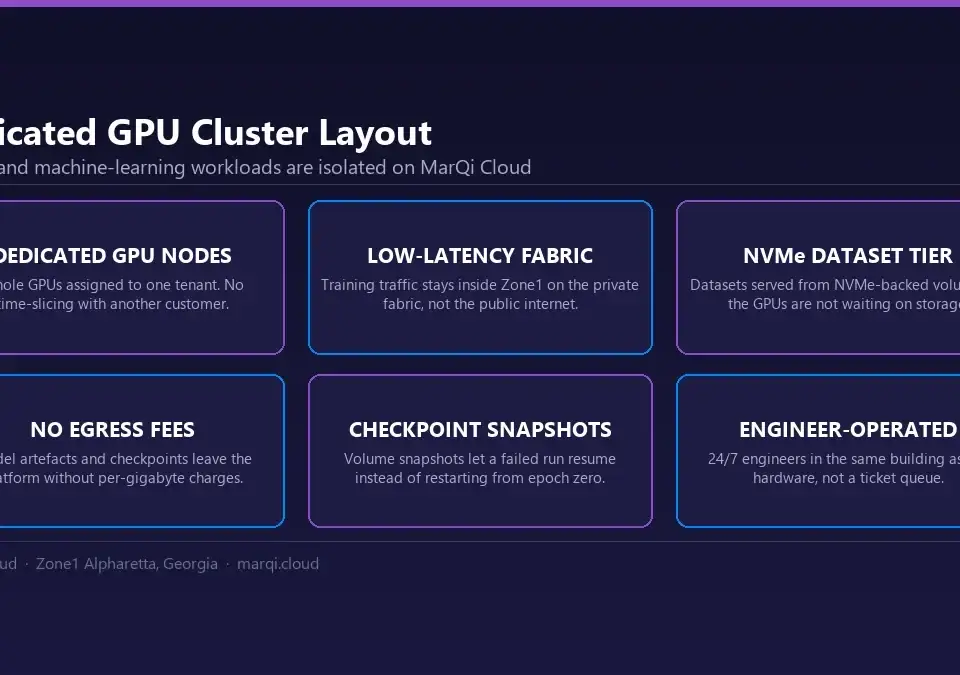
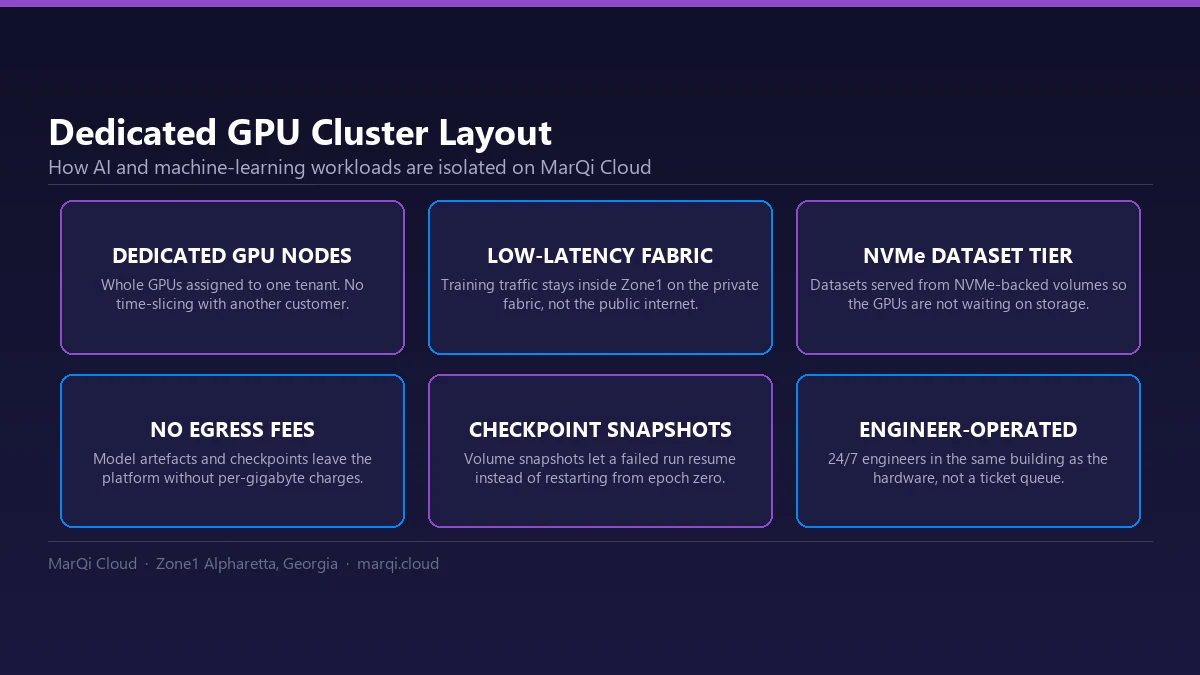
By establishing separate compute pools, organizations can achieve better resource isolation. This means that workloads from one pool do not interfere with those from another. For example, if a high-demand AI project is running in one pool, it will not impact the performance of other projects running in separate pools. This isolation is crucial for ensuring that each workload receives the necessary computational resources without facing contention from other tasks.
2. Enhanced Performance Management
Separate compute pools allow for tailored performance management strategies. Organizations can optimize settings and configurations based on the specific needs of each pool. For instance, a pool dedicated to training complex machine learning models may require different configurations than a pool focused on real-time inference. This flexibility enables organizations to fine-tune their infrastructure for optimal performance based on workload requirements.
3. Simplified Scaling
As AI and ML demands grow, organizations often need to scale their resources accordingly. Separate compute pools facilitate this scaling process by allowing organizations to add or remove GPU resources based on the needs of each pool. This targeted scaling ensures that resources are allocated efficiently and can be adjusted without disrupting other workloads.
4. Enhanced Reliability and Fault Tolerance
Reliability is a critical factor for organizations leveraging AI and ML technologies. By utilizing separate compute pools, organizations can build redundancy and fault tolerance into their infrastructure. If one pool experiences a failure or performance degradation, the other pools can continue to operate normally. This separation minimizes the risk of a single point of failure and ensures that critical workloads remain operational.
5. Streamlined Resource Allocation
With separate compute pools, organizations can implement more efficient resource allocation strategies. For instance, they can prioritize resources based on the urgency and importance of specific tasks. This targeted allocation ensures that critical AI and ML projects receive the necessary computational power when needed, improving overall productivity.
Implementing AI/ML GPU Pooling with Separate Compute Pools
Implementing a GPU pooling strategy with separate compute pools requires careful planning and consideration. Here are some steps organizations can take to successfully implement this approach:
1. Assess Workload Requirements
Before setting up separate compute pools, organizations should assess the specific requirements of their AI and ML workloads. This includes understanding the computational demands, data processing needs, and performance expectations for each project. By clearly defining these requirements, organizations can create pools that are optimized for their unique workloads.
2. Design a Flexible Infrastructure
A flexible infrastructure is essential for supporting separate compute pools. Organizations should consider utilizing cloud-based solutions that allow for easy scaling and management of GPU resources. This ensures that compute pools can be adjusted as workload demands change over time.
3. Implement Monitoring and Management Tools
Effective monitoring and management tools are crucial for maintaining the performance and reliability of separate compute pools. Organizations should invest in solutions that provide real-time insights into resource utilization, performance metrics, and potential issues. This enables teams to proactively address any challenges that may arise and optimize resource allocation.
4. Establish Governance and Policies
To ensure the successful operation of separate compute pools, organizations should establish clear governance and policies. This includes defining roles and responsibilities for managing the pools, setting usage limits, and implementing best practices for resource allocation. By having well-defined policies in place, organizations can ensure that their GPU pooling strategy operates smoothly and efficiently.
Conclusion
As AI and ML technologies continue to evolve, organizations must adopt strategies that enhance their computational capabilities. AI/ML GPU pooling, particularly through the implementation of separate compute pools, offers a powerful solution for improving reliability, performance, and resource management. By leveraging this approach, organizations can ensure that they are well-equipped to handle the demands of their AI and ML workloads, ultimately driving innovation and success in their data-driven initiatives.
FAQ
1. What is GPU pooling?
GPU pooling is the aggregation of multiple GPUs into a shared resource that can be dynamically allocated to various applications and workloads, improving resource utilization and performance.
2. Why are separate compute pools beneficial?
Separate compute pools enhance resource isolation, performance management, scaling, reliability, and streamlined resource allocation for different workloads.
3. How do GPUs improve AI and ML performance?
GPUs excel at parallel processing, making them ideal for handling complex mathematical operations and large datasets involved in AI and ML tasks.
4. What are the key considerations when implementing separate compute pools?
Organizations should assess workload requirements, design a flexible infrastructure, implement monitoring tools, and establish governance and policies for effective management.
5. How can separate compute pools improve reliability?
Separate compute pools minimize the risk of resource contention and single points of failure, ensuring that critical workloads remain operational even if one pool faces issues.
6. What role does cloud infrastructure play in GPU pooling?
Cloud infrastructure offers flexibility and scalability, making it easier for organizations to manage GPU resources and create separate compute pools as needed.
7. Can separate compute pools be used for different teams within an organization?
Yes, separate compute pools can be tailored for different teams or projects, allowing for optimized resource allocation based on specific needs.
8. What monitoring tools are recommended for GPU pooling?
Organizations should consider tools that provide real-time insights into resource utilization, performance metrics, and potential issues to effectively manage their GPU pools.
9. How does separate compute pooling affect costs?
By optimizing resource allocation and reducing contention, separate compute pooling can lead to more efficient use of resources, potentially lowering operational costs in the long run.
10. What industries can benefit from AI/ML GPU pooling?
Industries such as healthcare, finance, retail, and technology can benefit from AI/ML GPU pooling as they leverage data-driven insights and machine learning algorithms for decision-making.