AI Infrastructure Provider in Atlanta: What Makes MarQi Different?
March 11, 2026
Understanding Tier-1 Network Connectivity in Georgia Data Centers
March 11, 2026
Hybrid Cloud Solutions for Atlanta Startups: Unlocking Growth and Flexibility
In the fast-paced world of technology, startups in Atlanta are constantly seeking ways to innovate and remain competitive. One of the most effective ways to achieve this is through the adoption of hybrid cloud solutions. Hybrid cloud technology combines the benefits of both public and private cloud environments, allowing businesses to tailor their cloud strategy to meet specific needs. This article delves into the advantages of hybrid cloud solutions for startups in Atlanta, exploring how they can leverage these technologies to drive growth, enhance security, and improve operational efficiency.
Understanding Hybrid Cloud Solutions
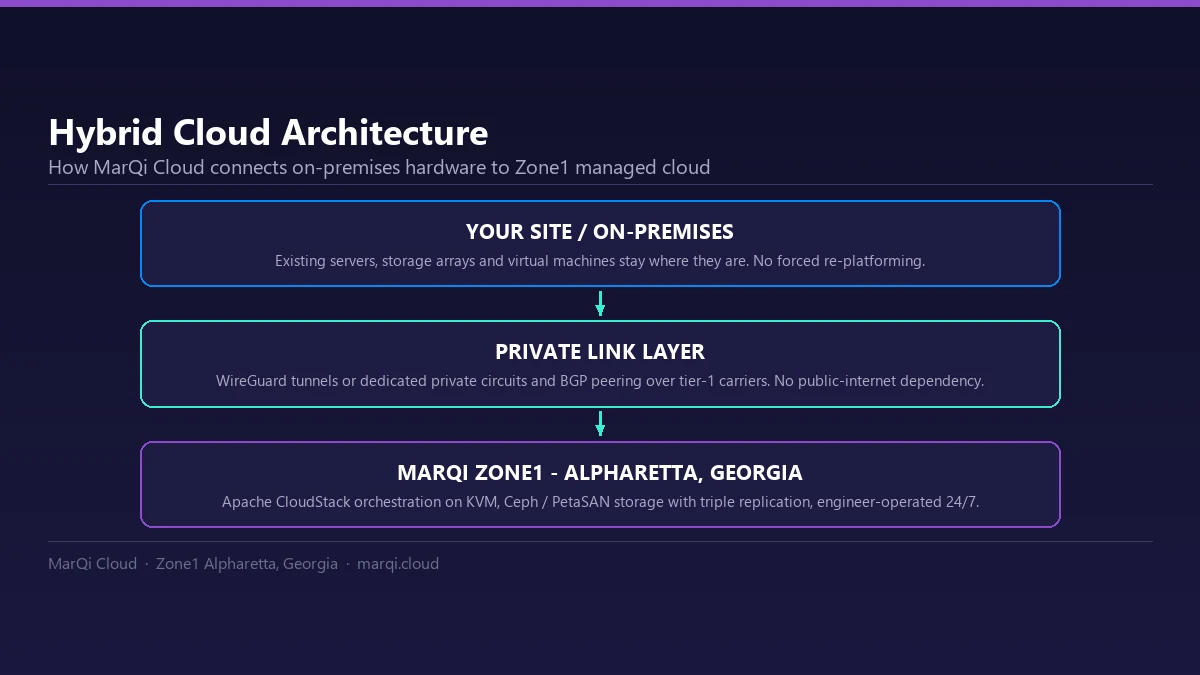
Hybrid cloud solutions blend the best of both worlds: the scalability and cost-effectiveness of public clouds and the control and security of private clouds. This combination allows startups to optimize their resources based on their unique requirements. With hybrid cloud infrastructure, businesses can easily scale their operations, manage workloads, and ensure business continuity.
Key Components of Hybrid Cloud
To fully grasp the potential of hybrid cloud solutions, it’s essential to understand its key components:
- Public Cloud: This is a cloud service offered over the public internet, making it accessible to anyone. Providers like AWS, Google Cloud, and Microsoft Azure deliver scalable resources on a pay-as-you-go basis.
- Private Cloud: This environment is dedicated solely to one organization. It offers enhanced security and control, making it ideal for businesses that handle sensitive data or require compliance with regulations.
- Cloud Management Platform: This platform enables seamless integration and management of both public and private cloud resources, allowing businesses to optimize workloads and costs.
The Advantages of Hybrid Cloud for Startups
Startups in Atlanta can significantly benefit from adopting hybrid cloud solutions. Here are some of the key advantages:
1. Cost Efficiency
One of the primary benefits of hybrid cloud solutions is cost efficiency. Startups can avoid hefty upfront investments in infrastructure by leveraging public cloud resources for non-sensitive operations. This allows them to pay only for the resources they use, which is crucial for startups working with limited budgets.
2. Scalability
As startups grow, their computing and storage needs evolve. Hybrid cloud solutions provide the scalability required to accommodate increased demand. Startups can easily scale their public cloud resources up or down based on current needs, ensuring optimal performance without overspending.
3. Enhanced Security
Data security is a top priority for startups, especially those handling sensitive information. Hybrid cloud solutions allow businesses to store critical data in a private cloud environment while using the public cloud for less sensitive operations. This layered approach provides enhanced security and compliance with industry regulations.
4. Business Continuity and Disaster Recovery
Startups need to ensure that their operations can withstand disruptions. Hybrid cloud solutions offer robust business continuity and disaster recovery options. By maintaining backups in the public cloud, startups can quickly recover from data loss or outages, minimizing downtime and maintaining customer trust.
5. Flexibility
Hybrid cloud solutions provide startups with the flexibility to choose where to host their applications and data. This adaptability allows businesses to experiment with different deployment models and adjust their strategies based on performance and cost-effectiveness.
Implementing Hybrid Cloud Solutions
For Atlanta startups looking to implement hybrid cloud solutions, the process can be broken down into several key steps:
1. Assess Business Needs
Start by assessing your startup’s specific needs. Determine which applications and data are critical, what compliance requirements need to be met, and how much budget is available for cloud solutions.
2. Choose the Right Cloud Provider
Selecting the right cloud provider is crucial. Look for providers that offer strong support, reliability, and flexibility. MarQi Cloud, for example, provides enterprise-grade infrastructure and US-based support, ensuring that startups have access to the resources they need.
3. Develop a Cloud Strategy
Once you have assessed your needs and selected a provider, develop a cloud strategy that outlines how you will use both public and private cloud resources. This strategy should include workload distribution, data management, and security protocols.
4. Implement and Monitor
After developing a strategy, it’s time to implement your hybrid cloud solution. Monitor performance, security, and costs regularly to ensure that the solution continues to meet your needs as your startup grows.
Case Studies: Successful Hybrid Cloud Implementations in Atlanta
Several startups in Atlanta have successfully leveraged hybrid cloud solutions to drive growth and innovation:
1. Fintech Startup
A fintech startup in Atlanta utilized a hybrid cloud strategy to enhance its data security and compliance. By storing sensitive customer data in a private cloud while using a public cloud for analytics and processing, the startup improved its operational efficiency and reduced costs.
2. E-commerce Business
An e-commerce startup adopted a hybrid cloud solution to manage fluctuating demand during peak seasons. By scaling its public cloud resources, the startup was able to handle increased traffic without compromising performance or customer satisfaction.
Challenges and Considerations
While hybrid cloud solutions offer numerous benefits, startups must also be aware of potential challenges:
1. Complexity
Managing a hybrid cloud environment can be complex. Startups need to ensure that they have the right tools and expertise to effectively manage both public and private cloud resources.
2. Security Risks
While hybrid clouds can enhance security, they also introduce new risks. It’s crucial for startups to implement robust security measures and regularly update protocols to protect against potential threats.
Conclusion
For startups in Atlanta, hybrid cloud solutions offer a pathway to growth, efficiency, and flexibility. By leveraging the strengths of both public and private cloud environments, businesses can tailor their cloud strategy to meet their unique needs. As technology continues to evolve, embracing hybrid cloud solutions can position startups for success in an increasingly competitive landscape.
FAQs
1. What is a hybrid cloud solution?
A hybrid cloud solution is a combination of public and private cloud environments that allows businesses to optimize their cloud strategy based on specific needs.
2. How can startups benefit from hybrid cloud solutions?
Startups can benefit from cost efficiency, scalability, enhanced security, business continuity, and flexibility when using hybrid cloud solutions.
3. What are the key components of a hybrid cloud?
The key components include public clouds, private clouds, and cloud management platforms.
4. What should startups consider before implementing hybrid cloud solutions?
Startups should assess their business needs, choose the right cloud provider, develop a cloud strategy, and monitor performance regularly.
5. Are hybrid cloud solutions secure?
Yes, hybrid cloud solutions can offer enhanced security by allowing businesses to store sensitive data in private clouds while using public clouds for less critical operations.
6. How do hybrid cloud solutions support business continuity?
Hybrid cloud solutions provide robust disaster recovery options, allowing startups to quickly recover from data loss or outages using backups stored in the public cloud.
7. Can hybrid cloud solutions scale with a startup’s growth?
Yes, hybrid cloud solutions provide the scalability needed to accommodate increased demand as a startup grows.
8. What challenges do startups face when adopting hybrid cloud solutions?
Challenges include complexity in management and potential security risks that must be addressed with strong protocols.
9. How do I choose the right cloud provider for hybrid solutions?
Look for providers that offer strong support, reliability, flexibility, and features that align with your startup’s specific needs.
10. What industries can benefit from hybrid cloud solutions?
Many industries, including fintech, e-commerce, healthcare, and more, can benefit from hybrid cloud solutions due to their unique data and operational requirements.