How MarQi Cloud’s Architecture Makes Downtime Practically Impossible
May 9, 2026
The Cloud Provider That Doesn’t Nickel-and-Dime You: A MarQi Cloud Deep Dive
May 10, 2026
Why Every AI Startup Should Start With MarQi Cloud Before Going to AWS
In the rapidly evolving world of artificial intelligence (AI), startups face numerous challenges in building and deploying their solutions effectively. The cloud infrastructure you choose can significantly impact your success. While AWS is a popular choice among many businesses, AI startups should consider starting with MarQi Cloud for its unique value propositions tailored to their specific needs. In this article, we will explore the reasons why MarQi Cloud is the ideal starting point for AI startups and how it can enhance their growth potential.
Understanding the Unique Needs of AI Startups
AI startups operate in a highly dynamic environment where innovation and speed are crucial. These businesses require:
1. Scalable Resources
AI models often require significant computational power and storage, especially when training complex algorithms. This necessitates a cloud infrastructure that can effortlessly scale resources as the demand fluctuates.
2. Performance Optimization
Latency and performance are critical factors in AI deployment. Startups must ensure that their infrastructure is designed for optimal performance to deliver real-time results to users.
3. Security and Compliance
Data privacy and security are paramount, particularly when dealing with sensitive information. Startups must choose a cloud provider that offers a secure hosting environment and complies with relevant regulations.
4. Cost Efficiency
Startups often operate on limited budgets. Therefore, flexible pricing models are essential to allow for growth without compromising financial sustainability.
Why MarQi Cloud Stands Out
MarQi Cloud offers several advantages that make it a compelling choice for AI startups:
1. Enterprise-Grade Cloud Infrastructure
MarQi Cloud provides an enterprise-grade infrastructure that supports the high demands of AI workloads. With robust processing power and storage options, it ensures that startups can run complex algorithms without any hitches.
2. Hybrid Cloud Deployment Models
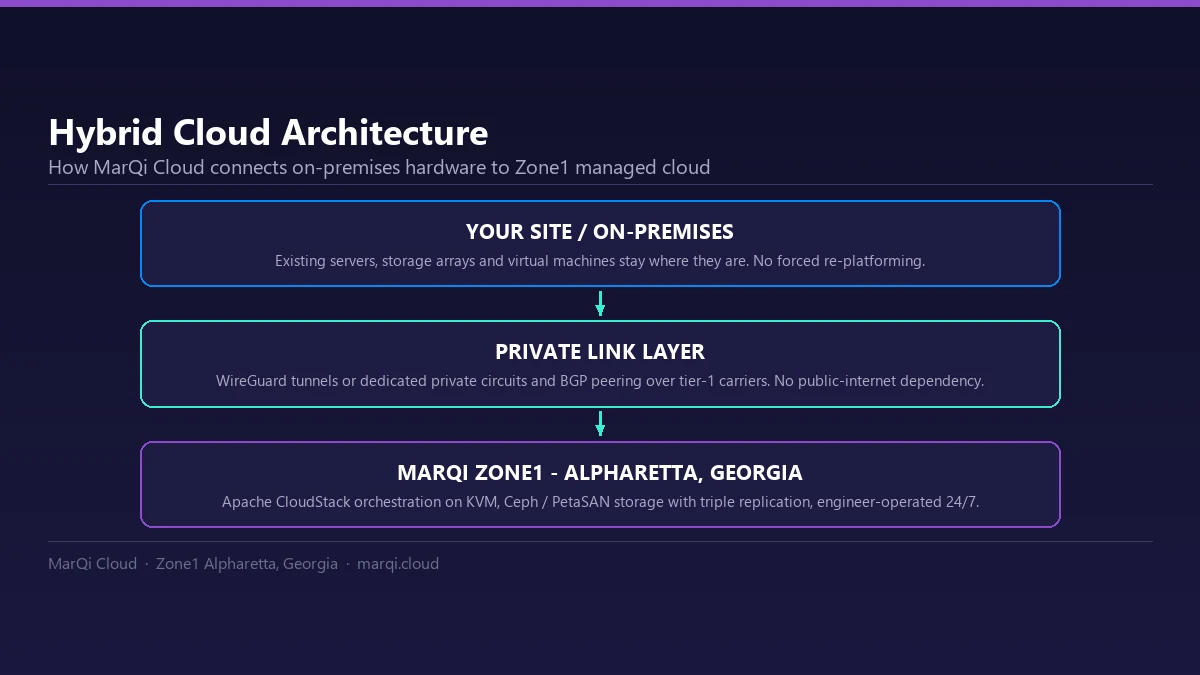
With MarQi Cloud’s hybrid cloud deployment models, AI startups can benefit from the flexibility of using both public and private cloud resources. This allows them to tailor their infrastructure to their specific needs, optimizing performance while maintaining control over sensitive data.
3. Private and Secure Hosting Environments
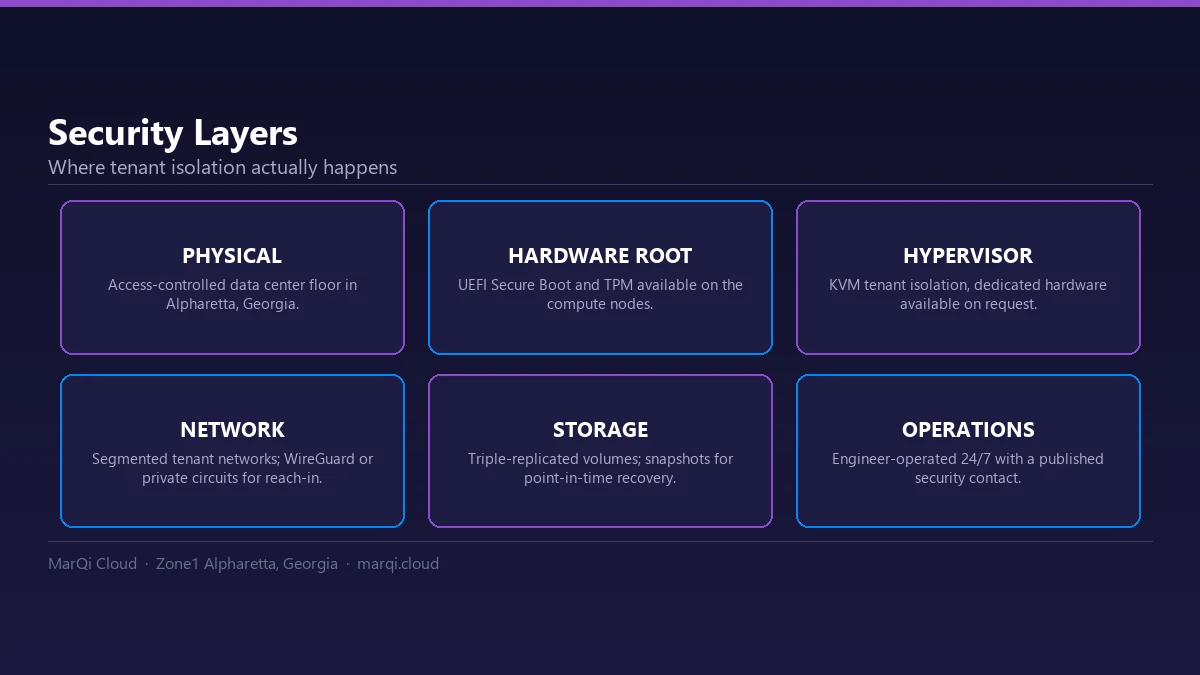
MarQi Cloud’s commitment to security means that startups can operate in a secure environment, protecting their intellectual property and customer data. With features like end-to-end encryption and advanced security protocols, startups can focus on innovation without worrying about data breaches.
4. Business Continuity and Disaster Recovery
AI startups must ensure that their operations remain uninterrupted. MarQi Cloud offers robust business continuity and disaster recovery solutions, safeguarding critical data and ensuring that services remain available even in the face of unforeseen disruptions.
5. Performance-Driven Infrastructure Design
The performance-driven design of MarQi Cloud ensures that AI applications run smoothly. With optimized load balancing and high-speed connectivity, startups can trust that their applications will deliver the performance their users expect.
6. US-Based Infrastructure and Support
Having US-based infrastructure means lower latency for American users and compliance with local regulations. MarQi Cloud also provides dedicated support, ensuring that startups have access to expert guidance whenever they need it.
7. Flexible Pricing Models
Startups can benefit from MarQi Cloud’s flexible pricing models, which allow them to pay for only the resources they use. This cost-effective approach enables startups to allocate their budgets more effectively and scale their operations without financial strain.
Case Studies of Successful AI Startups Using MarQi Cloud
To understand the impact of choosing MarQi Cloud, let’s look at a few case studies:
1. Case Study: AI-Powered Healthcare Startup
An AI startup focused on predictive analytics in healthcare chose MarQi Cloud for its secure hosting and scalable resources. By leveraging MarQi’s infrastructure, they were able to process large datasets efficiently, leading to improved patient outcomes and significant cost savings.
2. Case Study: AI Chatbot Platform
A chatbot startup utilized MarQi Cloud’s hybrid cloud model to manage both sensitive user data and scalable workloads. This flexibility allowed them to rapidly deploy updates and maintain high performance, ultimately leading to increased user satisfaction and retention.
Comparing MarQi Cloud to AWS
While AWS is a popular choice, it may not always be the best fit for every AI startup. Here’s a comparison of MarQi Cloud and AWS:
1. Complexity vs. Simplicity
AWS offers a vast array of services, which can be overwhelming for startups. In contrast, MarQi Cloud provides a more straightforward approach, focusing on essential services that cater specifically to AI needs.
2. Cost Management
Startups often face unpredictable costs with AWS due to its pay-as-you-go model. MarQi Cloud’s flexible pricing can help startups manage their budgets more effectively.
3. Support and Guidance
MarQi Cloud offers dedicated support tailored to startups, while AWS can sometimes feel impersonal due to its size. This personalized support can make a significant difference for new businesses navigating the complexities of cloud infrastructure.
Conclusion
For AI startups, the choice of cloud infrastructure is crucial to their success. MarQi Cloud offers a unique blend of scalability, security, performance, and cost-effectiveness that makes it the ideal starting point before considering larger providers like AWS. By leveraging MarQi Cloud, startups can build a strong foundation for their AI applications, ensuring they are well-positioned for growth and innovation.
Frequently Asked Questions (FAQs)
1. What is MarQi Cloud?
MarQi Cloud is a cloud service provider that offers enterprise-grade infrastructure tailored for businesses, particularly AI startups, focusing on security, scalability, and performance.
2. How does MarQi Cloud ensure security for AI startups?
MarQi Cloud employs advanced security protocols, including end-to-end encryption and private hosting environments, to protect sensitive data and intellectual property.
3. Can MarQi Cloud handle large AI workloads?
Yes, MarQi Cloud provides scalable computing and storage resources designed to support large AI workloads and complex algorithms.
4. What are hybrid cloud deployment models?
Hybrid cloud deployment models allow businesses to utilize both public and private cloud resources, offering flexibility and control over data management.
5. What kind of support does MarQi Cloud offer?
MarQi Cloud offers dedicated, US-based support, providing startups with expert guidance tailored to their specific needs.
6. How does MarQi Cloud compare to AWS?
While AWS offers a wide range of services, MarQi Cloud focuses on simplicity, cost-effectiveness, and personalized support tailored to startups.
7. How can AI startups benefit from MarQi Cloud’s pricing models?
MarQi Cloud’s flexible pricing models allow startups to pay only for the resources they use, making it easier to manage budgets and scale operations without financial strain.
8. What are business continuity and disaster recovery solutions?
These solutions ensure that businesses can maintain operations and recover critical data in the event of a disruption, safeguarding their services and customer trust.
9. Can MarQi Cloud help with compliance requirements?
Yes, MarQi Cloud’s US-based infrastructure ensures compliance with local regulations, which is crucial for startups handling sensitive data.
10. Why is performance optimization important for AI applications?
Performance optimization is essential for AI applications to deliver real-time results and provide a seamless user experience, which can significantly impact user satisfaction and retention.