How to Choose the Right GPU Server in Georgia: A Comprehensive Guide
March 21, 2026
Why AI Workloads Need Liquid Cooling: The Future of Efficient Computing
March 21, 2026
AI Model Deployment on Bare Metal Servers: A Comprehensive Guide
Introduction
In today’s rapidly evolving technological landscape, artificial intelligence (AI) has become a cornerstone for innovation across various industries. The deployment of AI models plays a vital role in leveraging their capabilities to produce actionable insights and drive business success. While cloud deployments have garnered substantial attention, bare metal servers are emerging as a robust alternative for organizations seeking enhanced performance, security, and control. In this comprehensive guide, we will delve into the intricacies of deploying AI models on bare metal servers, exploring the benefits, challenges, best practices, and key considerations.
What are Bare Metal Servers?
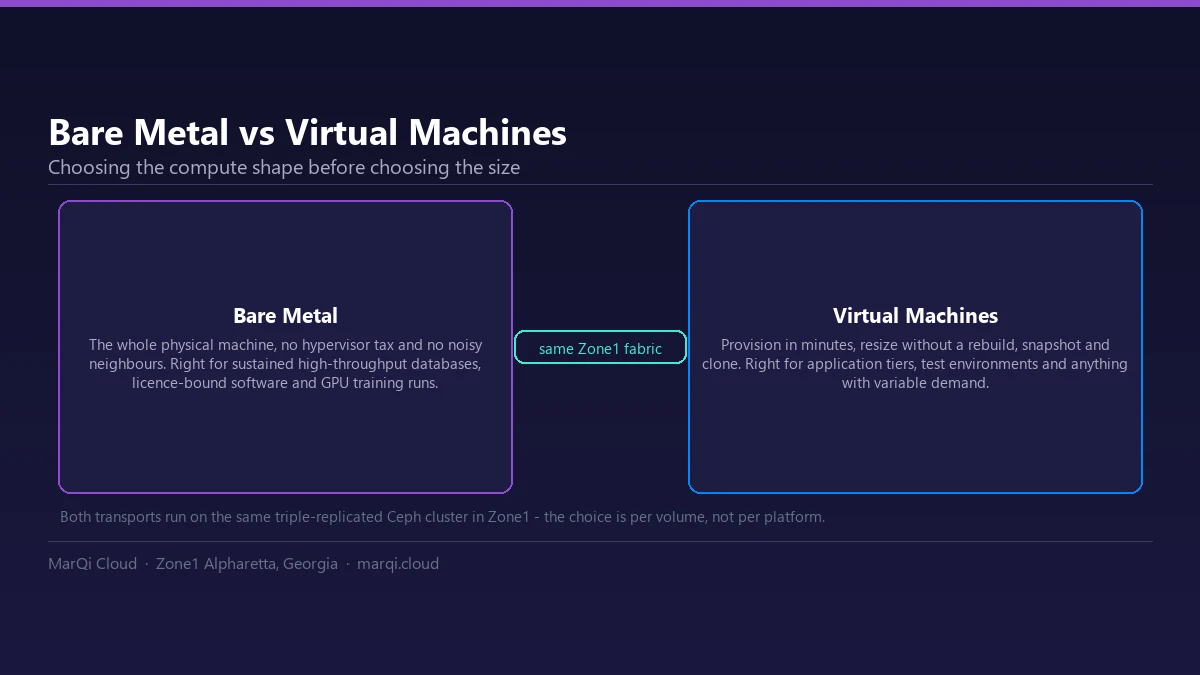
Bare metal servers are physical servers dedicated to a single tenant, providing exclusive access to computing resources without the virtualization layer that cloud services typically employ. This dedicated hardware setup allows organizations to harness maximum performance, scalability, and security for their AI workloads.
Benefits of Deploying AI Models on Bare Metal Servers
1. Enhanced Performance
One of the primary advantages of deploying AI models on bare metal servers is the superior performance they offer. Unlike virtualized environments, where resources are shared among multiple users, bare metal servers provide dedicated CPU, memory, and storage resources. This configuration ensures that AI computations are executed with minimal latency, significantly enhancing model training and inference times.
2. Improved Security
Security is a paramount concern for organizations dealing with sensitive data. Bare metal servers provide a more secure environment as they eliminate potential vulnerabilities associated with multi-tenant cloud infrastructures. With dedicated hardware, organizations can implement robust security measures, including firewalls, intrusion detection systems, and physical security protocols.
3. Customization and Control
Deploying AI models on bare metal servers grants organizations complete control over their infrastructure. This control allows for the customization of hardware configurations, software environments, and networking setups tailored to specific AI workloads. Organizations can optimize their infrastructure to achieve maximum efficiency and performance.
4. Cost-Effectiveness
While the initial investment in bare metal servers may be higher than cloud solutions, the long-term cost-effectiveness can be significant. Organizations can avoid ongoing cloud rental fees and benefit from predictable budgeting by owning their hardware. Additionally, bare metal servers often provide better performance per dollar spent compared to cloud instances.
5. Predictable Performance
In AI model deployment, consistency in performance is crucial. Bare metal servers offer predictable performance levels since resources are not shared with other tenants. This predictability is particularly important for organizations that require real-time processing and low-latency responses.
Challenges of Deploying AI Models on Bare Metal Servers
1. Initial Setup and Management
Deploying AI models on bare metal servers requires a more complex initial setup compared to cloud environments. Organizations need to manage hardware procurement, installation, and ongoing maintenance. This can be resource-intensive and may require specialized expertise.
2. Scalability Limitations
While bare metal servers provide excellent performance, they may not offer the same level of scalability as cloud solutions. Organizations need to carefully plan their hardware requirements and may face challenges in rapidly scaling their infrastructure to meet changing demands.
3. Longer Deployment Times
The deployment of AI models on bare metal servers can take longer than in cloud environments, where resources can be provisioned in minutes. Organizations need to account for hardware procurement and setup times, which can delay the time-to-market for AI applications.
Best Practices for AI Model Deployment on Bare Metal Servers
1. Assess Workload Requirements
Before deploying AI models on bare metal servers, organizations must conduct a thorough assessment of their workload requirements. This includes understanding the computational power needed for model training and inference, as well as storage and memory requirements.
2. Optimize Hardware Configuration
Customizing the hardware configuration is essential for maximizing performance. Organizations should choose the right combination of CPU, GPU, memory, and storage based on their specific AI workloads. This optimization ensures efficient resource utilization and faster processing times.
3. Implement Monitoring and Management Tools
Utilizing monitoring and management tools can significantly ease the operational burden of managing bare metal servers. These tools help organizations track performance metrics, resource usage, and system health, enabling proactive maintenance and optimization.
4. Plan for Disaster Recovery
Business continuity is crucial, especially when deploying AI models that drive critical business functions. Organizations should implement robust disaster recovery solutions, ensuring that data and infrastructure can be restored quickly in the event of an outage or failure.
Key Considerations for AI Model Deployment
1. Regulatory Compliance
Organizations must ensure that their deployment of AI models on bare metal servers complies with relevant regulations and industry standards, particularly when handling sensitive data. Compliance with regulations such as GDPR, HIPAA, or PCI-DSS is essential to avoid legal repercussions.
2. Data Management
Effective data management strategies are vital for the success of AI model deployment. Organizations should establish protocols for data collection, storage, processing, and analysis, ensuring data integrity and security throughout the lifecycle.
3. Training and Expertise
Deploying AI models on bare metal servers requires skilled personnel with expertise in both AI and server management. Organizations should invest in training programs to equip their teams with the necessary skills to manage and optimize their AI infrastructure.
Conclusion
Deploying AI models on bare metal servers offers organizations numerous benefits, including enhanced performance, improved security, and greater control over their infrastructure. While there are challenges to consider, following best practices and addressing key considerations can lead to successful deployments that drive business innovation and growth. As AI continues to shape the future of technology, bare metal servers will play a crucial role in enabling organizations to harness the full potential of their AI initiatives.
FAQ
1. What is the main advantage of using bare metal servers for AI model deployment?
The main advantage is enhanced performance due to dedicated resources, which reduces latency and increases processing speeds for AI tasks.
2. Are bare metal servers more secure than cloud servers?
Yes, bare metal servers offer improved security as they eliminate multi-tenant vulnerabilities and allow for customized security measures.
3. What challenges might organizations face when deploying AI on bare metal servers?
Challenges include the complexity of initial setup, potential scalability limitations, and longer deployment times compared to cloud solutions.
4. Can bare metal servers be scaled easily?
Scaling bare metal servers can be more challenging than cloud environments, as it requires hardware procurement and setup.
5. How can organizations optimize their hardware for AI workloads?
Organizations can optimize hardware by selecting the appropriate CPU, GPU, memory, and storage configurations tailored to their specific AI workloads.
6. What role does disaster recovery play in AI model deployment?
Disaster recovery is essential for business continuity, ensuring that data and infrastructure can be restored quickly in case of an outage or failure.
7. Do bare metal servers require specialized personnel for management?
Yes, managing bare metal servers requires skilled personnel with expertise in both server management and AI deployment.
8. How important is regulatory compliance in AI deployments?
Regulatory compliance is crucial, especially when handling sensitive data, to avoid legal issues and ensure data protection.
9. What monitoring tools should be used for bare metal servers?
Organizations should utilize tools that track performance metrics, resource usage, and system health to optimize server management.
10. Is the initial investment in bare metal servers worth it for AI deployment?
While the initial investment may be higher, the long-term cost-effectiveness and performance benefits often make it worthwhile for many organizations.